
Stop 6/7
Mèo Vạc, around Km185 of the Loop, is the town at the foot of Mã Pí Lèng Pass, known for its Sunday morning market and the once-a-year Khâu Vai Love Market. From here the Pả Vi turn-off leads down to the Nho Quế boat dock, and the road continues to Du Già.
Mèo Vạc, around Km185 of the Hà Giang Loop, is the town at the bottom of the Mã Pí Lèng Pass — stay one night to catch the Sunday morning market, take the Nho Quế boat trip via the Pả Vi turn-off, visit the Khâu Vai Love Market if your dates line up, and fill up with fuel and cash before the long ride to Du Già.
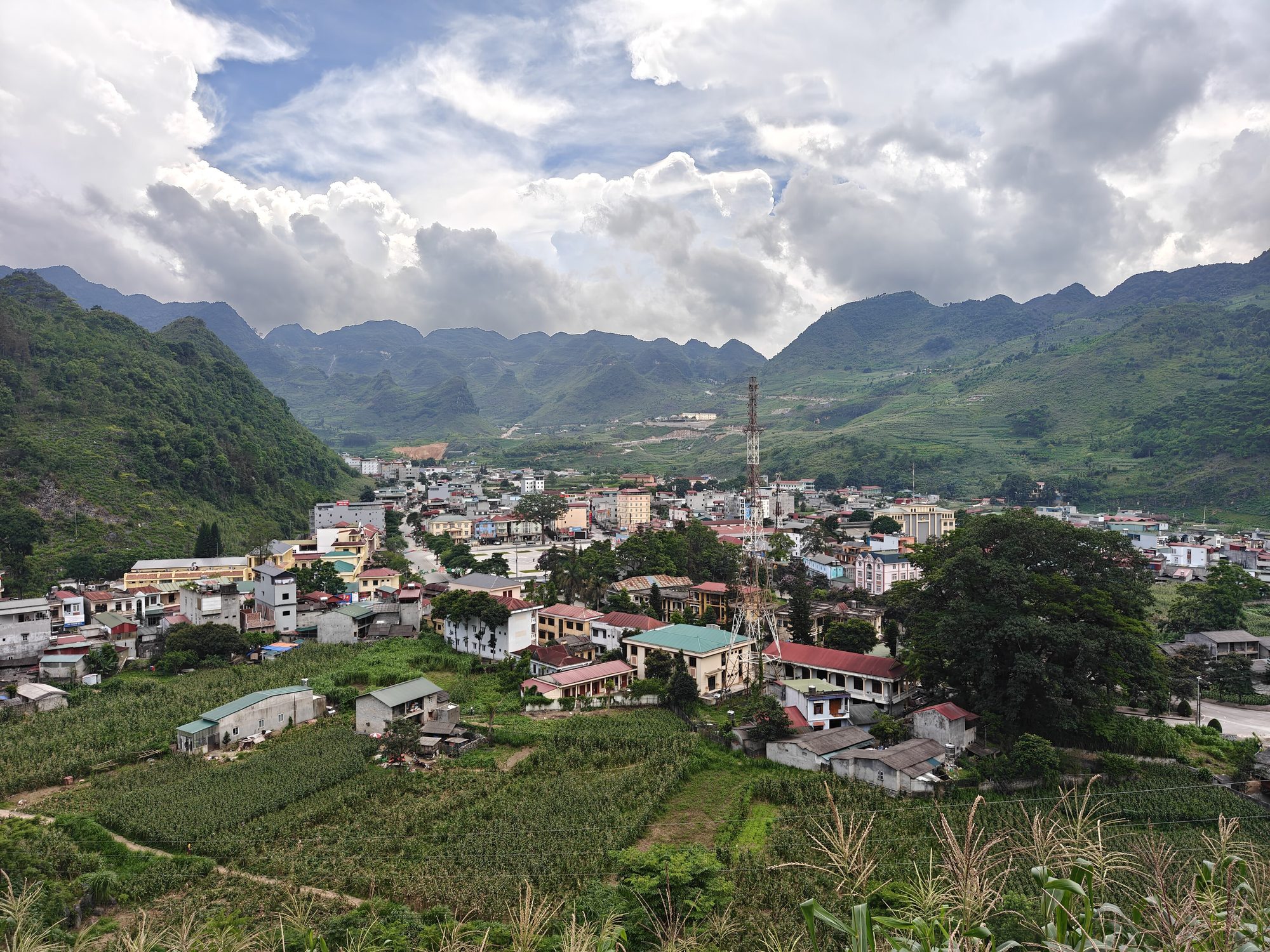
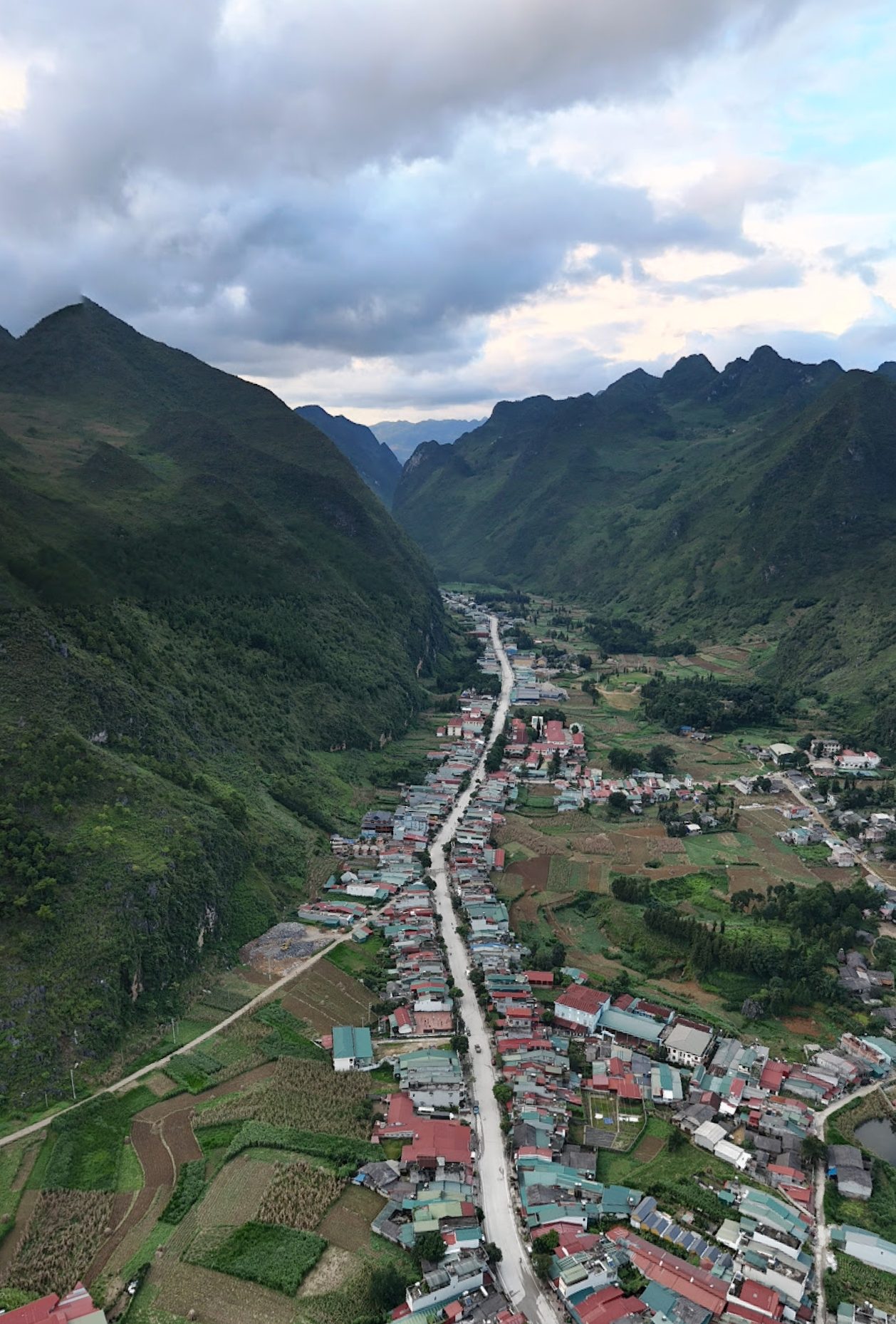
Coming down from the Mã Pí Lèng Pass, the Happiness Road ends in a wide valley ringed by limestone peaks: Mèo Vạc. It is a small town, quieter than Đồng Văn, yet it has a very lively Sunday market, Hmong and Lô Lô villages that keep many of their traditions, and, not far away, the Khâu Vai Love Market, held only once a year. It is also where the second half of the Loop begins, heading south towards Du Già.
Since 1 July 2025, Hà Giang province has been merged into Tuyên Quang province and districts no longer exist; the old Mèo Vạc town together with Pả Vi, Giàng Chu Phìn and Tả Lủng now forms Mèo Vạc commune, while Khâu Vai is a separate commune. Travellers still say "Mèo Vạc, Hà Giang", so this page sticks with the familiar name.
Mèo Vạc — the end of the Happiness Road
Mèo Vạc is the end point of the Happiness Road, which runs from Hà Giang city through Quản Bạ, Yên Minh, Đồng Văn and over Mã Pí Lèng. The road was built by hand between 1959 and 1965, cut through rock faces to bring everyday life to the most remote villages on the plateau. Reaching Mèo Vạc means you have ridden the whole of it — a milestone worth stopping for, spending a night and looking back on what you have just crossed before turning onto the rural road to the south.
Unlike Đồng Văn, Mèo Vạc has no old quarter and few cafés aimed at visitors. It is a working highland town: schools, a market, petrol stations, guesthouses and simple eateries. Evenings are quiet, which suits an early night after a long day on the passes — and an early start if the next morning is a Sunday.
Getting there from Mã Pí Lèng
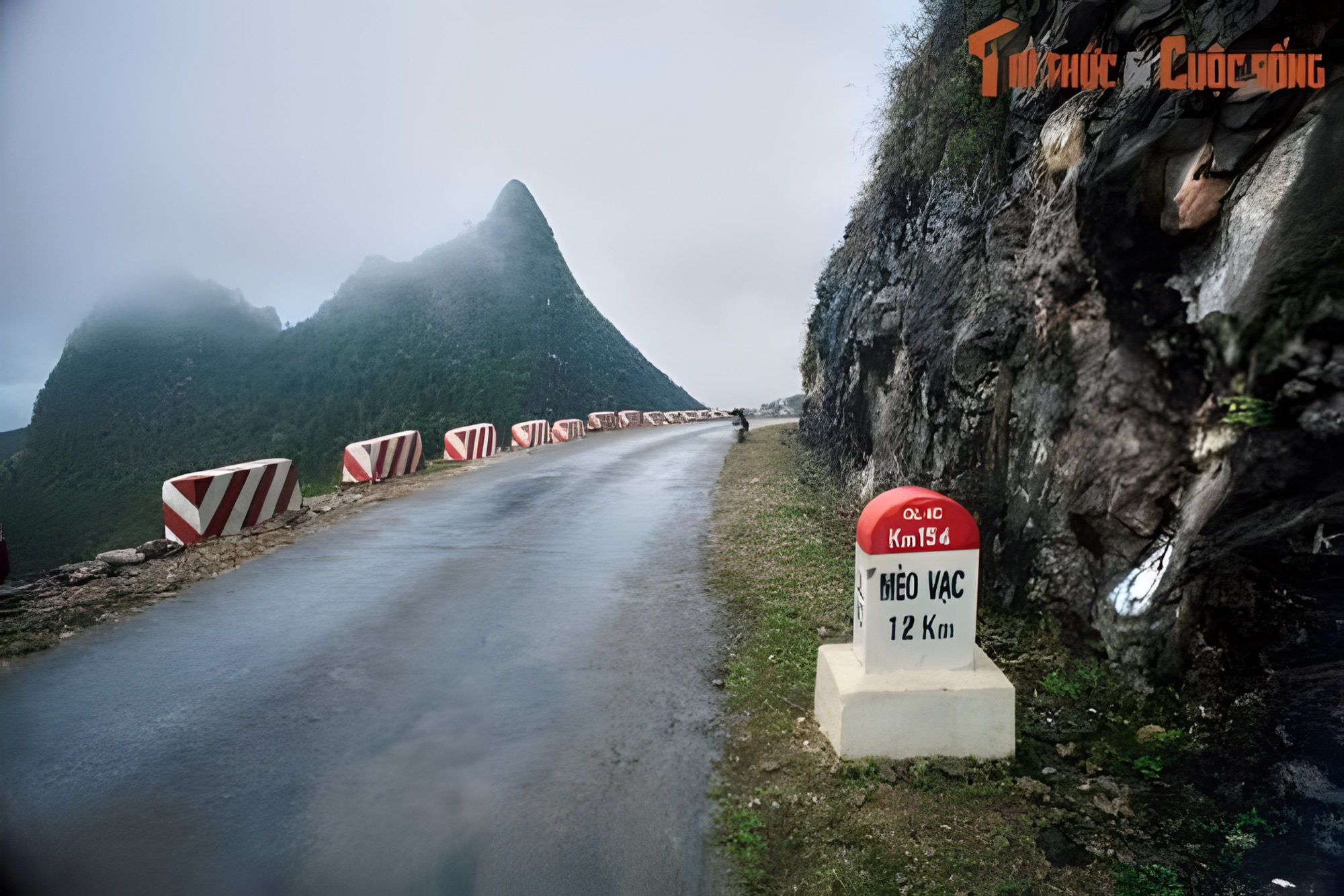
From the top of the Mã Pí Lèng Pass to central Mèo Vạc is about 15 km, roughly 30 minutes of riding without photo stops.
- The road: a long descent with many bends, gradually opening onto a broad valley of houses and corn fields.
- Pả Vi: just before the centre you pass Pả Vi. It is both a Hmong cultural village and the turn-off to the Nho Quế boat dock (see below).
- Riding yourself: long descents overheat brakes. Use a low gear and engine braking, and brake gently rather than holding the lever.
- Easy rider / car: an easy section; watch for buses and trucks climbing the pass in the other direction.
- Weather: late in the day and in winter, fog can roll down from the pass into town; avoid riding the pass after dark.
On the way down, a few bends give you a full view of the town in its ring of mountains — the spot to photograph the road you have just ridden, best in the late afternoon. If you are unsure about long descents, read easy rider or self-ride on the Hà Giang Loop before setting off.
The Mèo Vạc Sunday market
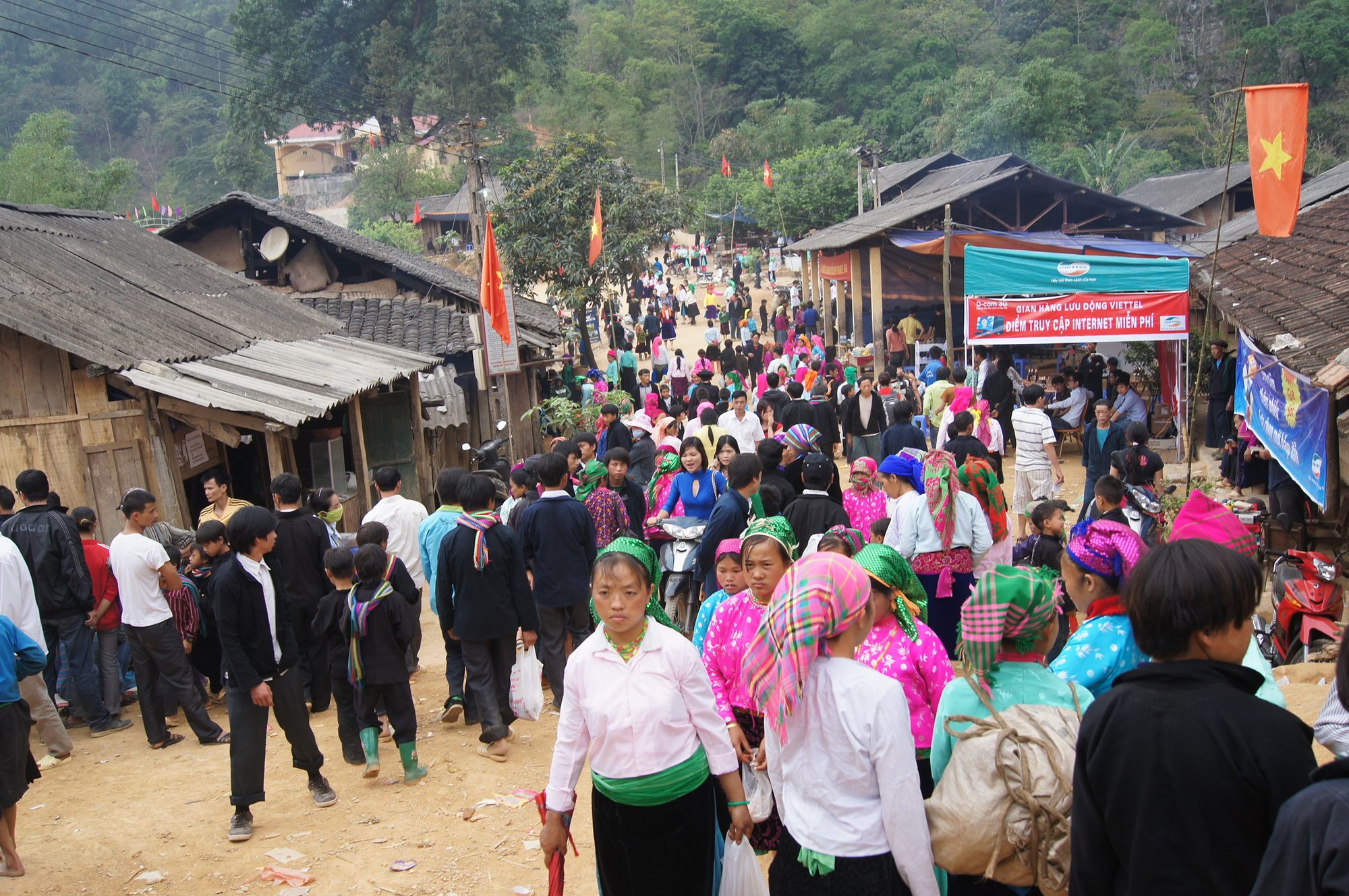
The market is held every Sunday morning (by the solar calendar) in the centre of Mèo Vạc commune, i.e. the old Mèo Vạc town. People come in from all over Mèo Vạc, Yên Minh and Đồng Văn; many set off while it is still dark, so there are already people at the market by 4–5 a.m.
| Time (approx.) | What is happening |
|---|---|
| 4:00–5:00 | People start arriving, still dark |
| Around 6:30 | The market is already busy |
| 6:30–10:00 | Busiest, best for watching and photos |
| After about 10:00 | The crowd thins out |
These times are estimates; aim to be there before 7:00. Most market-goers are Hmong, along with Dao, Lô Lô, Giáy and Kinh people, many in traditional dress — one market morning shows you many highland communities in one place.
Breakfast stalls
Look for big pans of thắng cố (a traditional horse-meat and offal stew), mèn mén (steamed ground corn), cháo ấu tẩu (rice porridge with a medicinal root), canh tẩu chúa and five-colour sticky rice. Eating breakfast inside the market is the most natural way to sit down among local people. For what to try, see Hà Giang specialities worth tasting.
The corn wine row
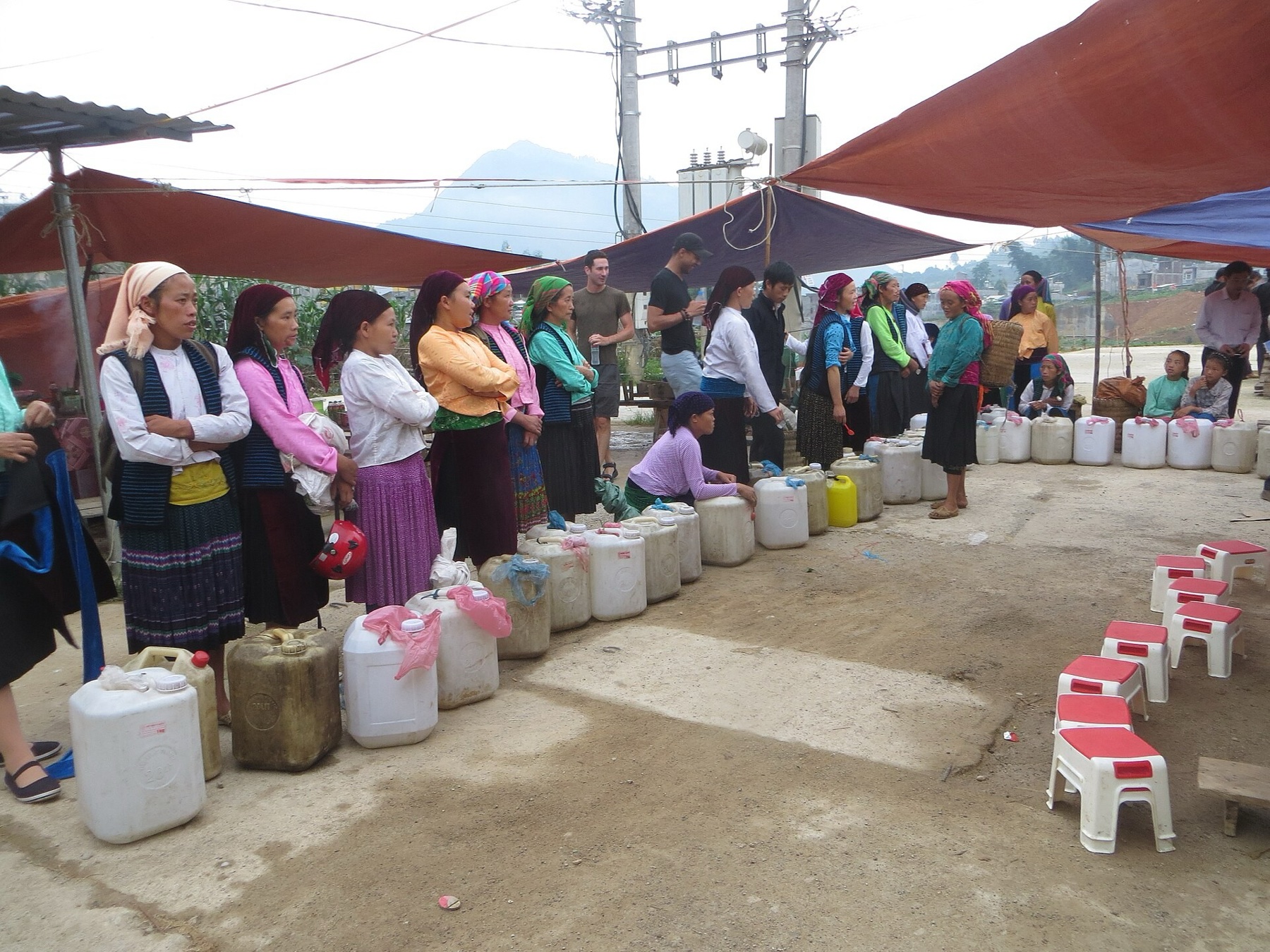
A corner unique to Mèo Vạc market is the row of corn wine stalls run by women: jerrycans of wine lined up in a long row. Corn wine is strong; if you try it, just take a sip — and never ride a motorbike afterwards.
Hmong skirts and tailors
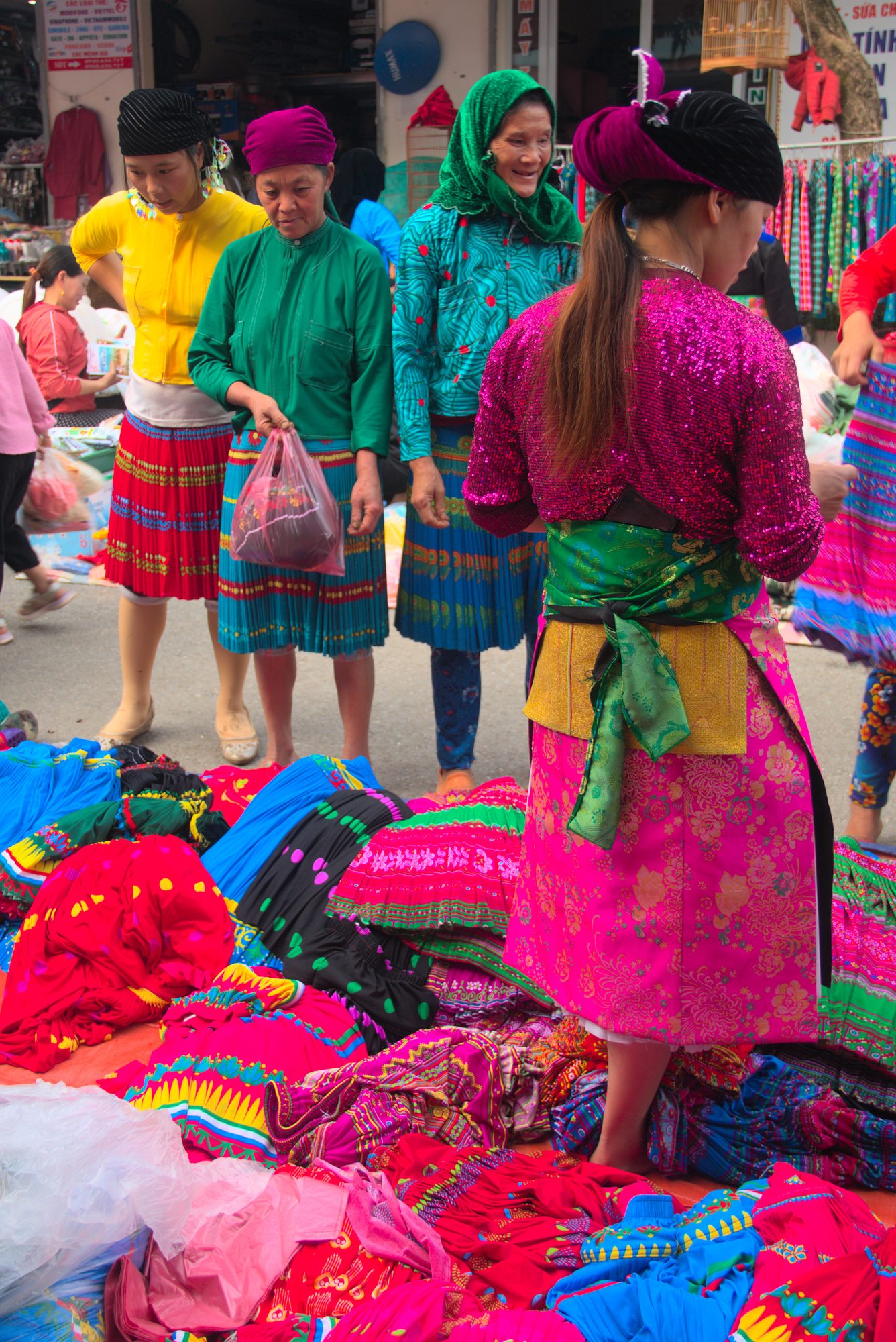
The fabric section is the most colourful part of the market. You will find handmade Hmong skirts and machine-made ones, tailors sewing on the spot, and household goods and farm tools in between. If you want to buy a skirt, ask the seller which pieces are handmade and which are machine-sewn — the work behind them is very different.
The livestock market
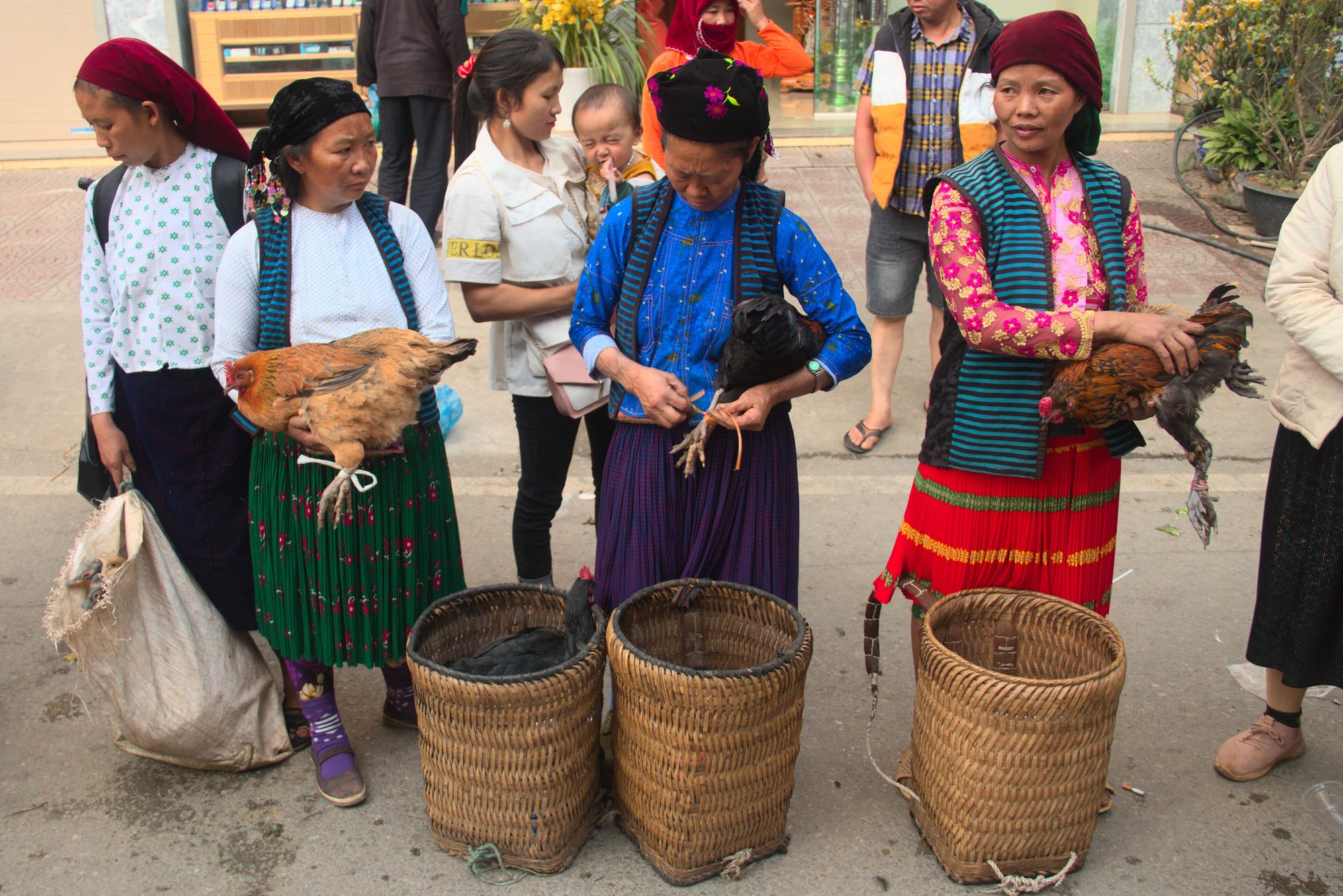
The livestock area is where buffalo, cattle, pigs, chickens and goats change hands. People carrying a piglet under one arm are a familiar sight. Keep your distance from the animals, don't step in while two sides are bargaining, and don't block the path when buffalo and cattle are led through.
Etiquette and photos
- Ask before taking photos, especially close-ups of elderly people and children; if someone shakes their head, put the camera away.
- Buy something small from the stall you want to photograph — a bowl of porridge, a cake — far more polite and natural than just raising a camera.
- No flash, and go easy on pointing long lenses at people.
- Carry small cash notes and dress warmly: early mornings in the valley are often cold, especially in November–December.
A more detailed guide to timing, the different sections and planning is in the Mèo Vạc Sunday market; to compare with other markets in the region, see Hà Giang ethnic markets.
The Khâu Vai Love Market — once a year
The Khâu Vai Love Market (Chợ Phong Lưu Khâu Vai) is not a weekly market. It is held only once a year, on the 27th day of the 3rd lunar month, in Khâu Vai commune, about 20–25 km from central Mèo Vạc. Today it is a 2–3-day festival; in 2026 it took place on 12–13 May 2026 at the "Stone Maze" (Mê cung đá) ground in Khâu Vai. Because it follows the lunar calendar, the solar date changes every year — check the official schedule before you go.
The legend: Ba, a poor Nùng young man, and Út, a Giáy girl, loved each other but were not allowed to marry. They parted on the 27th of the 3rd lunar month and promised to meet at that same place once a year. Khâu Vai still has the Miếu Ông – Miếu Bà shrines linked to the story.
The Khâu Vai market festival is listed as national intangible cultural heritage (certificate received on 26 April 2022).
If your trip coincides with the festival:
- Book your room in Mèo Vạc well ahead — rooms fill up fast on these days.
- Sleep in Mèo Vạc and visit Khâu Vai as a day trip, leaving early to avoid traffic on the narrow road.
- Respect the occasion: it is a gathering for local people, not a stage show; ask before taking photos and don't intrude on conversations.
The Nho Quế boat trip from the Mèo Vạc side
The boat dock for the Tu Sản canyon is now reached from the Mèo Vạc side. Follow QL4C over the whole Mã Pí Lèng Pass; at Pả Vi, turn left onto the road to Xín Cái and descend to Tràng Hương bridge, below the Nho Quế 1 hydropower dam. Since Pả Vi lies between the pass and central Mèo Vạc, if you are staying in Mèo Vạc you only need to ride back up QL4C a short way to the turn-off.
- Below the bridge there is a ticket office (sign "Canyon boat trip"), parking and toilets. Cars cannot go down to the dock: after buying your ticket, an electric shuttle takes you about 2–3 km to the boats.
- Boats run about 1–2 km into the Tu Sản canyon, stop for around 15 minutes inside the gorge and return; the whole ride takes about 1 hour. Counting from the Pả Vi turn-off, allow about 2–3 hours.
- Ticket: about 150,000 VND per adult (≈ US$ 6, July 2026 rate), insurance included; may change.
- Life jackets are compulsory from the moment you board and may only come off during the stop inside the gorge.
- The ticket office is open roughly 7:00–18:30; arrive before about 16:00 so you are back on QL4C before dark.
- The Tà Làng dock (a steep, winding road from the Đồng Văn side) was no longer taking visitors as of August 2026; some older maps still show that route, so check with your accommodation before you go.
The water is usually at its clearest green from around the 10th lunar month to 30 April; in the rainy season it can turn brown with silt, boats may pause after heavy rain and the road down to the dock gets slippery. The Sky Path on Mã Pí Lèng is a cliff-edge walking trail and does not go down to the river. For the road to the dock, water seasons and safety notes, see the Nho Quế boat trip through the Tu Sản canyon and the Nho Quế River page.
Villages and scenery around Mèo Vạc
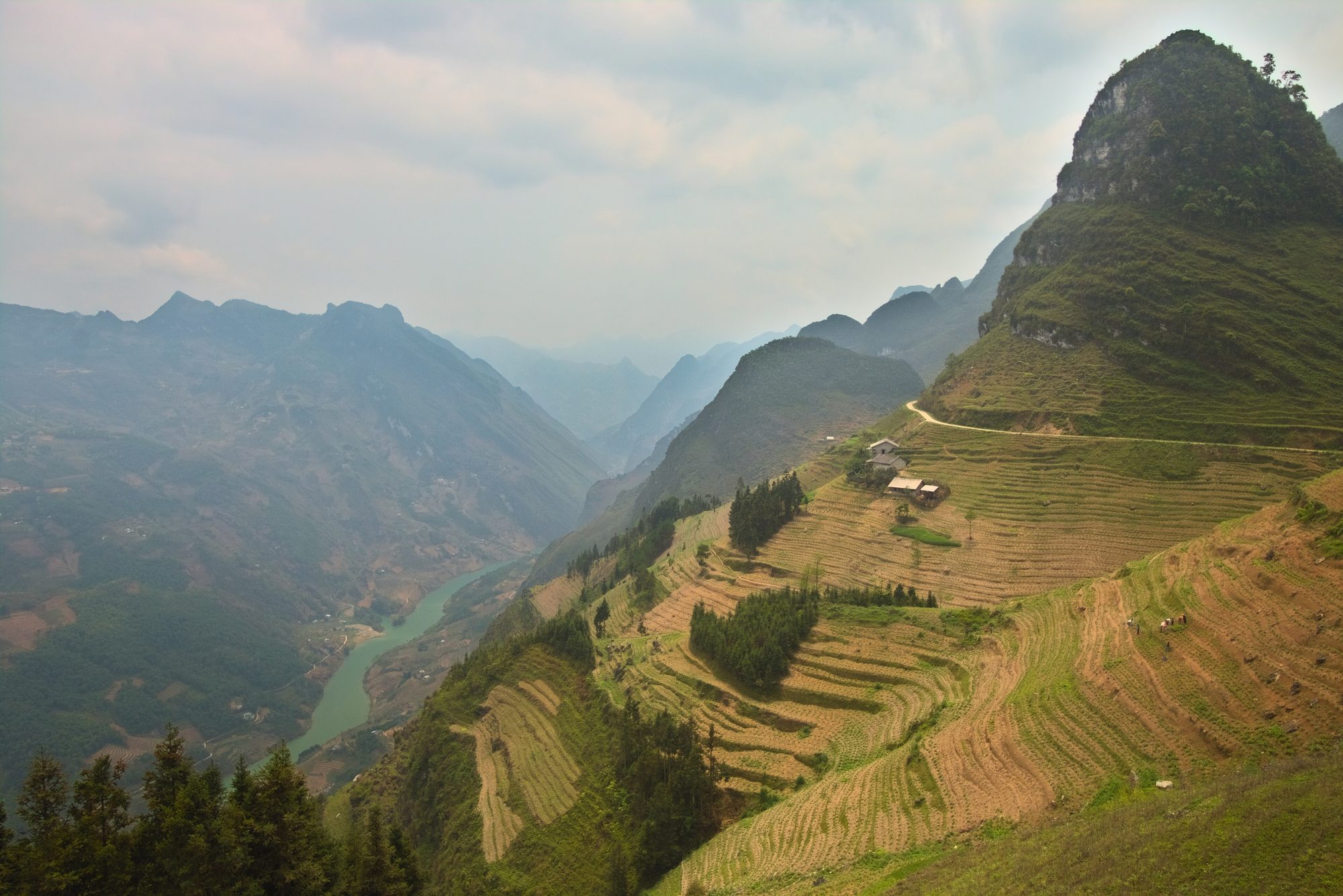
- Pả Vi cultural village: a Hmong village near town with rammed-earth houses, stone walls and community homestays. A slow afternoon walk through the village is a gentle way to see daily life on the Rocky Plateau.
- Giàng Chu Phìn: terraced mountainsides and hand-stacked stone walls above the Nho Quế valley — far fewer people than along QL4C.
- Corn and buckwheat in rock pockets: typical of the Rocky Plateau, especially in the flower season around October–November.
- The last bends of the pass: a viewpoint over the Mèo Vạc valley in its ring of mountains.
In the villages, follow the same rules as at the market: ask before taking photos, don't walk into yards uninvited, don't hand out sweets or money to children, and carry your rubbish out with you.
What to eat in Mèo Vạc
The Sunday market is the place to try thắng cố cooked in huge pans, mèn mén, cháo ấu tẩu, corn cakes, smoked meats from above the kitchen fire such as sausage, buffalo and pork, and local corn wine. On other days, eateries in town serve beef dishes, hotpots and cải mèo mustard greens picked from the hillside fields. In village homestays dinner is usually a home-cooked meal — let your hosts know when you will arrive so they can prepare.
Where to stay
Options are guesthouses and small hotels in town, plus homestays in villages such as Pả Vi.
- For the Sunday market: plan your route so your night in Mèo Vạc is a Saturday, and stay near the centre so you can walk to the market early.
- For quiet and village life: pick a homestay in Pả Vi; it is also handy for the turn-off to the Nho Quế boat dock.
- During the Khâu Vai Love Market: book early.
- Cold season: mornings and evenings in November–December on the plateau are often only about 5–15 °C; ask your accommodation about thick blankets and hot water, and bring a warm jacket.
Sleeping in Mèo Vạc also gives you an unhurried morning before the long road to Du Già.
Onwards: Mèo Vạc → Du Già
From Mèo Vạc to Du Già is about 80 km, roughly 3–4 hours of riding depending on the road and how often you stop. The road passes through the Mậu Duệ area before turning into the Du Già valley; the scenery shifts from bare rock to green hills, terraces and villages.
- Road condition: for many people this is the narrowest and toughest stretch of the Loop, with sections under upgrade, gravel, potholes and debris after rain. Ask your accommodation or easy rider for the latest conditions.
- When to leave: if you go to the Sunday market, leaving Mèo Vạc as it thins out (around 10:00) still gets you to Du Già before dark. Don't ride this stretch after dark or in heavy rain.
- Fuel and cash: fill up in Mèo Vạc; it is also one of the last places with an easy-to-find ATM — Du Già has almost none.
- Check your bike: brakes, tyres and chain should be in good shape before the rough sections.
Sample itinerary through Mèo Vạc
| Day | Route | Notes |
|---|---|---|
| 1 | Hà Giang city → Quản Bạ → Yên Minh | Paragliding or paramotor flight in Quản Bạ |
| 2 | Yên Minh → Đồng Văn | Optional detour to Lũng Cú |
| 3 | Đồng Văn → Mã Pí Lèng → Pả Vi → Mèo Vạc | Nho Quế boat trip, night in Mèo Vạc (ideally a Saturday) |
| 4 | Mèo Vạc → Du Già → Hà Giang city | Sunday market in the morning; a long day — consider an extra night in Du Già |
See the Hà Giang Loop 4 days 3 nights itinerary for details, or open the Hà Giang Loop map to picture the whole circuit.
Best time & quick tips
- October–November: buckwheat flowers, clear skies, good riding weather.
- December–February: cold; mustard and plum blossoms start to appear; late December–January can bring frost on the plateau.
- Late 3rd lunar month: the Khâu Vai Love Market.
- Market day: every Sunday morning.
- Short days: in November–December the sun sets around 17:15–17:30, so plan to reach Mèo Vạc before dusk.
See Hà Giang weather month by month to choose your dates.
Add a flight
If you ride the Loop in reverse (Hà Giang city → Du Già → Mèo Vạc → Đồng Văn), Quản Bạ will be your last stage — a flight over the valley is a memorable way to end the trip. The Quản Bạ flying site (around Km45) is open daily 06:30–18:30: a standard tandem paragliding flight of 9–15 minutes depending on the wind costs 2,290,000 VND per guest (≈ US$ 91), a 15-minute paramotor flight 2,490,000 VND per guest (≈ US$ 99), including GoPro video, insurance, drinking water and pick-up/drop-off within the Quản Bạ area. See the Quản Bạ flying site and book online — no deposit, pay at check-in, free rescheduling for bad weather.
To fly over the Rocky Plateau itself, the team can also schedule paragliding in Đồng Văn depending on the wind; contact them in advance.
Frequently asked questions
When is the Mèo Vạc market, and what time should I go?
Every Sunday morning, starting before dawn; busiest around 6:30–10:00, quieter after that. Stay in Mèo Vạc on Saturday night.
Is the Khâu Vai Love Market held every week?
No. It is held only once a year, on the 27th day of the 3rd lunar month (12–13 May in 2026), in Khâu Vai commune about 20–25 km from Mèo Vạc.
How do I get to the Nho Quế boat trip from Mèo Vạc?
Ride back up QL4C to Pả Vi, turn onto the road to Xín Cái, go down to Tràng Hương bridge to buy a ticket (about 150,000 VND) and take the electric shuttle to the dock. Allow about 2–3 hours in total.
How many nights should I spend in Mèo Vạc?
One night is enough for most itineraries. Add a second if you want both the Nho Quế boat trip and the Sunday market without rushing, or if you are there for the Khâu Vai Love Market.
How long does it take from Mèo Vạc to Du Già?
About 80 km, 3–4 hours of riding. Fill up with fuel, get cash in Mèo Vạc and only ride in daylight.
Next stop: Du Già · Previous stop: Mã Pí Lèng Pass