Stop 5/7
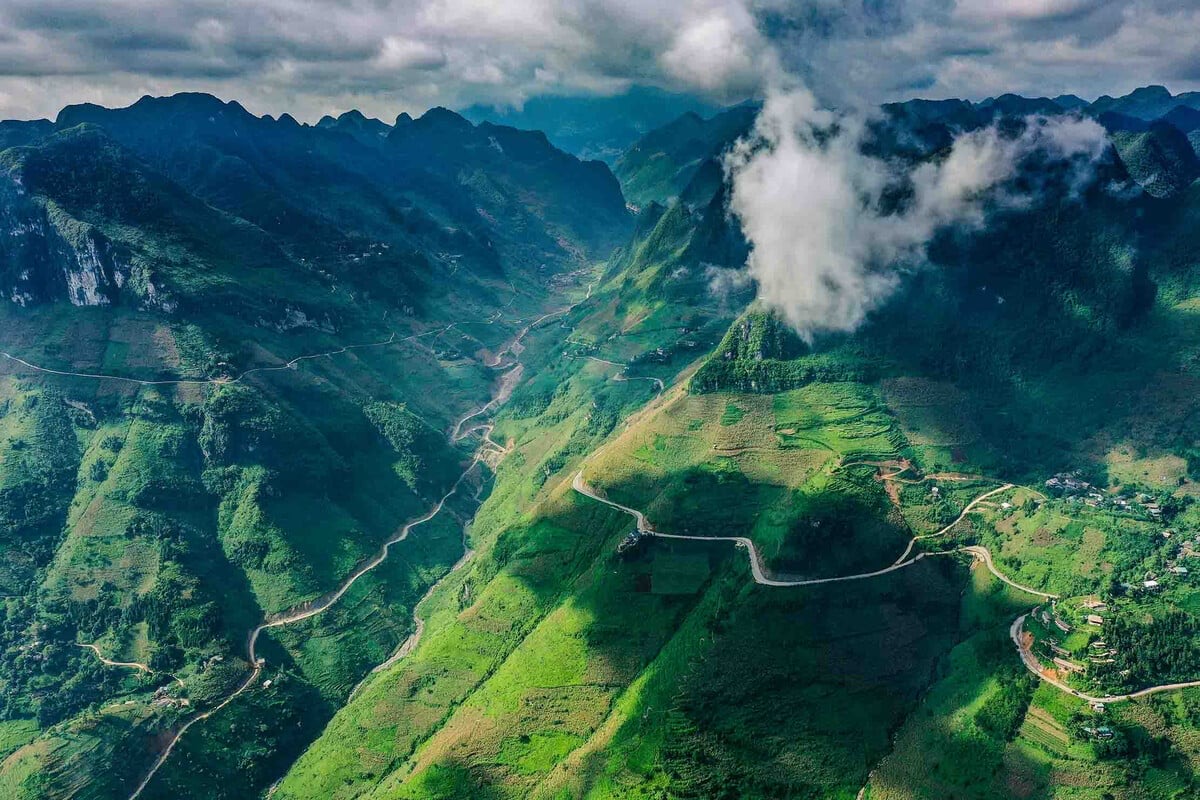
Mã Pí Lèng, around Km170 of the Loop, is a pass about 20 km long between Đồng Văn and Mèo Vạc. From the top you look down into the Tu Sản Canyon and the Nho Quế River — the finest view on the whole route.
If you could remember just one stretch of road in Hà Giang, many people would pick Mã Pí Lèng. The pass, about 20 km long, links Đồng Văn with Mèo Vạc around Km170 of the Loop and is carved into the side of the limestone cliffs. On one side the mountain rises sheer; on the other is a deep abyss, and at the bottom the Nho Quế River threads like a jade-green ribbon through the Tu Sản Canyon. This is the stretch that makes you want to ride as slowly as possible.
Getting from Đồng Văn over Mã Pí Lèng
From Đồng Văn Old Quarter to the top of Mã Pí Lèng Pass is about 20 km, then another 15 km down to Mèo Vạc town. Riding time is only about 1 hour, but in practice most people take half a day because they keep stopping for photos.
- The route: this road is part of the Happiness Road, built by hand between 1959 and 1965 by tens of thousands of young volunteers and local ethnic people; the section over Mã Pí Lèng is considered the hardest of all.
- Riding yourself: paved, but with many sharp bends and stretches right on the edge of the drop. Stay in your lane, don't cut across the centre line on bends, use a low gear on descents, and never film while riding.
- Easy rider: well worth considering on this leg so you can take in the views at ease.
- Car: watch for passing places; when you meet a truck or bus, stop in a wide spot to let it through.
- Fog and rain: early in the morning and in the rainy season, cloud can blanket the pass with visibility down to a few dozen metres. Turn your lights on, honk at blind bends, or wait for the fog to lift.
Viewpoints on Mã Pí Lèng Pass
- Top of Mã Pí Lèng Pass: the area with the Happiness Road memorial stele and a viewpoint — the classic stop to gaze down into the valley.
- Mã Pí Lèng Panorama: a viewpoint with a sweeping view of the Tu Sản Canyon and the Nho Quế River, convenient for a break and a drink.
- Tu Sản Canyon: a deep gorge with sheer cliffs on both sides, considered by many one of the deepest and most spectacular canyons in Southeast Asia. Even from the pass it's breathtaking.
- Nho Quế River: the jade-green river flowing at the foot of the mountains — its colour changes with the seasons and the light.
- Bends along the mountainside: the road snaking along the cliff face is Mã Pí Lèng's "signature" shot; take it from a safe parking spot.
- Rock ledges above the drop: many people like stepping out onto the ledges for photos, but be extremely careful: the rock can be slippery, the wind is strong and there are no railings.
- Pải Lủng village: a village on the mountainside near the pass, with a small road leading down towards the Nho Quế River.
Boat trip on the Nho Quế River
One of the most popular experiences is a boat trip on the Nho Quế River, gliding between the two cliff walls of the Tu Sản Canyon. To reach the boat landing, you take a small, steep, twisting road from the village on the mountainside down to the riverbed — if you're not confident riding it, ask a local or your easy rider to take you. Water levels and boat schedules depend on the season and weather; ask at your homestay or a local first. Always wear a life jacket on board.
Where to eat and stay
On the pass itself there are mostly roadside stops selling drinks, snacks, grilled corn and grilled eggs — enough for a rest while taking in the view. Have your main meals in Đồng Văn (bánh cuốn trứng — steamed rice rolls with egg, cháo ấu tẩu — aconite-root porridge) or Mèo Vạc (thắng cố — horse-meat stew, lạp xưởng gác bếp — smoked sausage, mèn mén — steamed ground corn).
There are a few mountainside homestays near the pass with valley views, but most travellers choose to sleep in Đồng Văn Old Quarter or Mèo Vạc town, at either end of the pass.
Best time to go & tips
- October–December: dry weather, long views, the Nho Quế at its most beautiful green.
- January–March: cold, possibly misty; in return, some mornings bring a sea of clouds below the pass.
- Summer: lots of rain, the river can be murkier, and there's a risk of local landslides.
- Best light: morning when the sun shines into the canyon, or late afternoon with golden light on the cliffs.
Tips:
- Check your brakes before the pass and fill up in Đồng Văn.
- Park close to the cliff side, never on a bend; don't step into the middle of the road for photos.
- Don't fly drones in strong wind and respect restricted areas.
- Bring a windbreaker: a cold wind blows hard at the top of the pass all year round.
One more idea
Having seen the plateau from the edge of the abyss, you'll want to see it from the sky. If you have time on the way back, drop by the Quản Bạ flying site.
Next stop: Mèo Vạc · Previous stop: Đồng Văn Old Quarter