Safety
Safety first
Every flight starts with a safety decision: the right people, the right equipment, the right weather. This is how we work.
Pre-flight checks
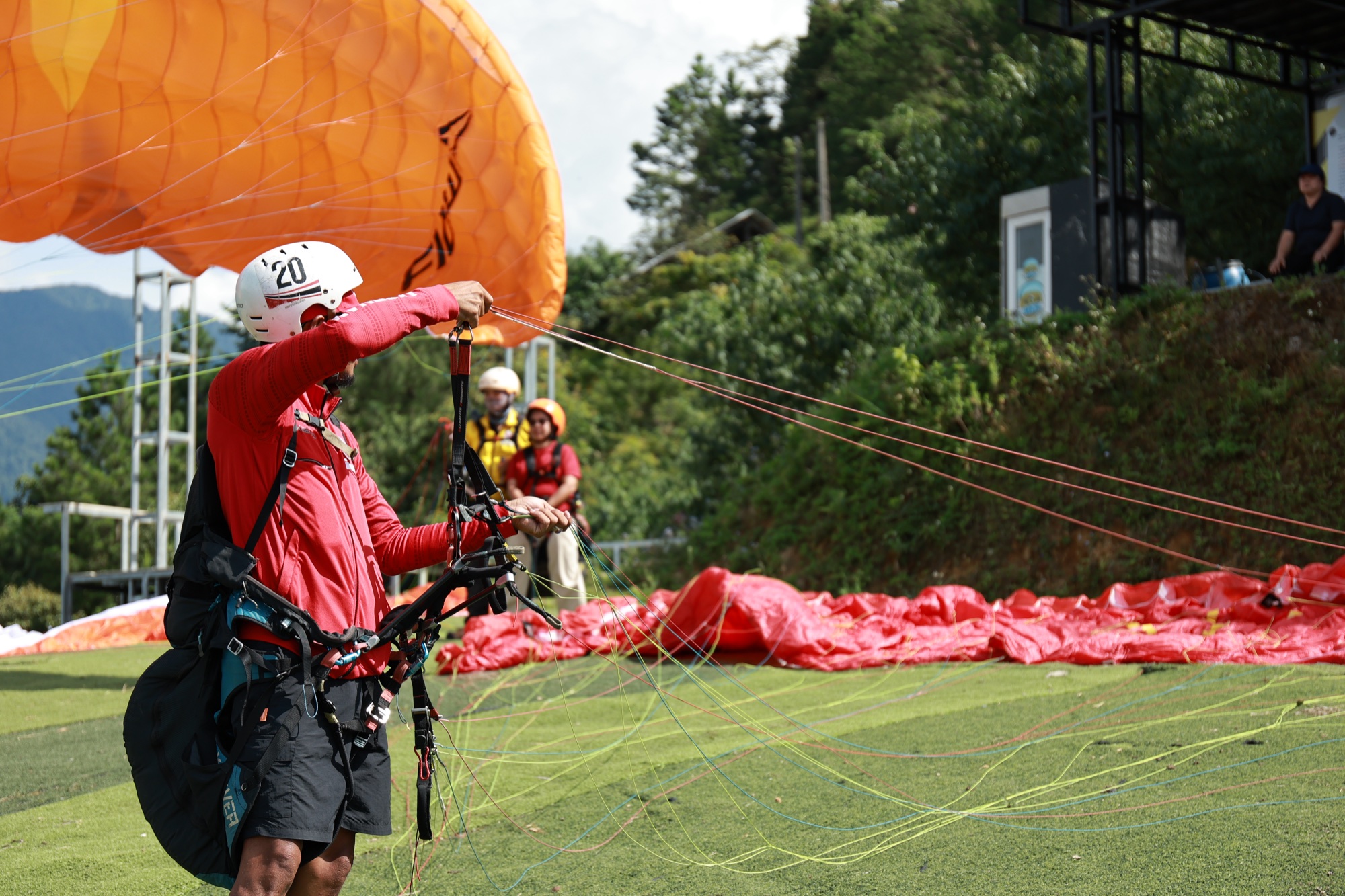
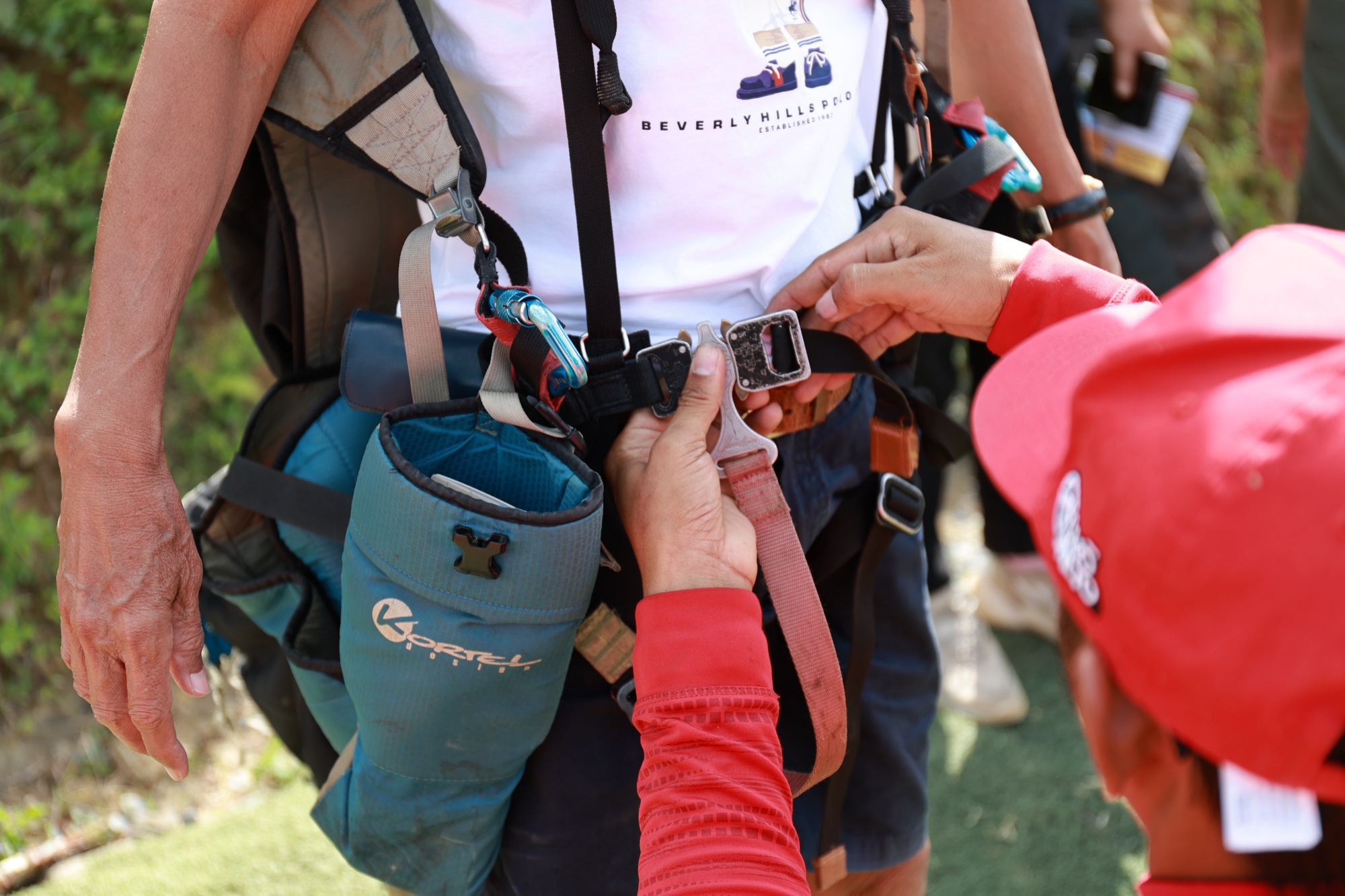
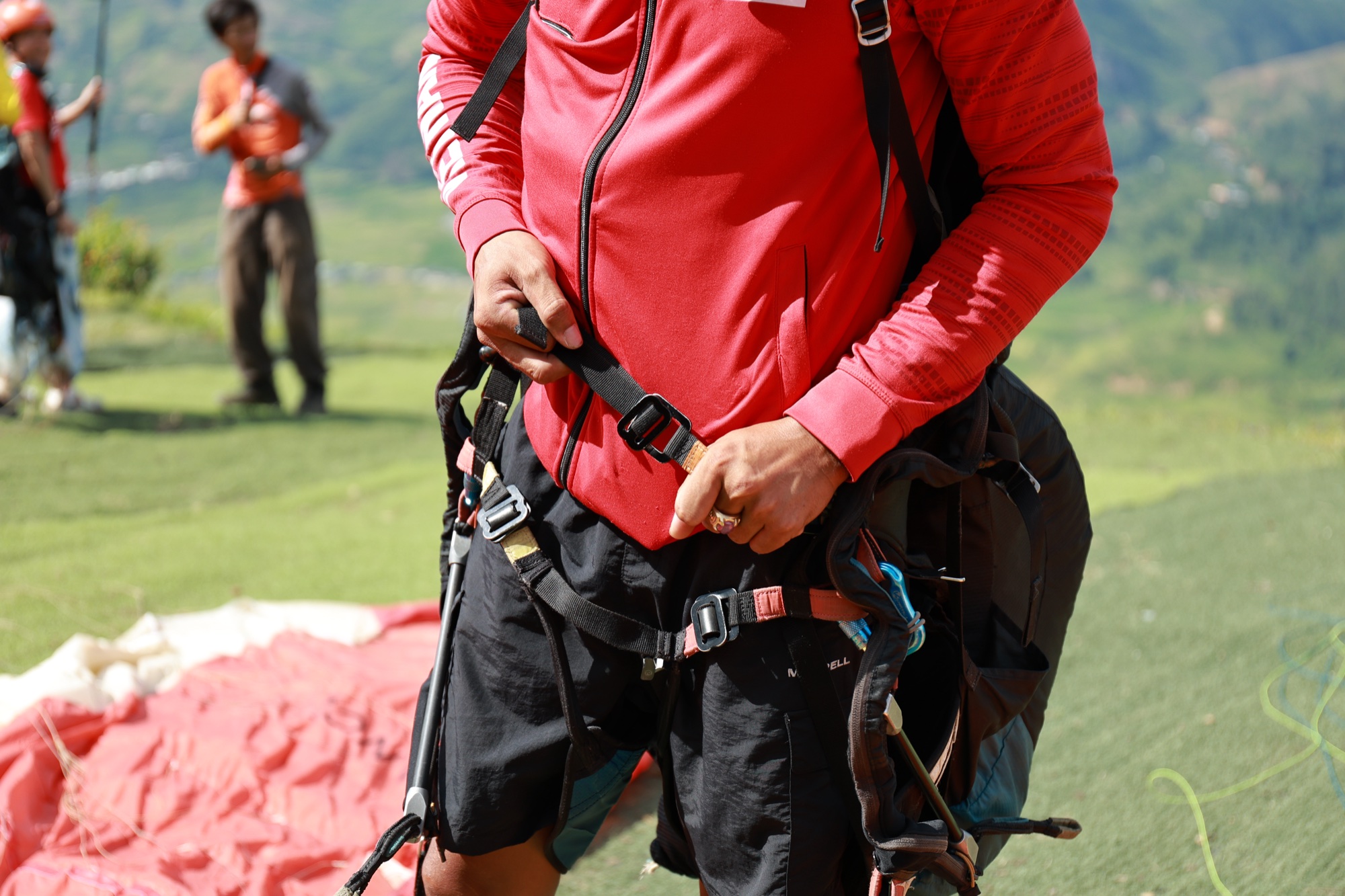
Wing, lines, harness and buckles are checked before every take-off.
Weather assessment
Wind, gusts and clouds are monitored from early morning. We postpone when conditions are not right.
Equipment
Helmet, harness with back protection and a reserve parachute on every tandem flight.
Pilots
Your pilot controls the entire flight, from the take-off run to touchdown.
Passenger briefing
5–10 minutes on the take-off run, seating position, signals and how to land.
Landing procedure
The landing field is checked before each session; passengers are reminded of the landing position before touchdown.
Taking photos safely in the air
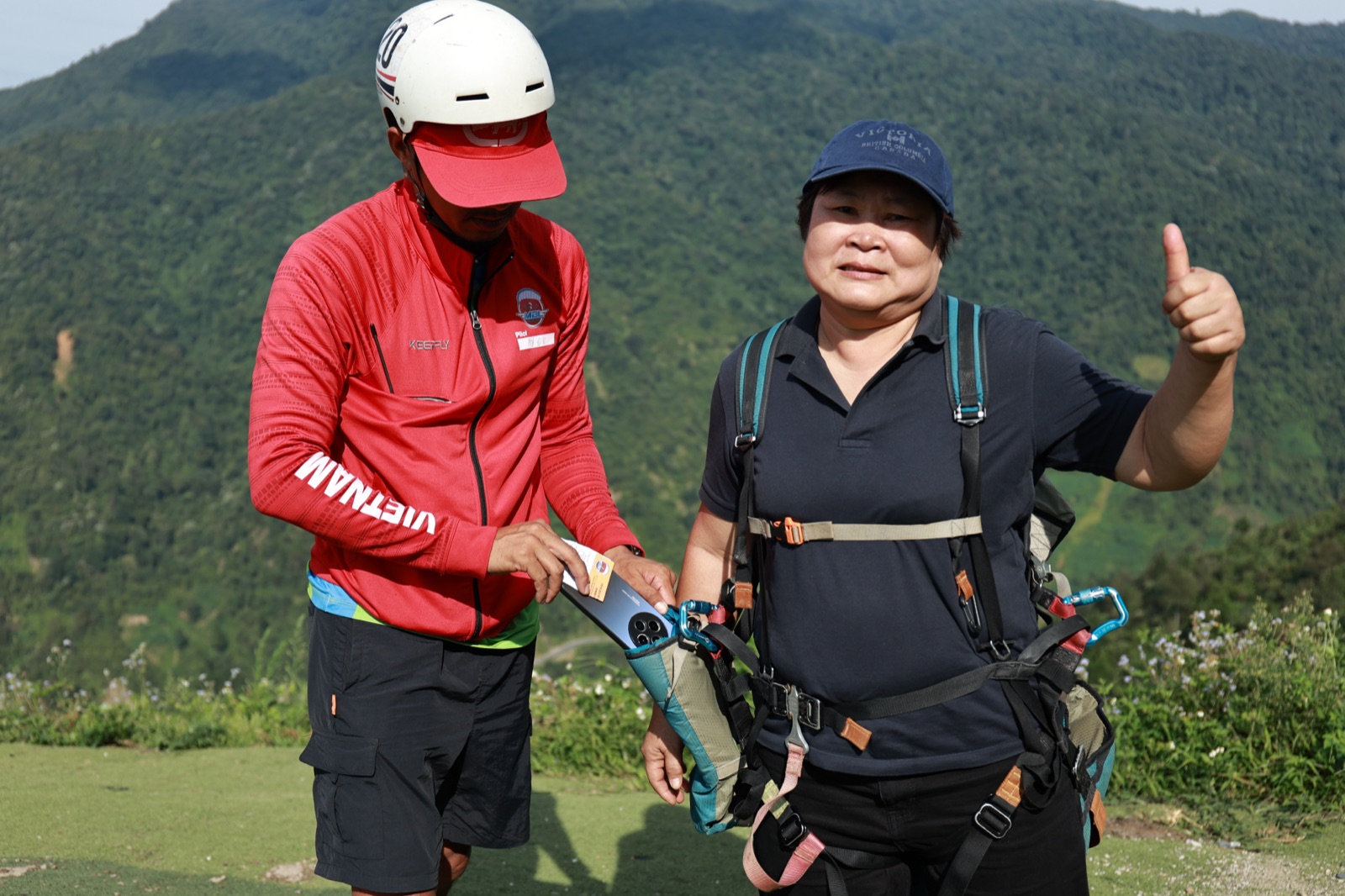
- Your phone needs a wrist or neck strap — never hold it loose.
- Empty loose items from your pockets (keys, clip-on glasses, caps) before take-off.
- Shoot only when your pilot says so; put the camera away for take-off and landing.
- Don’t reach far out or touch the lines — the pilot handles the selfie pole.
- The GoPro is always included free — just ask your pilot when you want to film.
Our safety philosophy
Paragliding is an outdoor sport that depends directly on the wind and weather. We do not promise "absolute safety" — no operator can honestly say that. What we do promise is a consistent process, and the right to stop flying whenever conditions are not right.
Pre-flight checks
- The wing, lines, harness and reserve parachute are checked before every flying day.
- Buckles, connectors and helmets are checked before every take-off.
- Any equipment showing signs of damage is taken out of service until it is repaired or replaced.
Weather assessment
From early morning, our pilots monitor wind speed, gusts, wind direction, clouds and the risk of rain. The flight status is updated on the Flight status page and may change during the day.
- Wind too strong, gusty or constantly changing direction: flights on hold.
- Low cloud or fog covering the landing site: flights on hold.
- Rain or risk of thunderstorms: flying stops.
Equipment
Passengers are given a helmet and a padded protective harness, and are shown how to sit and how to do the take-off run. The team will update detailed information about the equipment.
Pilot competence
Each tandem flight is flown by one pilot. Information on each pilot's experience and certifications is published on the Pilots page once verified.
Pre-flight briefing
Before take-off, your pilot will brief you for about 5–10 minutes on:
- How to do the take-off run and your posture at take-off.
- How to sit and where to keep your hands during the flight.
- The position to prepare for landing.
- Communication signals between pilot and passenger.
Landing procedure
The landing field is checked before each flying session. Passengers are reminded of the landing position before touching down; most landings are gentle, standing or seated.
Passenger responsibilities
- Honestly declare your health, weight and any medical conditions (heart, blood pressure, spine, pregnancy…).
- Do not drink alcohol or take stimulants before your flight.
- Wear neat clothing and sports shoes; no sandals.
- Follow the pilot's instructions throughout the flight.
Cancellation or rescheduling due to weather
If conditions are not safe, we will contact you to move your flight to another day or refund you under our Cancellation policy. A decision to stop flying for safety reasons is final.
Ready for your first flight?
If you have any questions about health or weather, message us before you book.