
Detour off the loop
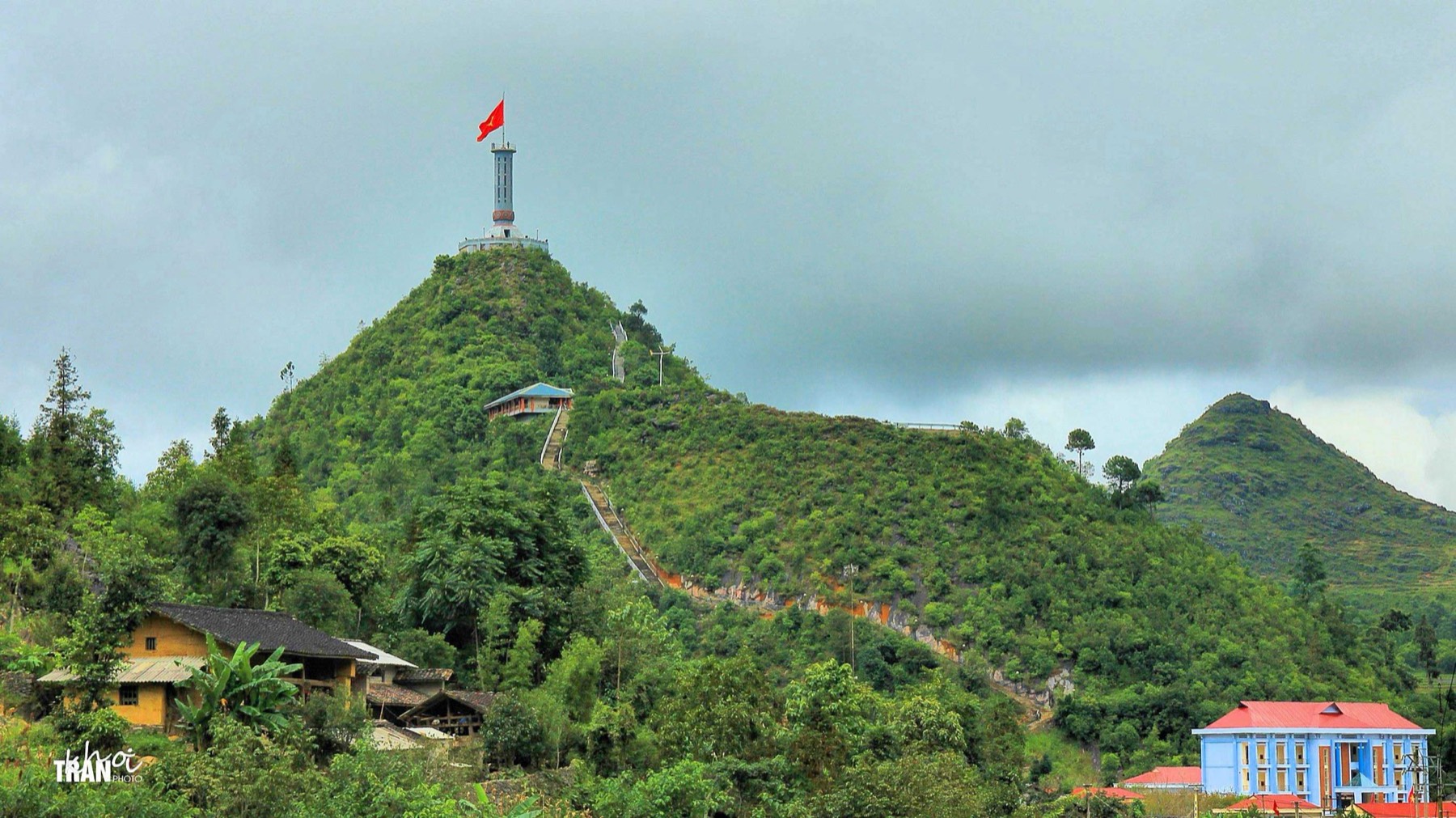
Lũng Cú Flag Tower, a detour about 25 km north of Đồng Văn, stands on top of Dragon Mountain at about 1,470 m, close to Vietnam's northernmost point. Below it lies Lô Lô Chải, a village of rammed-earth houses and homestays, and the way up can take in Sà Phìn and the Vương Family Mansion.
Lũng Cú is a detour of about 24–25 km north of Đồng Văn, roughly 45 minutes to an hour each way, where a 54 m² flag flies on top of Dragon Mountain (about 1,470 m), close to Vietnam's northernmost point — give it at least half a day, or stay the night in Lô Lô Chải village right below the mountain.
Standing at the foot of Dragon Mountain and looking up at a giant red flag with a yellow star snapping against the sky — that moment leaves many Loop riders speechless. The flag measures 54 m², one square metre for each of Vietnam's 54 ethnic groups. Lũng Cú isn't on the main Loop, but almost everyone who makes it to Đồng Văn tries to fit in this detour: the road winds through grey stone valleys and mountain villages, can take in Sà Phìn and the Vương Family Mansion, and ends at a Lô Lô village that has just won international recognition.
Administratively, the area is now Lũng Cú commune in Tuyên Quang province, after Hà Giang was merged into it on 1 July 2025. Travellers and most road signs still simply say "Lũng Cú, Hà Giang".
Lũng Cú at a glance
| Item | Details |
|---|---|
| Location | Lũng Cú commune, near Vietnam's northernmost point (now part of Tuyên Quang province) |
| Distance | About 24–25 km from central Đồng Văn, about 50 km return |
| Travel time | About 45 minutes to 1 hour each way |
| Dragon Mountain summit | About 1,470 m above sea level |
| The flag | 54 m², for the 54 ethnic groups |
| Time needed | Half a day; one night if you want to be up there at sunrise |
| Entry ticket | There is a small fee for the flag tower area, subject to change — bring cash |
| Best months | Oct–Nov (buckwheat flowers, clear skies), Feb–Mar (plum and peach blossom) |
Getting from Đồng Văn to Lũng Cú
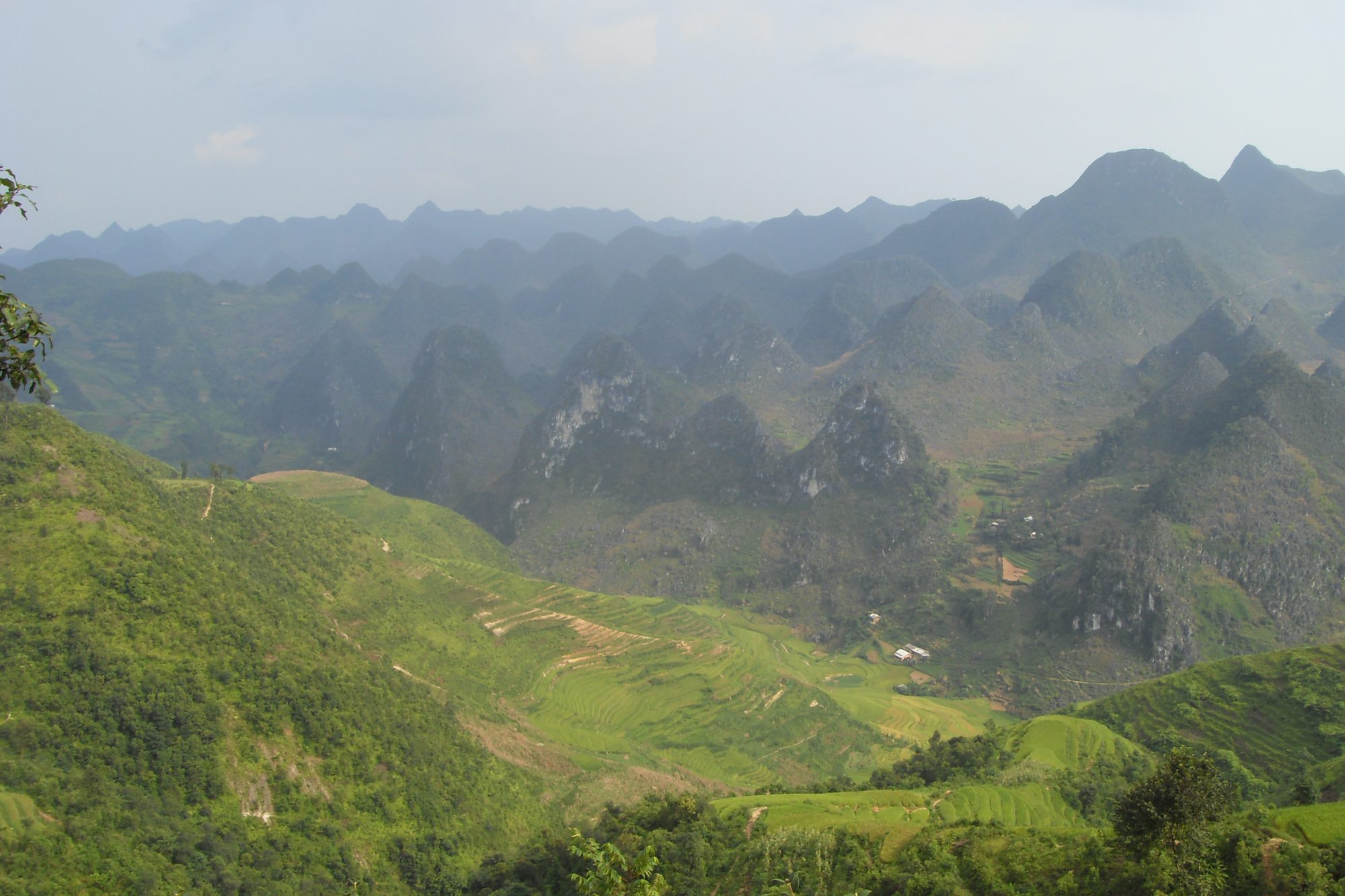
Lũng Cú is a dead-end detour: you ride up and come back the same way to carry on with the Loop. The turn-off is on highway QL4C, about 2 km from central Đồng Văn in the direction of Sà Phìn and Yên Minh. From there the road heads north between limestone massifs and small hamlets, and after about 24–25 km you reach the foot of Dragon Mountain.
There are two common ways to fit it in:
- On the way into Đồng Văn: riding from Yên Minh on QL4C, you pass the Sà Phìn valley (Vương Family Mansion) first, take the turn-off up to Lũng Cú, then come down in the afternoon to sleep in Đồng Văn old quarter. This way you don't ride the Đồng Văn – Sà Phìn stretch of highway twice.
- Out and back from Đồng Văn: if you've already spent the night in Đồng Văn, go up to Lũng Cú early, come back by lunchtime and ride on to the Mã Pí Lèng Pass in the afternoon. In that case the Vương Mansion lies another 11 km or so back towards Yên Minh from the turn-off — a separate out-and-back if you want to see it.
How to get there
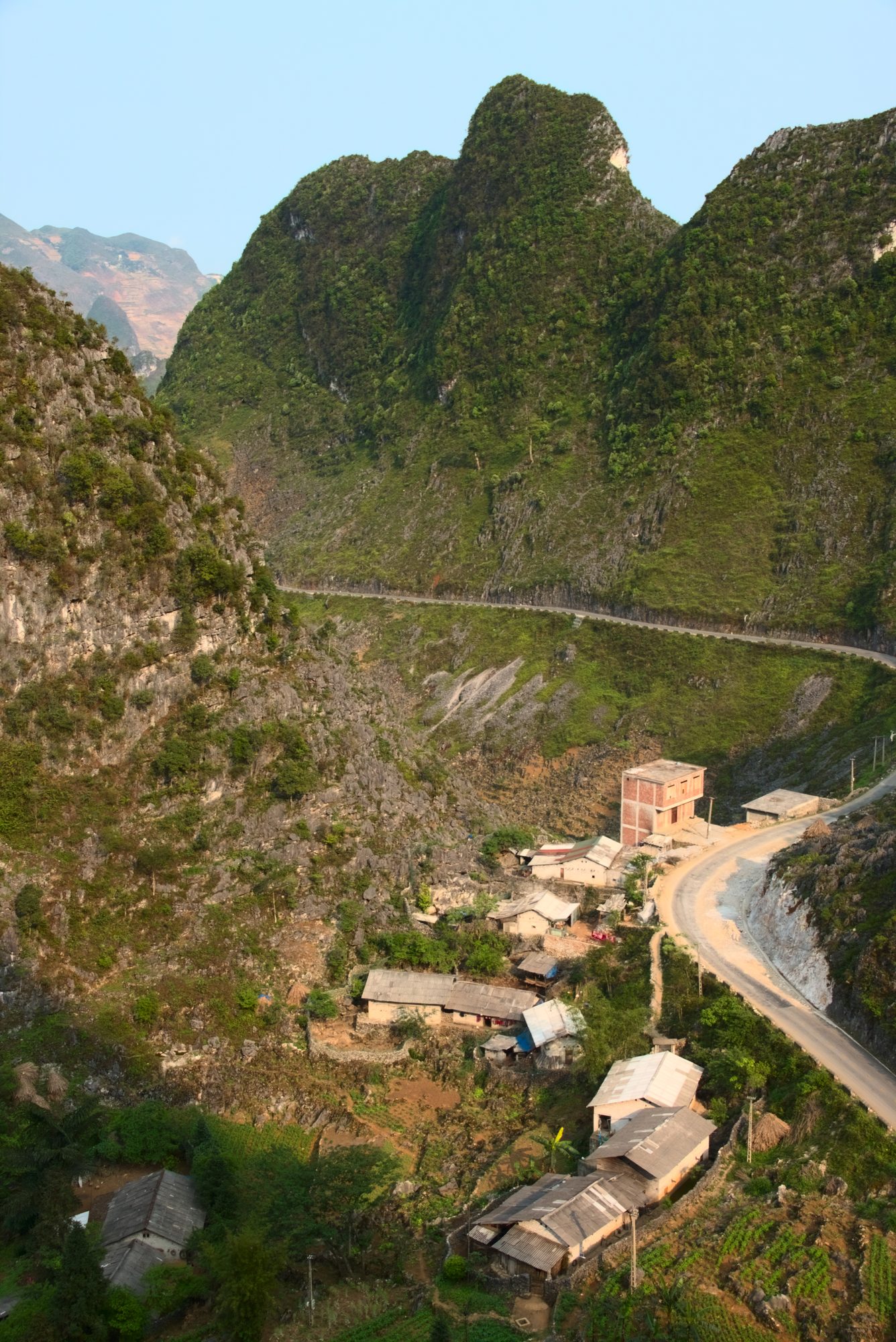
- Riding your own motorbike: the road is paved but narrower than the highway, with steep sections and one blind bend after another. Ride slowly, honk before corners and give way to bigger vehicles. Fill up in Đồng Văn before you set off.
- Easy rider: the drivers know the road and the photo stops, and usually combine Sà Phìn in the same outing. If you're still deciding, read easy rider or ride yourself?.
- Car: cars can drive right up to the car park below the flag tower. The road is narrow, so larger vehicles struggle to pass each other on busy days in flower season — setting off early makes it much easier.
Staying safe on the road
In winter, early mornings can bring thick fog, and in some years frost on the higher stretches. If you can only see a few dozen metres, wait for the sun to come out before setting off. When it rains, the road around the limestone gets slippery — slow down on downhill bends. Around the villages, children, buffalo and people carrying baskets often walk right on the road, so take it slowly through settlements. Days are short in November–December (sunset around 17:15–17:30), so plan to be back in Đồng Văn before dark.
A stop in Sà Phìn: the Vương Family Mansion
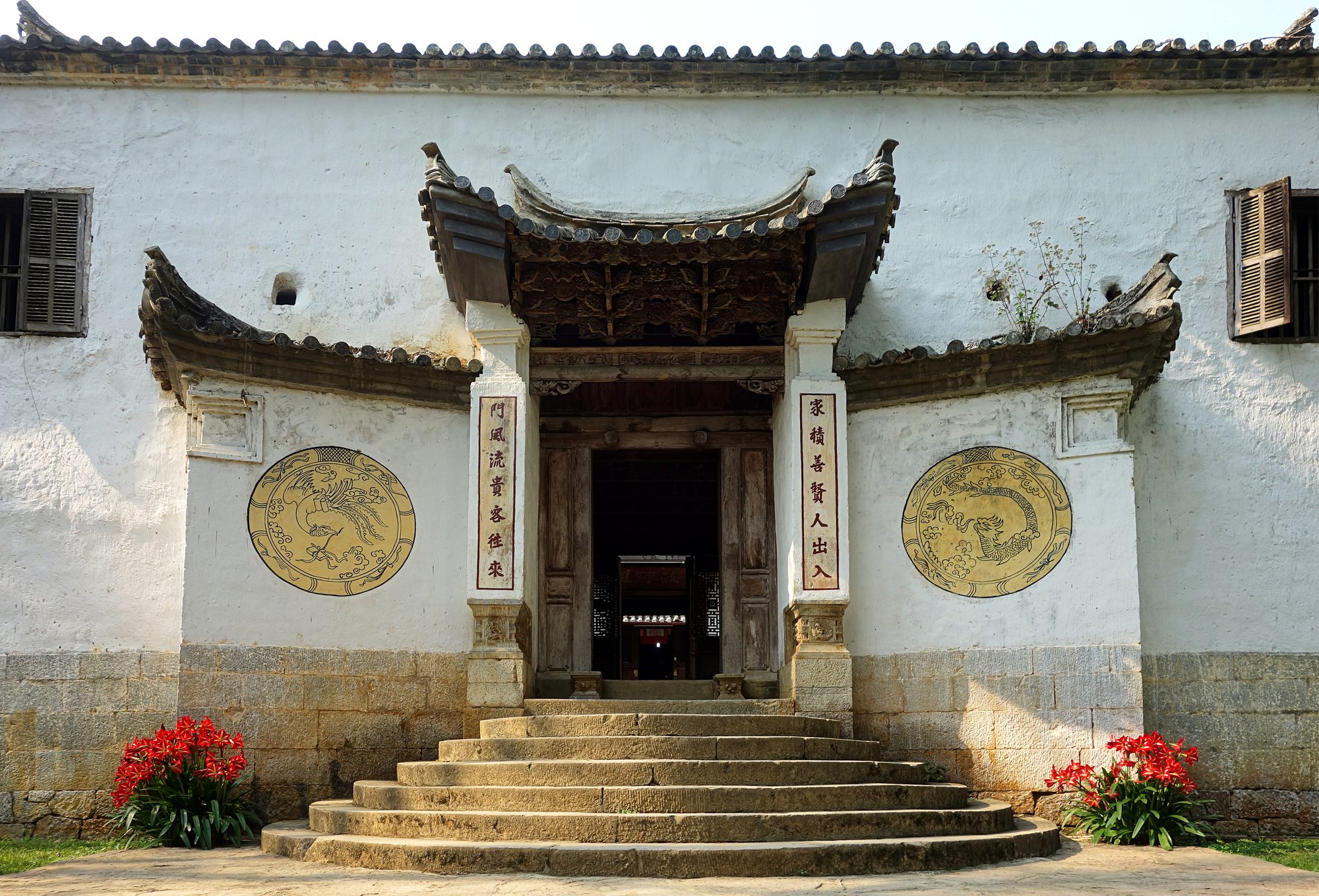
The Vương Family Mansion — locally often called the "Hmong King's Palace" (Dinh Vua Mèo) — sits in the Sà Phìn valley, about 13–15 km from central Đồng Văn. You can see it in the middle of the valley from QL4C, and a short side road leads to it. It was the home of Vương Chính Đức and his son Vương Chí Sình, who later joined the revolution, served as a deputy in the first and second National Assemblies and became the first chairman of Đồng Văn district after 1945.
The mansion was built around 1898–1907 on a turtle-shell-shaped mound with the mountains at its back. It blends Yunnan (Chinese) and French architecture with Hmong stonework: blue stone, pơ mu and pine wood, yin-yang roof tiles, column bases carved like poppy pods, and two rings of stone walls with gun slits. It has 64 rooms on two floors and was listed as a National Architectural and Artistic Monument in 1993.
- Ticket: around 20,000–25,000 VND, subject to change; usually open from the morning until about 17:00.
- Time to visit: 45 minutes to an hour is enough to walk through the wings and courtyards.
- Light: mornings are best for the main gate and the avenue of fir (sa mộc) trees in front; avoid the harsh midday sun.
- Sà Phìn market: a "shifting" market held every 6 days (so it falls one weekday earlier each week), right beside QL4C — ask your homestay which day it falls on.
More in our article on the Hmong King's Palace in Sà Phìn.
Lũng Cú Flag Tower: what you'll see
Climbing Dragon Mountain
From the car park at the foot of the mountain, you walk up a stone stairway — a few hundred steps, depending on where you start. There are handrails and places to rest; take it slowly and stop a few times if you need to, especially with older people or small children. At the base of the tower, a spiral staircase inside the tower itself takes you up to the viewing platform. It's narrow, so at busy times you'll have to wait your turn going up and down.
The reliefs and the 54 m² flag
Around the tower are reliefs telling the story of different periods of the country's history — well worth a close look before you head up. Above, the 54 m² flag is almost always taut in the wind; from the platform you can clearly hear it snapping. The wind at the top is much stronger and colder than at the car park, even on a sunny day, so bring a jacket.

The view from the platform
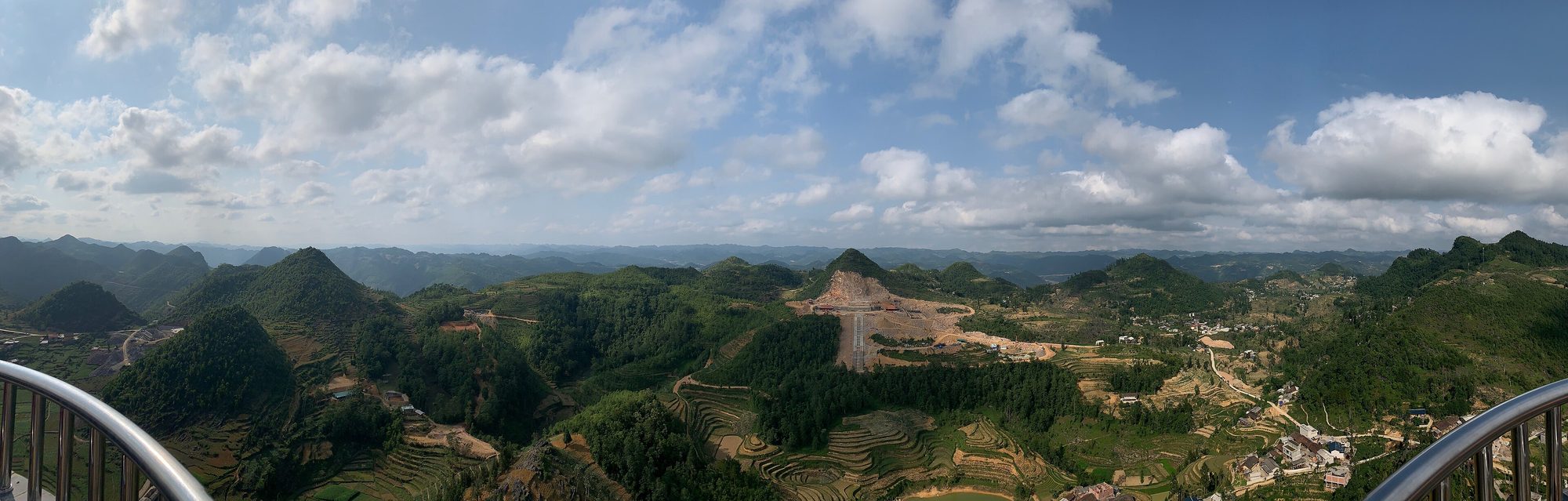
Below you lie the valley with Lô Lô Chải village, two small lakes, terraced fields and mountain ranges rolling away towards the border. On a clear day you can see a very long way; on a foggy day the tower can disappear into the clouds — be patient for a while, as clouds on the plateau change quickly. Coming early or late in the afternoon avoids the crowds and gives you softer light.
The two "dragon's eyes" lakes and the northernmost point
Locals call the two lakes at the foot of the mountain the "dragon's eyes" — a rare sight in a limestone region short of water. The actual northernmost marker of Vietnam is a few kilometres north of the tower, by the upper reaches of the Nho Quế river. The way down is steep: only go with a local guide, and ask first about the rules for moving around the border area.
Lô Lô Chải village below Dragon Mountain
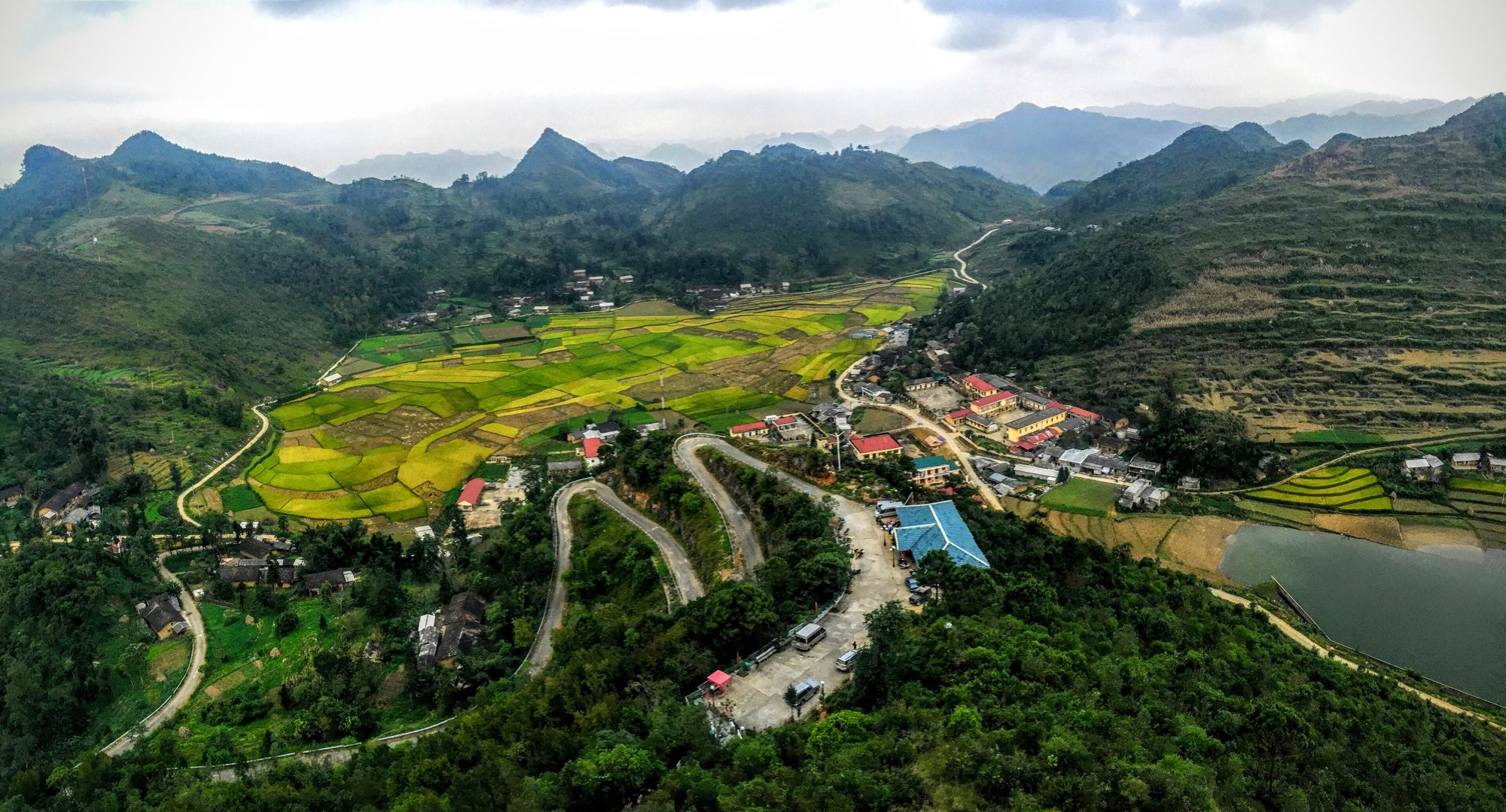
Right at the foot of the mountain is Lô Lô Chải, a village of the Lô Lô people. Thick rammed-earth houses, yin-yang tiled roofs, dry-stone walls around the yards; many families now run homestays but keep their houses the traditional way. In 2025, Lô Lô Chải was named one of the Best Tourism Villages by UN Tourism — recognition for a village that has opened up to visitors while keeping its architecture and way of life.
Take a slow walk around the village early in the morning or late in the afternoon, when kitchen smoke rises through the tiles and things are still quiet. After climbing the tower, stop at Cà phê Cực Bắc ("Northernmost Café") in the village for a rest and a view of Dragon Mountain from below.
A few things to keep in mind in the village:
- Ask before photographing people, especially the elderly and children.
- Don't walk into houses or yards unless you're invited.
- Don't hand out sweets or money to children; if you want to support the village, stay in a homestay, eat a home-cooked meal or buy handicrafts directly from the people who make them.
- Keep it quiet in the evening — villages go to bed early, and noise carries a long way in the valley.
Buckwheat season at Lũng Cú
In 2026 the Lũng Cú area alone has about 70 ha of buckwheat. The flowers here tend to bloom early and are at their best around early October. Across the plateau as a whole, the season runs from about October to early December, peaking from late October into November. The 12th Buckwheat Flower Festival, "Âm vang miền đá" ("Echoes of the stone land"), opened on the evening of 25 October 2026 at Youth Square in Đồng Văn, with about 400 ha of flowers; activities continue until the end of December 2026.
If you arrive in late October or November, the fields around Lũng Cú may already be past their best — look instead in the valleys around Sà Phìn and Đồng Văn. Many flower fields are farmland belonging to local families, and some charge a small fee for photos; ask first and don't step on the rows. More in our guide to buckwheat flower season in Hà Giang.
Suggested plans
| Plan | Suggestion |
|---|---|
| Half a day from Đồng Văn | Leave early, climb the tower while it's quiet, coffee in Lô Lô Chải, back to Đồng Văn for lunch, Mã Pí Lèng in the afternoon |
| On the way from Yên Minh | Vương Mansion in the morning, Lũng Cú around midday, down to Đồng Văn old quarter for the night |
| Overnight in Lô Lô Chải | Reach the village in the afternoon, climb the tower early next morning while it's quiet, then back to Đồng Văn and onwards |
If you're in Đồng Văn on a Sunday morning, visit the Đồng Văn market first and go up to Lũng Cú afterwards — see Đồng Văn old quarter, the Sunday market and old-quarter nights. To see where Lũng Cú fits into the whole trip, check our 4-day, 3-night Hà Giang Loop itinerary.
Where to eat and sleep
The Lũng Cú area has far fewer restaurants than Đồng Văn old quarter, but homestay family dinners are a memorable experience: mèn mén (steamed ground corn), thắng cố (traditional horse-meat stew), smoked sausage, smoked meat hung over the kitchen fire, mustard greens, free-range chicken and home-made corn wine. If you pass through Sà Phìn in flower season, look for buckwheat cakes. For what to try along the whole route, see Hà Giang specialities worth trying.
For a bed, homestays in Lô Lô Chải and the villages around the foot of the mountain are the popular choice — staying overnight so you can climb the tower early in the morning is a very different experience from the midday crowds. Homestay rooms are usually simple; rammed-earth walls hold the warmth well, but winter nights are still cold, so ask your host about thick blankets and hot water. If you want more comfort, ride the 25 km or so back to Đồng Văn old quarter, which has more hotels, homestays and places to eat.
When to go and the weather
- October–November: buckwheat season and clear blue skies — also the busiest time.
- December–January: mustard flowers; very cold, with frost on the plateau in some years.
- February–March: plum and peach blossom in the villages.
- Summer: green and cool, but with sudden showers and clouds covering the summit.
In November–December, mornings and evenings on the plateau are often only around 5–15 °C, colder still in Đồng Văn, and the strong wind on Dragon Mountain makes it feel even colder. Bring a warm jacket, plus gloves and a scarf if you're riding. Check Hà Giang weather month by month before you settle on dates.
Tips and border-area etiquette
- Carry your ID card or passport: Lũng Cú is right by the border and you may be asked to show it. Foreign visitors should ask their homestay or easy rider in advance about any procedures or permits for the border area.
- Respect the border zone: don't wander onto paths close to the border, and don't fly a drone in restricted areas.
- Wear comfortable shoes and bring water: the way up is a long stairway, and the wind at the top is very strong and cold.
- Come early or late in the afternoon to avoid the busiest hours — the light is better too.
- Cash: bring enough for tickets, food and your homestay; ATMs are very rare up here.
- Dress respectfully at the flag tower — it's a place of deep meaning for Vietnamese people.
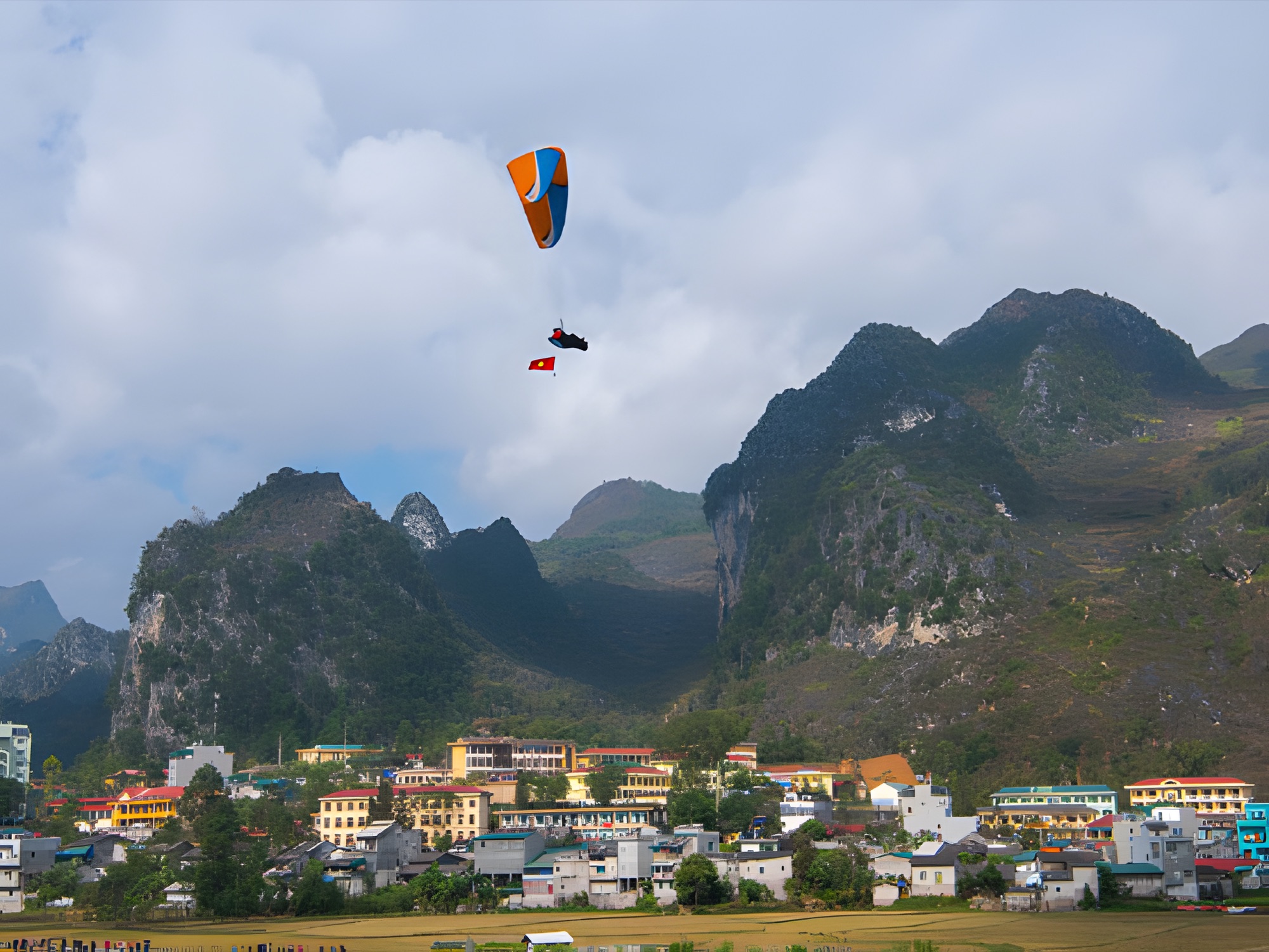
Another view: the plateau from a paraglider
From the flag tower you see the plateau from a mountaintop; seeing it from under a paraglider wing is something else entirely. In Đồng Văn you can fly tandem paragliding (paragliding only, no paramotor): the wing soars over the old quarter and the Đồng Văn Karst Plateau UNESCO Global Geopark — the Rocky Plateau — and lands right in town. There are no fixed daily slots; the team schedules each group in advance according to the wind, so get in touch early. Details in our article on the Đồng Văn paragliding site.
If you'd rather fly on a daily schedule, the Quản Bạ flying site at about Km45 — the first stage of the Loop — is open 06:30–18:30 for both paragliding and paramotor. No experience needed, and children from 3 years old can fly; book online with no deposit and pay at the site on the day of your flight.
Frequently asked questions
How far is Lũng Cú from Đồng Văn, and how long does it take?
About 24–25 km each way, roughly 45 minutes to an hour. Allowing time to climb the tower and wander around Lô Lô Chải, plan at least half a day.
Is it hard to climb Lũng Cú Flag Tower?
Not hard, but fairly long: a few hundred stone steps from the foot of the mountain, then a narrow spiral staircase inside the tower. Take it slowly and rest a few times; older people and children usually make it up fine as long as they don't rush.
Do I need any documents to visit Lũng Cú?
Bring your ID card or passport, as this is a border area. Foreign visitors should ask their homestay or easy rider in advance about procedures for the border zone.
Can I stay overnight at Lũng Cú?
Yes. Lô Lô Chải and the villages around the foot of the mountain have plenty of homestays, mostly traditional rammed-earth houses with family meals. If you need more comfort, head back to Đồng Văn.
Can I go paragliding at Lũng Cú?
No. The team doesn't fly at Lũng Cú. The nearest options are tandem paragliding in Đồng Văn (booked in advance according to the wind) or daily flights at Quản Bạ, on the first stage of the Loop.
Book a flight: book online — no deposit, free rescheduling in bad weather
Hotline / Zalo / WhatsApp: +84 964 073 555
Read more: The Hà Giang Loop stage by stage · Flying weather forecast · The Hmong King's Palace, Sà Phìn
Detour from Đồng Văn Old Quarter · Back on the Loop: Mã Pí Lèng Pass