Hà Giang market days on the Loop: which market, which day
Market days along the Hà Giang Loop: Đồng Văn and Mèo Vạc every Sunday morning, Sà Phìn and Phố Cáo rolling markets every 6 days, the Khâu Vai love market on the 27th day of the 3rd lunar month. What to buy and eat, photo etiquette and how to plan the Loop with a paragliding flight.
Ms. Judy · · 17 min read
On the Hà Giang Loop, the Đồng Văn and Mèo Vạc markets are held every Sunday morning, Sà Phìn and Phố Cáo are "rolling markets" held every 6 days, and the Khâu Vai love market takes place only once a year, on the 27th day of the 3rd lunar month.
Market day is when Hmong, Dao, Tày, Lô Lô, Giáy and other peoples come down from their villages to buy and sell, meet up, drink corn wine and catch up on news. For travellers on the Loop, a morning at a highland market is often the most vivid memory of the whole trip. This guide covers which market runs on which day, what is sold, how to behave, and how to plan your Loop around a market day, including if you want to go paragliding in Quản Bạ. A quick note on names: since 1 July 2025, Hà Giang province has been merged into Tuyên Quang province and the old districts were abolished, but travellers and locals still say "Hà Giang", "Đồng Văn" and "Mèo Vạc" as before.
How is a highland market different from an ordinary market?
Highland markets are not held every day but on "market days". It is the day when people from remote villages, some walking for hours or riding a motorbike while it is still dark, come down to sell produce and livestock, buy tools and fabric, and see relatives and friends. For many families, market day is both business and a chance to wear their best clothes of the week.
Keep reading
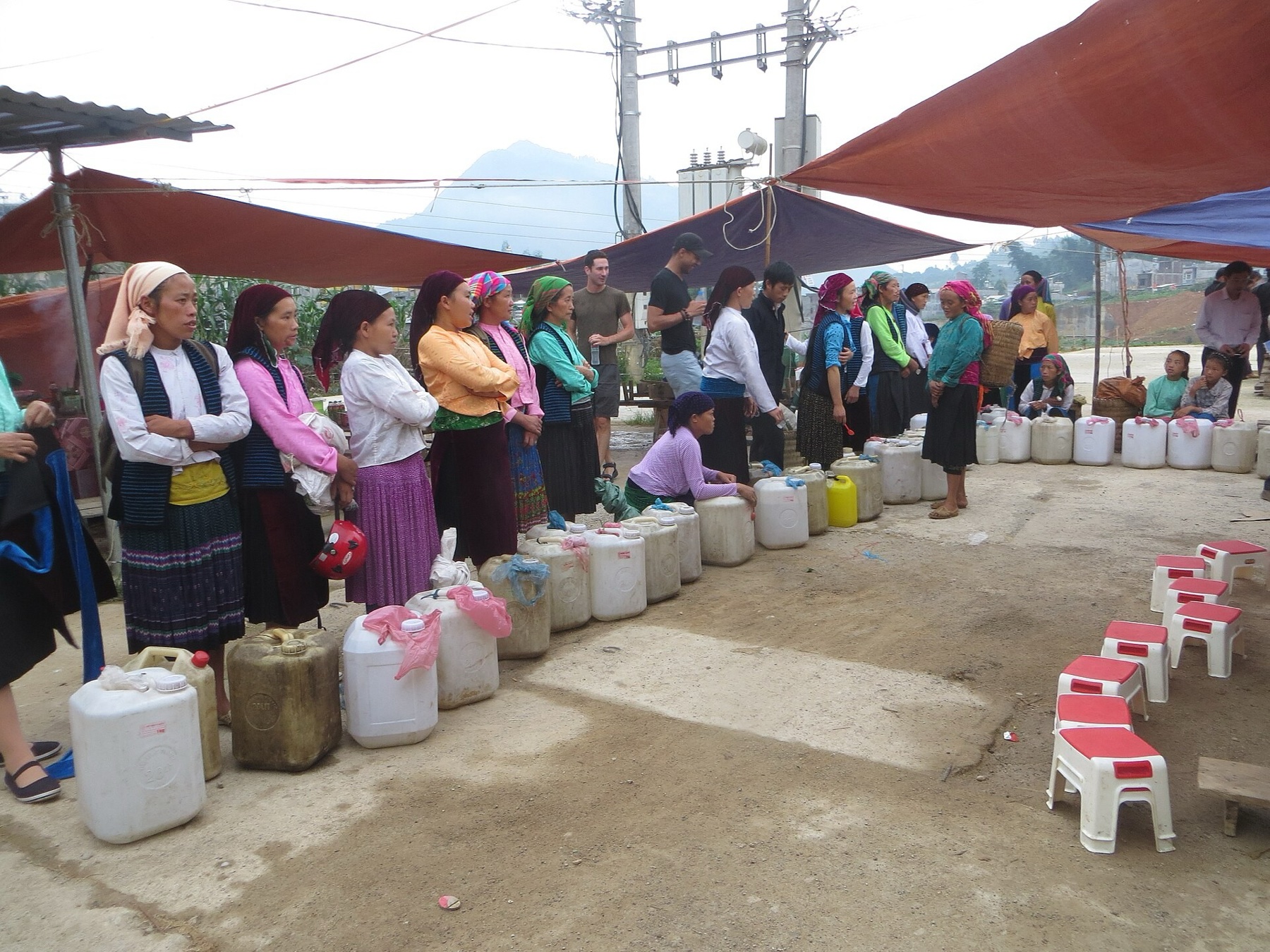
Hmong women standing beside a long row of corn wine containers under a tarpaulin at a highland market in Hà Giang — Photo: Nghia Bui – Zonitrip, CC BY-SA 4.0, Wikimedia Commons
There are two kinds of schedule to tell apart:
Sunday markets (solar calendar): the big central markets such as Đồng Văn and Mèo Vạc are held every Sunday morning. These are the easiest to plan around.
Rolling markets (zodiac days, lunar calendar): held every 6 days, for example on a Rat day and then on a Horse day. Because a week has 7 days, each market falls one weekday earlier than the week before (Sunday → Saturday → Friday…), which is why locals call it a "chợ lùi", a market that steps back. Sà Phìn and Phố Cáo are two well-known rolling markets on the way up to Đồng Văn.
Schedules can change from year to year and from place to place. Always double-check with your guesthouse host or locals a day or two before you go, especially for rolling markets.
Market days along the Hà Giang Loop
Market
Location on the Loop
Market day
Notes
Quản Bạ market (Tam Sơn)
Km45
Usually Sunday morning
Close to the flying site, easy to combine
Yên Minh market
Km100
Usually Sunday morning
Central market, very busy
Phố Cáo market
Between Yên Minh and Đồng Văn
Rolling market, every 6 days
Check the date locally
Sà Phìn market
By QL4C at Sà Phìn, near the Hmong King's Palace
Rolling market, every 6 days
Check the date locally
Đồng Văn market
Km150, old quarter
Every Sunday morning
Busiest around 7:00–10:00
Mèo Vạc market
Km185, centre of Mèo Vạc commune
Every Sunday, from before dawn
Has a livestock area
Khâu Vai love market
Khâu Vai commune, about 20–25 km from Mèo Vạc
Once a year, 27th day of the 3rd lunar month
Now a 2–3-day festival
Other small markets (Lũng Phìn…)
Around Đồng Văn
Usually by zodiac calendar
Check locally
Quản Bạ market: the first market on the Loop
The market is in central Tam Sơn, right on the first stage of the Loop, about 45 km from Hà Giang city. It is a moderate size, and you will see Dao and Hmong people selling vegetables, corn, meat and medicinal herbs. It sees fewer tourists than Đồng Văn, so the atmosphere is very everyday.
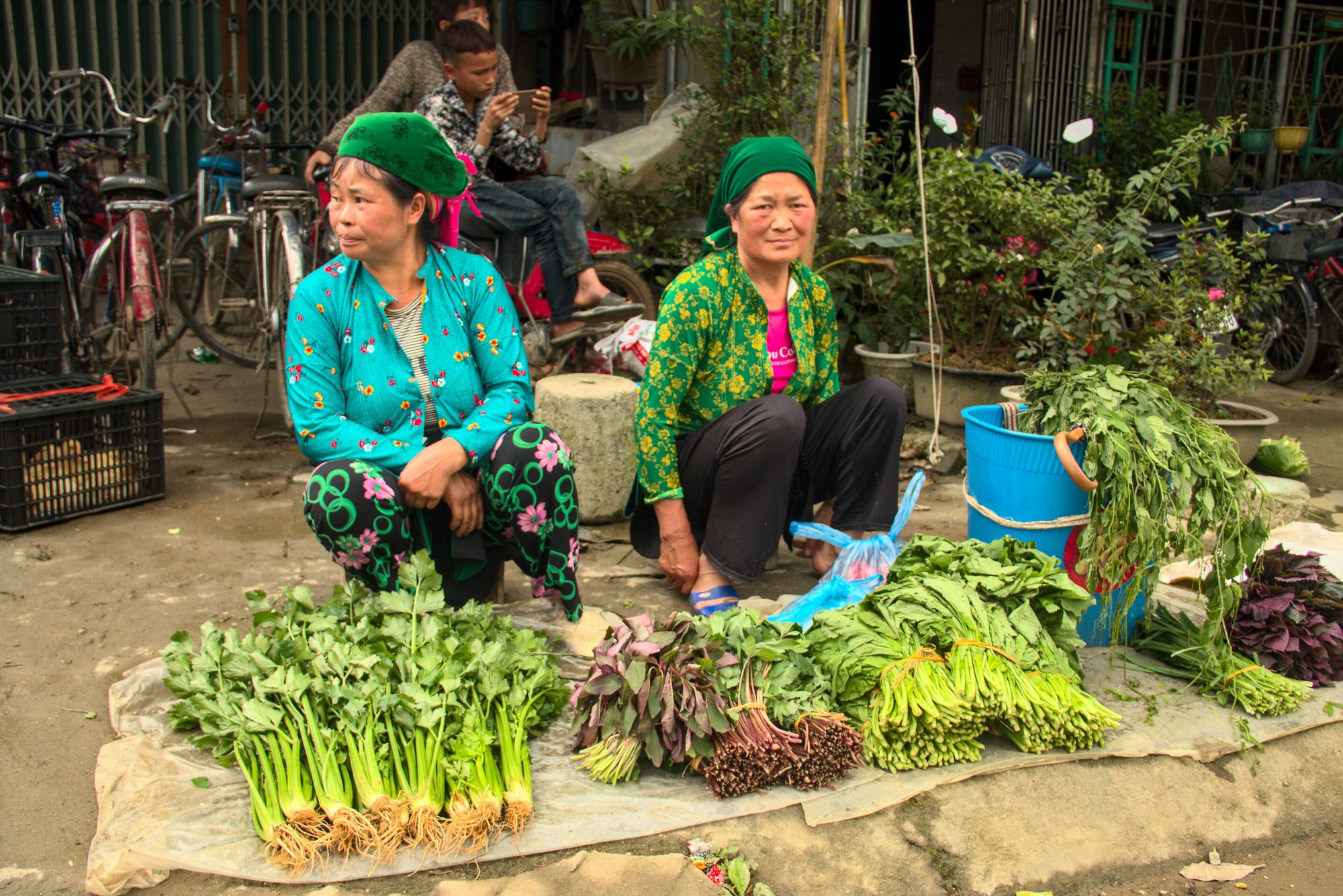
Women selling vegetables at Quyết Tiến market, Hà Giang — Photo: Benjamin Smith, CC BY-SA 4.0, Wikimedia Commons
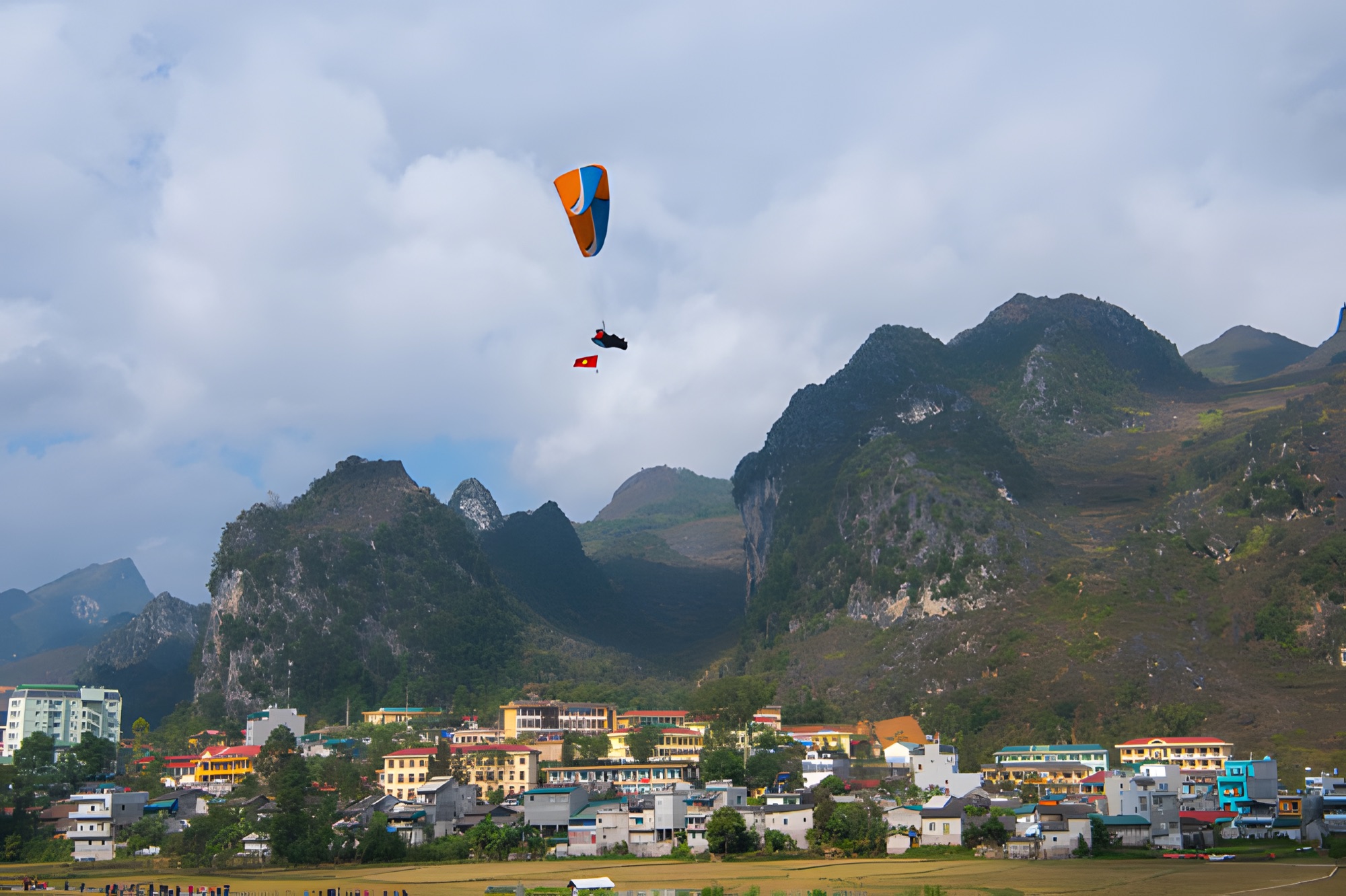
It is the easiest market to combine with a flight: visit the market early, have breakfast there, then go paragliding or paramotoring in the time slot the team confirms. If you are staying overnight in Quản Bạ, see the tips in staying overnight in Quản Bạ and the Quản Bạ stage of the Hà Giang Loop.
Yên Minh market
Yên Minh (around Km100) is the region's central market, with a wide range of goods, from farm produce and clothes to household items. The market is right in the old town centre, handy if you are riding the Yên Minh stage. If you are here on a Sunday morning, an hour at the market still leaves you time to ride on to Đồng Văn and enjoy the passes in daylight.
Đồng Văn market: every Sunday morning
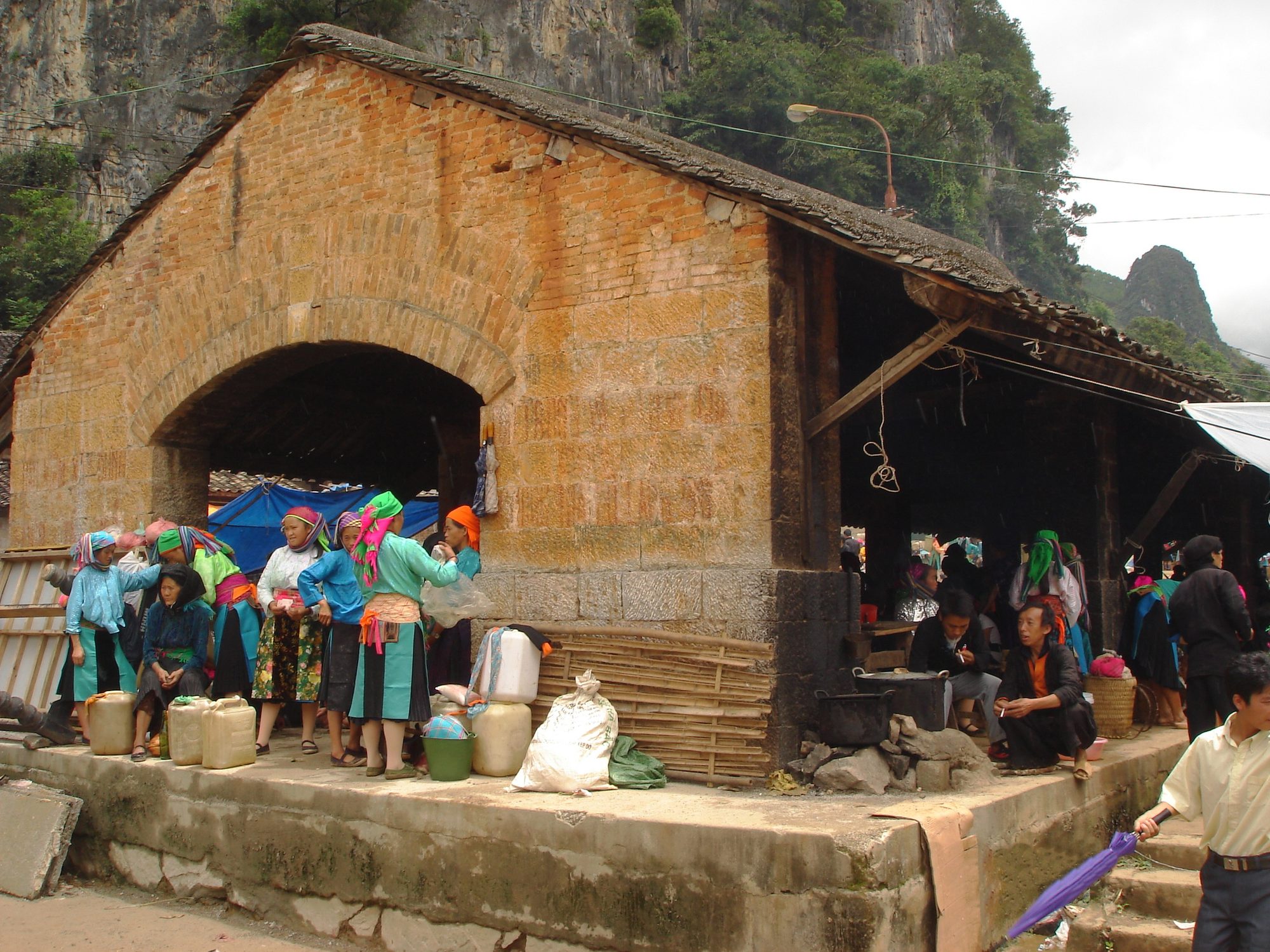
Probably the most famous market on the Loop. It is held every Sunday morning in and around the old market of Đồng Văn old quarter. The U-shaped stone market, with three main buildings of large cut stone and carved column bases, was built by the French in the 1920s with craftsmen from Sichuan. The old quarter runs for about 1 km, with some 40 old rammed-earth houses with yin-yang tiled roofs, built between the late 19th century and the first half of the 20th.
People by the old market hall in Đồng Văn (2009) — Photo: Stephan Klage, CC BY-SA 3.0 de, Wikimedia Commons
Vendors set up from around 5:30, the market is busiest around 7:00–10:00, then winds down in the late morning and early afternoon. Hmong, Lô Lô, Dao and Tày people come with brocade, clothing, poultry, pigs, cattle and medicinal herbs. Food stalls serve thắng cố, lạp xưởng sausage, mèn mén, five-colour sticky rice, black bánh chưng, dried persimmons and smoked buffalo meat. Bring cash.
To catch it, spend Saturday night in Đồng Văn so you can simply walk to the market in the morning; see tips for this stage on the Đồng Văn on the Hà Giang Loop page. For the old quarter in the evening, where to eat and where to have coffee, read Đồng Văn old quarter: night market and Sunday market. One thing to be clear about: Đồng Văn has no regular weekly night market. On some full-moon nights (lunar 14th–16th) there is an "old quarter night" with performances, khèn pipes and food stalls in the old market, but not every month; the buckwheat flower festival season also has evening programmes. Ask your accommodation.
Mèo Vạc market: Sunday, from before dawn
After the Mã Pí Lèng pass comes Mèo Vạc (around Km185). The market is held every Sunday in the centre of Mèo Vạc commune and starts earlier than Đồng Văn: people arrive from 4–5 a.m., it is already busy by about 6:30 and thins out after about 10:00. Most market-goers are Hmong, along with Dao, Lô Lô, Giáy and Kinh people, coming from all over Mèo Vạc, Yên Minh and Đồng Văn.
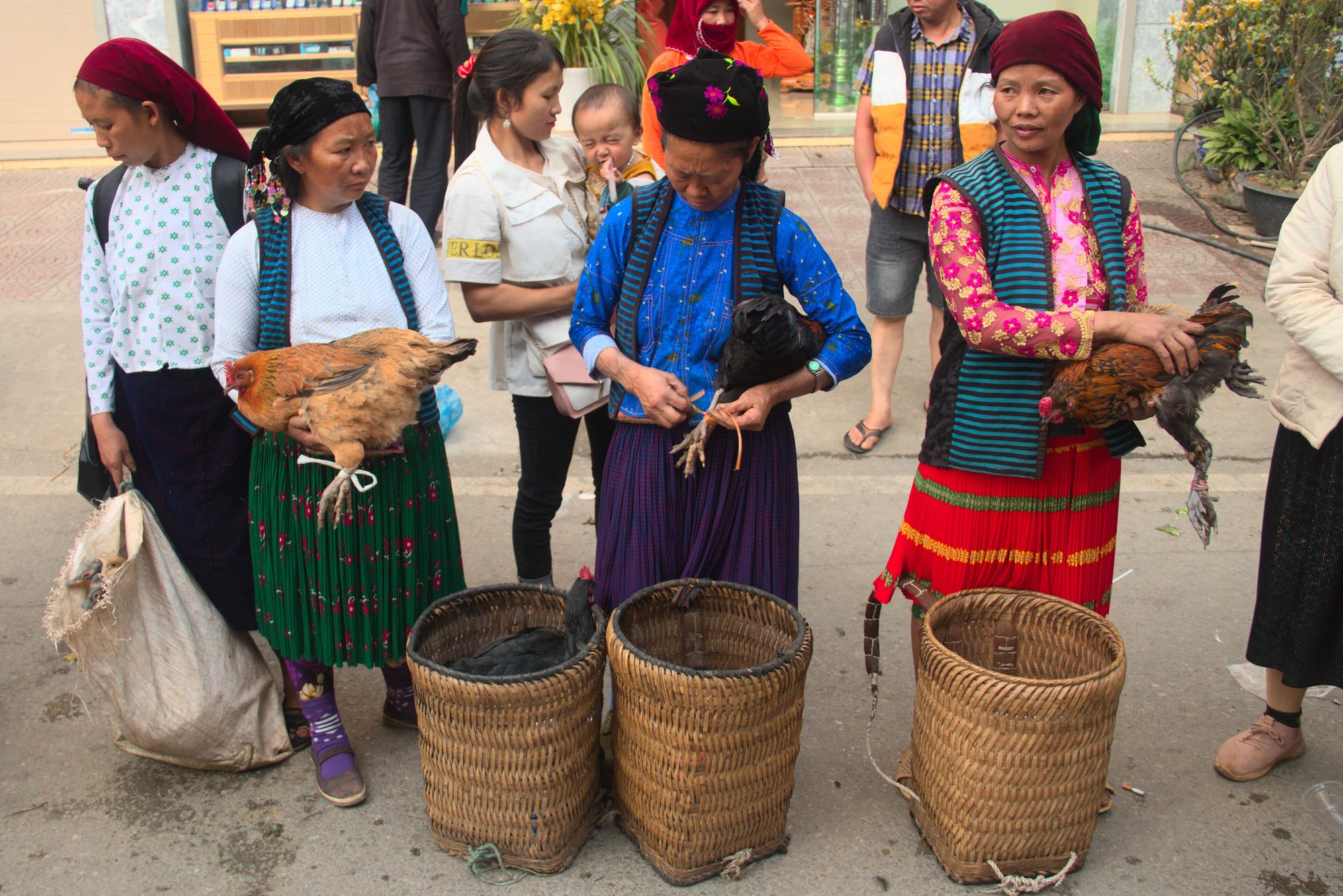
Women with chickens and baskets at Mèo Vạc market — Photo: Benjamin Smith, CC BY-SA 4.0, Wikimedia Commons
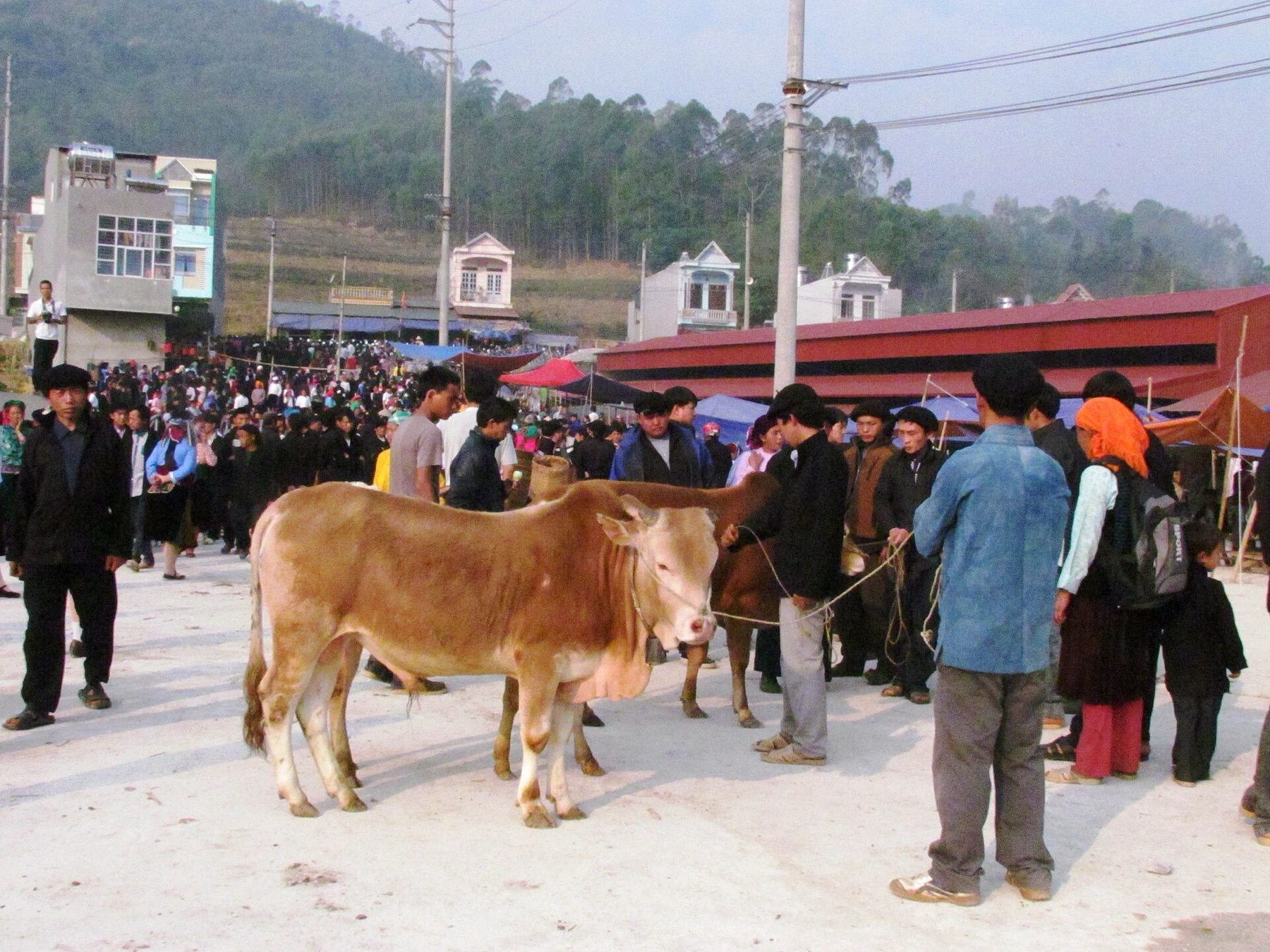
What makes Mèo Vạc special is its livestock area: buffalo, cattle, goats, pigs and chickens; many people carry a piglet under one arm or hold a chicken while waiting for a buyer. There is a row of corn wine stalls run by women, stalls of handmade and machine-made Hmong skirts, tailors, household goods, and food stalls serving thắng cố, mèn mén, cháo ấu tẩu, canh tẩu chúa and five-colour sticky rice. To catch this market, spend Saturday night in Mèo Vạc. More detail in Mèo Vạc Sunday market.
The rolling markets of Sà Phìn and Phố Cáo
On the road from Yên Minh up to Đồng Văn, the two rolling markets you may come across are Phố Cáo and Sà Phìn. Both are held every 6 days, so each week the market falls one weekday earlier. That means there is no fixed day of the week: the surest way is to ask your guesthouse host in Yên Minh or Đồng Văn when the next one is.
Sà Phìn market is held right beside QL4C at Sà Phìn, in the same commune as the Vương family mansion (the Hmong King's Palace). If the market falls on the day you pass, you can visit it in the morning and then the palace; read more in the Hmong King's Palace in Sà Phìn. Rolling markets are usually smaller and see fewer tourists than the Sunday markets, so you get a chance to see a highland market in its truest form: the buyers and sellers are mostly villagers, and the goods are corn, vegetables, chickens, pigs and farm tools.
Khâu Vai love market: once a year
Also in the Mèo Vạc area, about 20–25 km from central Mèo Vạc, is the Khâu Vai love market (Chợ Phong Lưu Khâu Vai). It takes place only once a year, on the 27th day of the 3rd lunar month, and is now organised as a festival lasting 2–3 days. In 2026 it was held on 12–13 May 2026 at the "Stone Maze" ground in Khâu Vai commune. The Khâu Vai love market is recognised as a national intangible cultural heritage (certificate received on 26 April 2022).
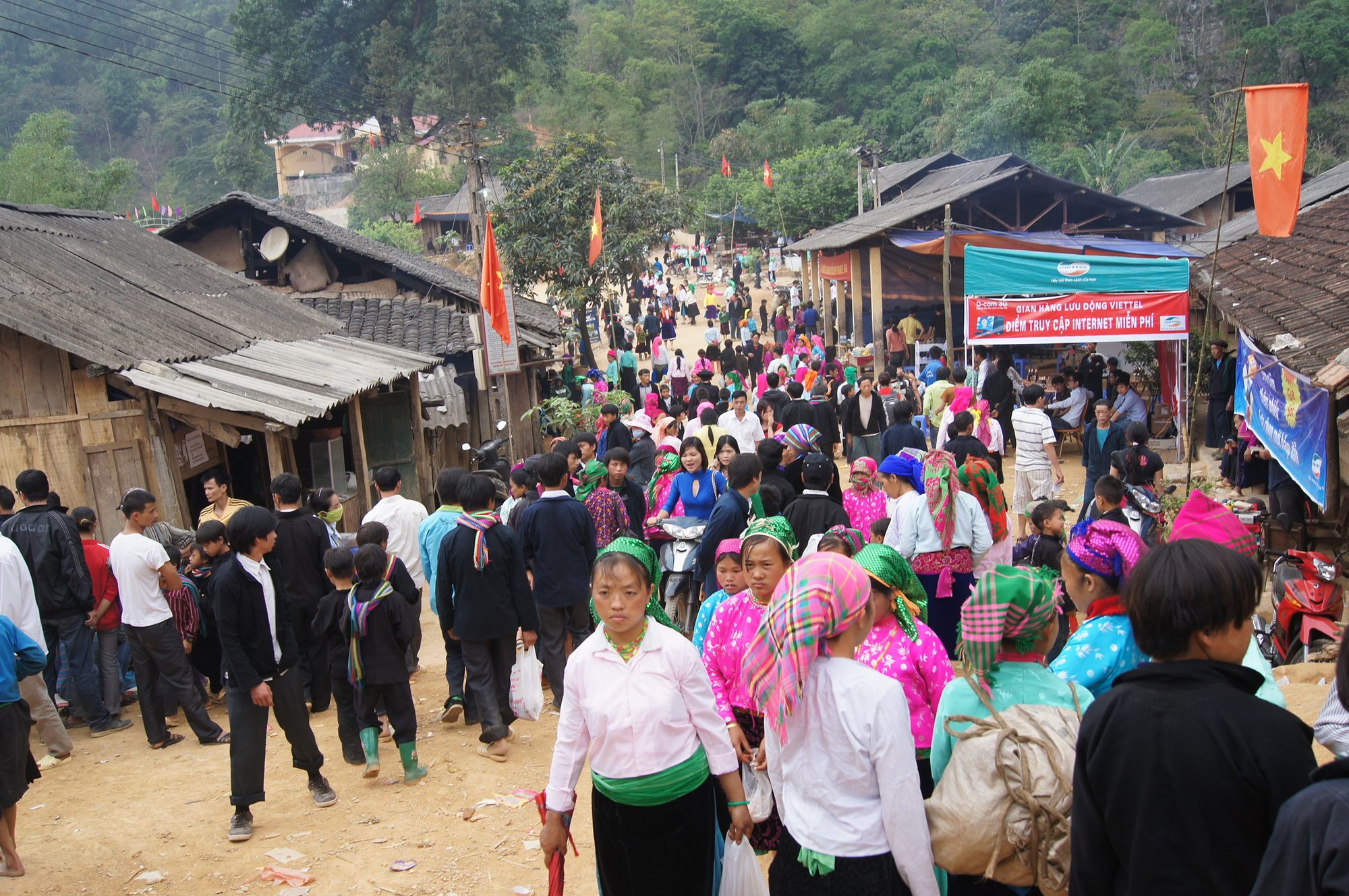
The Khâu Vai love market, Mèo Vạc, in 2011 — Photo: Hoangvantoanajc, CC BY-SA 3.0, Wikimedia Commons
The legend tells of Ba, a poor Nùng young man, and Út, a Giáy girl, who loved each other but were not allowed to marry. They parted on the 27th of the 3rd lunar month and promised to meet here once a year; the two shrines, Miếu Ông and Miếu Bà, still stand. It draws big crowds, so book accommodation in Mèo Vạc early and allow plenty of travel time. The solar date changes every year, so check a lunar calendar when you plan.
What to buy at Hà Giang markets
Highland markets are where locals buy their own everyday things, not souvenir markets, so the goods are very practical. Some things visitors often buy:
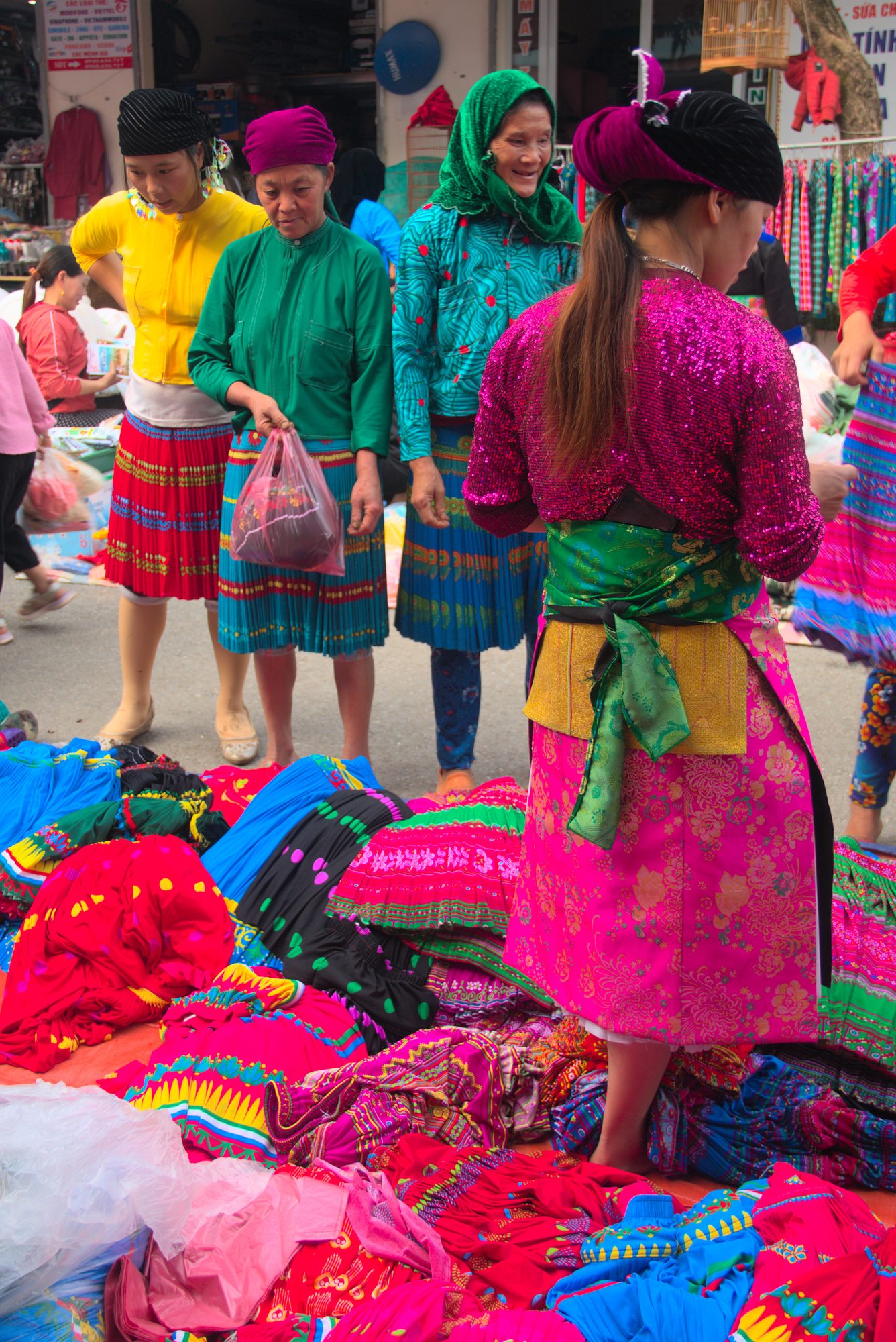
Shoppers choosing clothes at Mèo Vạc market — Photo: Benjamin Smith, CC BY-SA 4.0, Wikimedia Commons
Hemp cloth, scarves, bags and embroidered skirts made by Hmong and Dao people. You will find both handmade and machine-made skirts; handmade ones cost more because they take weeks, sometimes a month, of work.
Mint-flower honey (in season) and shan tuyết tea.
Black cardamom, dổi seeds and other dried spices.
Smoked buffalo meat, lạp xưởng sausage and dried persimmons as gifts; ask how to keep them if you still have a long way to go.
Corn wine: sellers usually let you taste first; if you buy some to take home, choose a small container and wrap it well.
Bargain gently and politely, and do not push prices too low. Many items represent a month's work for the seller. For more local foods worth trying, see Hà Giang specialities to try.
What to eat at the market
Breakfast at the market is part of the experience. The food stalls usually cluster in their own area, with low plastic stools and pots of broth steaming from early on.
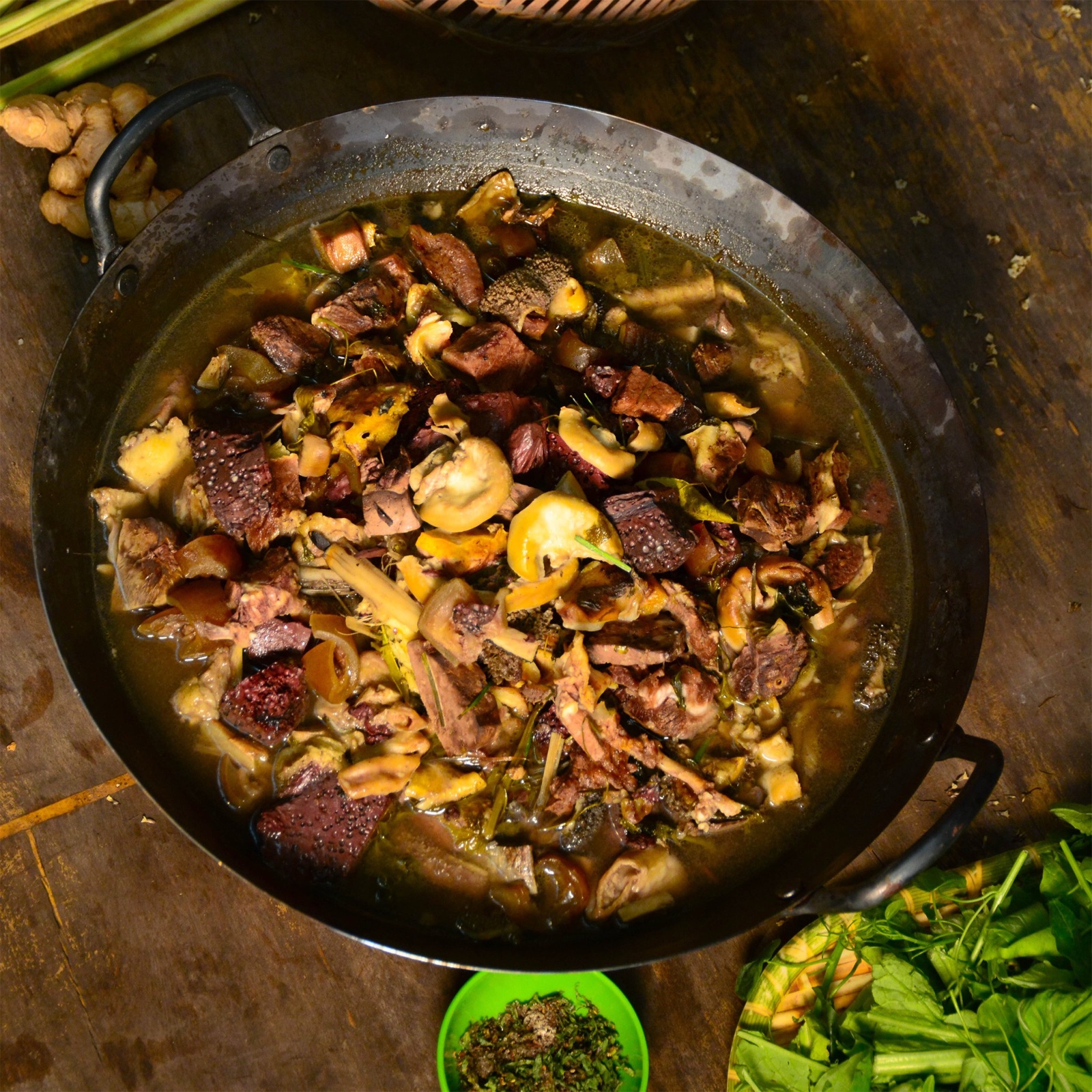
A pan of thắng cố, a familiar dish at market food stalls
Thắng cố: a stew of meat and offal (traditionally horse, also beef), eaten hot, perfect on a cold morning. It is not to everyone's taste, so order a small bowl to try.
Mèn mén: steamed corn flour, the Hmong staple.
Cháo ấu tẩu: a rice porridge cooked with carefully prepared ấu tẩu root, eaten hot, slightly bitter.
Five-colour sticky rice, black bánh chưng, corn cakes and buckwheat cakes for a quick bite or for the road.
Phở and bánh cuốn at the eateries around the market if you want something more familiar.
Etiquette and photography at the market
Highland markets are beautiful and full of colour, so it is easy to get carried away with your camera. Remember that for local people, this is their day of trading and meeting friends.
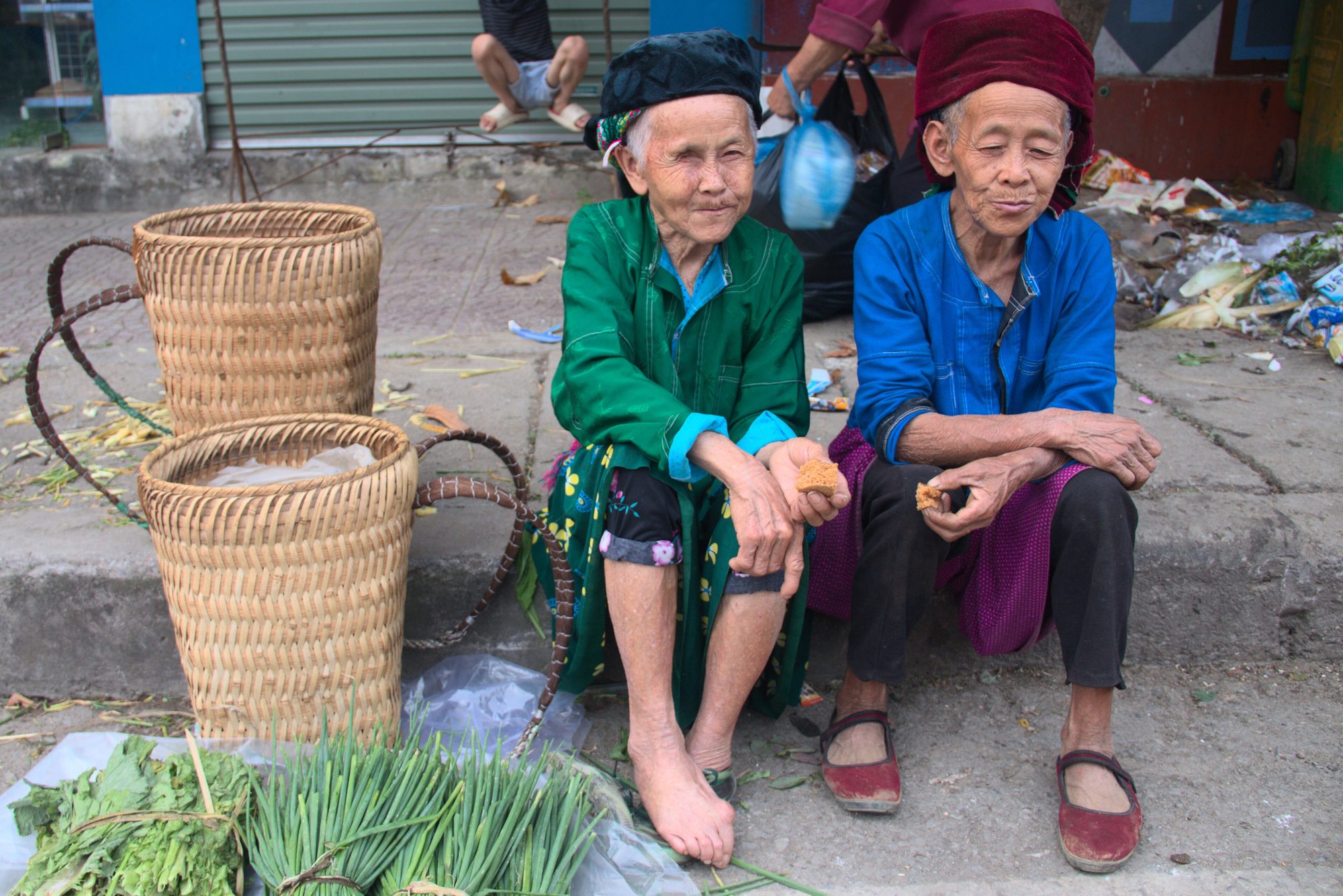
Two elderly women selling greens beside their baskets at Mèo Vạc market — Photo: Benjamin Smith, CC BY-SA 4.0, Wikimedia Commons
Ask before taking photos: point to your camera, and if someone shakes their head, leave it. Take special care with elderly people and children. Do not push your lens into people's faces or follow them to take pictures.
Buy something small from a stall you would like to photograph up close; it is a polite way to start a conversation.
Do not hand out sweets or money to children: if you want to help, buy from the sellers.
Keep your distance in the livestock area: buffalo and cattle can startle; do not stand right behind an animal, and make way for people leading them.
Do not block the way: market lanes are narrow and people carry heavy baskets. Step to the side when you stop.
Drink in moderation: accepting a cup of corn wine when offered is polite, but if you still have mountain roads to ride, decline kindly.
Tips for market days on the Loop
Go early: Đồng Văn market is busiest around 7:00–10:00; Mèo Vạc starts even earlier. By the afternoon most markets have wound down.
Dress warmly: early mornings on the Rocky Plateau are cold, often only 5–15 °C in November–December, and colder still in Đồng Văn. Bring a jacket, and gloves if you are riding a motorbike.
Carry small cash: most sellers do not take bank transfers or cards.
Watch your belongings: markets are crowded, so wear your bag in front.
Park outside the market: leave your bike in a designated spot or in front of your guesthouse and walk in; do not ride into the middle of the market.
No drinking if you are riding: the Mã Pí Lèng pass and the Thẩm Mã slope do not forgive mistakes. If you are not used to mountain passes, consider a motorbike with a driver; see easy rider or riding yourself on the Hà Giang Loop.
Planning the Hà Giang Loop around market day
Since the two biggest markets are both on Sunday morning, the easiest approach is to plan your trip so that you sleep in Đồng Văn or Mèo Vạc on Saturday night. Both markets run on the same morning, so you can only choose one.
Suggested plan (4 days, 3 nights)
Route
Market
Thursday
Hà Giang city → Quản Bạ, paragliding or paramotor in the afternoon, sleep in Quản Bạ
—
Friday
Quản Bạ → Yên Minh → Phố Cáo → Sà Phìn → Đồng Văn
Phố Cáo / Sà Phìn rolling market if it falls that day
Saturday
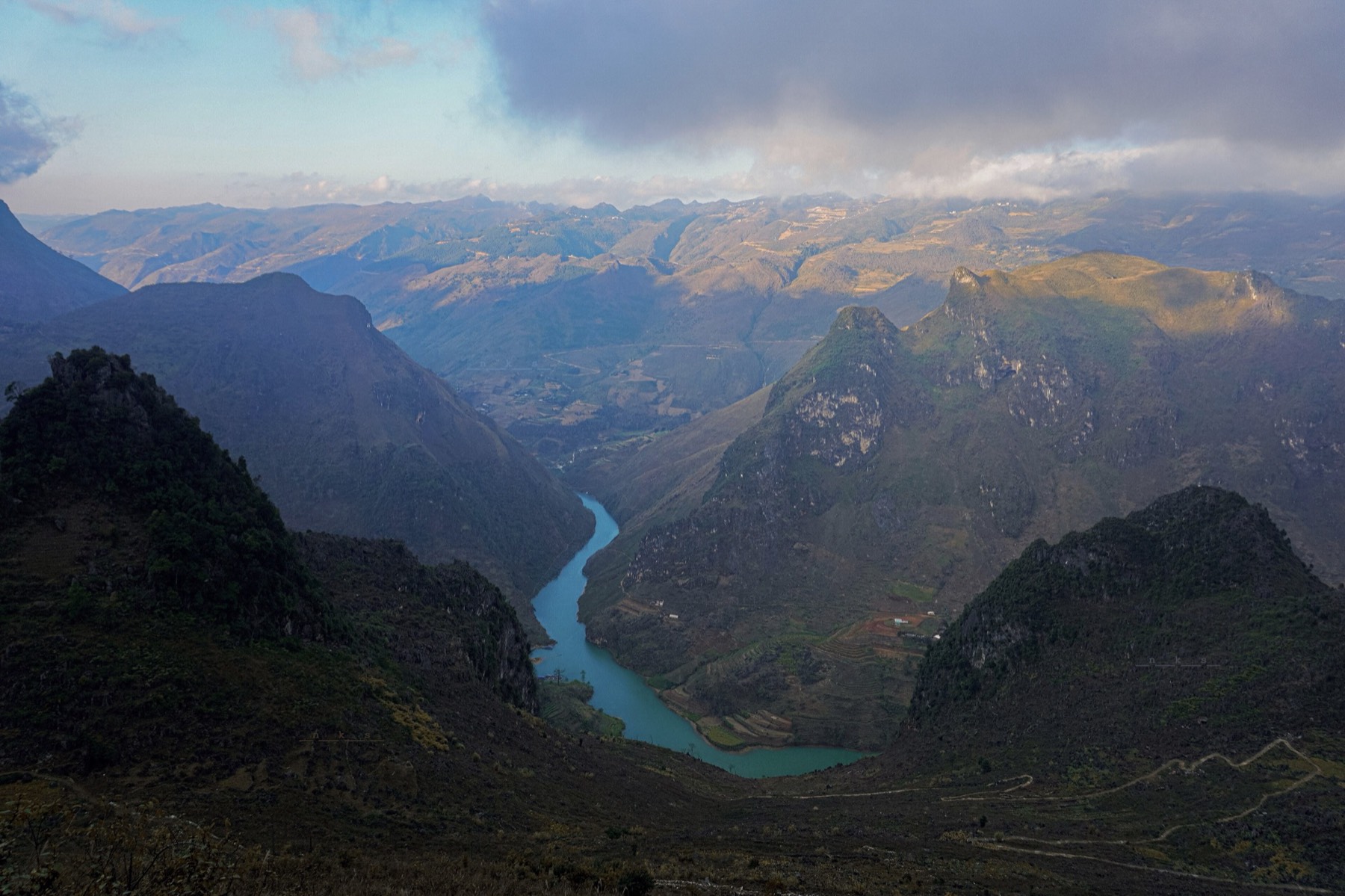
Lũng Cú, Mã Pí Lèng, the Nho Quế river, back to Đồng Văn (or on to Mèo Vạc)
—
Sunday
Đồng Văn (or Mèo Vạc) market in the morning, then ride back
A small tip: arriving in Đồng Văn the day before means you will not have to ride mountain roads in the dark to make it to the market. From October to early December the Rocky Plateau is also in buckwheat flower season; the 12th Buckwheat Flower Festival opened on the evening of 25 October 2026 in Đồng Văn commune, with activities running until the end of December 2026. See more in buckwheat flower season.
Combining a market with paragliding
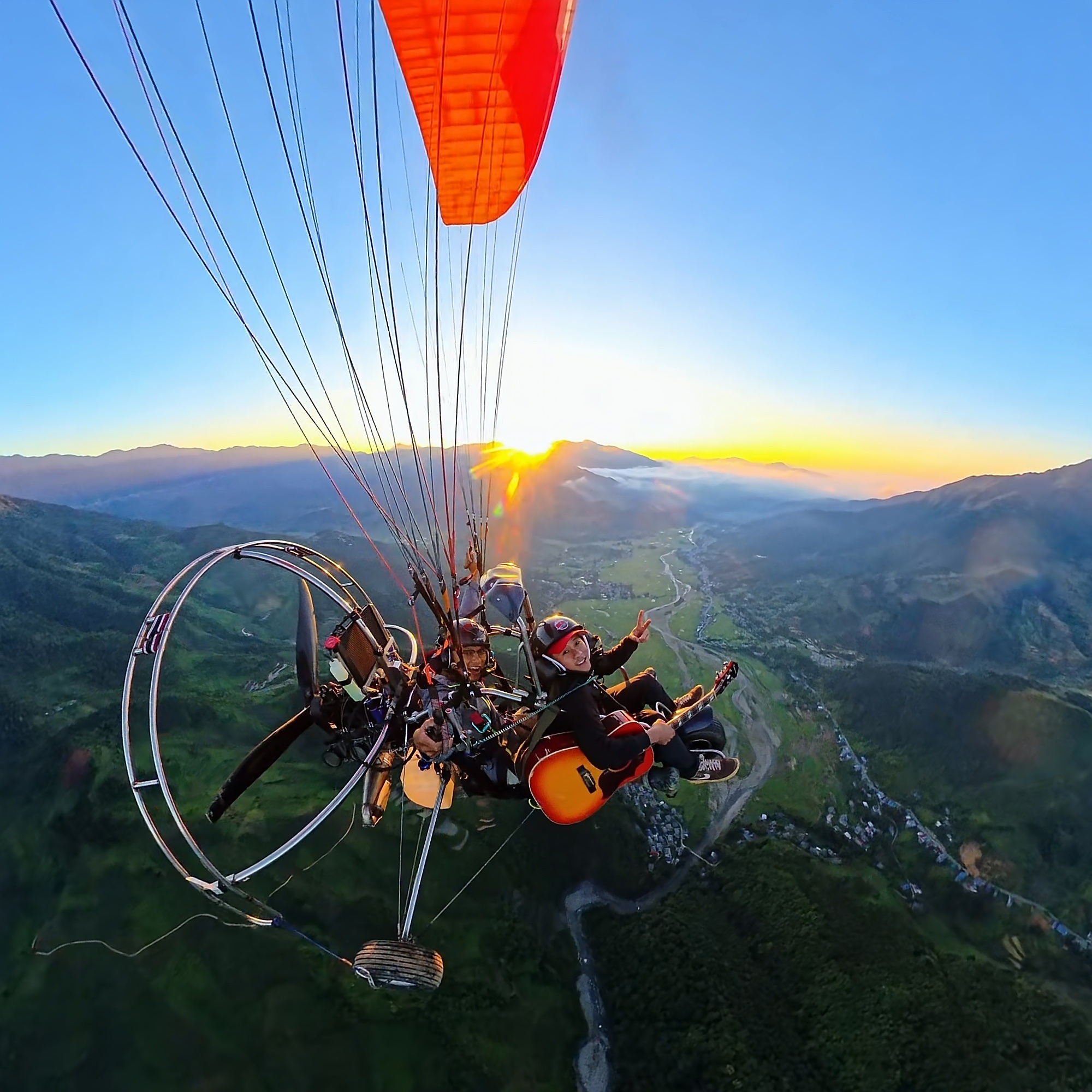
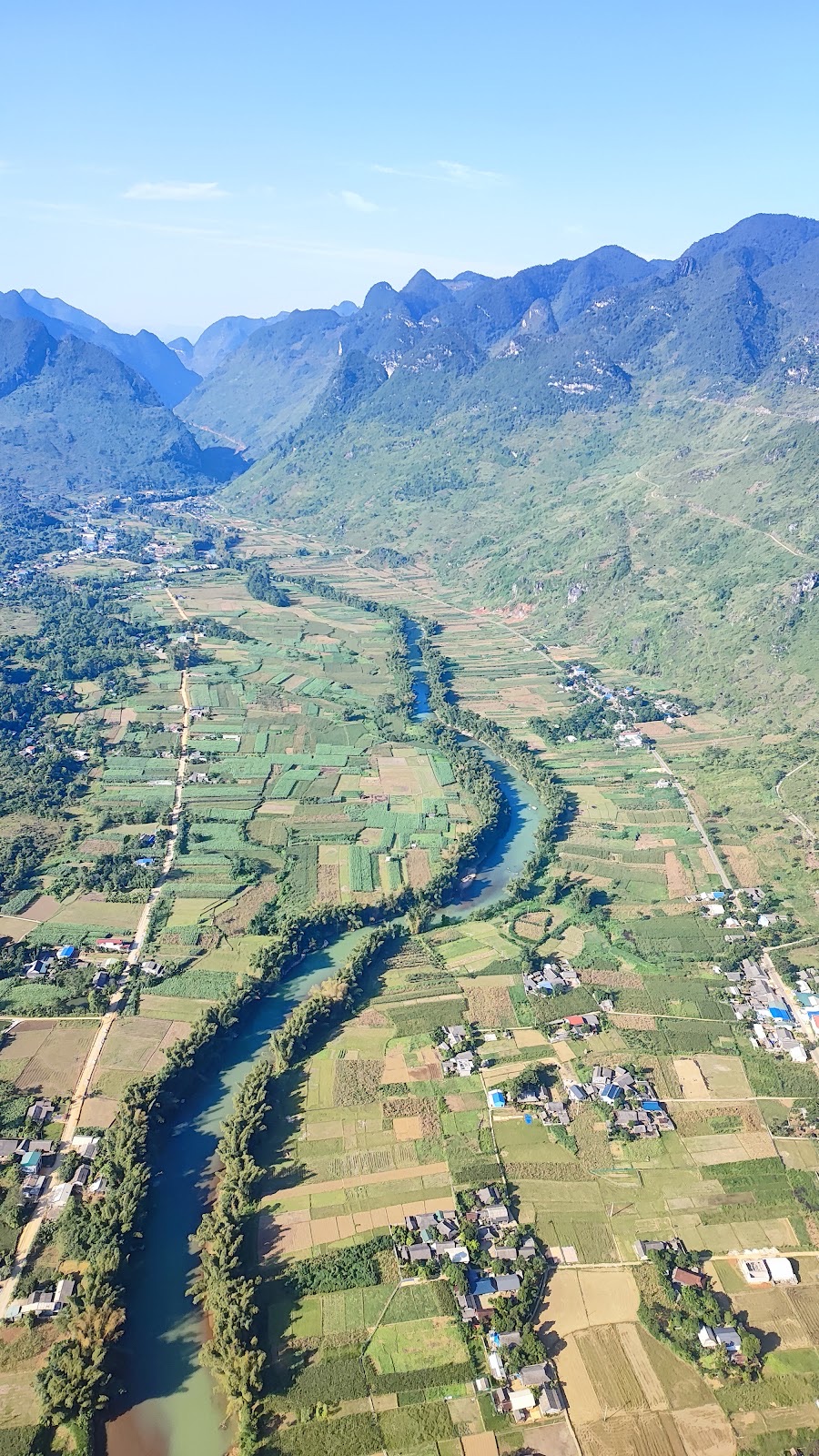
The Mebayluon flying team's main site is in Quản Bạ (Km45), open daily 06:30–18:30. The three easiest ways to combine them:
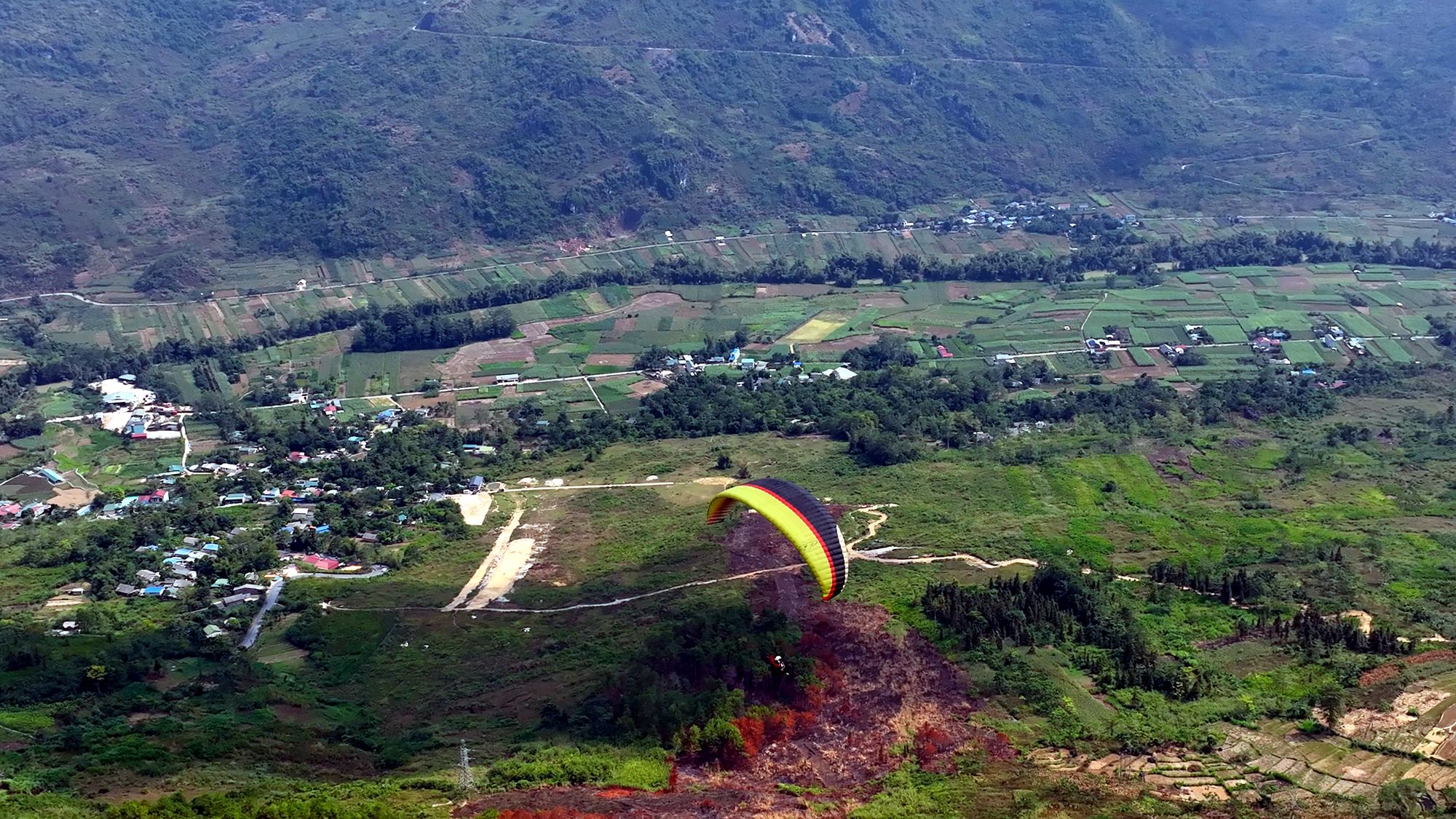
Quản Bạ market, then fly: visit Tam Sơn market on Sunday morning, then paraglide around noon or in the afternoon (2,290,000 VND per guest, ≈ US$ 91, 9–15 minutes depending on the wind) or go paramotoring (2,490,000 VND per guest, ≈ US$ 99, 15 minutes). Free pick-up and drop-off within the Quản Bạ area.
Fly first, Đồng Văn market later: fly in Quản Bạ on Thursday, Friday or Saturday, then ride on to Đồng Văn and stay Saturday night for the Sunday morning market. This is the most popular plan.
Fly right over Đồng Văn: in Đồng Văn there are tandem paragliding flights over the old quarter and the Rocky Plateau, with no paramotor and no fixed time slots; flights are scheduled in advance for each group according to the wind, so get in touch early. See paragliding in Đồng Văn.
No experience is needed, and children from 3 years old can fly with a pilot. Online booking requires no deposit; you pay at the flying site before your flight. Before your flight day, check the hourly forecast on the flying weather page; the team only flies when wind and visibility are safe, confirms the time on the morning of the flight, and reschedules for free if the weather does not allow it.
Frequently asked questions
What day is Đồng Văn market held?
Đồng Văn market is held every Sunday morning (solar calendar), in and around the old market. Vendors set up from around 5:30, and it is busiest around 7:00–10:00.
Can I visit Mèo Vạc and Đồng Văn markets on the same day?
It is hard, because both are held on Sunday morning and are busiest at the same time. Choose one: go to the market wherever you sleep on Saturday night.
What is a rolling market, and how do I find out when it is?
It is a market held by the lunar calendar every 6 days on a zodiac day, so each week it falls one weekday earlier. Sà Phìn and Phố Cáo are two rolling markets on the way to Đồng Văn. The surest way is to ask your guesthouse host a day or two ahead.
When is the Khâu Vai love market?
Once a year, on the 27th day of the 3rd lunar month, now a 2–3-day festival. In 2026 it was held on 12–13 May. It gets very crowded, so book accommodation early.
Can I visit a market and go paragliding on the same day?
Yes, if you are in Quản Bạ on a Sunday morning: visit Tam Sơn market in the morning, then fly in a time slot that suits the day's wind. For Đồng Văn market, it is easier to fly in Quản Bạ a day or two before and then ride up.
Cover photo: Zennysmile / Wikimedia Commons, CC BY-SA 4.0
Book a flight:book online — no deposit, free cancellation
Christmas and New Year (24/12/2026 – 1/1/2027) is peak time on the Hà Giang Loop. Welcome the year in the air at Quản Bạ with cloud-chasing or sunrise paramotor and sunset paragliding, plus 3- and 4-day plans, group booking, gift ideas, warm clothing and winter road safety tips…
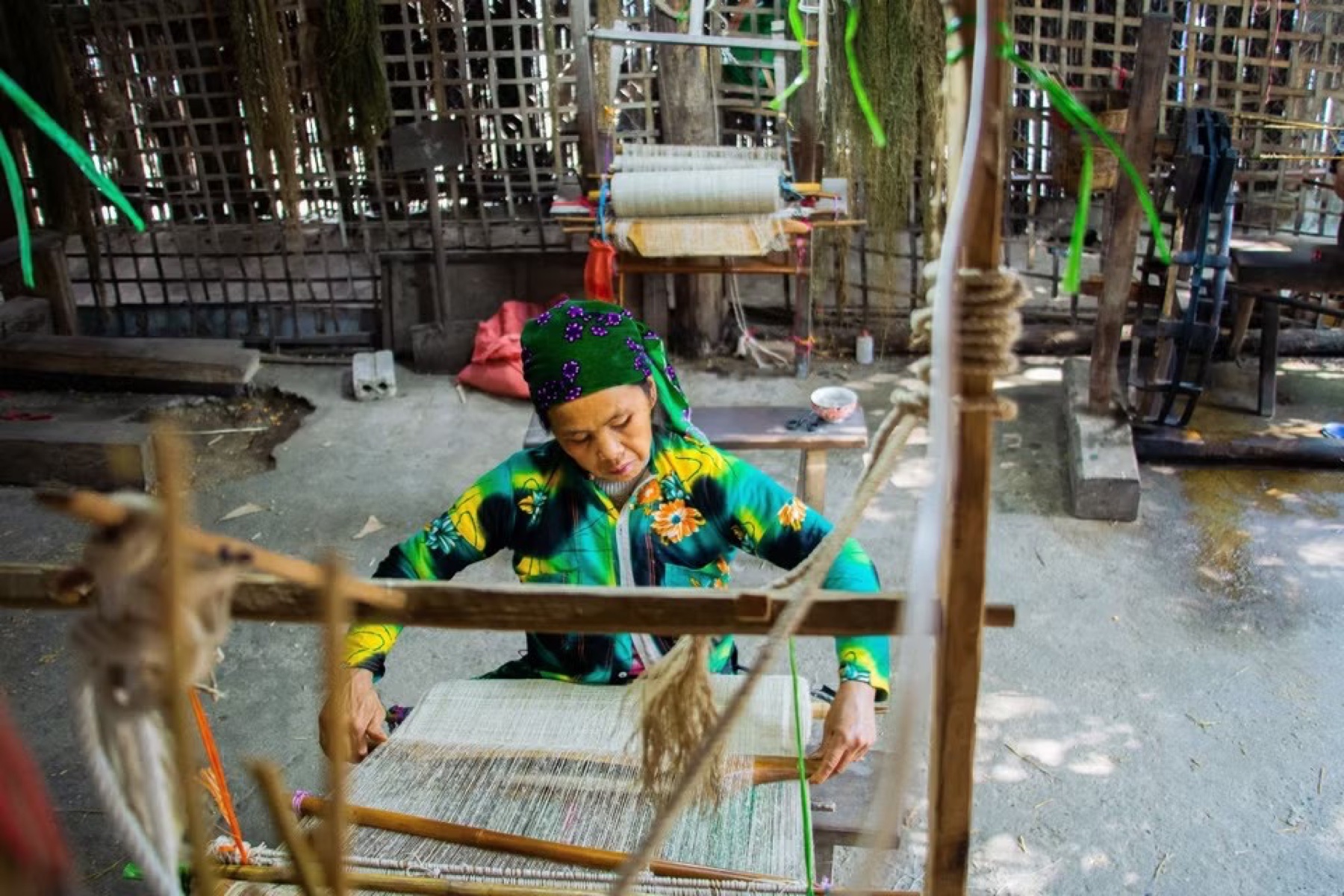
Visit the Lùng Tám linen weaving cooperative in the Quản Bạ valley: watch Hmong women spin linen, weave cloth, draw patterns in beeswax and dye with indigo, then try it yourself — an easy pairing with a paragliding flight…
A day-by-day 4-day, 3-night Hà Giang Loop itinerary: paragliding in Quản Bạ, the new Cán Tỷ – Yên Minh road, the Hmong King's Palace, Lũng Cú, Đồng Văn old quarter, Mã Pí Lèng, a Nho Quế river boat, Mèo Vạc and Du Già, plus Sunday markets and a 3-day version…
Only have 2 days? A realistic Hà Giang Loop plan: fly in Quản Bạ on the first morning, take the new Cán Tỷ – Yên Minh road, spend the night in Đồng Văn, see Mã Pí Lèng at dawn and ride back — plus what to skip and two 3-day options…
Bắc Sum Pass or Quản Bạ? A side-by-side look at the two flying sites on the QL4C near Hà Giang city: distance, landing field, valley width, paragliding and paramotor, a flying morning at Quản Bạ, getting there and fitting the flight into the Hà Giang Loop…
Quản Bạ or Đồng Văn? An honest comparison of our two flying sites on the Hà Giang Loop: location, getting there, scenery, paragliding vs paramotor, what a flying session looks like, wind and schedule, price, and how to fly both…