Pả Vi Hạ village (Mèo Vạc): Hmong homestays below the Mã Pí Lèng pass
A guide to Pả Vi Hạ, the Hmong community-tourism village about 4–6 km from central Mèo Vạc at the foot of the Mã Pí Lèng pass: rammed-earth houses, linen weaving, homestays, food, the turn-off for the Nho Quế boat trip and how to combine it with the Mèo Vạc Sunday market.
Ms. Judy · · 15 min read
Pả Vi Hạ cultural village is a Hmong community-tourism village of homestays right on QL4C at the foot of the Mã Pí Lèng pass, about 4–6 km from central Mèo Vạc; it is the most convenient place to sleep if you want to see the pass, take the Nho Quế boat trip and catch the Mèo Vạc Sunday market.
Many riders only know Pả Vi as a roadside sign on the long descent from the pass into Mèo Vạc, yet it is one of the most talked-about community-tourism villages on the Rocky Plateau: earth-coloured rammed-earth houses, yin-yang tiled roofs, dry-stone walls, and sheer limestone cliffs behind. This guide covers where the village is, what there is to see, where to sleep and eat, and how to combine it with the Nho Quế boat trip and the Mèo Vạc market.
Quick facts
Info
Details (approximate, may change)
Name
Làng văn hoá du lịch cộng đồng dân tộc Mông thôn Pả Vi Hạ (Pả Vi Hạ Hmong community cultural-tourism village); often just Pả Vi or Pa Vi village
Location
Pả Vi Hạ hamlet, now in Mèo Vạc commune, Tuyên Quang province; on QL4C below the Mã Pí Lèng pass
Keep reading
On the Hà Giang Loop
Around Km180, between the top of Mã Pí Lèng (around Km170) and central Mèo Vạc (around Km185)
From central Mèo Vạc
About 4–6 km (sources differ)
Open to visitors since
2019
Time to allow
1–2 hours for a stroll; best of all, stay the night
Riding the Loop in the usual direction, you cross the Mã Pí Lèng pass from the Đồng Văn side and then drop down a long descent into the Mèo Vạc valley; Pả Vi sits at the bottom of that descent, just before the town centre. The top of the pass is about 15 km from central Mèo Vạc, so the main viewpoint is only some 10 km up the road from the village.
Since 1 July 2025 Hà Giang province has been merged into Tuyên Quang province and districts no longer exist; the old Mèo Vạc town together with the former Pả Vi, Giàng Chu Phìn and Tả Lủng communes now form Mèo Vạc commune. Older maps still say "Pả Vi commune, Mèo Vạc district, Hà Giang" — it is the same place.
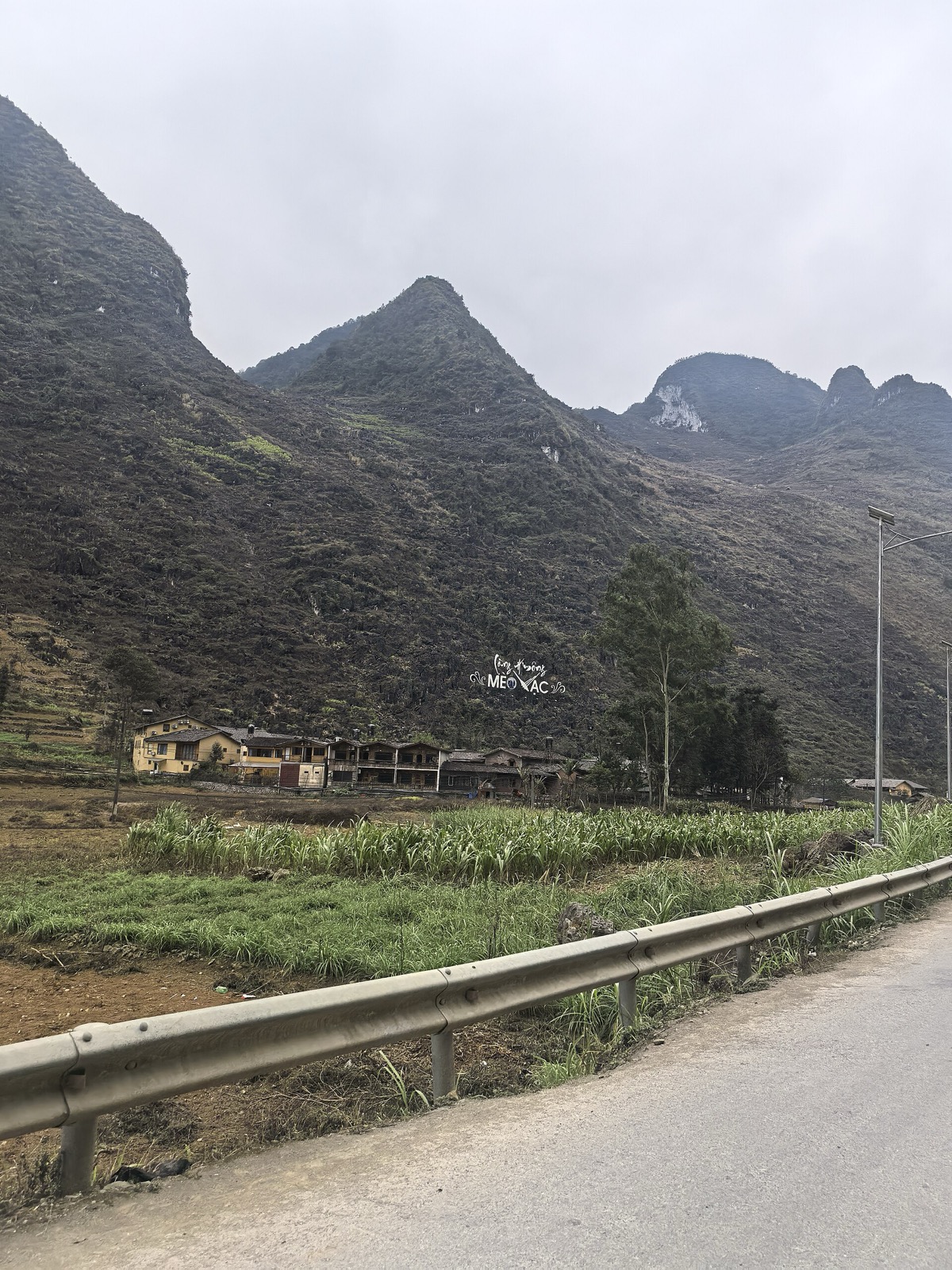
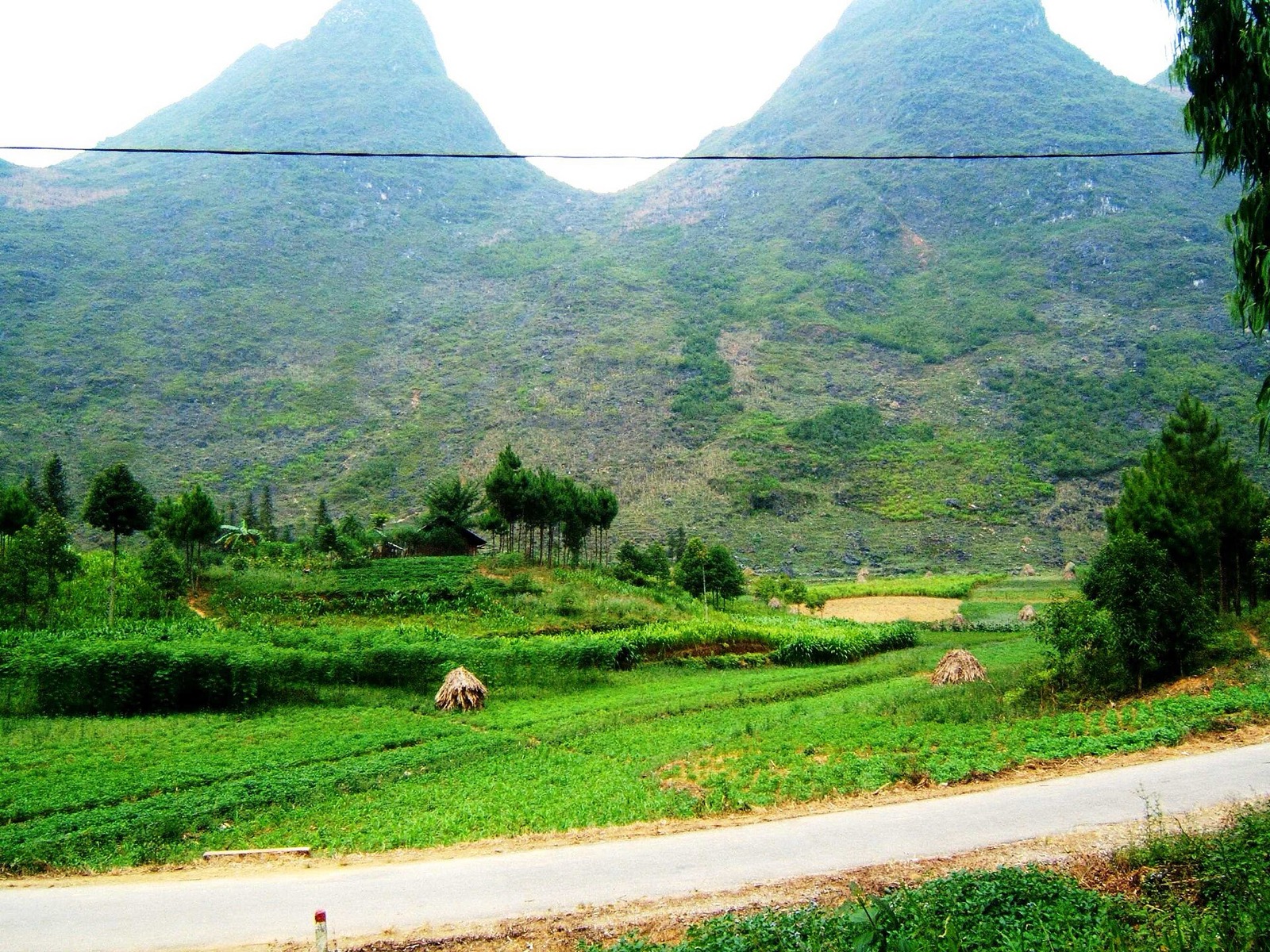
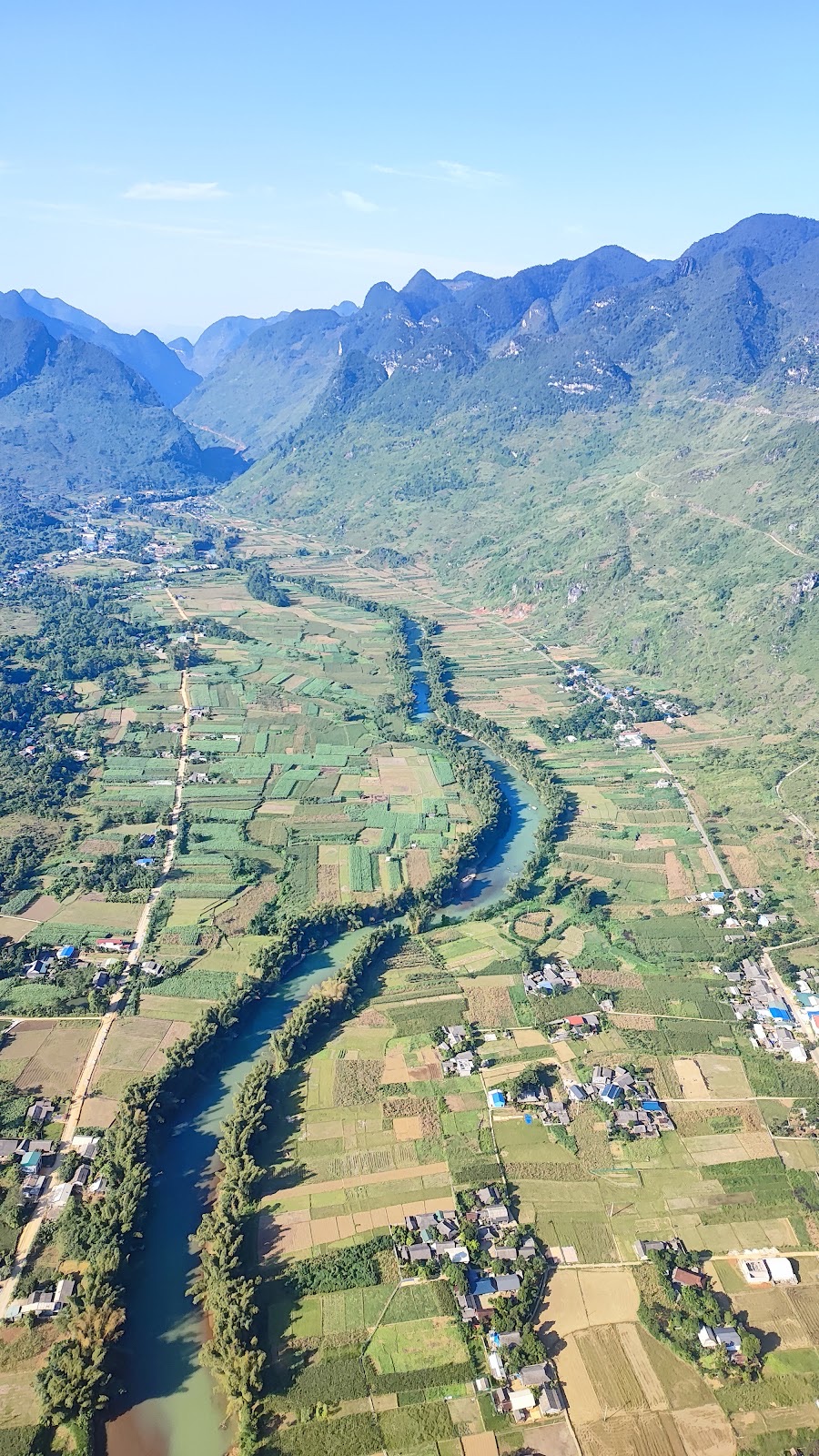
Homestays of Pả Vi Hạ village below the limestone peaks, seen from QL4C — Photo: HuangWending18072009, CC0, Wikimedia Commons
How the village came about
Pả Vi Hạ is not an ancient hamlet but a planned tourism village; according to Báo Văn hoá, about ten years ago the site was still bare land. The project was drawn up in 2016 to preserve and showcase Hmong culture, work started at the end of 2016, families began building their houses in 2017 and the village officially welcomed guests from April 2019. The model: the state built the infrastructure (roads, power, water, shared spaces) and each family built and runs its own homestay.
Newspapers give different figures for the planned area, from over 27,000 m² to over 46,000 m², split into three zones, A, B and C. In 2025 the village was named best community-tourism destination at the Vietnam Tourism Awards 2025. According to local figures quoted by Báo Văn hoá (July 2026), the village received more than 60,000 visits in the first half of 2026 alone, and roughly half of its overnight guests were foreigners. In peak season it gets busy.
A walk around the village: what to see
Rammed-earth houses, yin-yang tiles, stone walls
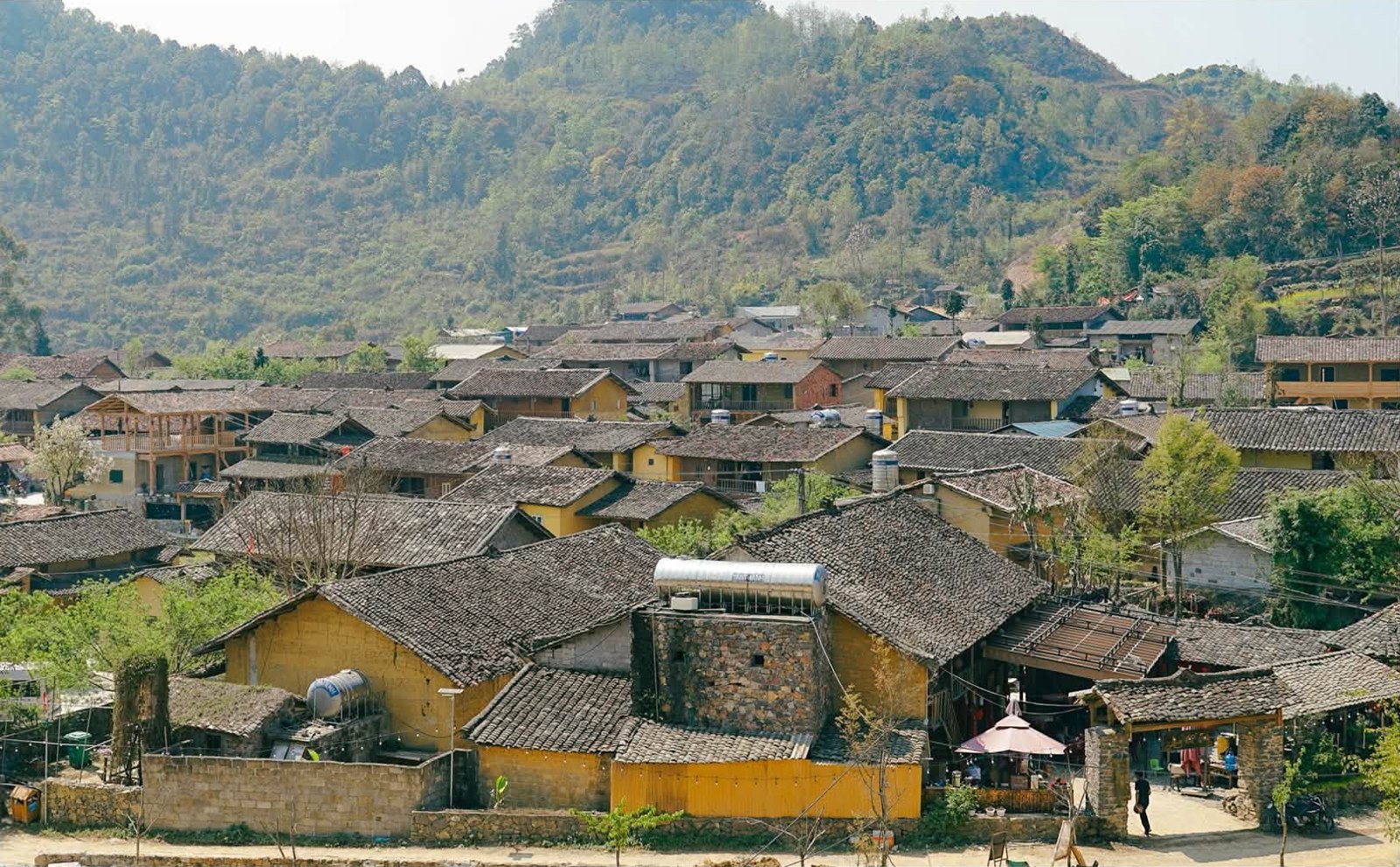
Pả Vi Hạ's signature is traditional Hmong architecture of the Rocky Plateau: thick rammed-earth walls (trình tường), a three-bay house with two side wings, a timber post-and-beam frame and a double layer of yin-yang tiles. Each plot is about 300 m² and enclosed by a dry-stone wall. Inside, the homestays keep the traditional frame but add modern bedrooms and bathrooms.
As you walk, look at the packed-earth walls, the stones stacked without mortar and the roofs stepping over one another — the same kind of house you see in the old villages around Đồng Văn, only newer here and laid out in neater rows.
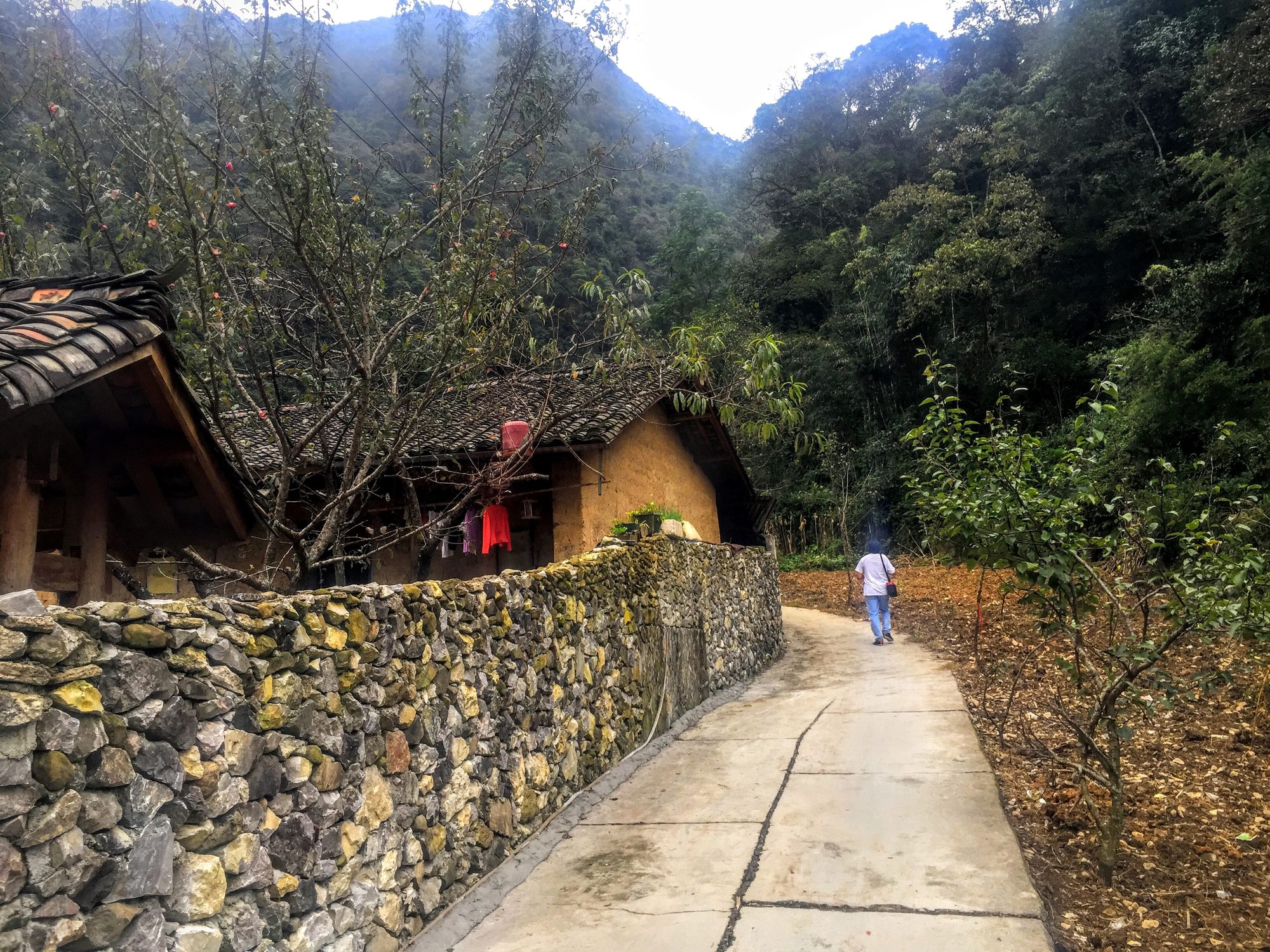
A Hmong rammed-earth house and dry-stone wall in Sủng Là (Đồng Văn) — the style the Pả Vi Hạ homestays are modelled on — Photo: trungydang, CC BY 3.0, Wikimedia Commons
The khèn gate, cultural house and performance ground
The village gate is shaped like a Hmong khèn (bamboo mouth organ), easy to spot from QL4C. Inside there is a community cultural house, an exhibition house built in the traditional style and a hexagonal open space used for performances. During cultural evenings you may hear the khèn, flutes and Hmong folk songs. There is no fixed schedule, so ask your host whether anything is on that night.
Linen weaving, embroidery and crafts
Several press reports mention activities guests can watch or try: stripping flax, weaving linen, brocade embroidery, basket-making, distilling corn wine and making mèn mén. These are everyday tasks rather than a show with set times; if you want to try weaving or put on Hmong clothes, ask your host to arrange it the day before. If you buy textiles, ask which pieces are handmade and which are machine-woven.
Getting there and parking
The village sits right on QL4C: coming from Đồng Văn, once you are over the pass you will see the row of yellow-walled houses beside the road; coming the other way from Du Già, go through central Mèo Vạc and continue about 4–6 km towards the pass. Overnight guests usually park in their homestay's yard — ask when you book. Don't stop on a bend of the highway to photograph the gate: buses and trucks run up and down the pass all day.
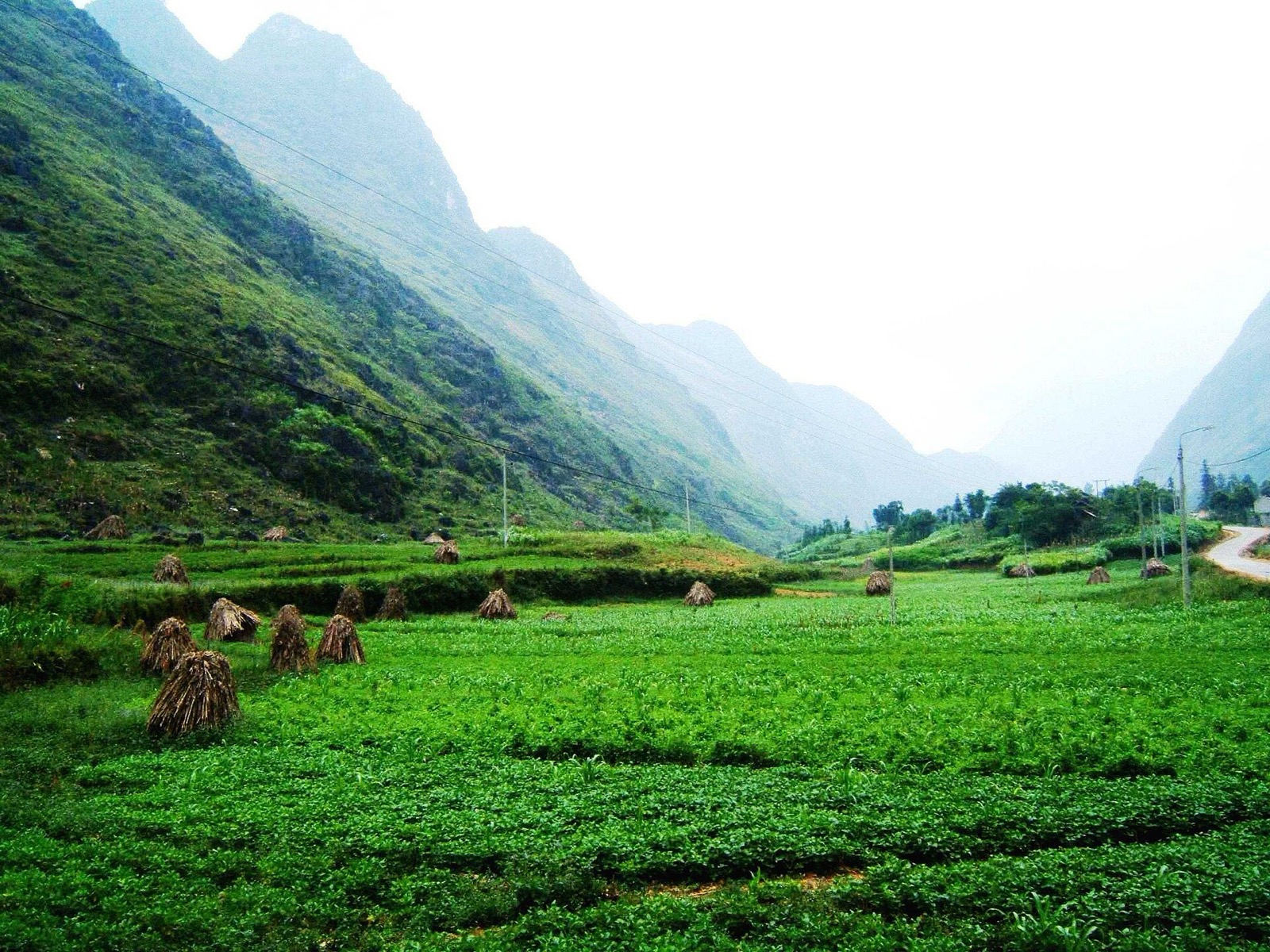
QL4C and the farmed valley at Pả Vi — Photo: BacLuong, CC BY-SA 4.0, Wikimedia Commons
Seeing Mã Pí Lèng from Pả Vi
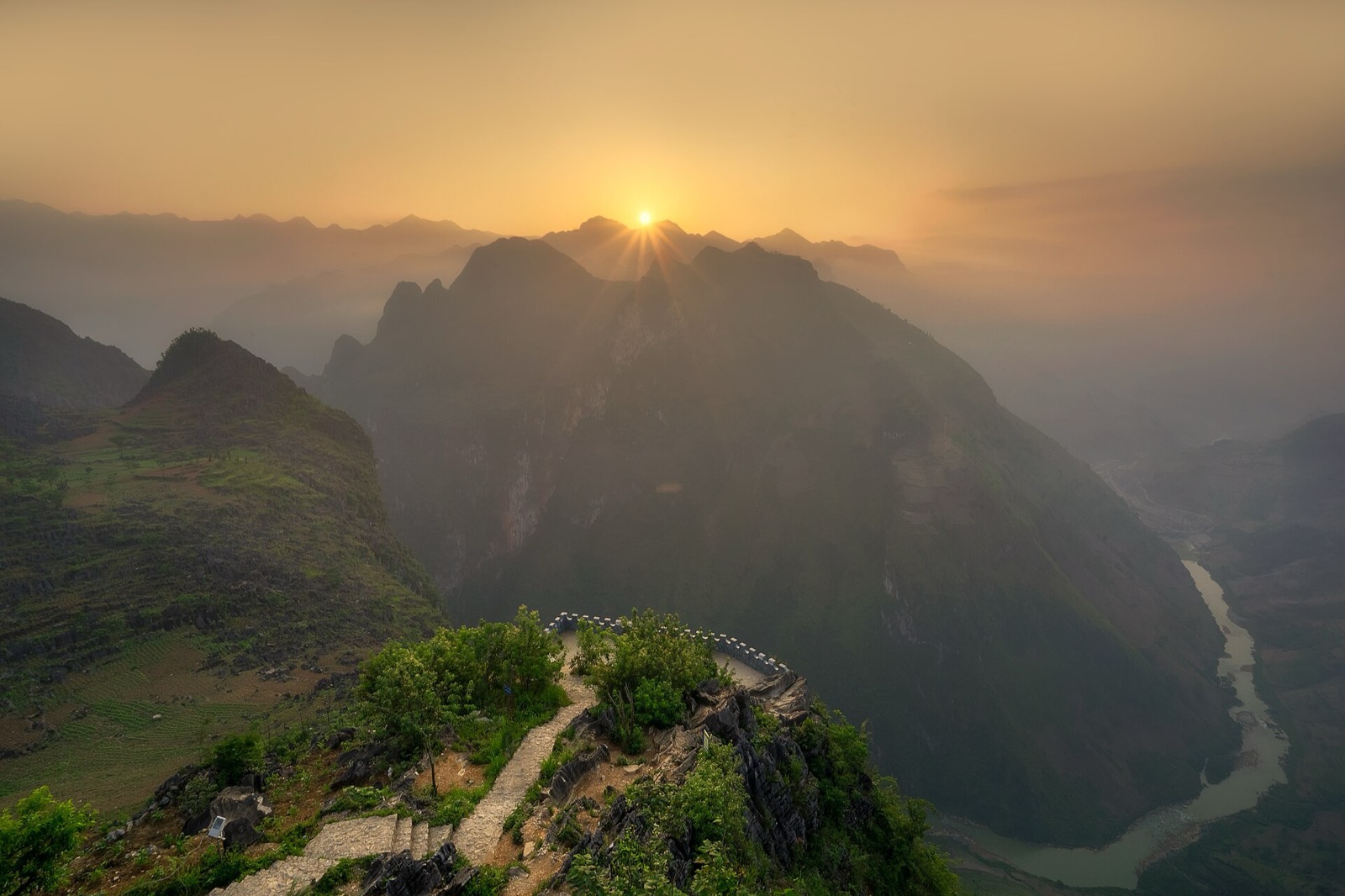
From the village you only see the cliffs above; to look down into the Nho Quế gorge you need to go up the pass. Staying in Pả Vi means you can ride up to the top early in the morning, before the tour buses arrive, and be back for breakfast — only about 10 km each way.
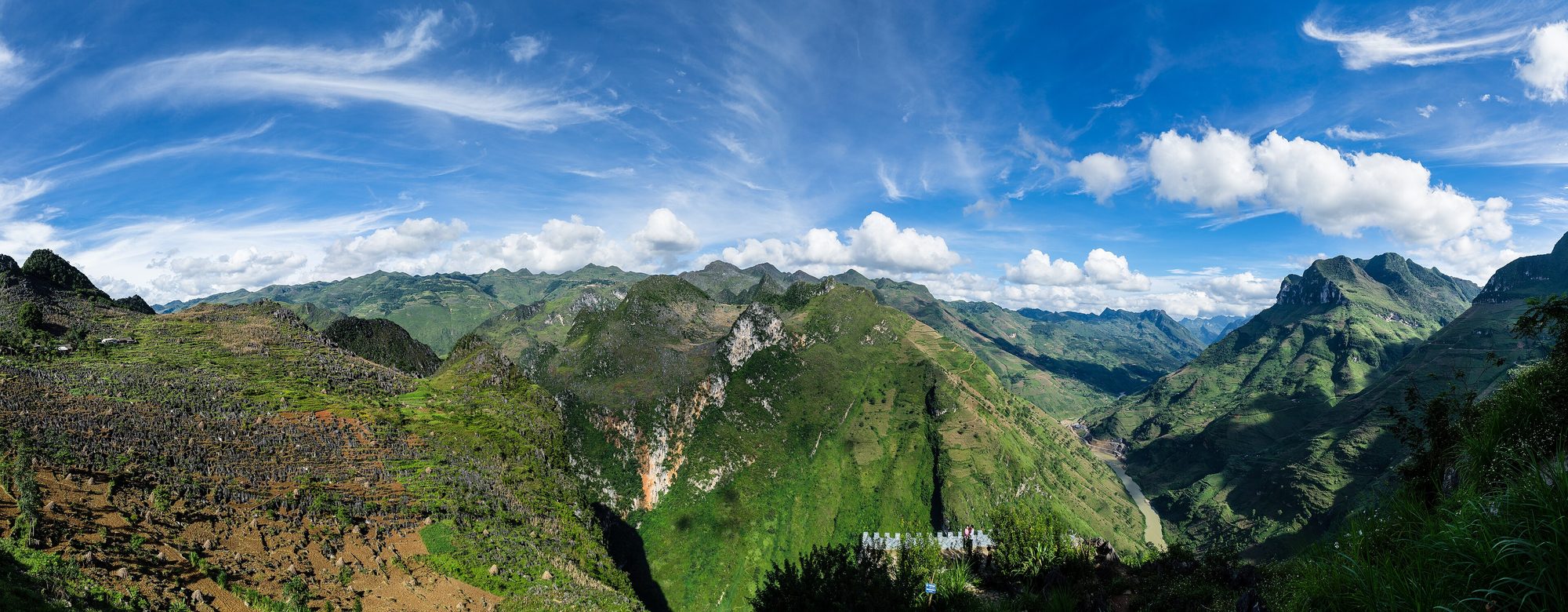
The Mã Pí Lèng pass is about 20 km long and tops out at about 1,200 m. Besides the main viewpoint at the top there is the Sky Path, a free cliff-edge walking trail of about 2–3 hours; it does not go down to the river and is dangerous in rain or fog. See Mã Pí Lèng pass and our Mã Pí Lèng Sky Path guide.
Panorama of the Mã Pí Lèng pass under a blue sky — Photo: minhphuc_99kdd, CC0, Wikimedia Commons
The Nho Quế boat trip: the turn-off at Pả Vi
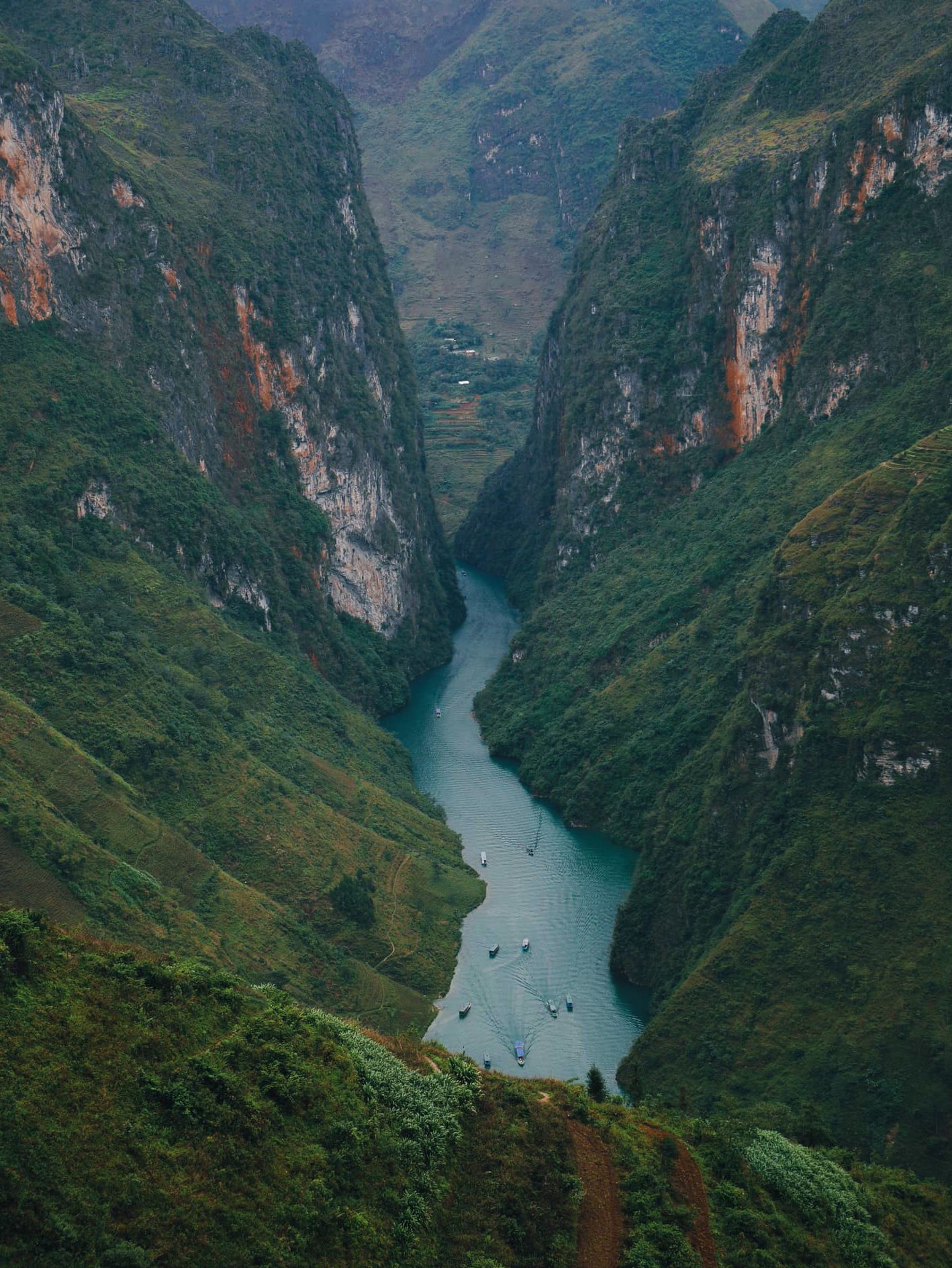
Boats into the Tu Sản canyon now leave from the Mèo Vạc side, and the turn-off is right in the Pả Vi area. Follow QL4C over the whole pass; at Pả Vi turn left onto the road to Xín Cái and head down to Tràng Hương bridge below the Nho Quế 1 hydropower dam. At the bridge there is a ticket office, parking and toilets; cars can't go all the way to the dock, so after buying your ticket you take an electric shuttle about 2–3 km to the dock on the Nho Quế 1 reservoir. If you're not sure where to turn, ask your homestay host.
Ticket: about 150,000 VND (≈ US$ 6) per adult (July 2026 price), insurance included; may change.
Timing: the boat goes about 1–2 km into the canyon, stops for around 15 minutes and returns — about 1 hour in all. Allow 2–3 hours from the Pả Vi turn-off.
The ticket office opens roughly 7:00–18:30; arrive before about 16:00. Life jackets are compulsory.
The Tà Làng dock on the Đồng Văn side was reported closed to visitors (August 2026); old maps may still show that route.
The road from Pả Vi down to Tràng Hương bridge is steep with many bends; if you ride yourself, use a low gear and brake gently. For the full details see Nho Quế boat trip through the Tu Sản canyon and the Nho Quế River page.
Tu Sản canyon with boats on the Nho Quế River, seen from Mã Pí Lèng — Photo: NKSTTSSHNVN, CC BY-SA 4.0, Wikimedia Commons
Sleeping in Pả Vi Hạ: homestays
All the accommodation in the village is in homestays run by local families. According to Báo Văn hoá (July 2026), the village has 29 houses managed by 19 households, with 185 en-suite rooms and 17 dormitory rooms in total, taking up to about 800 guests a day; all of them accept online bookings. The same report gives prices of about 400,000 VND to over 1 million VND (≈ US$ 16–40) per night for a double room and from about 200,000 VND (≈ US$ 8) for a dormitory bed — for reference only.
Buckwheat-flower season (roughly September–November) and holidays: homestays are almost full; book a few days ahead, especially if you want Saturday night so you can go to the Sunday market.
Summer is quieter and rooms are easier to find.
November–December nights on the plateau are often only about 5–15 °C; ask your host about thick blankets and hot water.
If you want more choice of restaurants and ATMs, sleeping in central Mèo Vạc is only 10–15 minutes away by motorbike. See also the Mèo Vạc on the Hà Giang Loop page.
What to eat
The homestays serve meals, and many source their ingredients from neighbours in the village. Menus vary from house to house, so ask when you book. Hmong foods the press mentions in Pả Vi Hạ include mèn mén (steamed ground corn), corn wine and hand-pounded sticky-rice cakes. Tell your host in the afternoon if you want dinner or eat vegetarian.
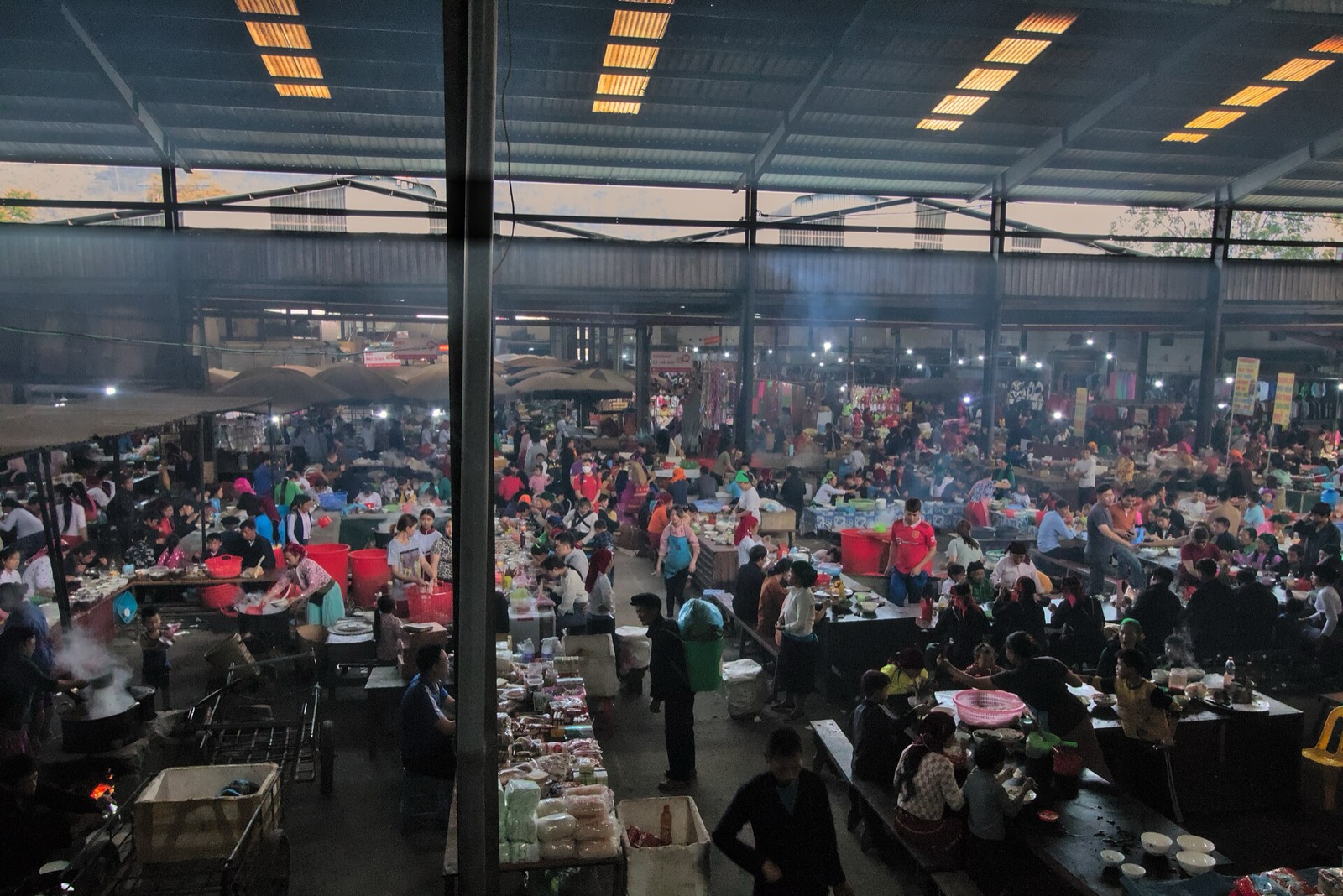
For more variety, head down to central Mèo Vạc. On Sunday mornings the market's food section has thắng cố (a horse-meat and offal stew), mèn mén, cháo ấu tẩu (a bitter-root rice porridge), canh tẩu chúa, five-colour sticky rice and a whole row of corn-wine stalls. Corn wine is strong — skip it if you still have a mountain road to ride. Read more in Hà Giang specialities to try.
The food hall at Mèo Vạc Sunday market in the morning — Photo: Benjamin Smith, CC BY-SA 4.0, Wikimedia Commons
Combine it with the Mèo Vạc Sunday market
Mèo Vạc market is held every Sunday morning in the centre of Mèo Vạc commune. People arrive from 4–5 am, it is busy from about 6:30 and thins out after about 10:00. There are food stalls, Hmong skirts and clothing, household goods and a livestock section. Most of the people who come are Hmong.
The market is only about 4–6 km from Pả Vi Hạ, so the best plan is to sleep in the village on Saturday night: get up early, go down to the market as day breaks, have breakfast there and then set off for Du Già or back up the pass. Bring small cash. More in our Mèo Vạc Sunday market guide.
If you're here around the 27th day of the 3rd lunar month, the Khâu Vai love market takes place once a year in Khâu Vai commune, about 20–25 km from Mèo Vạc — see Khâu Vai love market.
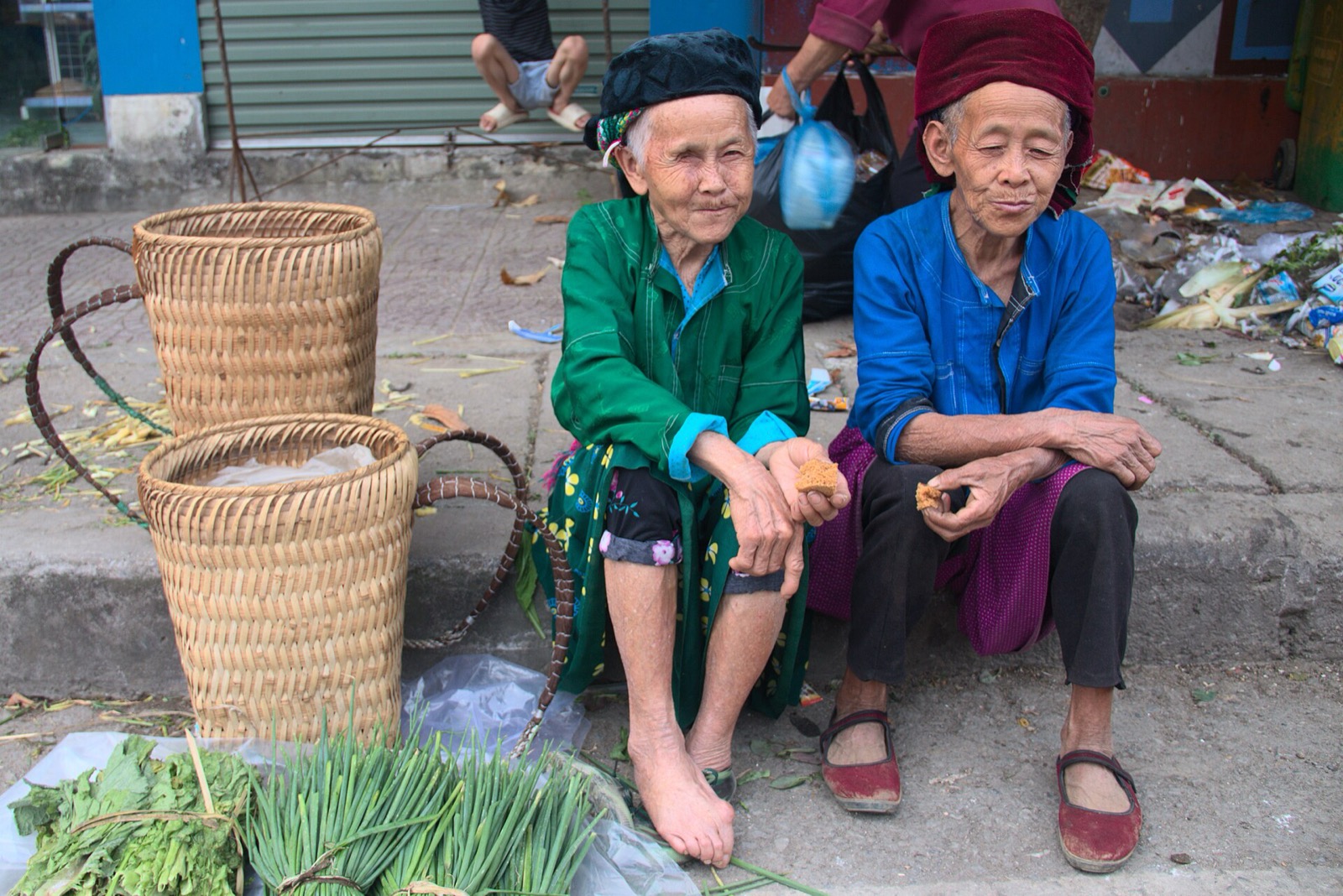
Two elderly women selling greens beside woven baskets at Mèo Vạc market — Photo: Benjamin Smith, CC BY-SA 4.0, Wikimedia Commons
Suggested plan around Pả Vi
Saturday morning: leave Đồng Văn and stop at the viewpoints on the Mã Pí Lèng pass.
Saturday, early afternoon: turn off at Pả Vi down to Tràng Hương bridge for the Nho Quế boat trip (2–3 hours in all).
Saturday, late afternoon: check in at Pả Vi Hạ, stroll around the village in the soft light, have dinner with your hosts.
Sunday, early morning: go down to Mèo Vạc market and have breakfast there.
Sunday, before noon: fill up with fuel and withdraw cash in Mèo Vạc, then continue to Du Già (about 80 km, 3–4 hours).
October–November: buckwheat-flower season, drier and clearer skies — and the busiest time in the village.
January–March: peach and plum blossom around the hamlets; late December–January can bring frost.
Late afternoon: low sun turns the earth walls golden — the time for the rows of houses and stone walls.
Early morning: the time to ride up the pass; mist and cloud often settle in the valleys after a cold, damp night.
Photograph the khèn gate from a safe spot at the roadside, never from the middle of the highway. To get the village and the cliffs in one frame, step back towards the fields across the road — but stay on the field edges and don't trample the crops.
Etiquette in the village
People live here: don't walk into a yard or a house unless invited.
Ask before photographing people, especially the elderly and children. Don't give children sweets or money in exchange for photos.
The corn fields and vegetable gardens around the village are private; stick to the shared paths.
Keep the evenings quiet and take your rubbish to the collection point. The village has a green-tourism pledge to cut plastic waste.
Road safety around Pả Vi
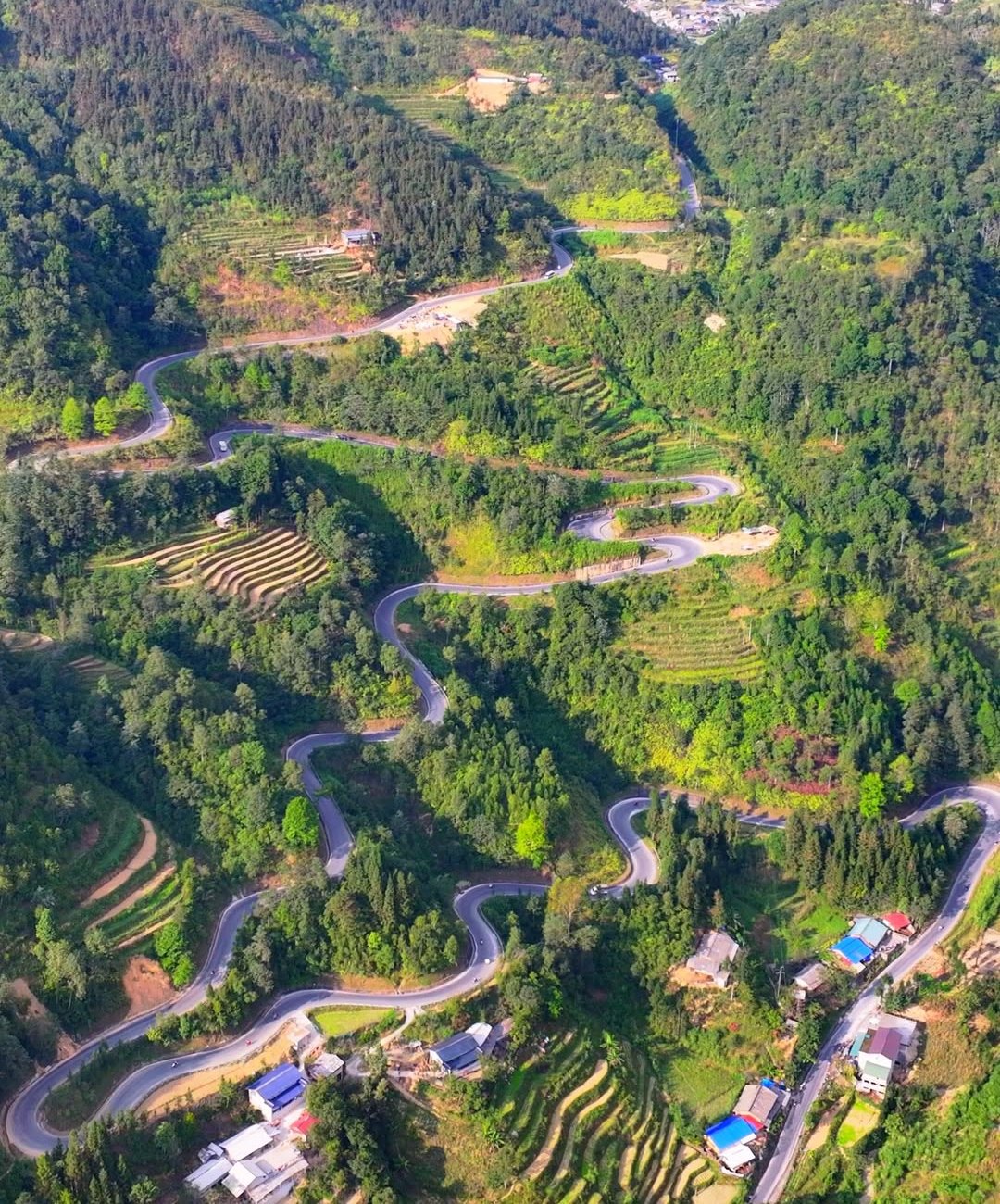
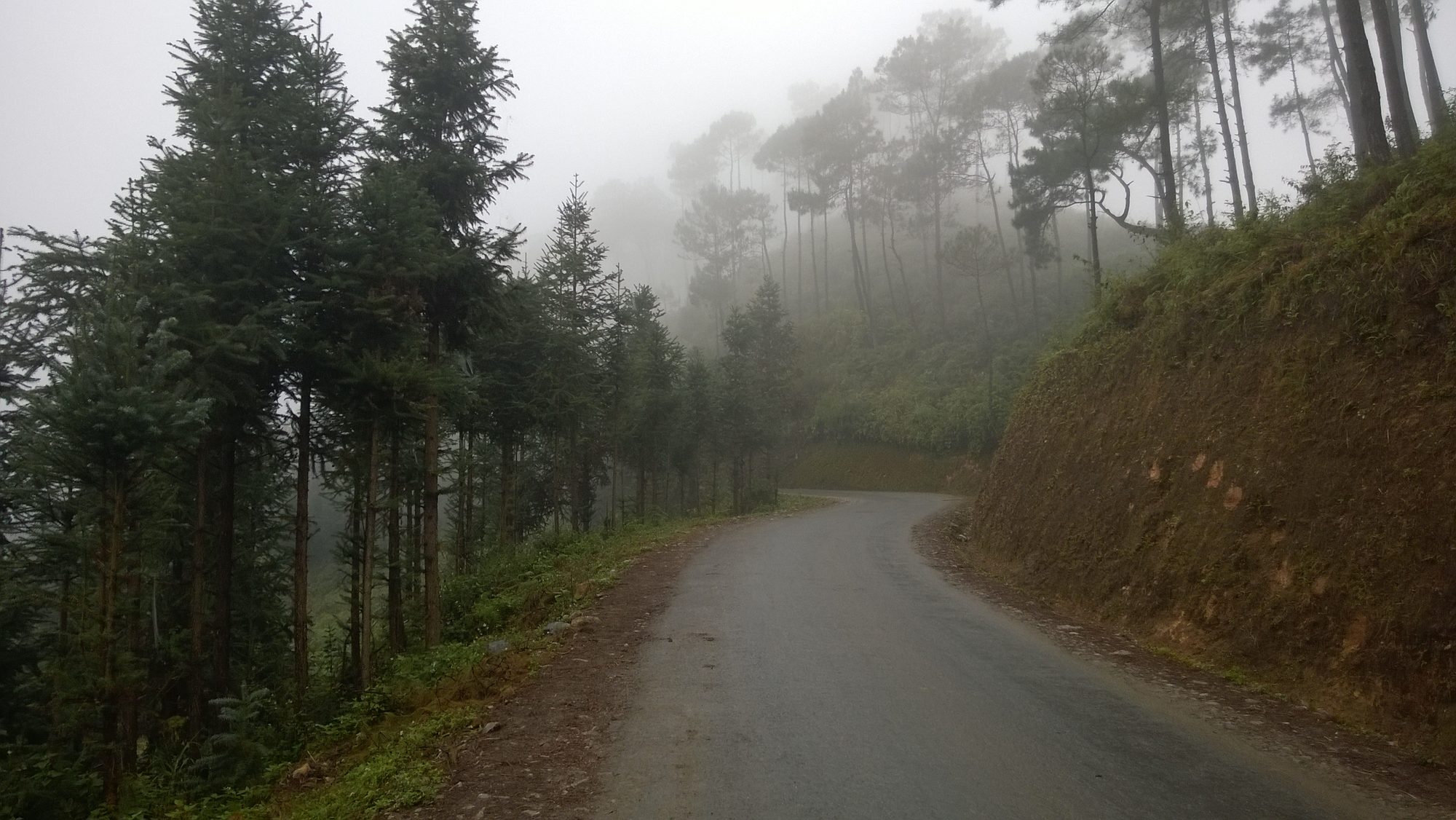
From the top of Mã Pí Lèng down to Pả Vi is a long descent with many bends, and brakes overheat easily: use a low gear and engine braking rather than holding the brakes all the way. In the late afternoon and in winter, fog can cover the pass within minutes; turn your lights on, slow down, never overtake on a bend, and avoid riding the pass after dark (in November–December the sun sets around 17:15–17:30). If you're not used to mountain roads, consider riding with an easy rider — see easy rider or self-drive on the Hà Giang Loop.
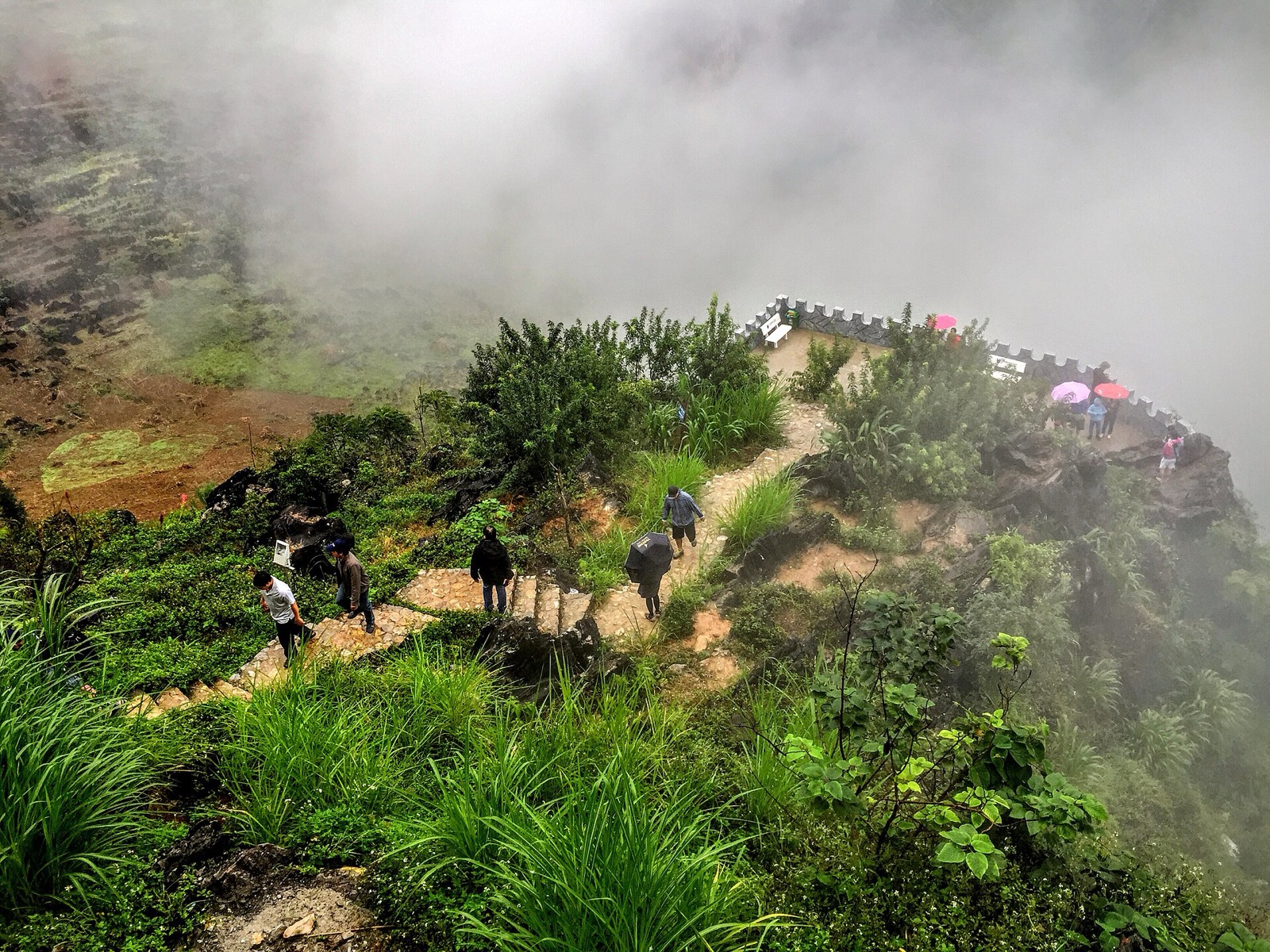
A viewpoint on the Mã Pí Lèng pass on a foggy day — Photo: trungydang, CC BY 3.0, Wikimedia Commons
Add a paragliding flight to your trip
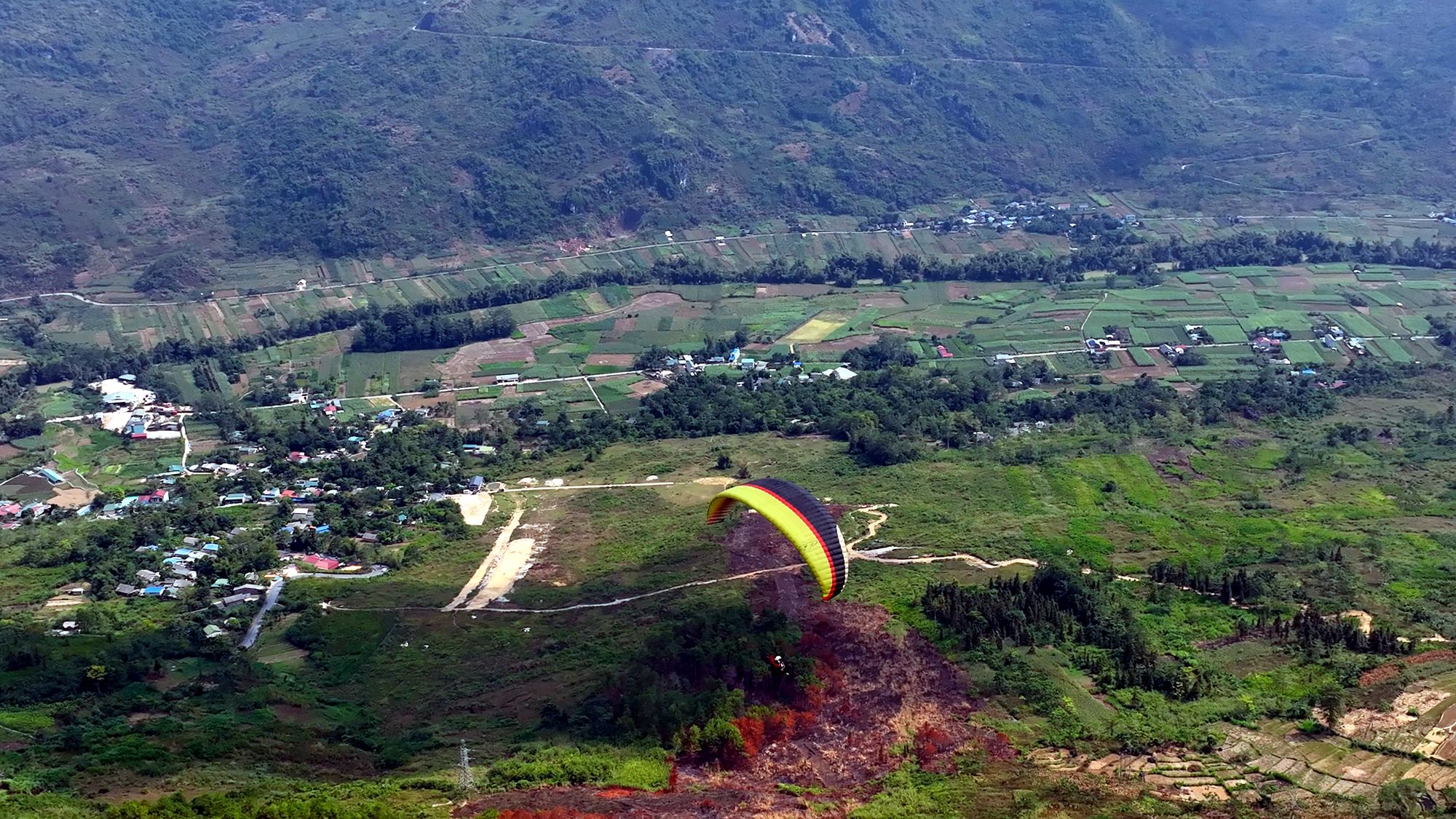
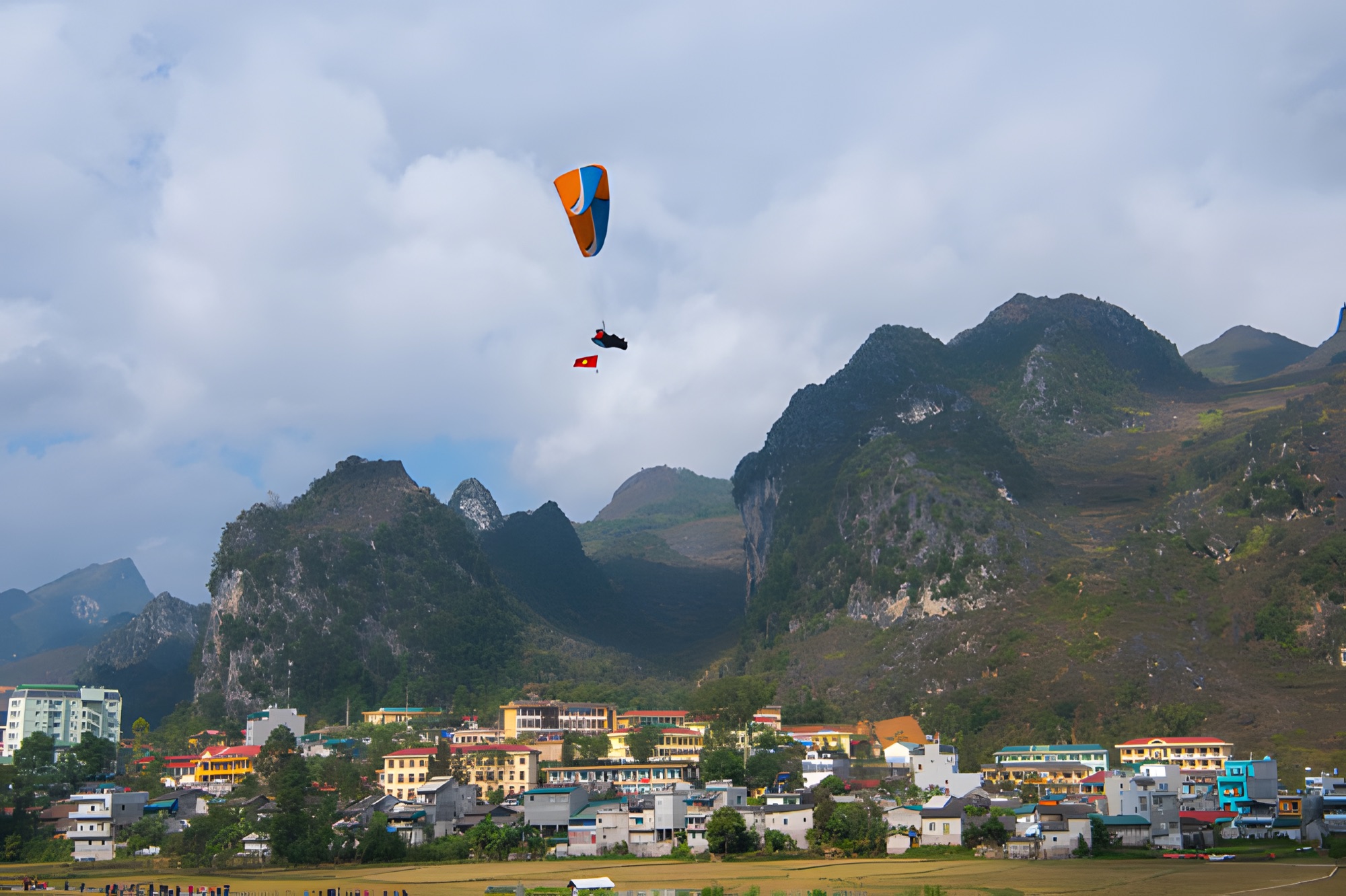
Riding the Loop in the usual direction, on day one you pass Quản Bạ at around Km45 — where the Mebayluon flying team flies tandem paragliding and paramotor every day from 06:30 to 18:30 over the Fairy Twin Mountains (núi đôi Cô Tiên) and the Miện river valley. A standard tandem paragliding flight of 9–15 minutes, depending on the wind, costs 2,290,000 VND (≈ US$ 91) per person, including GoPro video and insurance; no experience needed. If you ride the Loop the other way, Quản Bạ is your last stop. See the Quản Bạ flying site or our guide to paragliding in Hà Giang.
Frequently asked questions
How far is Pả Vi Hạ from central Mèo Vạc?
About 4–6 km along QL4C towards the Mã Pí Lèng pass (sources differ), roughly 10–15 minutes by motorbike. The top of the pass is about 10 km from the village.
Is there an entrance fee for Pả Vi Hạ village?
We found no official source mentioning an entrance ticket; you can walk around freely. Activities such as performances, trying weaving or dressing in Hmong clothes are separate services — ask the price on the spot.
How do I get to the Nho Quế boat trip from Pả Vi?
In the Pả Vi area, turn onto the road to Xín Cái, go down to Tràng Hương bridge to buy a ticket (about 150,000 VND, July 2026) and take the electric shuttle to the dock. Allow 2–3 hours in total.
Is Pả Vi Hạ worth a stop if I'm not staying overnight?
Yes — an hour is enough to stroll around and see the rammed-earth houses and the khèn gate. But the village is at its best in the late afternoon and early morning, so stay the night if you can, ideally on a Saturday.
Cover photo: BacLuong, CC BY-SA 4.0, Wikimedia Commons
Book a flight:book online — no deposit, free cancellation
Bắc Sum Pass or Quản Bạ? A side-by-side look at the two flying sites on the QL4C near Hà Giang city: distance, landing field, valley width, paragliding and paramotor, a flying morning at Quản Bạ, getting there and fitting the flight into the Hà Giang Loop…
Quản Bạ or Đồng Văn? An honest comparison of our two flying sites on the Hà Giang Loop: location, getting there, scenery, paragliding vs paramotor, what a flying session looks like, wind and schedule, price, and how to fly both…
The Chín Khoanh slope is a stack of hairpin bends on QL4C between Phố Cáo and Sủng Là, about 18 km past Yên Minh and 27 km before Đồng Văn: why it's called "nine coils", the best viewpoint, how to stop safely, how it differs from Thẩm Mã and what to see nearby…
A practical guide to the Mã Pí Lèng Sky Path, the cliff-edge walking trail above the Nho Quế River: the trailhead at the Youth Volunteers monument, the route section by section, the death rock closure (October 2026), what to wear, when to go and how to pair it with a Tu Sản canyon boat trip…
A guide to Lô Lô Chải, the Lô Lô village at the foot of the Lũng Cú flag tower: rammed-earth houses, costume and bronze drums, Café Cực Bắc, homestays, the road from Đồng Văn, 2026–2027 traffic rules and village etiquette…
The Yên Minh pine forest lines Highway 4C about 7–8 km before Yên Minh town on the Quản Bạ side: exact location, commune after the 2025 merger, best light, how to stop safely, what's nearby and how to fit it into a 3- or 4-day Loop…