Mèo Vạc Sunday Market: When It Runs, What Time to Go, What You'll See, and the Khâu Vai Love Market
The Mèo Vạc market runs every Sunday morning from before dawn. When to arrive, the road over Mã Pí Lèng, the market sections, what to eat, where to sleep, photo etiquette, fitting it into the Hà Giang Loop, and the once-a-year Khâu Vai love market.
Ms. Judy · · 14 min read
The Mèo Vạc market takes place every Sunday morning in the centre of Mèo Vạc commune; it starts before dawn and is at its busiest between about 6:30 and 10:00 — so if you want to go, plan to sleep in Mèo Vạc on Saturday night.
This is the Sunday market for the whole Mèo Vạc area, and people come in from Yên Minh and Đồng Văn too. This guide covers when it runs, how to get there, what you'll find inside, how to behave and take photos, where to sleep, how to fit it into your Hà Giang Loop, and when you can add the Khâu Vai love market — a market held only once a year.
A quick note on place names: since 1 July 2025, Hà Giang has been merged into Tuyên Quang province and the district level no longer exists, so the former "Mèo Vạc town" is now the centre of Mèo Vạc commune, Tuyên Quang province. Travellers and tourist maps still call it "Mèo Vạc, Hà Giang", and this guide does the same.
When and where is the Mèo Vạc market?
The market runs every Sunday morning (by the ordinary calendar — it isn't a "rolling" market whose day shifts from week to week) in the centre of Mèo Vạc commune. Mèo Vạc is the stop right after the Mã Pí Lèng pass, at roughly Km185 of the Hà Giang Loop, and it's also where the Happiness Road (con đường Hạnh Phúc) ends. For more on the town, places to stay and the road, see the .
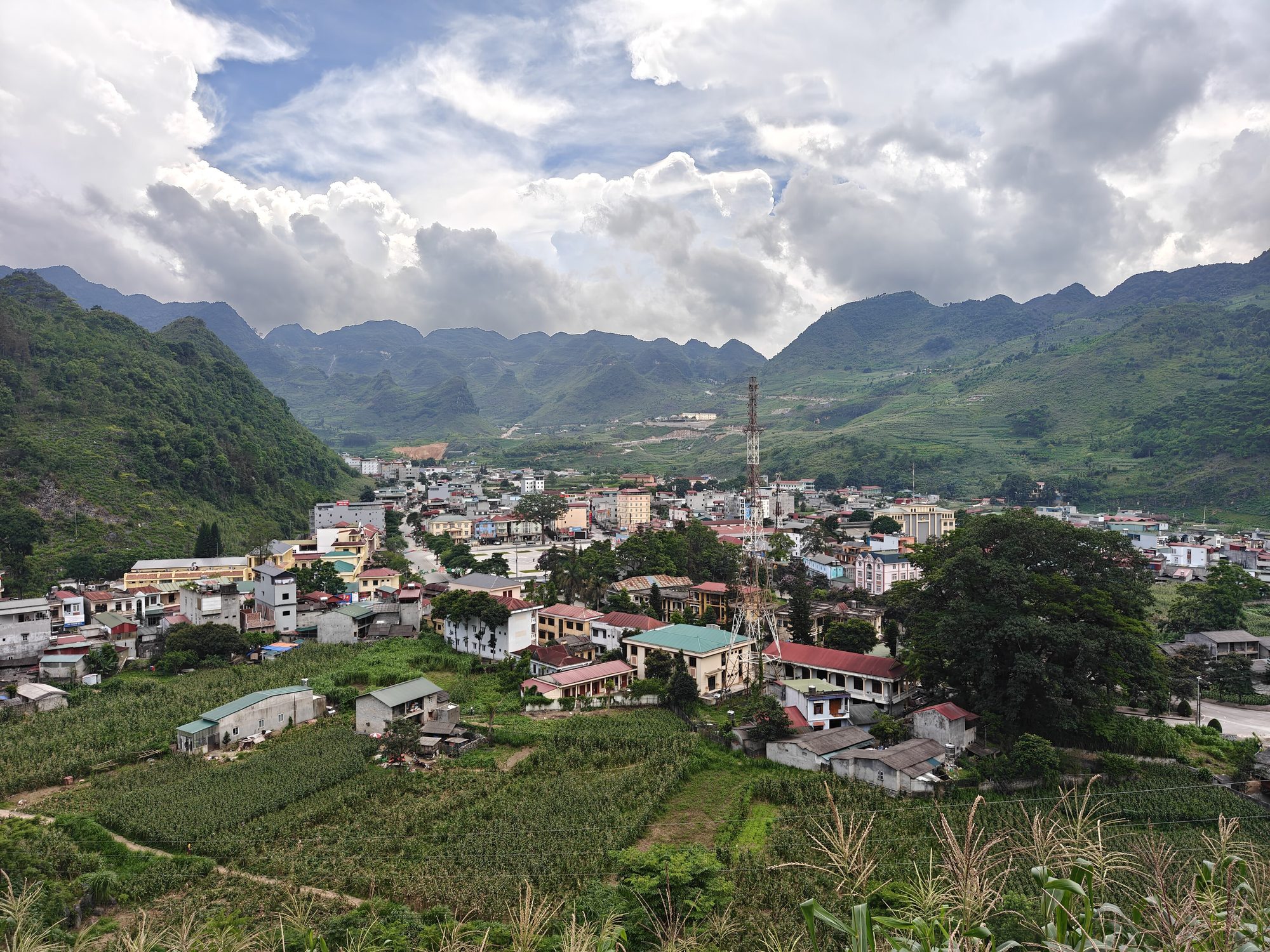
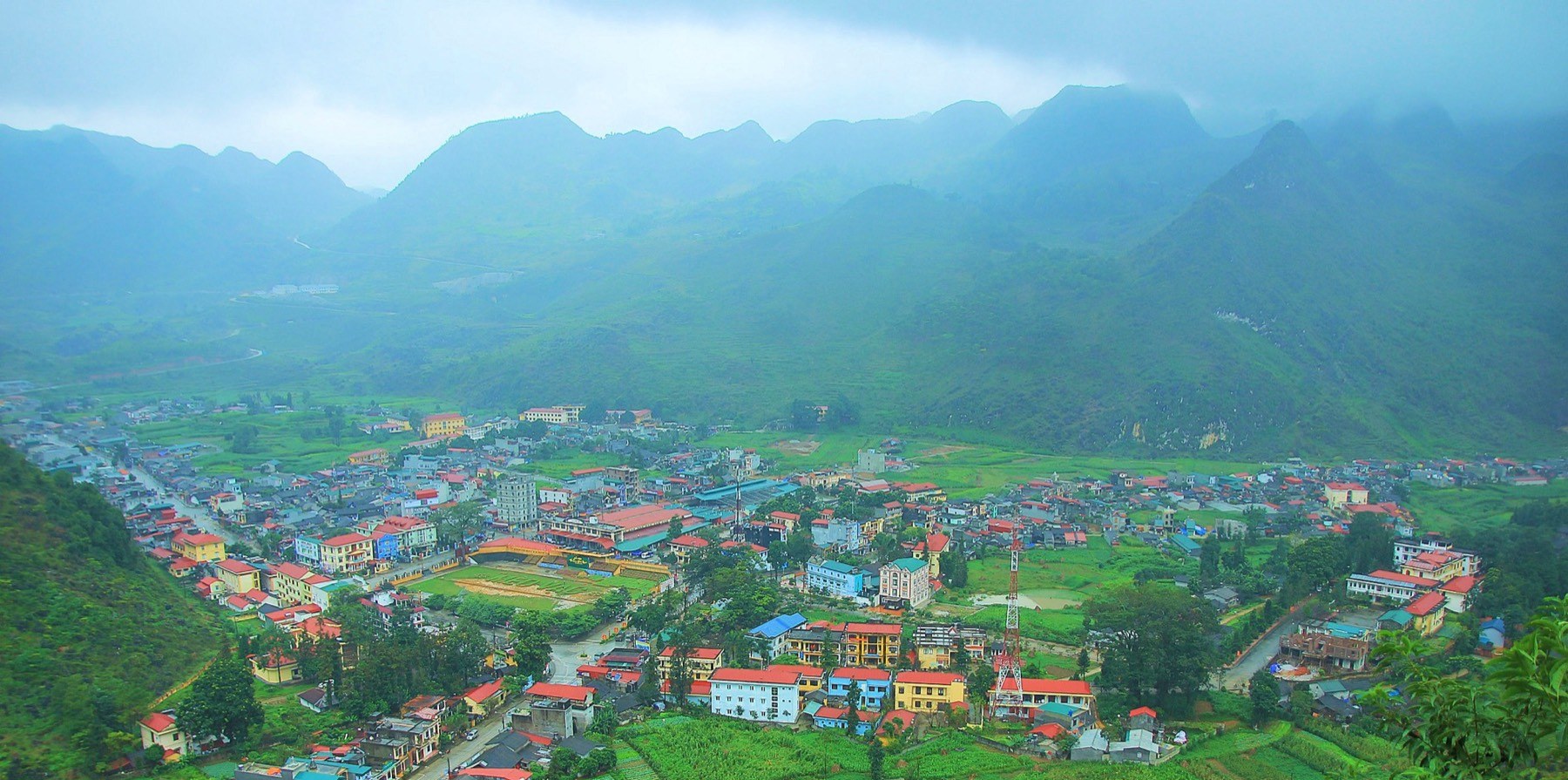
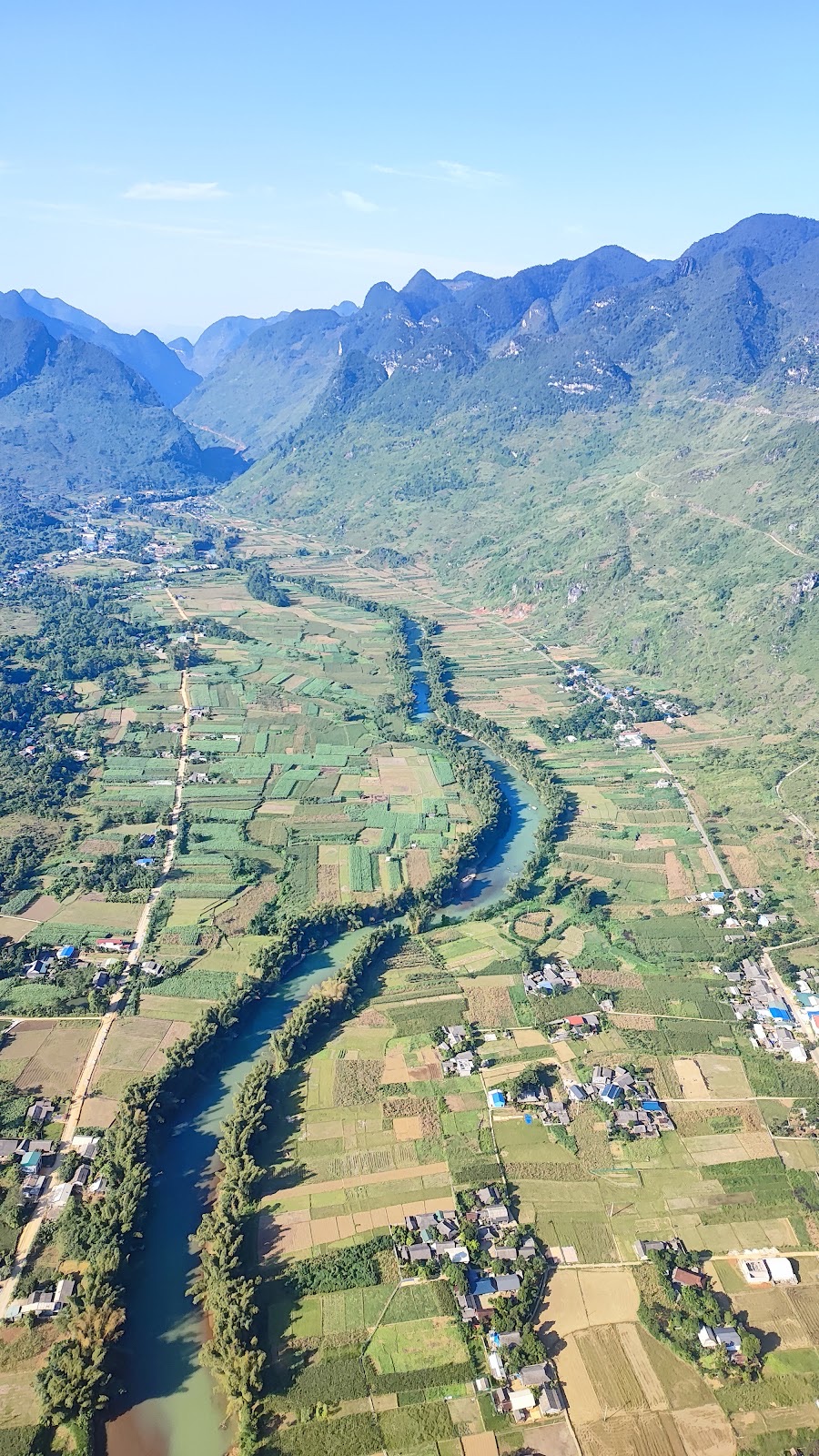
Central Mèo Vạc in its valley of limestone peaks — Photo: HuangWending18072009, CC0, Wikimedia Commons
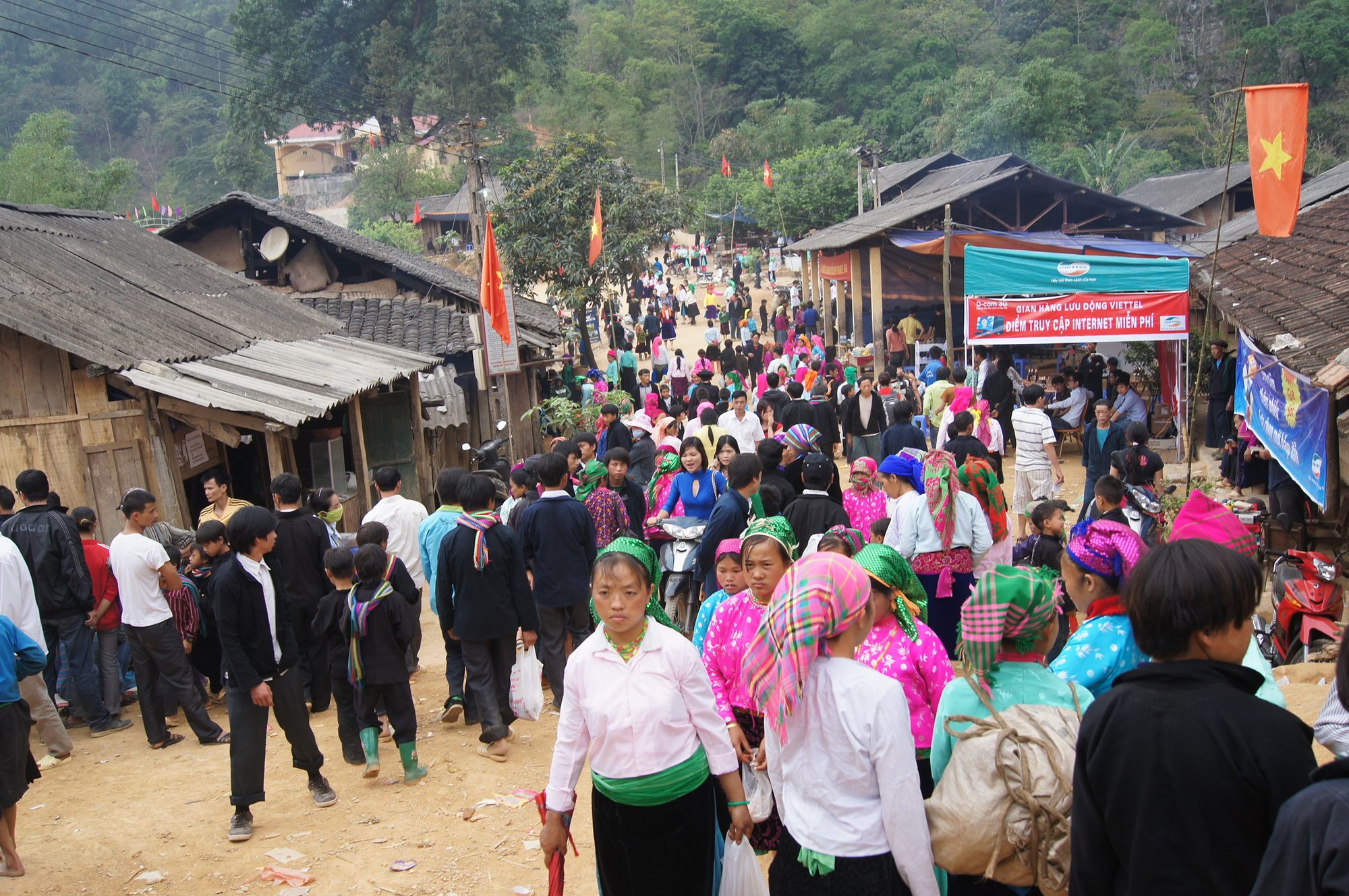
Many people set off while it's still dark, so the first arrivals are there by 4–5 a.m., and by full daylight the market is already in full swing.
Time (approx.)
What's happening
4:00–5:00
People start arriving, still dark
Around 6:30
The market is already crowded
6:30–10:00
Liveliest — the best time to watch and take photos
After about 10:00
It gradually thins out
These times are only estimates and shift with the season and the weather. Your best bet is to be there before 7:00. In winter the sun comes up late and the mist is thick, so early on the market may still be hazy and chilly; the dry season from October to December usually brings clearer skies, making it easier to get around and take photos.
Getting to Mèo Vạc, and why you should sleep there on Saturday night
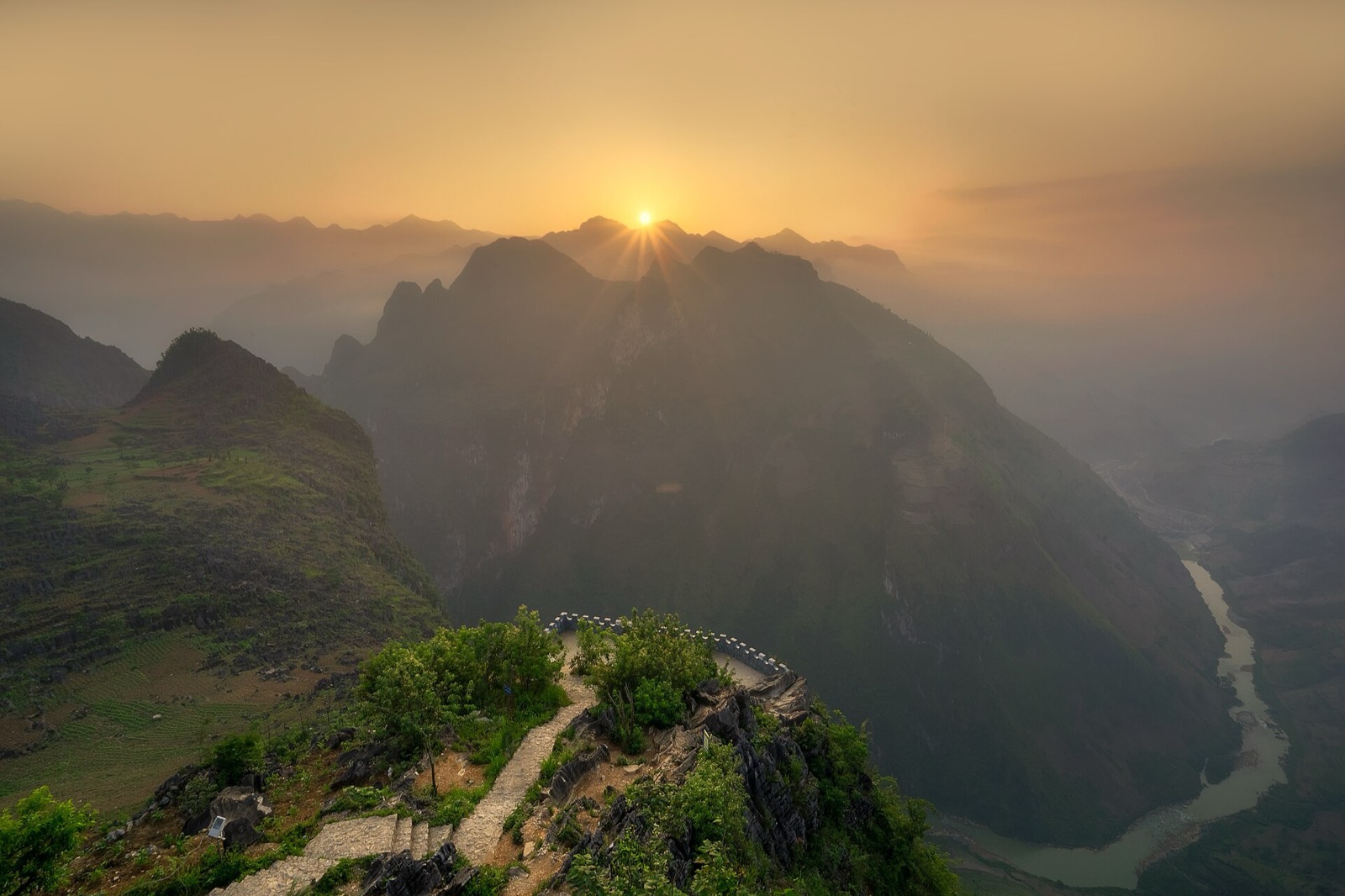
Most travellers reach Mèo Vạc from Đồng Văn's old quarter over the Mã Pí Lèng pass. It's about 20 km from Đồng Văn to the top of the pass, then roughly another 15 km down to Mèo Vạc town. The riding itself only takes about an hour, but in practice most people spend half a day on it, stopping to take in the Tu Sản canyon and the Nho Quế river.
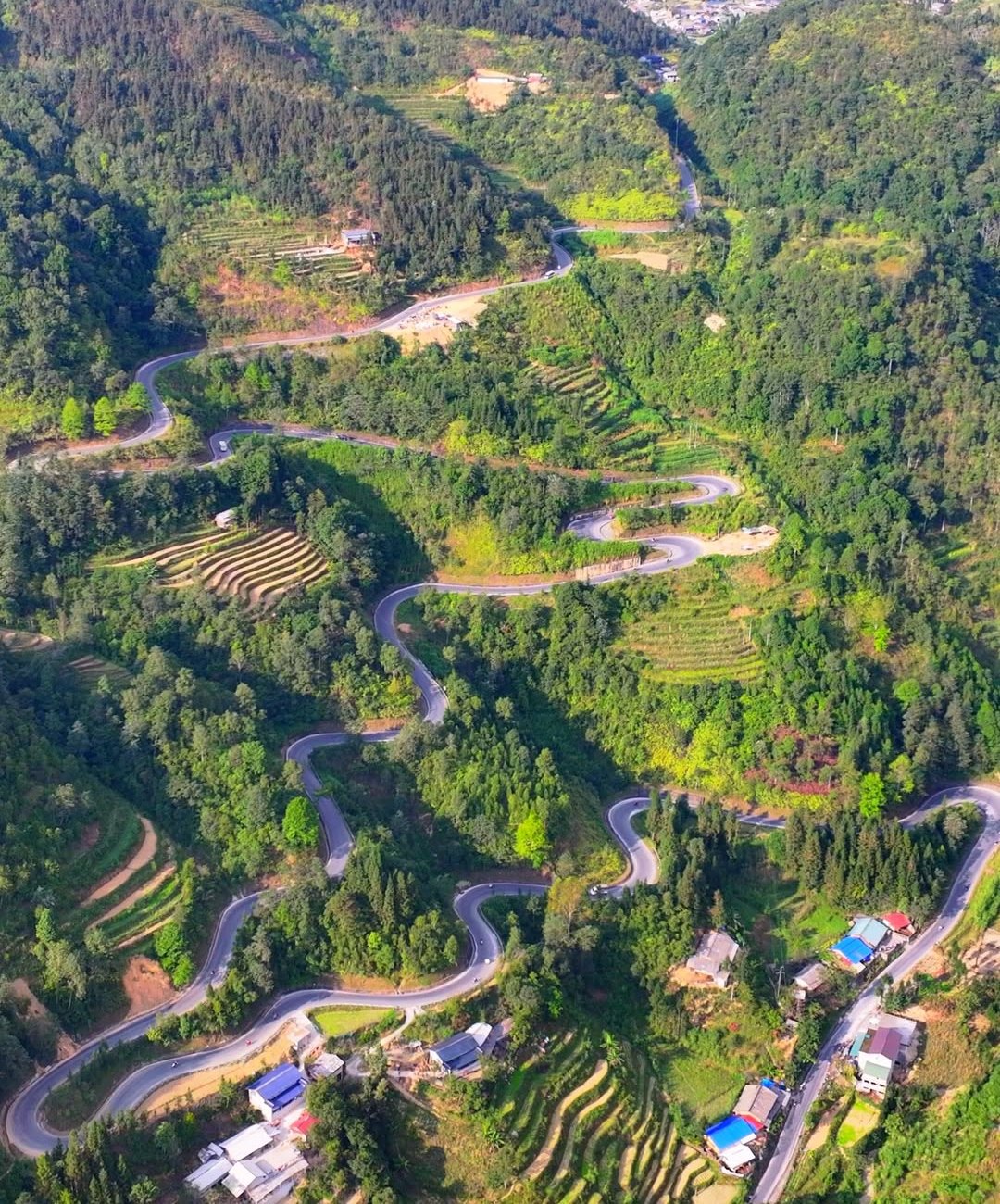
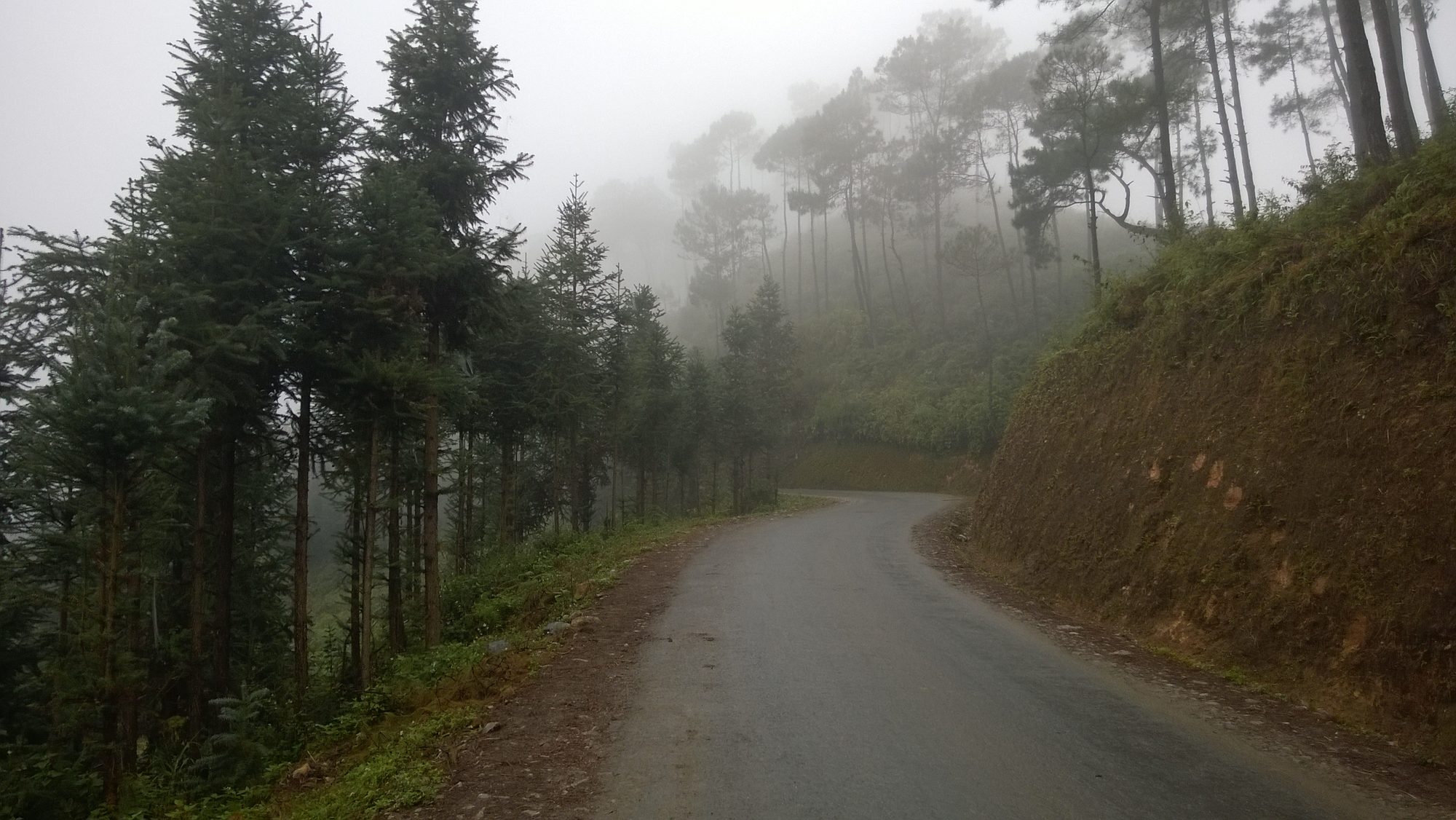
The stretch from the top of the pass down to Mèo Vạc is a long descent with plenty of bends. If you're riding your own motorbike, stay in a low gear, use engine braking and feather the brakes gently rather than squeezing them constantly. In the late afternoon and in winter, mist can hang all the way from the pass down to the town, so don't ride the pass after dark.
That's exactly why the "sleep in Đồng Văn, then race over to Mèo Vạc at dawn for the market" plan doesn't make sense: you'd be crossing Mã Pí Lèng in the dark and the cold mist, just when visibility is at its worst. Get to Mèo Vạc on Saturday afternoon, have dinner, go to bed early, and on Sunday morning all you have to do is walk to the market.
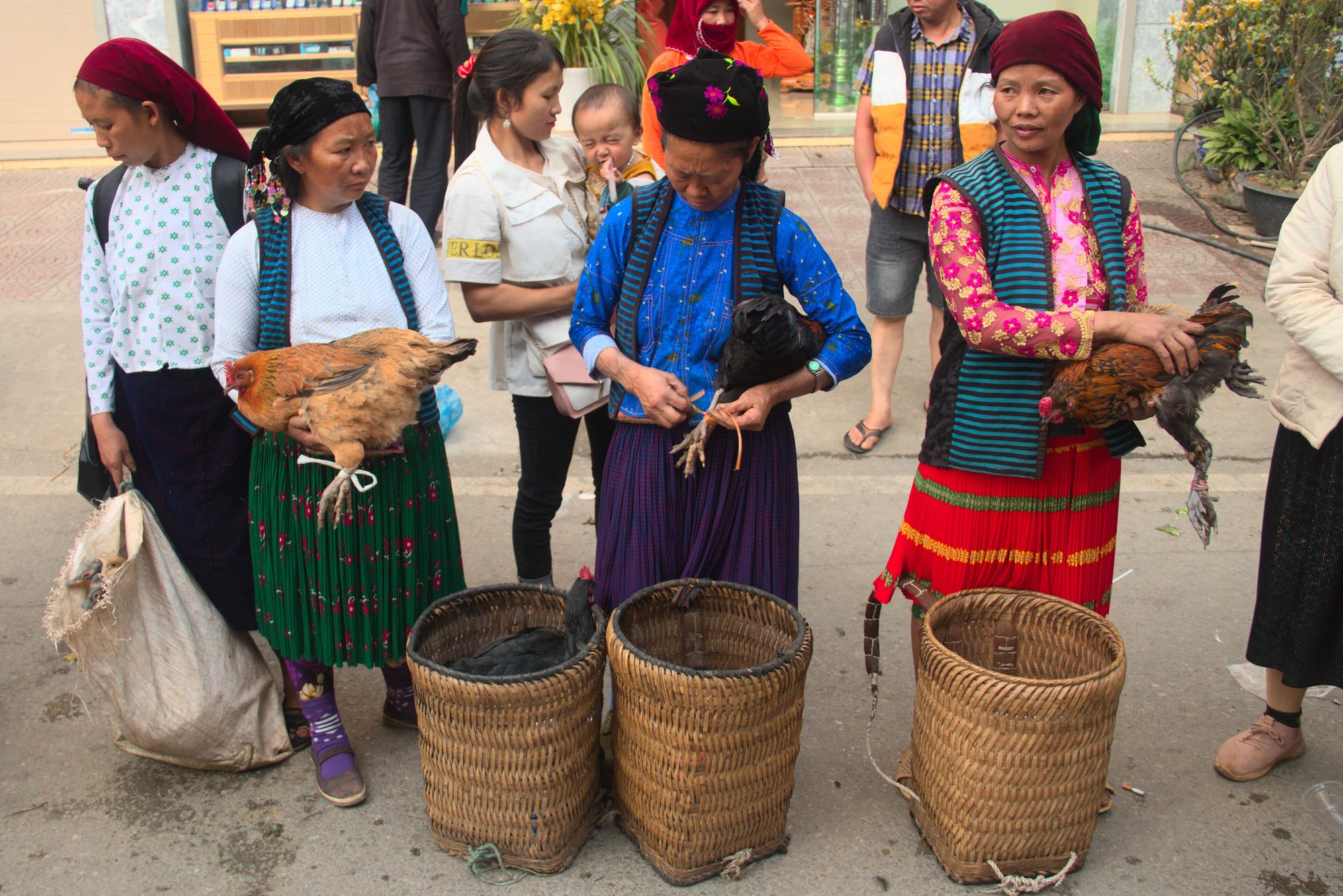
Women with chickens and back-baskets at the Mèo Vạc market — Photo: Benjamin Smith, CC BY-SA 4.0, Wikimedia Commons
If you're not riding yourself, you can go with an easy rider or hire a car with a driver; weigh up the two options in our guide easy rider or ride yourself.
What will you see in the market?
Walk one loop and you'll pick out four main sections: food, fabrics, corn wine and livestock. In between are household goods stalls, plus vegetables and farm produce that people bring down from their villages.
Breakfast stalls
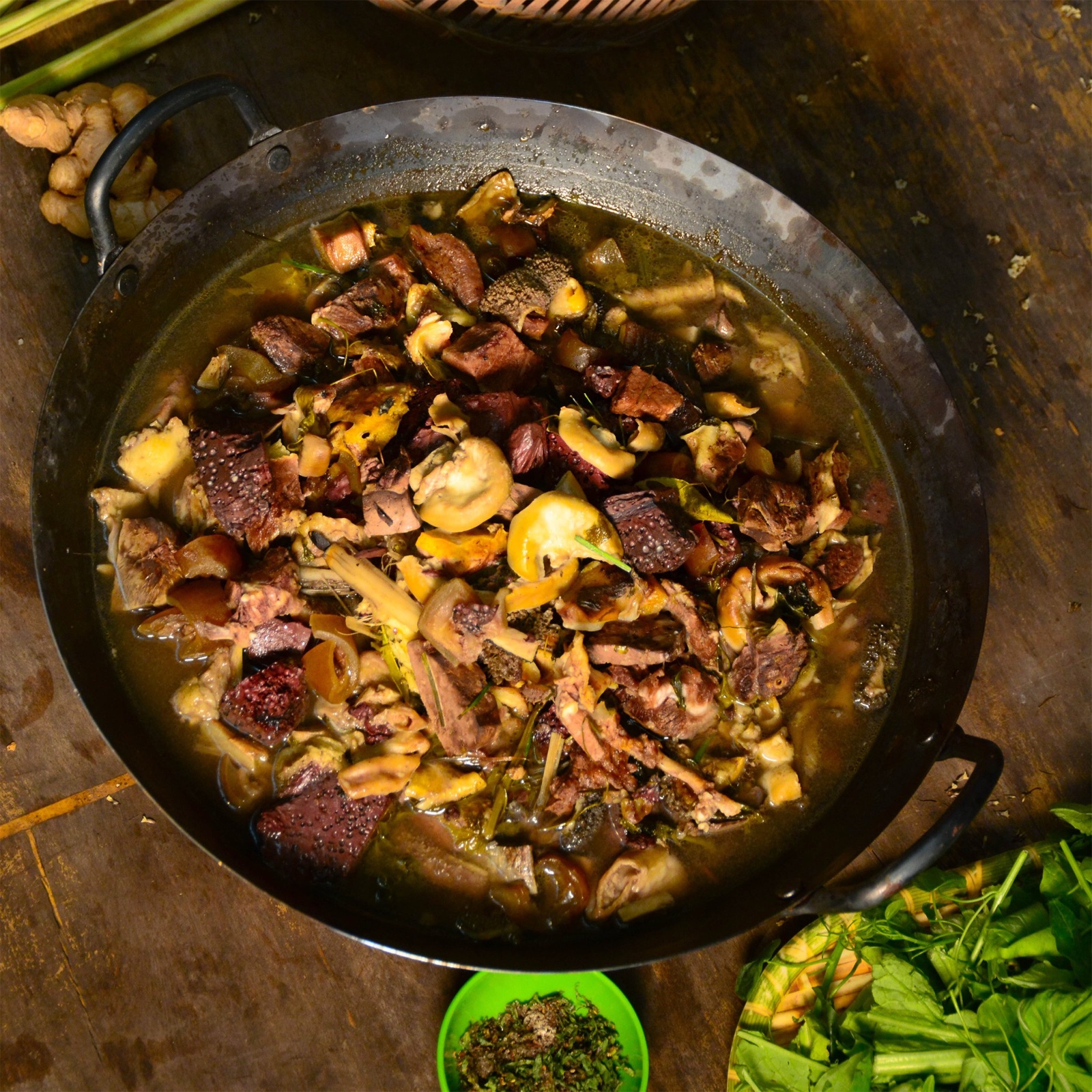
Look for big steaming pots of thắng cố stew, mèn mén (steamed ground corn), cháo ấu tẩu porridge, canh tẩu chúa soup and xôi ngũ sắc (five-colour sticky rice). Sitting down for breakfast right in the middle of the market, surrounded by the chatter and laughter of the shoppers, is the easiest way to soak up the atmosphere.
A pot of thắng cố
Thắng cố has a rich flavour and a rather distinctive smell; if you're not used to it, order a small bowl to try. Eat cháo ấu tẩu at a busy stall where it's been cooked thoroughly. To work out which dishes suit you, read our guide to Hà Giang specialities worth trying.
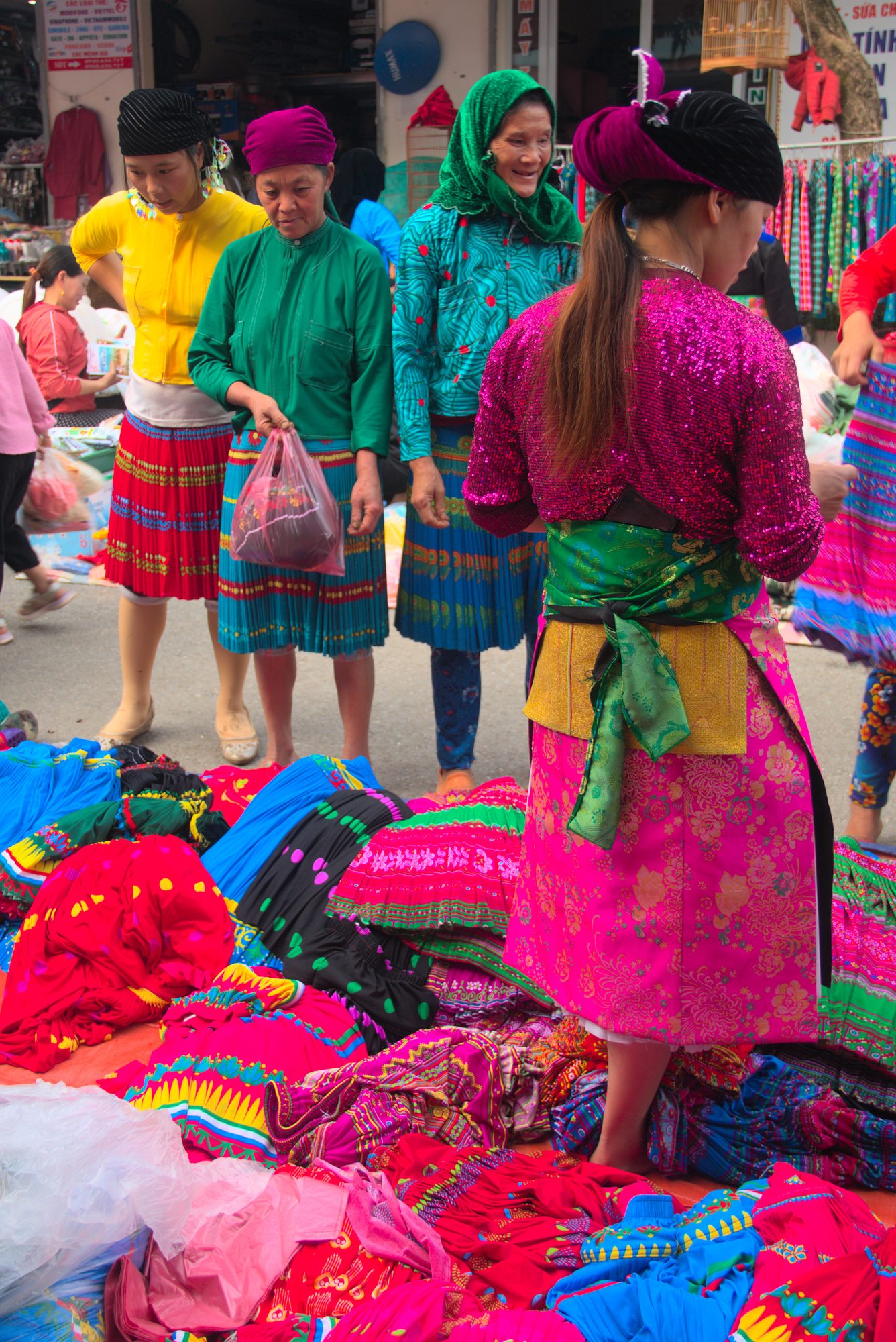
Hmong skirts and tailoring
The fabric section is the most colourful part. You'll find handmade Hmong skirts as well as machine-made ones, with tailors sewing right there in the market. This is also the section that draws the most women shoppers — some picking out fabric, others trying on skirts and tops.
Shoppers choosing skirts and tops at the Mèo Vạc market — Photo: Benjamin Smith, CC BY-SA 4.0, Wikimedia Commons
If you'd like to buy a skirt or a length of fabric as a keepsake, ask the seller which pieces are hand-embroidered and which are machine-sewn; the two differ a lot in the work involved and in price. Bargain in a friendly, light-hearted way, and don't push the price down too hard.
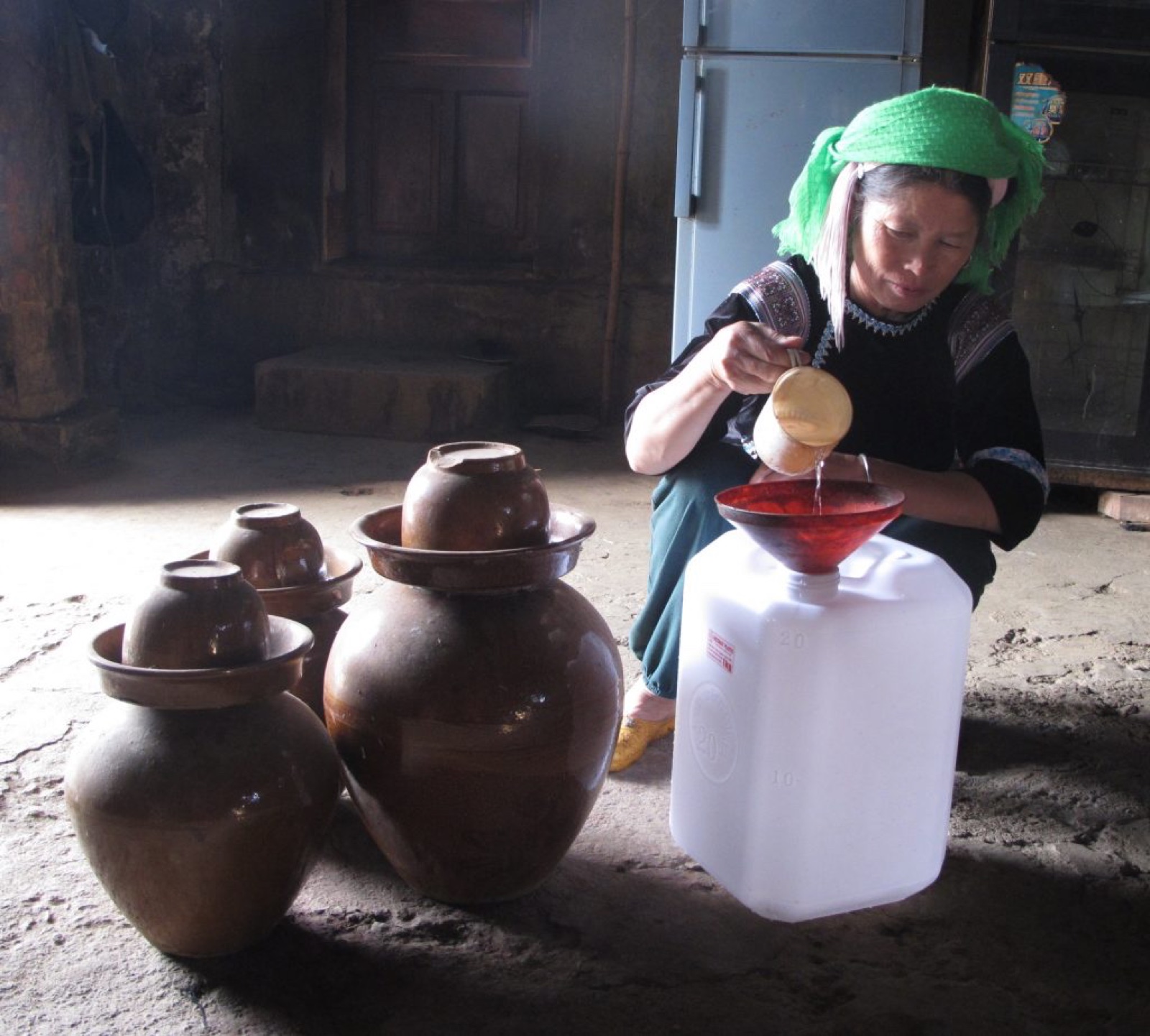
The corn wine row
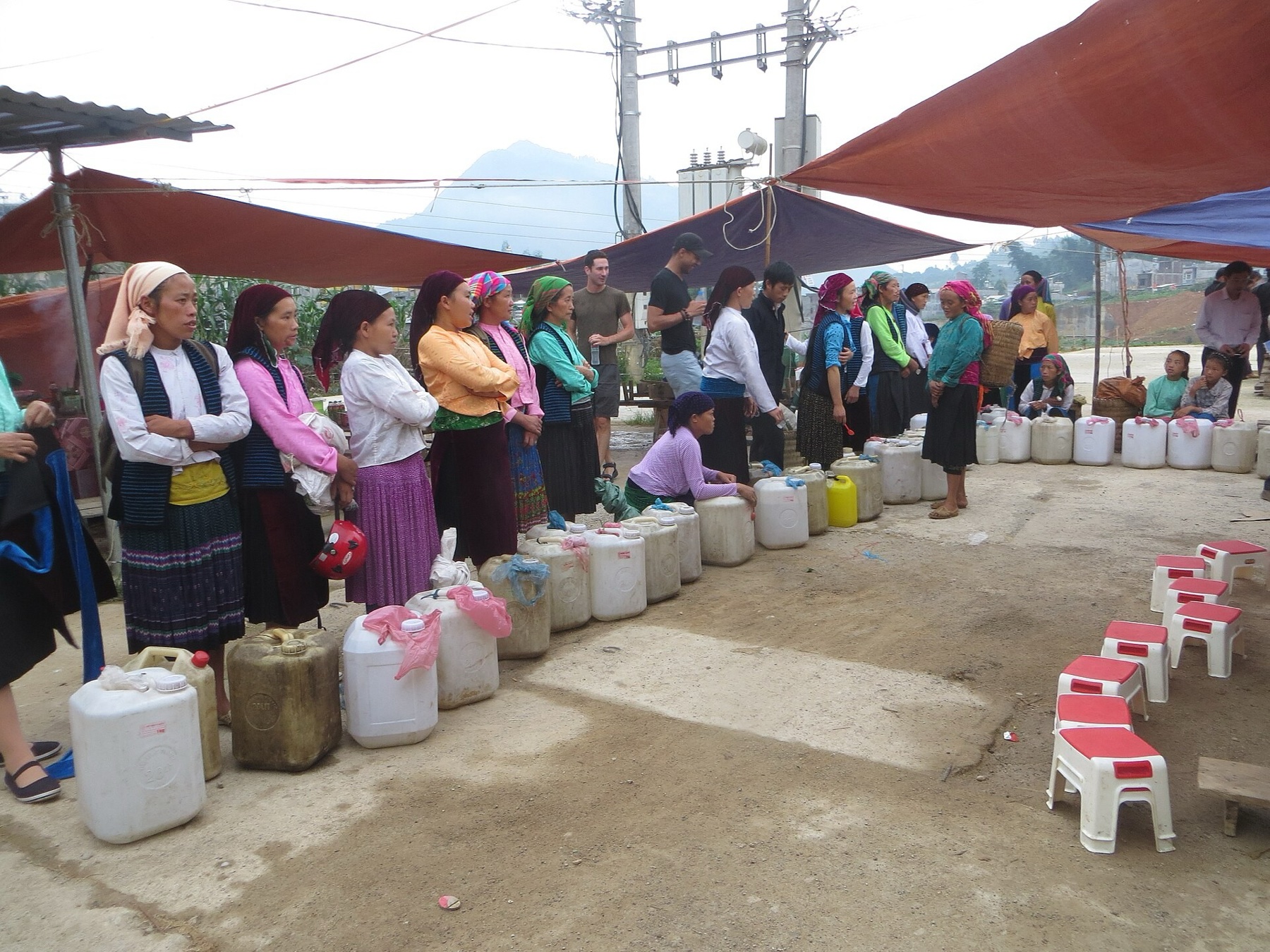
One very distinctive corner of the Mèo Vạc market is the row of corn wine stalls run by women: jerrycans of wine lined up in a long row.
Pouring corn wine from a jar
Corn wine is strong. If you try it, just take a sip — and never ride a motorbike yourself afterwards, especially with mountain passes still ahead.
Livestock market
This is where buffalo, cattle, pigs, chickens and goats change hands. People walking through the crowd with a pig tucked under one arm is a familiar sight here. Keep your distance from the animals, don't squeeze in while buyer and seller are bargaining, and don't block the path when buffalo and cattle are being led through. If you want to watch the trading here, come early, before the market starts to thin out.
The people
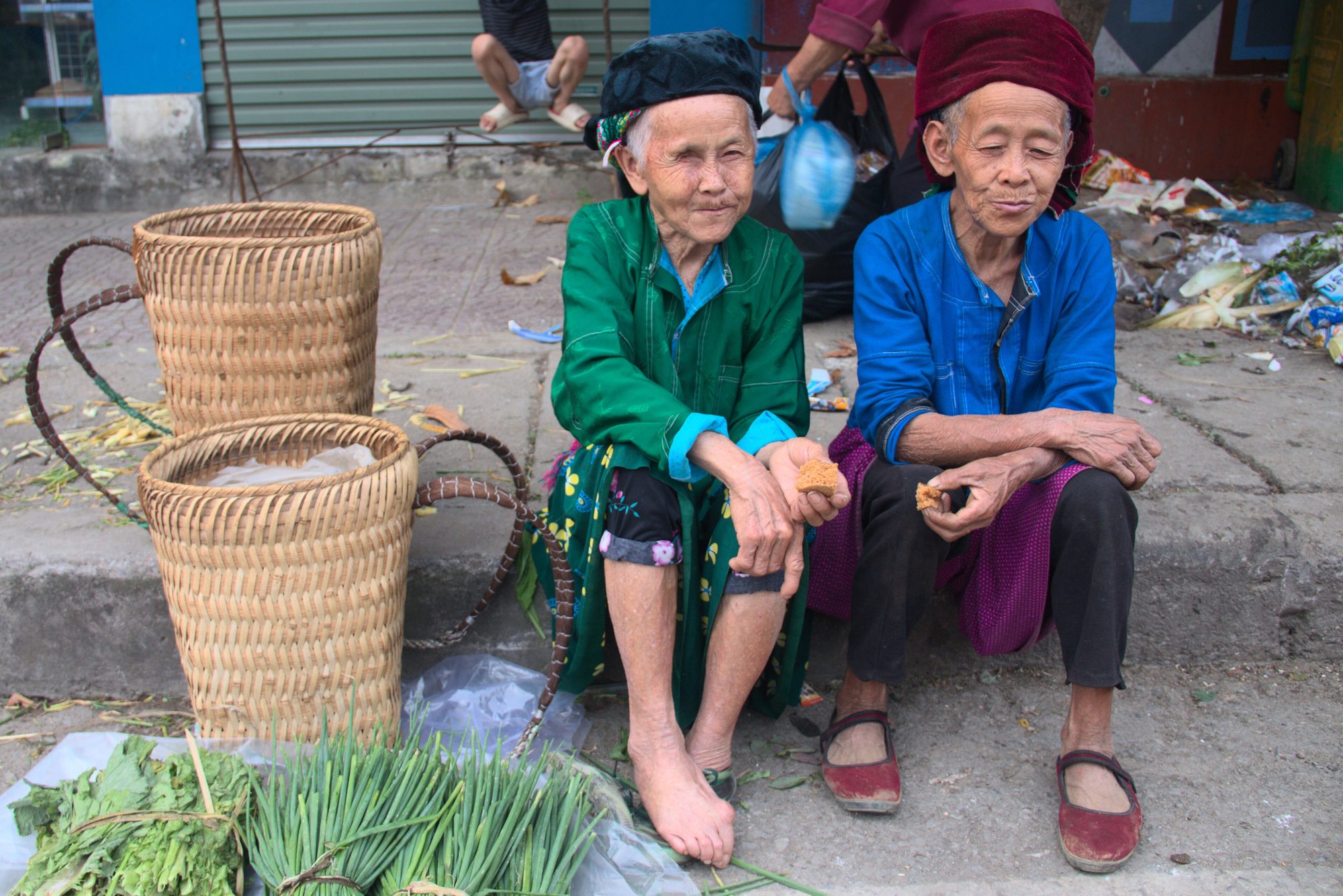
Most market-goers are Hmong (Mông), alongside Dao, Lô Lô, Giáy and Kinh people. They come from all over Mèo Vạc, Yên Minh and Đồng Văn, many in traditional dress. For highland people, market day isn't only about buying and selling: it's also a chance to meet relatives and friends and catch up on news.
Two elderly women selling vegetables beside their baskets at the Mèo Vạc market — Photo: Benjamin Smith, CC BY-SA 4.0, Wikimedia Commons
That makes the Mèo Vạc market a good chance to see several highland communities in one place — as long as you come as a guest, not as a "photo hunter".
Etiquette and photography
Ask before you take a photo, especially close-ups of elderly people and children. A smile and a nod is enough; if someone shakes their head, put the camera away.
Buy something small from the stall you'd like to photograph — a bowl of porridge, a cake. It's far more polite and natural than just raising a camera.
No flash, and avoid pointing long lenses at people.
Don't give children money or sweets in exchange for photos.
Bring cash, including small notes; the little stalls in the market mostly take cash only.
Walk slowly and give way: the paths are narrow, and people carrying loads or leading livestock always have priority.
Dress warmly: early mornings on the plateau are often cold, and in November and December temperatures are often only around 5–15 °C. Bring a windproof jacket and closed-toe walking shoes, as the market ground can get muddy after rain.
Around 6:00: leave your guesthouse, wrap up warm and walk to the market as people are streaming in.
6:30–7:30: wander the livestock and corn wine sections while the trading is still busy.
7:30–8:30: sit down for breakfast at a thắng cố or cháo ấu tẩu stall, then browse the fabrics and Hmong skirts.
8:30–9:30: pick up a small souvenir, slow down, watch, and chat if the chance comes up.
After about 10:00: as the market thins out, head back to pack up, fill up with fuel and hit the road.
Sleeping in Mèo Vạc on Saturday night
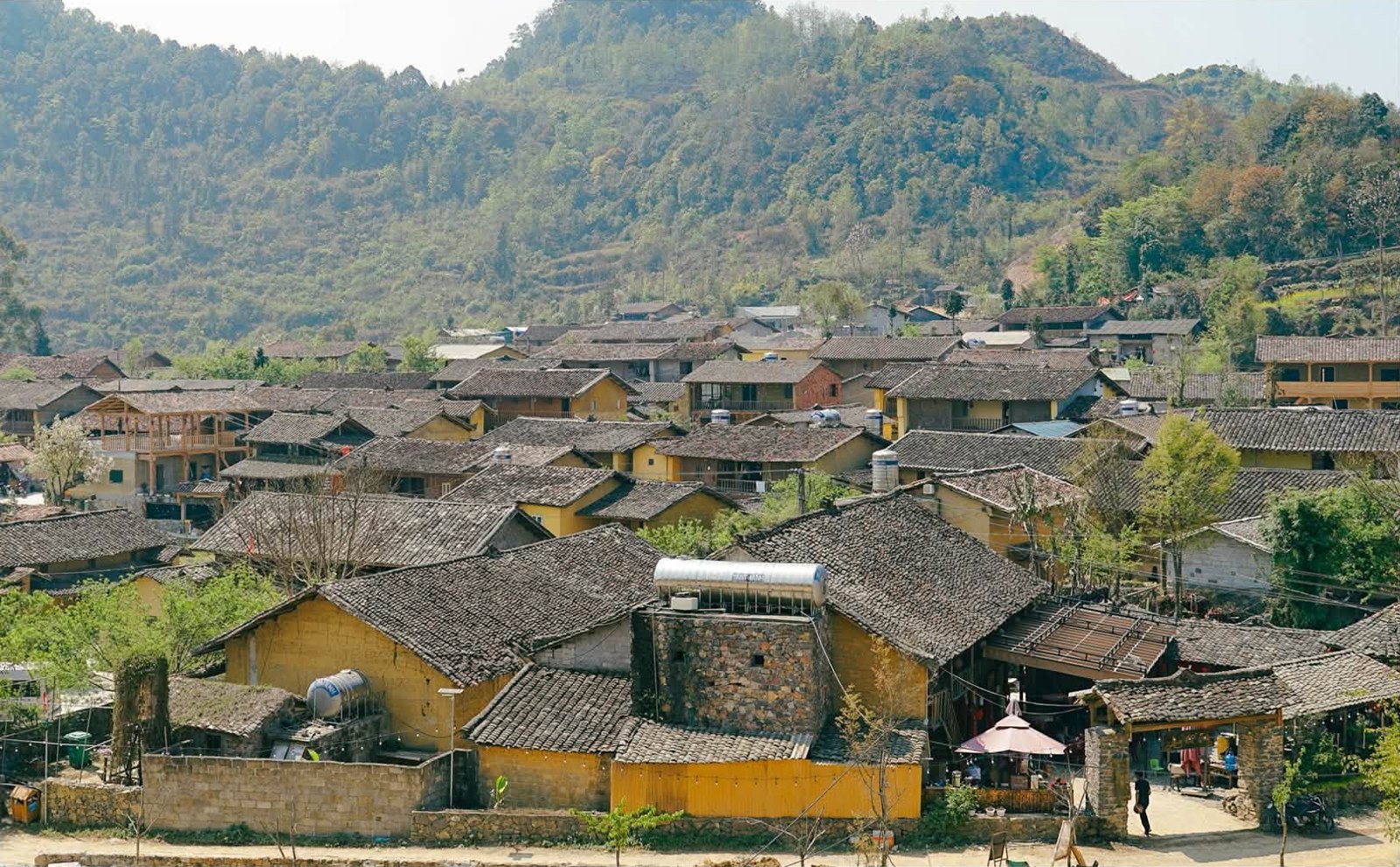
Places to stay in Mèo Vạc include guesthouses and small hotels in town, and homestays in villages such as Pả Vi — a Hmong village near town with rammed-earth houses and stone walls. Staying in town makes it very easy to walk to the market on Sunday morning; a village homestay is quieter, but you'll need to allow extra travel time.
Mèo Vạc town in its valley of limestone peaks — Photo: Khoitran1957, CC BY-SA 4.0, Wikimedia Commons
Before leaving Mèo Vạc, fill your tank and withdraw cash if you need it: the next stretch to Du Già is long, with areas where petrol stations are scarce, and Mèo Vạc is one of the last places where ATMs are easy to find before you head into the countryside.
Fitting the Mèo Vạc market into your Hà Giang Loop
Because the market only runs on Sunday morning, plan your trip backwards from that day:
Sunday morning: get up early, head to the market around 6:00–7:00 and have breakfast there.
After about 10:00: once the market thins out, move on. It's about 80 km from Mèo Vạc to Du Già, or 3–4 hours of riding, so leaving the market before noon works well.
The popular 4-day, 3-night Hà Giang Loop itinerary passes through Mèo Vạc on day three and then spends the night in Du Già. To catch the market, you only need a small tweak: make day three fall on a Saturday, sleep in Mèo Vạc instead of going straight on to Du Già, visit the market on Sunday morning and ride to Du Già in the afternoon. That means setting off from Hà Giang city on a Thursday, and the trip gets one night longer.
Mèo Vạc market or Đồng Văn market?
Đồng Văn also has a Sunday morning market, so on a single trip you can usually only pick one of the two. The Đồng Văn market is held in and around the old stone market building in the heart of the old quarter, which suits you if you love old architecture; the Mèo Vạc market is the market for the whole Mèo Vạc area, notable for its row of corn wine stalls run by women. Read more about the old quarter and its market in our guide to Đồng Văn old quarter, night market and Sunday market.
The Khâu Vai love market: nothing like the Sunday market
The Khâu Vai love market (Chợ Phong Lưu Khâu Vai) is not a weekly market. Many people mix the two up, then turn up in Mèo Vạc on an ordinary Sunday asking for directions to the "love market".
When and where?
The Khâu Vai love market is held only once a year, on the 27th day of the 3rd lunar month, in Khâu Vai commune, roughly 20–25 km from central Mèo Vạc. Today it has grown into a festival lasting 2–3 days. In 2026, for example, the festival took place on 12–13 May 2026 at the "Mê cung đá" (Stone Maze) ground in Khâu Vai commune. Because it follows the lunar calendar, the date on the ordinary calendar changes every year — check the official schedule before you go.
The Khâu Vai love market (Mèo Vạc) in 2011 — Photo: Hoangvantoanajc, CC BY-SA 3.0, Wikimedia Commons
The legend
The story goes that Ba, a poor young Nùng man, and Út, a Giáy girl, fell in love but were not allowed to marry. They parted on the 27th of the 3rd lunar month and promised to meet again at the same place once a year. Khâu Vai today has two shrines, Miếu Ông and Miếu Bà, linked to the story.
Heritage status
The Khâu Vai market festival is recognised as national intangible cultural heritage (the certificate was received on 26 April 2022).
Tips if your trip falls during the festival
Book your bed in Mèo Vạc well ahead: the festival draws big crowds.
Stay in Mèo Vạc and make a day trip to Khâu Vai: it's about 20–25 km, so set off early to beat the crowds.
Respect the festival space: this is a gathering for local people; ask before taking photos and don't push into groups who are talking.
Don't try to fit the love market into just any Sunday: outside the festival, there is no "love market" to see in Khâu Vai.
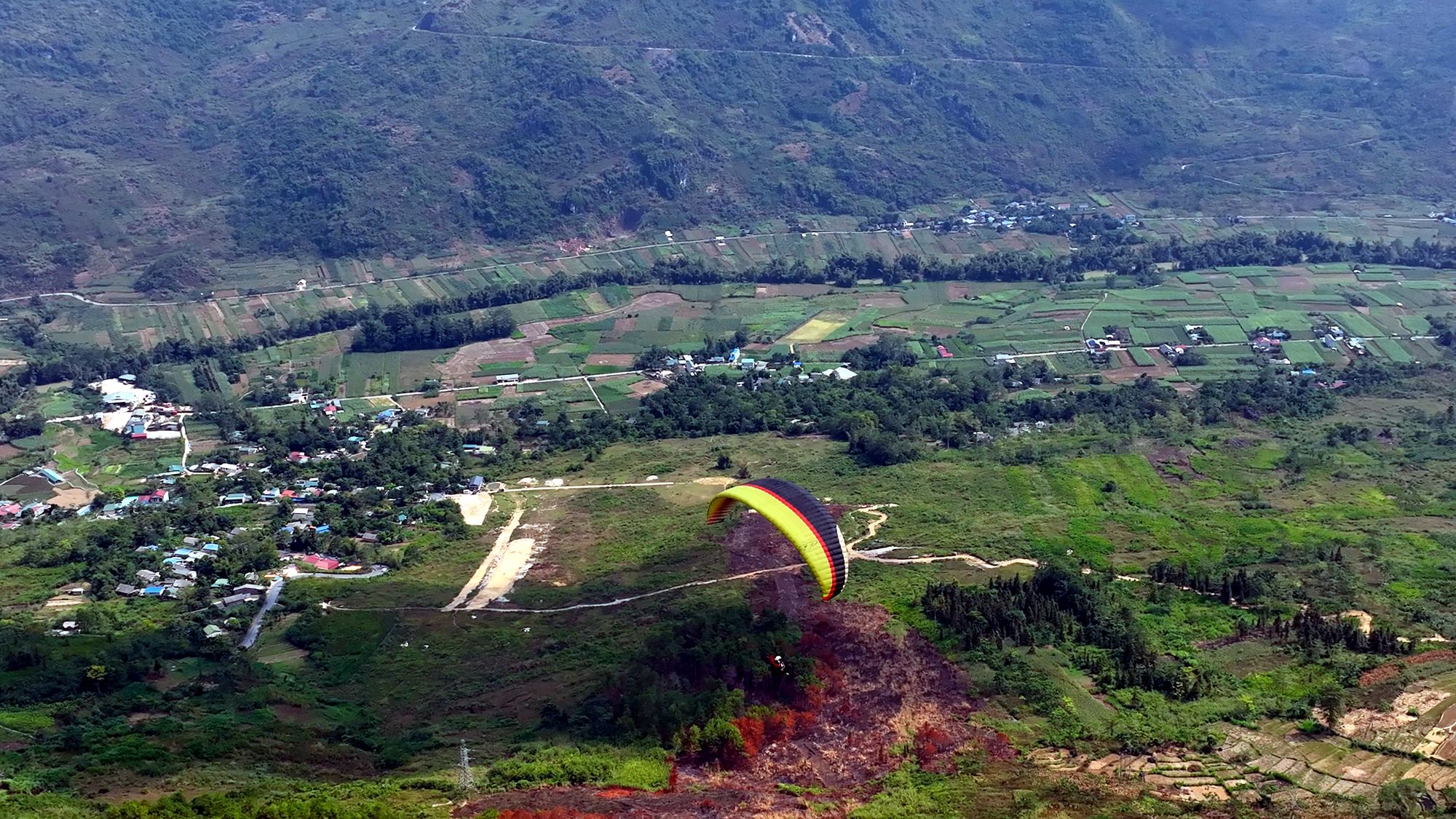
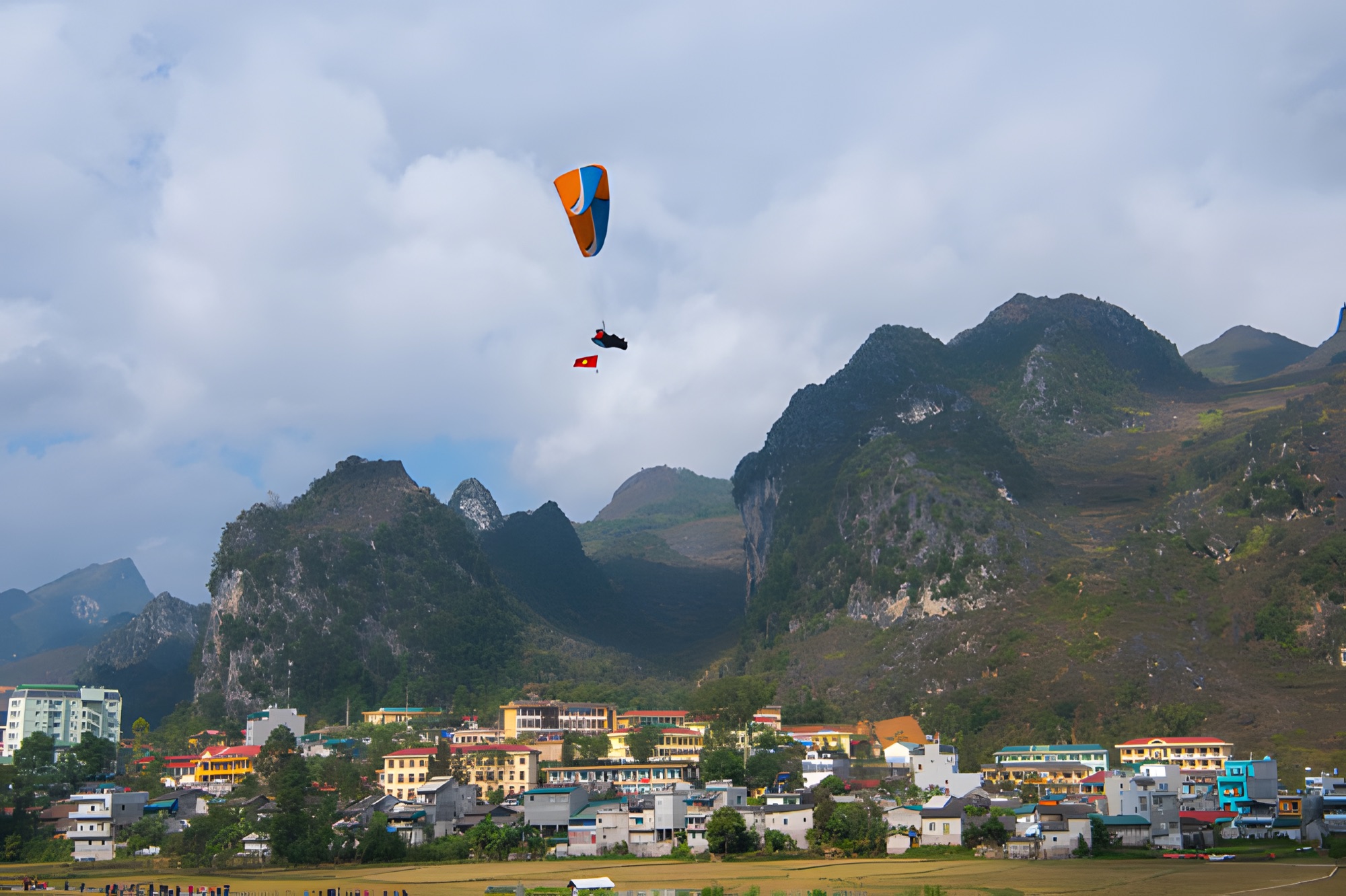
Add a flight at Quản Bạ
Quản Bạ is at about Km45, around 1 hour 15 minutes from Hà Giang city on QL4C, so many travellers fly on the first day of the Loop, before climbing onto the Rocky Plateau. Paragliding and paramotor flights run daily from 06:30 to 18:30, looking down over the Fairy Twin Mountains (núi đôi Cô Tiên), the Quản Bạ Heaven Gate and the Miện river valley. A standard 9–15-minute paragliding flight is 2,290,000 VND (≈ US$ 91) per person, and a standard 15-minute paramotor flight is 2,490,000 VND (≈ US$ 99) per person, GoPro video and insurance included.
If you have half a day free, you can check out the Quản Bạ flying site and then book a flight in advance with no deposit; you pay at check-in on the day of your flight. If the weather is bad, you can reschedule for free.
Frequently asked questions
What day is the Mèo Vạc market?
Every Sunday morning (by the ordinary calendar). It starts before dawn and thins out after about 10:00.
What time should I get there?
Before 7:00; roughly 6:30–10:00 is when it's busiest.
Can I visit both the Đồng Văn and Mèo Vạc markets on the same morning?
It's hard. Both run on Sunday morning, and between them lies the Mã Pí Lèng pass, about 35 km of road. Pick one market and take your time.
Is the Khâu Vai love market held every week?
No. It's held only once a year, on the 27th day of the 3rd lunar month (12–13 May in 2026).
Is it OK to photograph people at the market?
Yes, but ask first and respect it if someone says no.
Can I go paragliding as well as visiting the Mèo Vạc market?
Yes. The main flying site is at Quản Bạ (about Km45) and flies daily; many people fly on the first day of their Loop.
Cover photo: Nghia Bui – Zonitrip, CC BY-SA, Wikimedia Commons
Book a flight:book online — no deposit, free cancellation
Bắc Sum Pass or Quản Bạ? A side-by-side look at the two flying sites on the QL4C near Hà Giang city: distance, landing field, valley width, paragliding and paramotor, a flying morning at Quản Bạ, getting there and fitting the flight into the Hà Giang Loop…
Quản Bạ or Đồng Văn? An honest comparison of our two flying sites on the Hà Giang Loop: location, getting there, scenery, paragliding vs paramotor, what a flying session looks like, wind and schedule, price, and how to fly both…
The Chín Khoanh slope is a stack of hairpin bends on QL4C between Phố Cáo and Sủng Là, about 18 km past Yên Minh and 27 km before Đồng Văn: why it's called "nine coils", the best viewpoint, how to stop safely, how it differs from Thẩm Mã and what to see nearby…
A practical guide to the Mã Pí Lèng Sky Path, the cliff-edge walking trail above the Nho Quế River: the trailhead at the Youth Volunteers monument, the route section by section, the death rock closure (October 2026), what to wear, when to go and how to pair it with a Tu Sản canyon boat trip…
A guide to Lô Lô Chải, the Lô Lô village at the foot of the Lũng Cú flag tower: rammed-earth houses, costume and bronze drums, Café Cực Bắc, homestays, the road from Đồng Văn, 2026–2027 traffic rules and village etiquette…
The Yên Minh pine forest lines Highway 4C about 7–8 km before Yên Minh town on the Quản Bạ side: exact location, commune after the 2025 merger, best light, how to stop safely, what's nearby and how to fit it into a 3- or 4-day Loop…