Khâu Vai Love Market (Hà Giang): lunar date, 2027 date, how to get there from Mèo Vạc
A guide to the Khâu Vai love market (Chợ Phong Lưu), held once a year on the 27th day of the third lunar month: the legend of Ba and Út, the two shrines, the 2026 and 2027 dates, the road from Mèo Vạc, what happens at the festival, etiquette, where to sleep and how to plan your Hà Giang Loop.
Ms. Judy · · 16 min read
The Khâu Vai love market (Chợ tình Khâu Vai, also called Chợ Phong Lưu) is held only once a year, on the 27th day of the third lunar month, in Khâu Vai commune about 20–25 km from central Mèo Vạc; in 2026 the festival ran on 12–13 May, and in 2027 the lunar date falls on Monday 3 May 2027.
Plenty of Hà Giang Loop riders roll into Mèo Vạc on an ordinary Sunday morning expecting the "love market" and find only the weekly market. This guide explains what the Khâu Vai love market is, how to work out its date, how to get there from Mèo Vạc, what happens during the festival, what there is to see the rest of the year, and how to plan your Loop around a lunar date.
Quick facts
Info
Details (approximate, may change)
Names
Chợ tình Khâu Vai (Khâu Vai love market), Chợ Phong Lưu Khâu Vai
Location
Khâu Vai commune, about 20–25 km from central Mèo Vạc
Main day
27th day of the 3rd lunar month every year; people start arriving on the afternoon of the 26th
Keep reading
2026
Festival on 12–13 May 2026 (lunar 26–27/3), at the Mê cung đá (Stone Maze) ground, Khâu Vai commune
2027
Lunar 27/3 = Monday 3 May 2027; official festival dates not yet announced
Status
National intangible cultural heritage (certificate received 26 April 2022)
Where to sleep
Mèo Vạc is the most convenient; book very early for festival days
Combine with
Mèo Vạc Sunday market, Mã Pí Lèng pass, the Nho Quế River, Pả Vi Hạ village
What is the Khâu Vai love market?
Khâu Vai is a valley ringed by high mountains on the south-eastern side of the Rocky Plateau. Since 1 July 2025, Hà Giang has been merged into Tuyên Quang province and districts no longer exist; the new Khâu Vai commune combines the former communes of Khâu Vai, Lũng Pù and Cán Chu Phìn. When asking the way, people still say "Khâu Vai, Mèo Vạc, Hà Giang".
It is called a "market", but people never came here mainly to buy and sell. It is a day for meeting: friends, sweethearts, and even old lovers who never got to marry. That is why it is also known as the "chợ phong lưu" – roughly, the "romantic" or "free-spirited" market.
The legend of Ba and Út
The story goes that Ba was a young Nùng man, poor but a fine singer and flute player, and Út was the daughter of a Giáy clan chief. They fell in love, but her family refused the match because he was poor and from a different ethnic group. The couple fled to a mountain cave in Khâu Vai, and the two families came to blows, with blood spilt.
To end the fighting, Ba and Út parted on the 27th day of the third lunar month, promising to become husband and wife in their next life and to meet at the same place once a year. That promise gave birth to the once-a-year market. The press usually dates the market to 1919, and locals say it is more than 100 years old. Each source tells the legend a little differently, but all of them centre on the promise of the 27th day of the third month.
Miếu Ông and Miếu Bà shrines
In Khâu Vai village stand a pair of shrines, Miếu Ông ("his shrine") and Miếu Bà ("her shrine"), linked to the story of Ba and Út. According to local people, they were built where the two lovers died. At market time, an incense ceremony at the two shrines opens the festival, and people come to pray for love and good fortune. In early 2026 the shrine area was being restored ahead of the festival.
National intangible heritage
The social customs and beliefs of the Khâu Vai Phong Lưu market have been added to Vietnam's list of national intangible cultural heritage. The certificate was handed over on the evening of 26 April 2022, during that year's opening ceremony.
The market date: working out the lunar calendar
Because the market follows the lunar calendar, its Western date changes every year. From 2019 to 2030, the 27th day of the third lunar month always falls between roughly mid-April and mid-May.
Year
Lunar 27/3 (Western calendar)
Festival
2025
Thursday 24 April 2025
22–24 April 2025, opening at the central stadium in Mèo Vạc
2026
Wednesday 13 May 2026
12–13 May 2026, Mê cung đá ground, Khâu Vai commune
2027
Monday 3 May 2027
Not yet announced
The 2027 date was converted with the Vietnamese lunar calendar (UTC+7) and checked against a perpetual calendar; the same method gives exactly the 2022, 2025 and 2026 dates reported in the press. Lunar 26/3 in 2027 is Sunday 2 May 2027 – the same day as Mèo Vạc's Sunday market and right after Vietnam's 30 April–1 May holidays – so expect crowds.
How to check any year yourself:
Open a Vietnamese lunar–solar calendar converter (âm lịch) and look up the 27th day of the 3rd lunar month for your year.
The festival usually lasts 2–3 days and ends on or around the 27th. But dates and venue are set locally each year: in 2025 the opening was held in central Mèo Vạc; in 2022 and 2026 it was at the Mê cung đá in Khâu Vai.
About 3–4 weeks before market day, look for the official announcement on the Tuyên Quang provincial portal or in local newspapers, or ask a homestay in Mèo Vạc.
Getting from Mèo Vạc to Khâu Vai
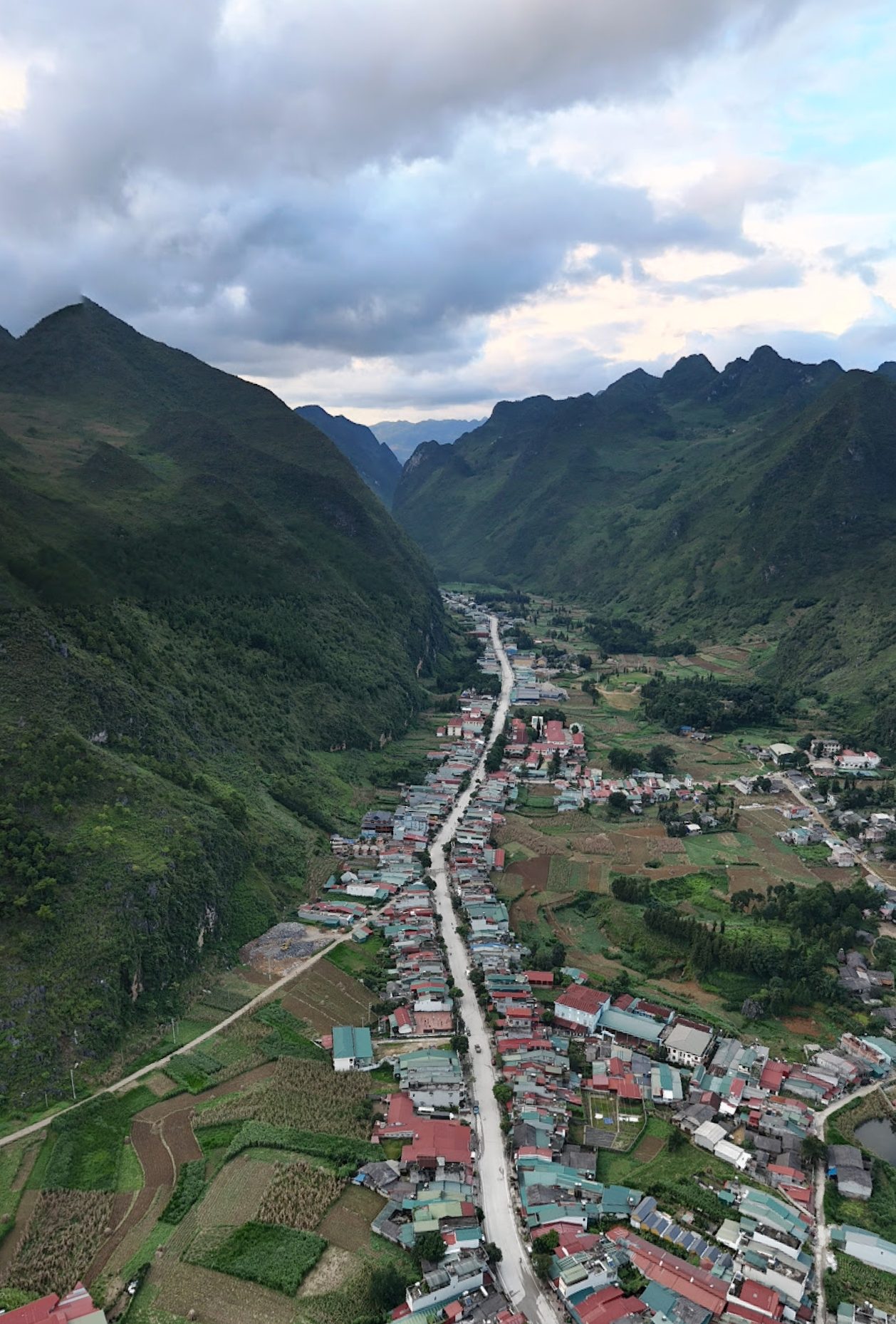
Most visitors treat Khâu Vai as a side trip from Mèo Vạc, the town at the end of Mã Pí Lèng pass, at around Km185 of the Loop. Khâu Vai is about 20–25 km from central Mèo Vạc depending on where you start (one source says up to 30 km). From town you leave QL4C on the edge of Mèo Vạc and follow a mountain road towards Khâu Vai; during the festival there are signs, on other days ask for directions at your guesthouse before you set off.
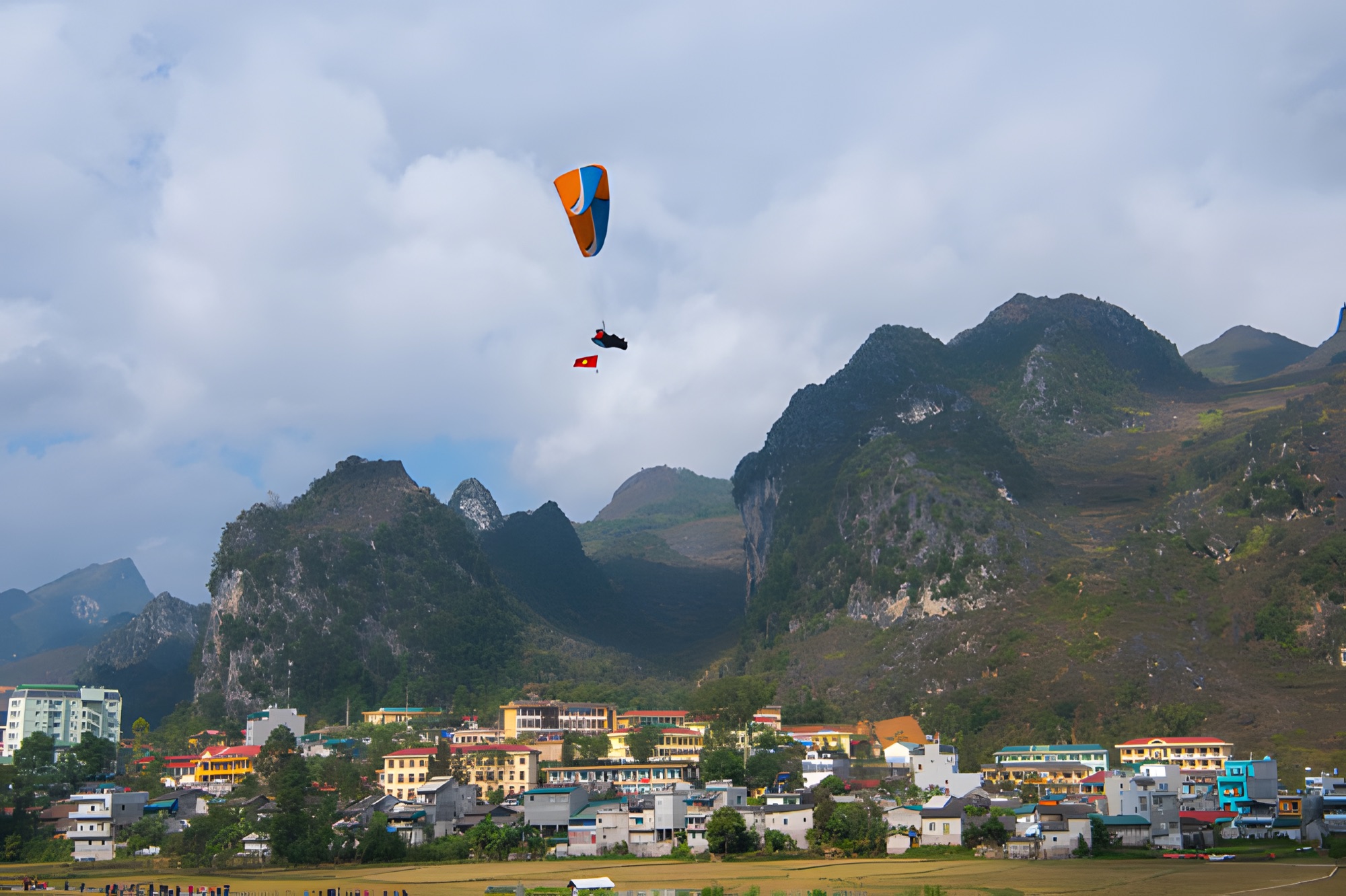
Mèo Vạc town from above — Photo: HuangWending18072009, CC0, Wikimedia Commons
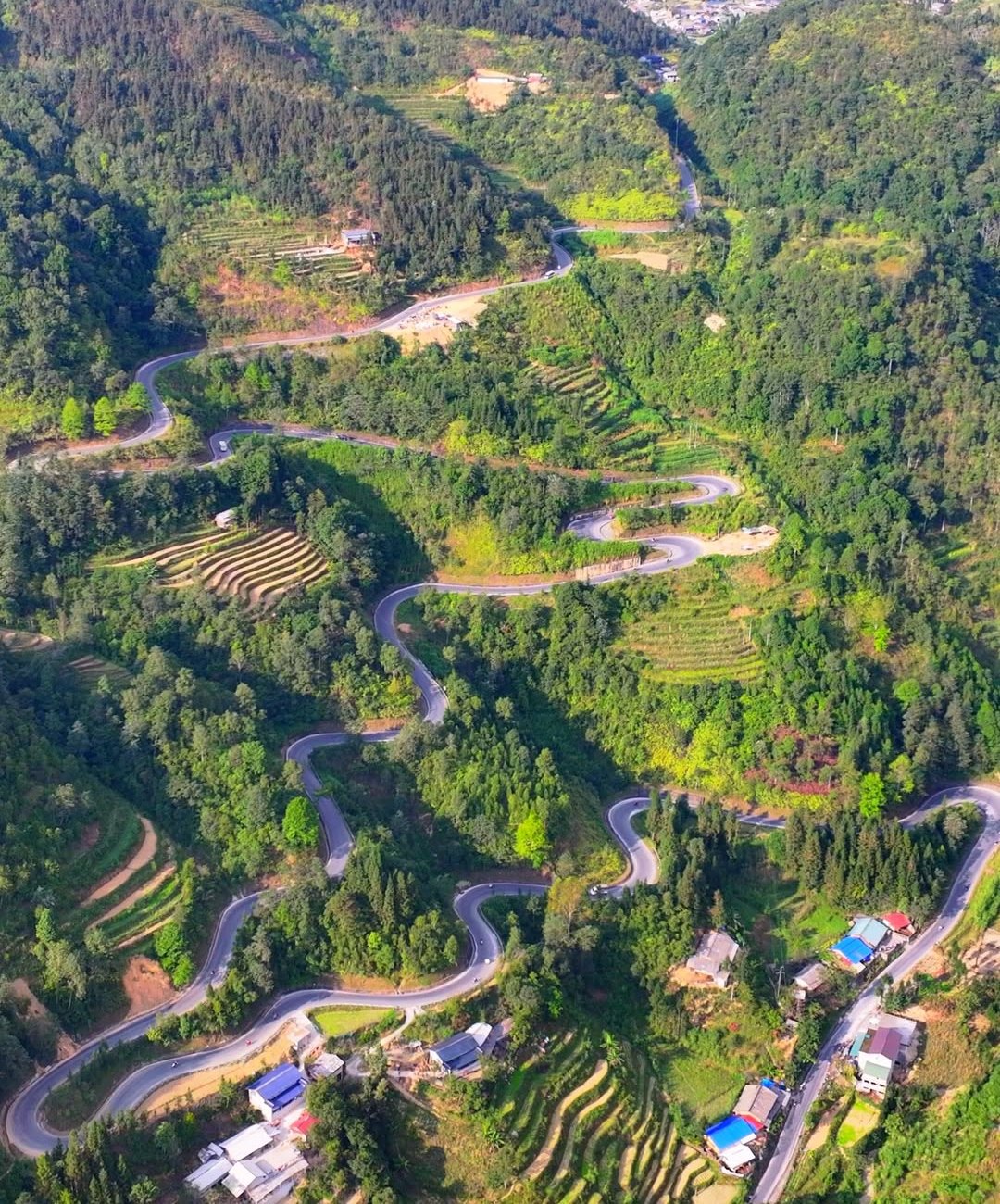
It is not a long ride, but it is a narrow mountain road with plenty of bends. Allow about an hour each way, not counting photo stops. On festival days, motorbikes, cars and people on foot all converge on one valley, so leave early, park where the organisers tell you and slow down near the festival ground.
Ride yourself or go with an easy rider?
The roads around Mèo Vạc are some of the trickiest on the Loop. If you are not used to mountain passes, especially in rain or fog, go with an easy rider or a local driver. They know the road and where to park, and they usually know people in the area. Our article on easy rider vs riding yourself compares the two.
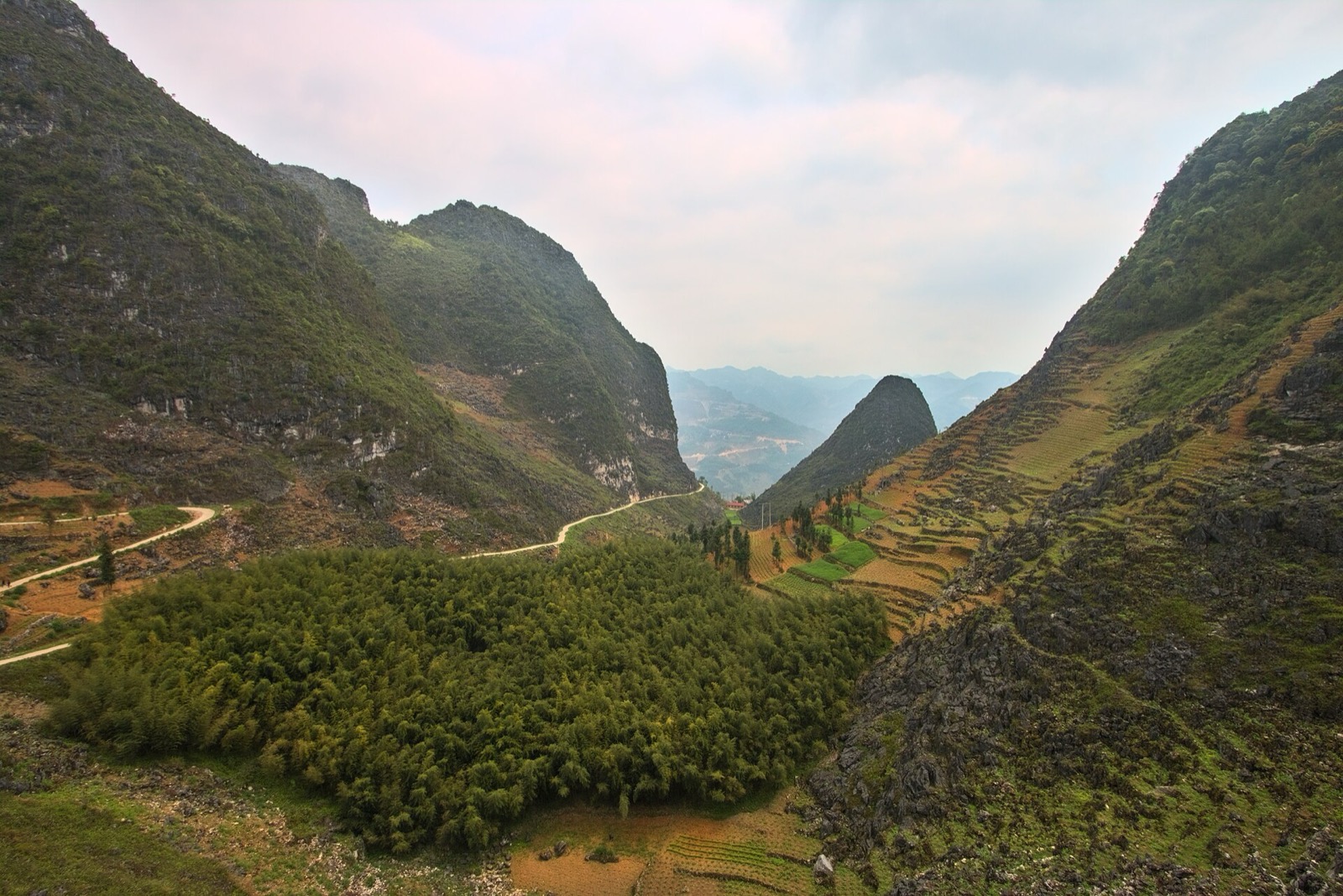
A dirt road threading through a limestone valley near Giàng Chu Phìn, Mèo Vạc — Photo: Benjamin Smith, CC BY-SA 4.0, Wikimedia Commons
A few safety notes:
Don't ride mountain roads after dark or in heavy rain.
Fill up with fuel and withdraw cash in Mèo Vạc before you go.
What happens during the festival?
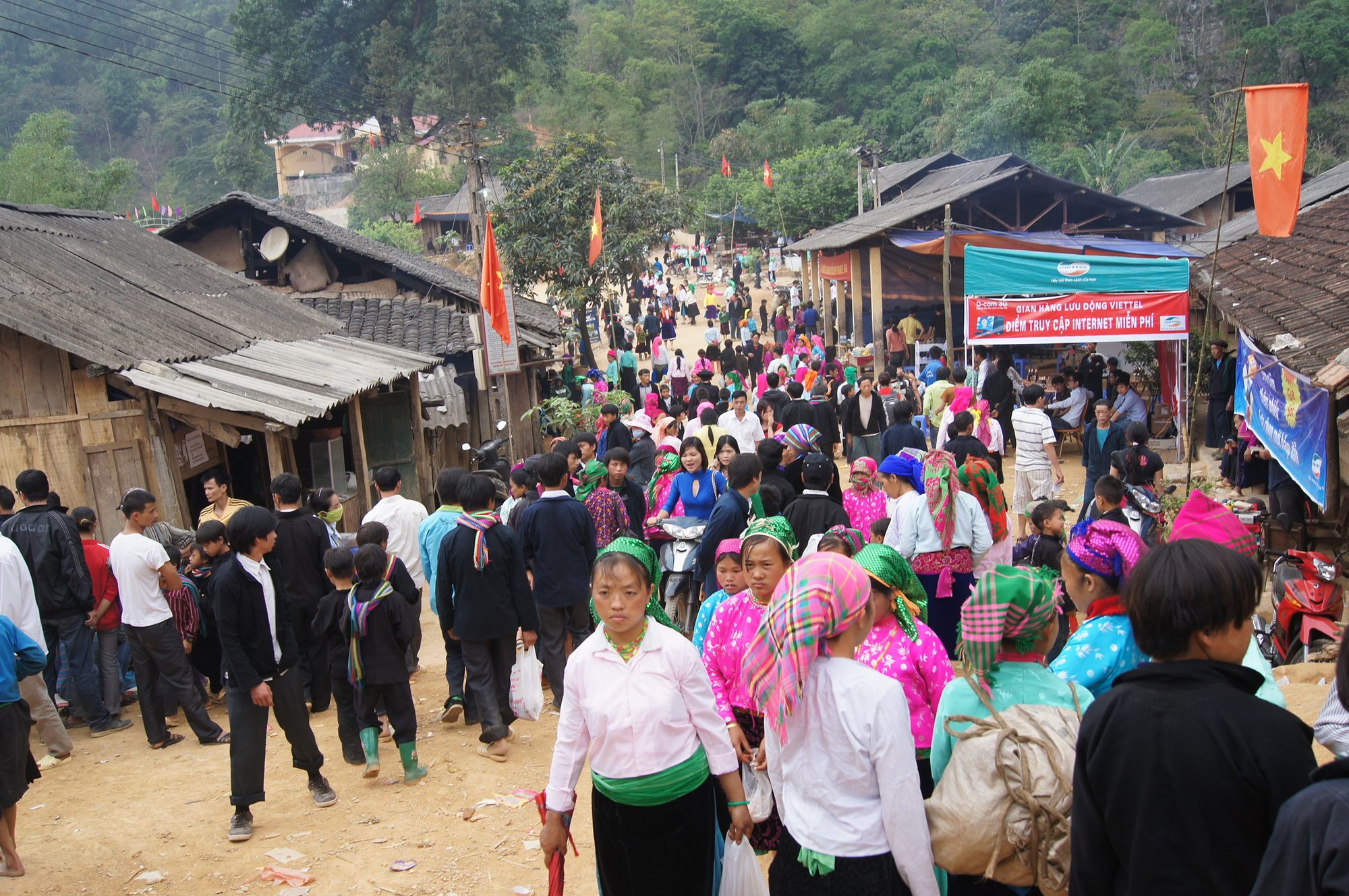
People start making their way to Khâu Vai on the afternoon of the 26th day of the third lunar month. They come from Tày, Nùng, Giáy, Hmong, Dao and Lô Lô villages around the region, and some cross over from Bảo Lạc in Cao Bằng province. Some stay the night with friends nearby.
Today the festival is organised by the local authorities, so it also includes ceremonies and a stage programme. In 2026 the programme included:
An incense ceremony at Miếu Ông and Miếu Bà and a love-blessing ritual (lễ cầu duyên), where participants tie a red thread around their wrist for love and good luck.
An opening night with Giáy folk songs, Hmong khèn (reed pipes), dances and a re-enactment of the Ba and Út love story.
Traditional costume shows by the Hmong, Lô Lô, Tày and Nùng peoples, and courtship singing.
Folk games and contests: ném pao (ball toss), đánh yến (shuttlecock), tug of war, stick pushing, pole climbing, tung còn (another courtship ball game), a songbird contest, a goat contest, a race carrying corn up to the fields and a Lũng Pù black-pig race.
Highland food: thắng cố (a hearty highland stew), mèn mén (steamed ground corn), buckwheat cakes and leaf-yeast corn wine.
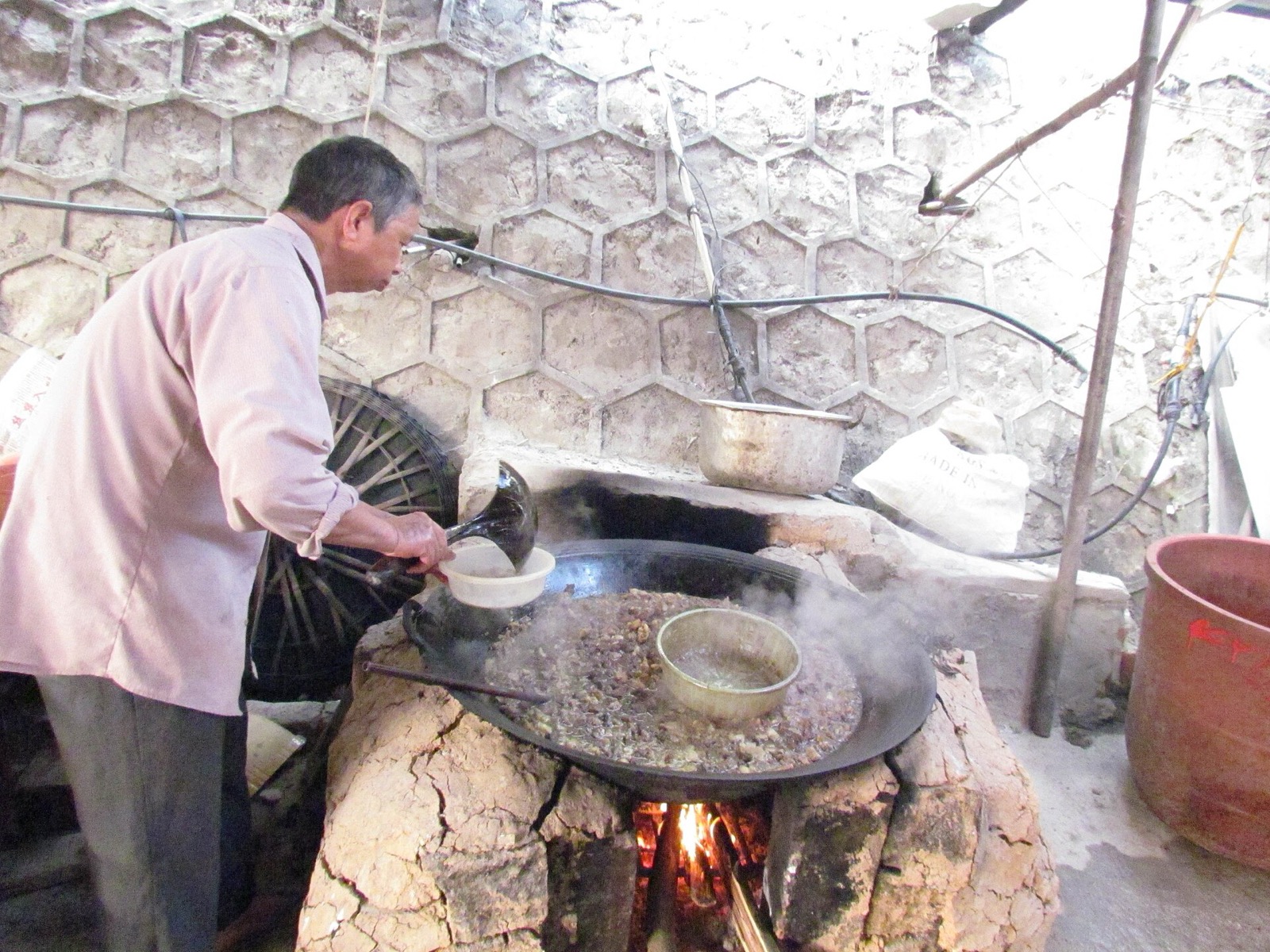
Thắng cố cooking in a big pan over a wood fire — Photo: Zennysmile, CC BY-SA 4.0, Wikimedia Commons
The programme changes from year to year, so check the detailed schedule once the organisers publish it. If you only have one day, choose the 27th, the market's main day.
The "free-spirited market", then and now
The old custom is unusual: married people can come too, and a husband and wife may even arrive together and then each go off to find old friends, without jealousy. Locals say this is accepted only on market day; outside it, such meetings are considered against custom.
It is also worth knowing in advance that many Vietnamese newspapers note the market now draws lots of tourists, has more buying and selling, and has lost some of its old simplicity. Come expecting a community festival, not the secret lovers' rendezvous of the legend.
Outside the festival: what is there to see in Khâu Vai?
Apart from those few festival days, there is no "love market" to see in Khâu Vai. But if you like quiet roads, a half-day side trip from Mèo Vạc is still worthwhile:
Miếu Ông and Miếu Bà in Khâu Vai village: where the story begins, far calmer than on festival days. Dress modestly and keep your voice down.
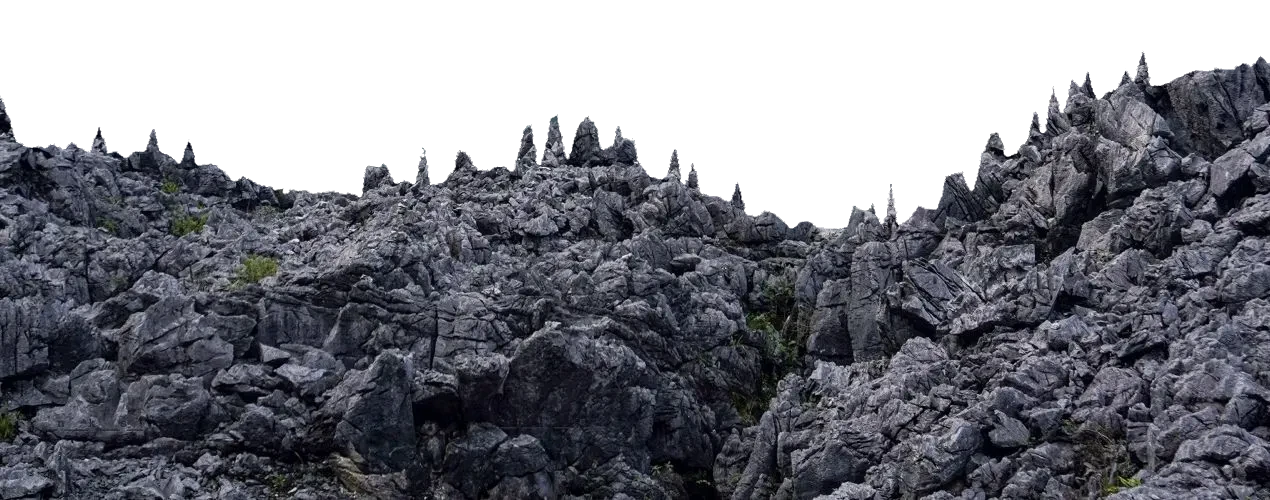
The Mê cung đá (Stone Maze) ground: the rocky area where the 2022 and 2026 festivals were held, also a well-known photo spot.
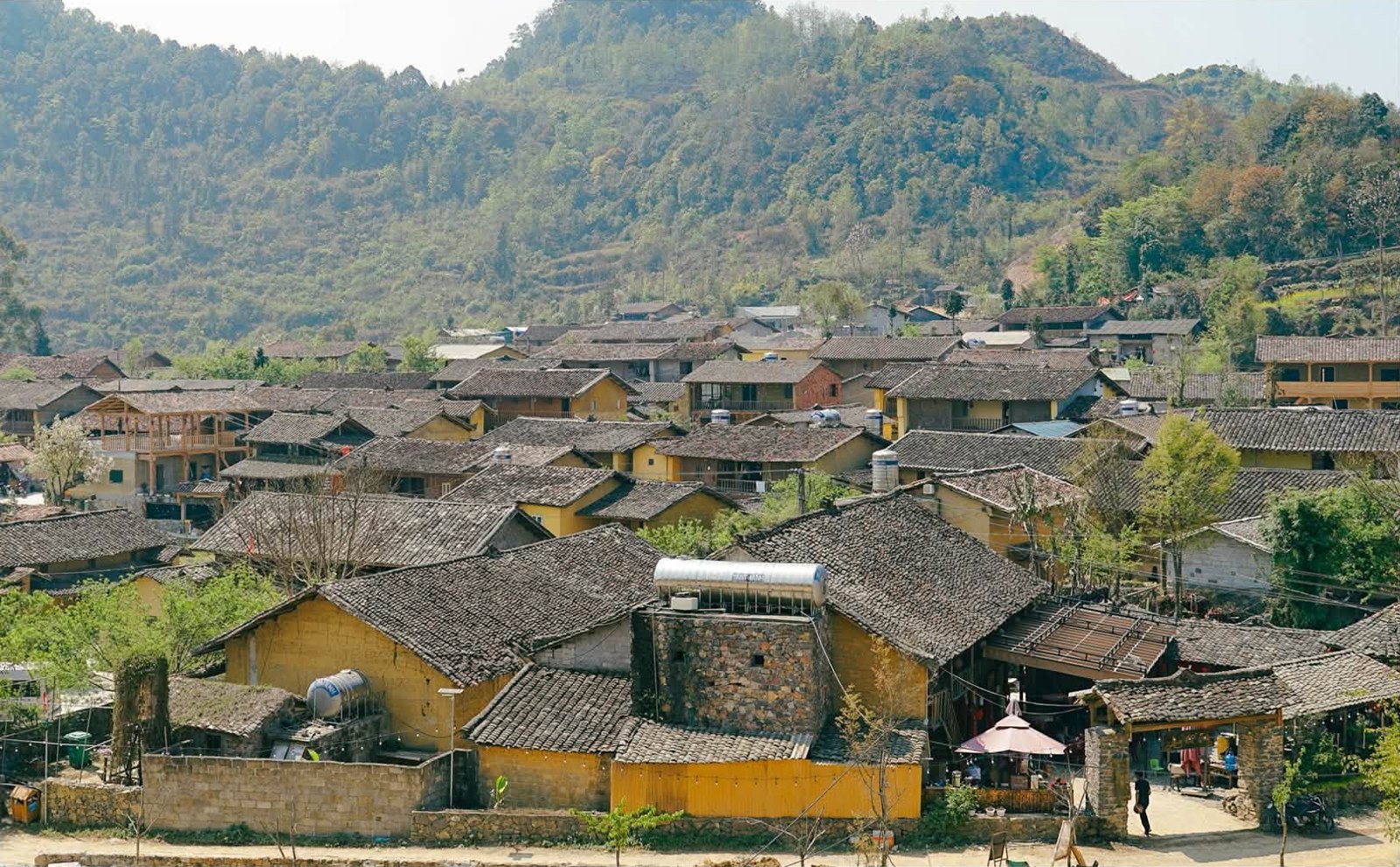
The road and the valley: limestone peaks, corn fields and dry-stone walls along the way from Mèo Vạc.
The village: houses, corn plots and little paths around the hamlet. Walk slowly, say hello, and ask before stepping into anyone's yard.
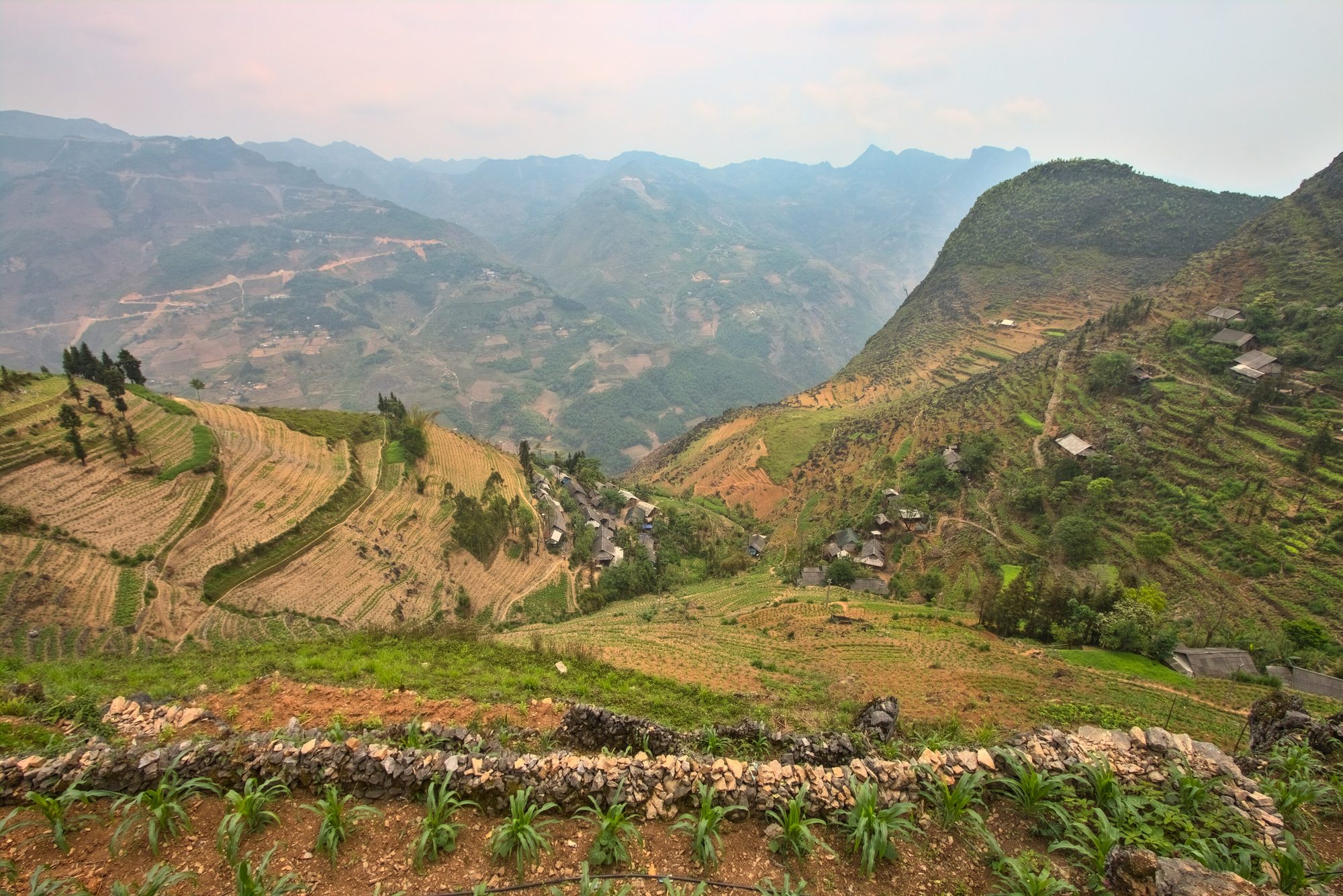
Terraces and stone walls near Giàng Chu Phìn, Mèo Vạc, in mid-April — Photo: Benjamin Smith, CC BY-SA 4.0, Wikimedia Commons
The best season for the roads outside the festival is the best season for the whole Loop: October to December is drier with clearer skies, and mornings and evenings are cold (often 5–15 °C in November–December). From late December to January there can be frost on the high plateau.
Etiquette at the love market
This is first and foremost a day for local people. Don't push into groups who are chatting, especially couples.
Ask before taking photos, particularly of older people and children. If someone shakes their head, put the camera away.
At the two shrines: stand behind people who are praying, don't climb onto the altar or touch the offerings, and ask whoever is in charge before photographing a ceremony.
Drones: ask the organisers first and never fly close to crowds.
Corn wine: you will be offered plenty at the market; accepting a cup is polite, but drink in moderation and never ride or drive afterwards.
Rubbish: bring a bag and carry your rubbish out of the festival area.
How is the Khâu Vai love market different from the Mèo Vạc Sunday market?
The two are often confused. Here is how they differ.
Meeting, courtship, rituals at the two shrines, festival
Trade: food stalls, corn wine, clothes, livestock
Busiest
Afternoon/evening of lunar 26/3 and the 27th
Roughly 6:30–10:00
Book a room early?
Absolutely
Book before Saturday night
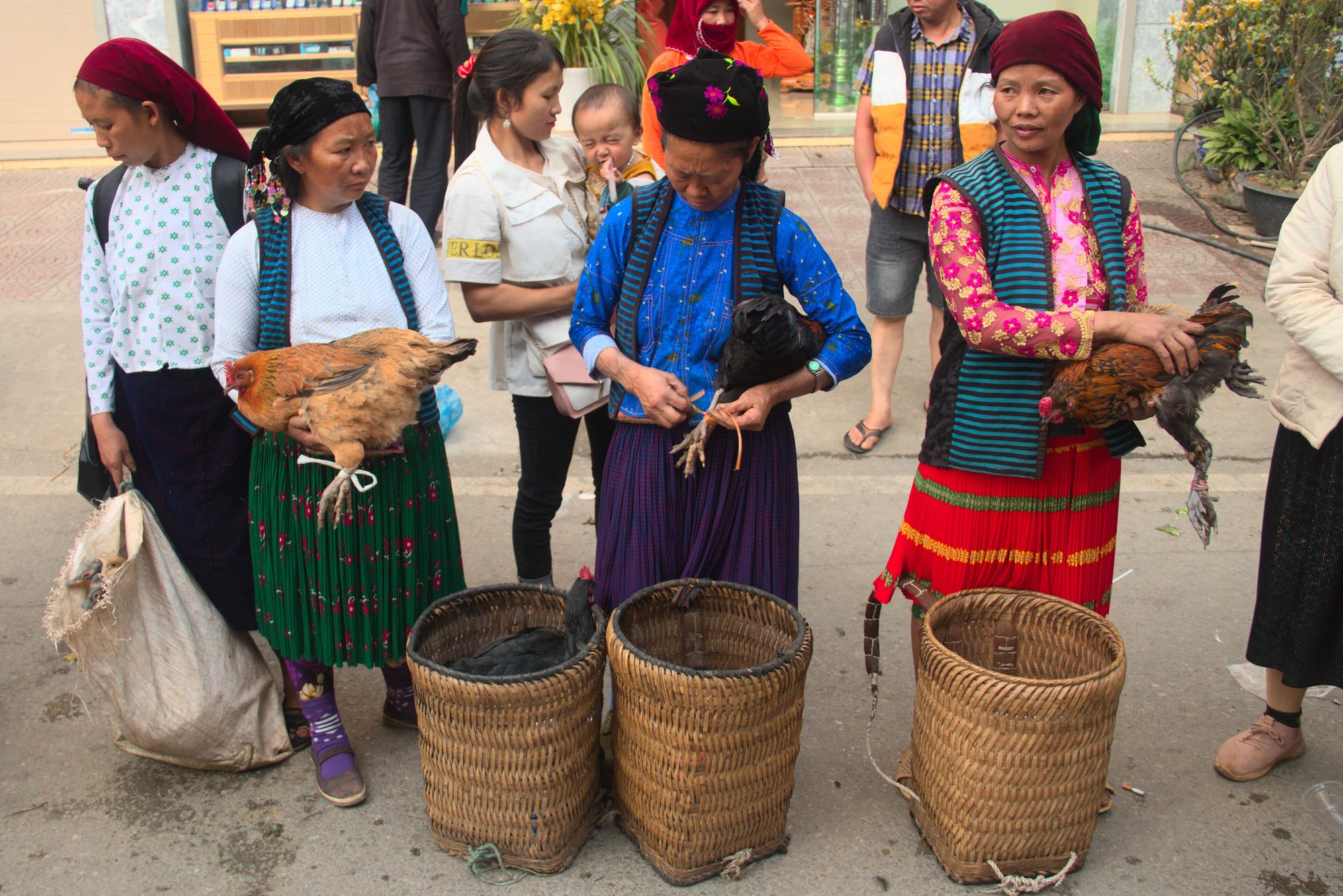
Women with chickens and baskets at Mèo Vạc market — Photo: Benjamin Smith, CC BY-SA 4.0, Wikimedia Commons
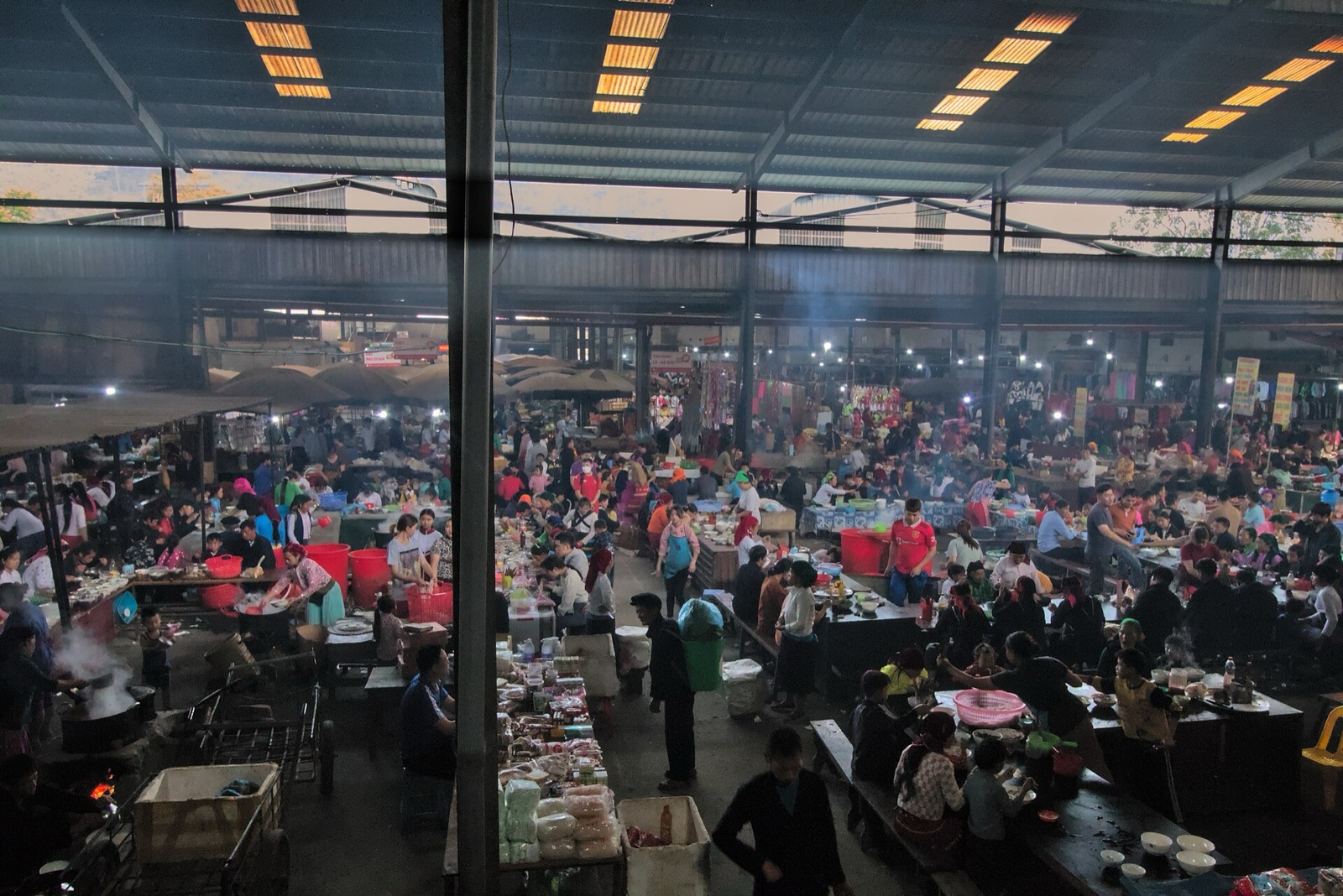
Mèo Vạc's Sunday market starts before dawn and has a row of corn-wine stalls run by women, stalls selling thắng cố, mèn mén, cháo ấu tẩu (a medicinal rice porridge) and five-colour sticky rice, plus a livestock area. If your trip doesn't coincide with lunar 27/3, this is the highland market worth a morning. In 2027, lunar 26/3 falls on a Sunday, so you could do the Mèo Vạc market in the morning and head to Khâu Vai in the afternoon.
Where to sleep: book early, stay in Mèo Vạc
During the festival, thousands of locals and visitors pour into one small commune, so rooms in Mèo Vạc and around Khâu Vai go fast. A few tips:
Stay in Mèo Vạc and visit Khâu Vai as a day trip. The town has guesthouses, small hotels and places to eat, and there are homestays in villages nearby such as Pả Vi Hạ.
Book as soon as your dates are fixed – don't wait for the official festival announcement. In 2027 the market follows straight on from the 30 April–1 May holidays, another reason to book early.
Ask the details when booking: where the room is, how far from Khâu Vai, and whether there is parking.
Bring cash for rooms, food and parking.
The food stalls under the roof of Mèo Vạc market — Photo: Benjamin Smith, CC BY-SA 4.0, Wikimedia Commons
The easiest way is to count back from market day so that you are already sleeping in Mèo Vạc on the night of lunar 26/3. On the usual direction (Hà Giang city → Quản Bạ → Yên Minh → Đồng Văn → Mã Pí Lèng → Mèo Vạc → Du Già), it could look like this:
Day 1: Hà Giang city → Quản Bạ (around Km45) → Yên Minh or Đồng Văn.
Day 2: Around Đồng Văn, sleep in Đồng Văn.
Day 3 (lunar 26/3): Ride over Mã Pí Lèng pass, with the Mã Pí Lèng Sky Path or a Nho Quế River boat trip in the morning; check in in Mèo Vạc in the afternoon. If you still have energy, go to Khâu Vai for the opening night (if it is held on the evening of the 26th) and come back before it gets too late.
Day 4 (lunar 27/3): Early start for Khâu Vai, enjoy the festival until midday, return to Mèo Vạc.
Day 5: Mèo Vạc → Du Già (about 80 km, 3–4 hours of riding) → Hà Giang city.
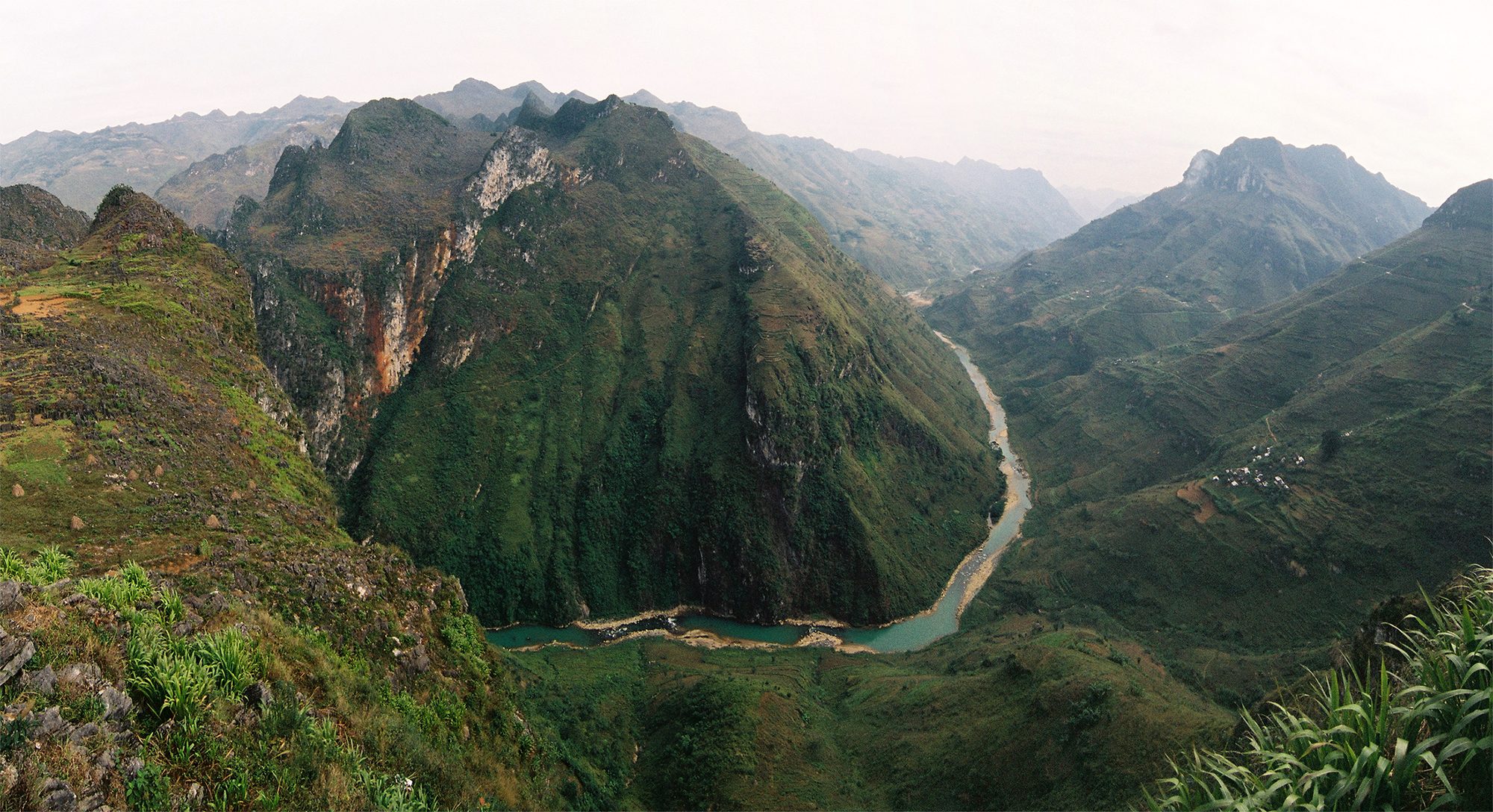
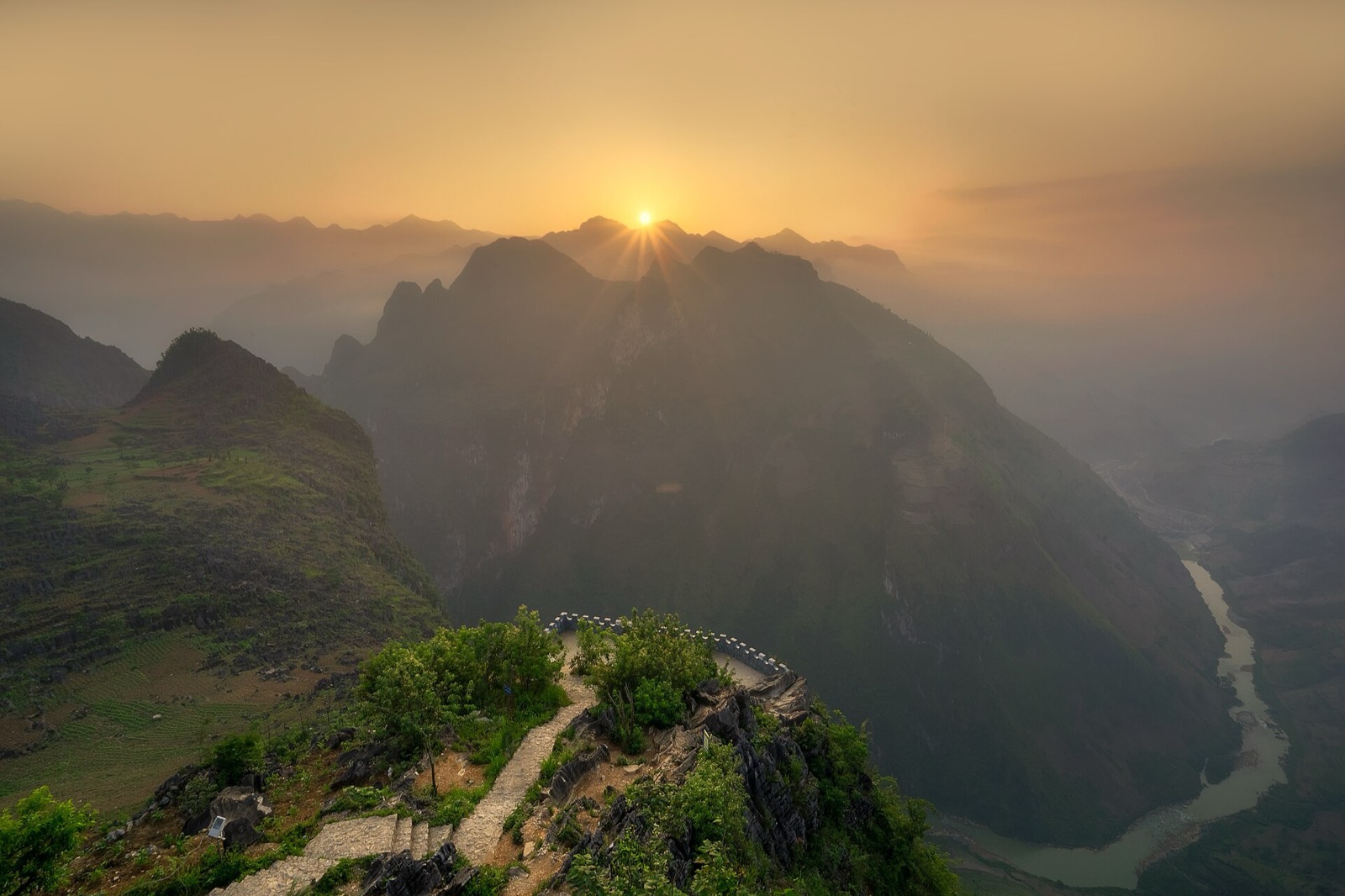
The Nho Quế River from Mã Pí Lèng pass, the stretch just before Mèo Vạc — Photo: Khánh Hmoong, CC BY 2.0, Wikimedia Commons
Don't ride from Mèo Vạc to Du Già late in the afternoon after the festival. If your dates don't match the market, the 4-day, 3-night Hà Giang Loop itinerary is a good framework.
A flight on the way
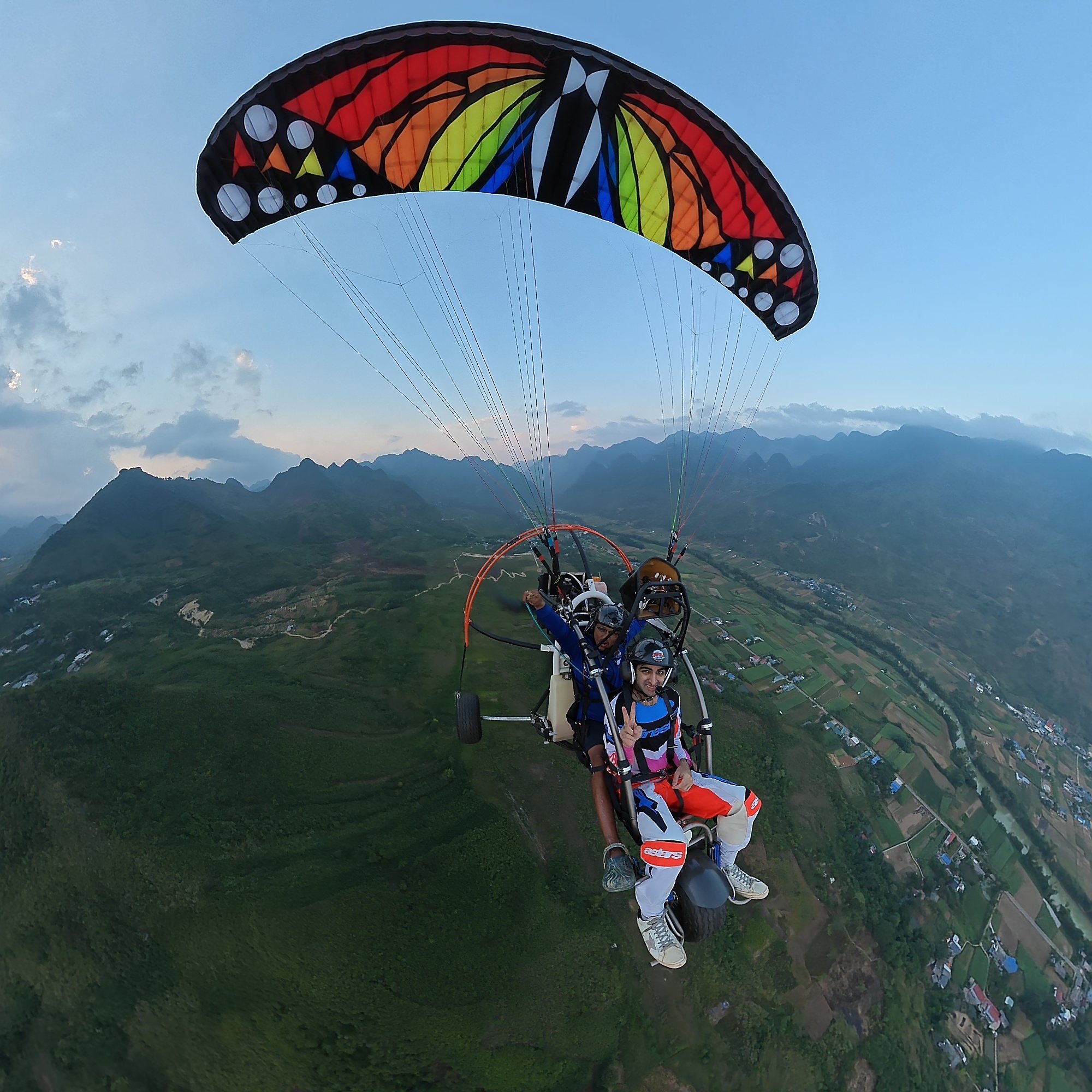
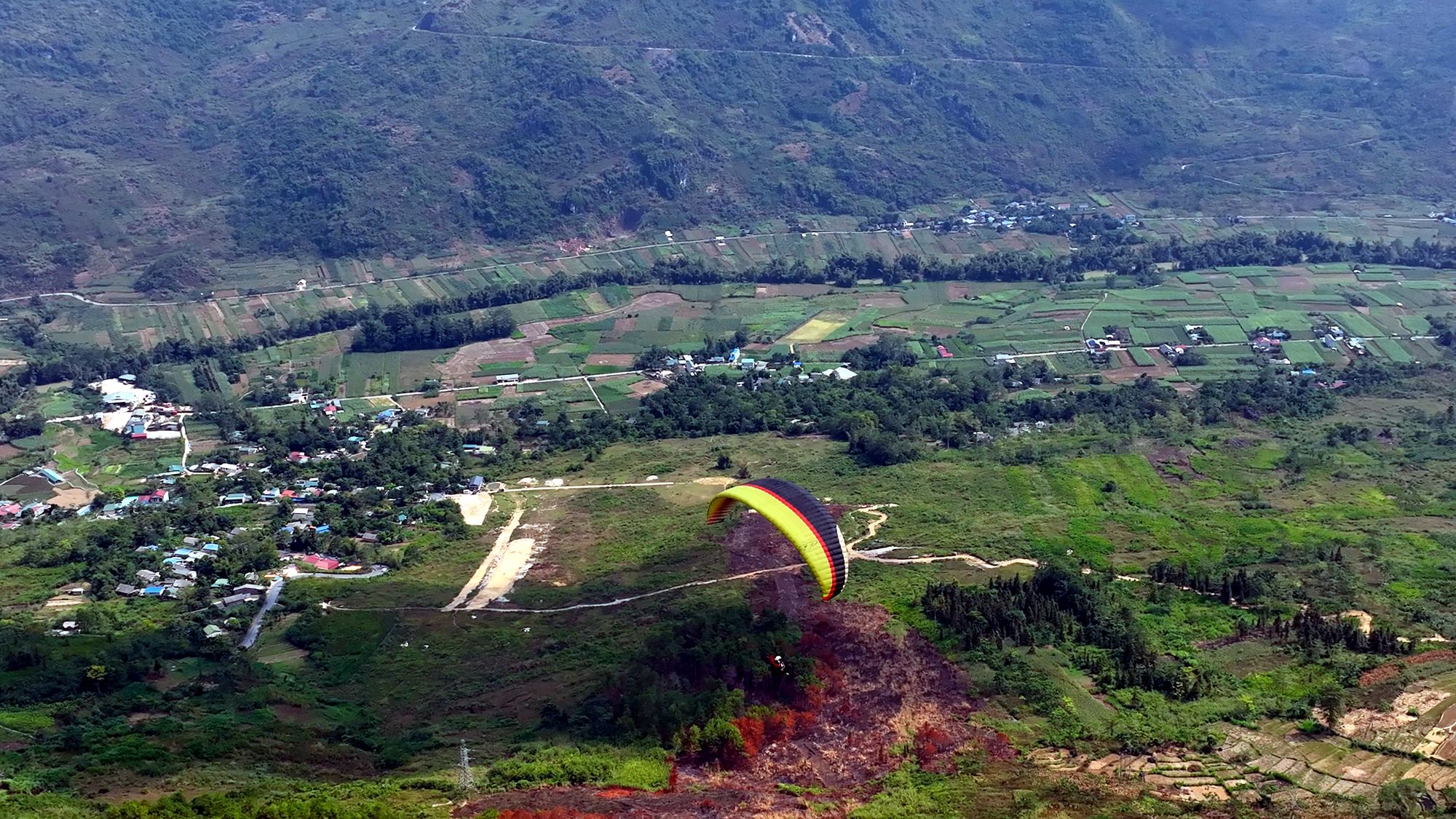
On your way up, at Quản Bạ (around Km45, about 1 hour 15 minutes from Hà Giang city on QL4C), the Mebayluon flying team flies tandem paragliders and paramotors every day from 06:30 to 18:30 over the Miện River valley and the Fairy Twin Mountains (núi đôi Cô Tiên). A standard 9–15-minute paragliding flight (depending on the wind) costs 2,290,000 VND (≈ US$ 91) per guest, and a 15-minute paramotor flight 2,490,000 VND (≈ US$ 99), GoPro video and insurance included. If you'd like to add a flight on the way to Mèo Vạc, see the Quản Bạ flying site or our guide to paragliding in Hà Giang.
Paramotor flight over the Quản Bạ valley
Frequently asked questions
When is the Khâu Vai love market in 2027?
The 27th day of the third lunar month in 2027 is Monday 3 May 2027 (the 26th is Sunday 2 May). The official festival schedule is announced locally, usually a few weeks before market day.
Is the Khâu Vai love market held every week?
No. It is held once a year, around the 27th day of the third lunar month. The weekly market is the Mèo Vạc market on Sunday mornings.
How far is Khâu Vai from Mèo Vạc?
About 20–25 km of mountain road, depending on where you start; allow about an hour each way.
Can tourists join the festival?
Yes. Visitors can watch the ceremonies, folk games and performances and eat at the food stalls. Ask before taking photos and respect the rituals at the two shrines.
Is Khâu Vai worth visiting outside the festival?
Yes, if you have an extra half-day in Mèo Vạc and enjoy quiet roads: you will see the two shrines, the valley and the villages. Just don't expect any love market.
Cover photo: Hoangvantoanajc, CC BY-SA 3.0, Wikimedia Commons
Book a flight:book online — no deposit, free cancellation
Bắc Sum Pass or Quản Bạ? A side-by-side look at the two flying sites on the QL4C near Hà Giang city: distance, landing field, valley width, paragliding and paramotor, a flying morning at Quản Bạ, getting there and fitting the flight into the Hà Giang Loop…
Quản Bạ or Đồng Văn? An honest comparison of our two flying sites on the Hà Giang Loop: location, getting there, scenery, paragliding vs paramotor, what a flying session looks like, wind and schedule, price, and how to fly both…
The Chín Khoanh slope is a stack of hairpin bends on QL4C between Phố Cáo and Sủng Là, about 18 km past Yên Minh and 27 km before Đồng Văn: why it's called "nine coils", the best viewpoint, how to stop safely, how it differs from Thẩm Mã and what to see nearby…
A practical guide to the Mã Pí Lèng Sky Path, the cliff-edge walking trail above the Nho Quế River: the trailhead at the Youth Volunteers monument, the route section by section, the death rock closure (October 2026), what to wear, when to go and how to pair it with a Tu Sản canyon boat trip…
A guide to Lô Lô Chải, the Lô Lô village at the foot of the Lũng Cú flag tower: rammed-earth houses, costume and bronze drums, Café Cực Bắc, homestays, the road from Đồng Văn, 2026–2027 traffic rules and village etiquette…
The Yên Minh pine forest lines Highway 4C about 7–8 km before Yên Minh town on the Quản Bạ side: exact location, commune after the 2025 merger, best light, how to stop safely, what's nearby and how to fit it into a 3- or 4-day Loop…