Nậm Đăm cultural village near the Quản Bạ flying site
Tips for visiting the Red Dao village of Nậm Đăm in Quản Bạ: how to get there, what to see, staying in a rammed-earth homestay, what to eat, village etiquette and how to fit in a paragliding flight the next morning with free pick-up.
Ms. Judy · · 16 min read
Nậm Đăm cultural village is a Red Dao community in the Quản Bạ valley, just a few kilometres of concrete road from central Quản Bạ (the former Tam Sơn town). The village lies inside the flight team's free pick-up and drop-off area, so you can sleep a night in a rammed-earth house and go paragliding or paramotoring the next morning.
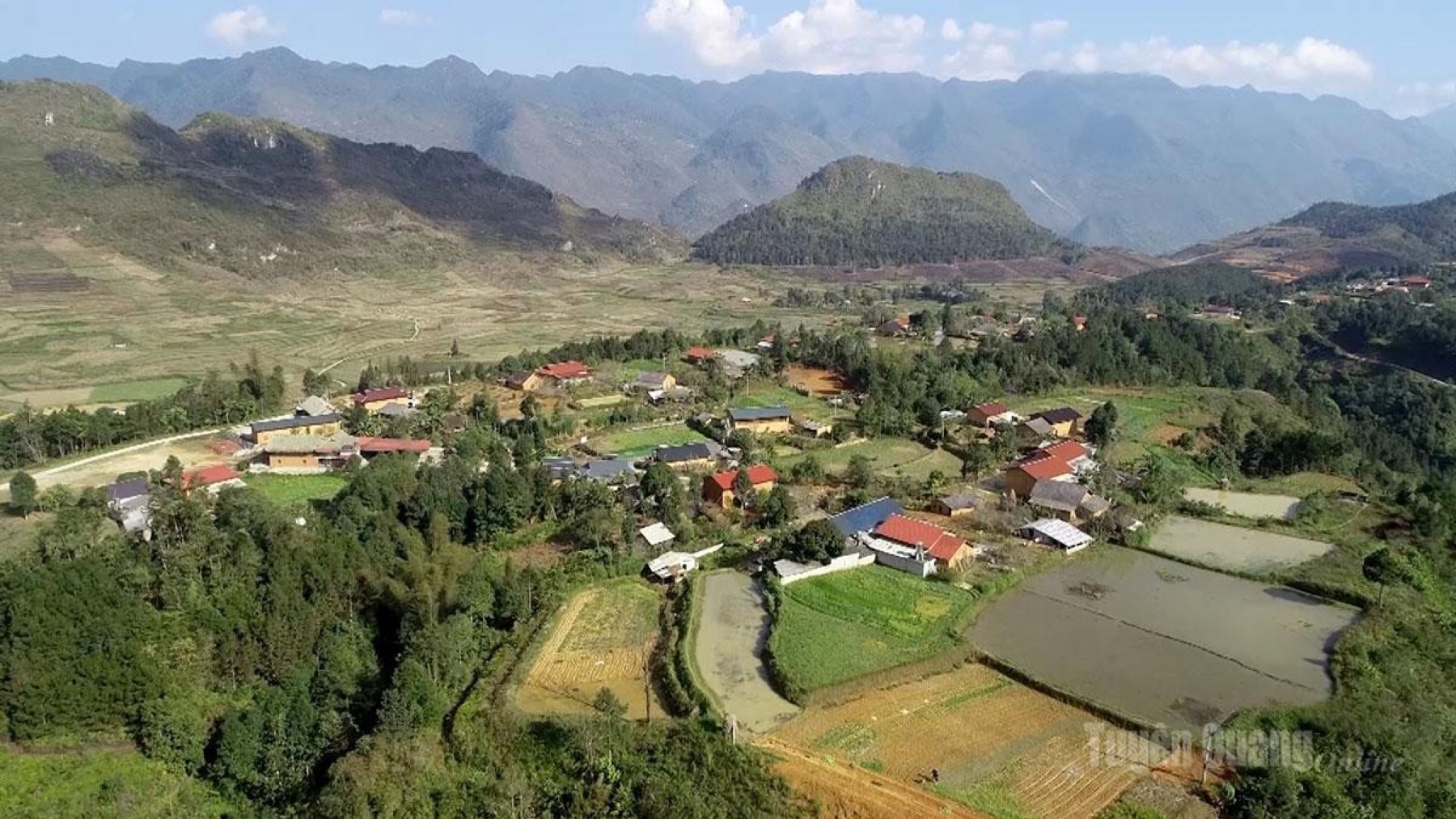
Many people riding the Hà Giang Loop stop only at Quản Bạ Heaven's Gate for a few photos, then head straight on to Yên Minh. If you have an extra half day, turning off to Nậm Đăm is the easiest way to see a village that still keeps its everyday rhythm: kitchen smoke in the late afternoon, a lane curving around fields and ponds, rooftops sitting at the foot of the mountains. Nậm Đăm is a community-tourism village where families host overnight guests, yet the atmosphere stays slow and quiet.
This article gathers everything you need for a visit to Nậm Đăm: how to get there, what to see, what homestays are like, what to eat, how to behave in the village and how to fit a Quản Bạ paragliding flight into the following morning. Since 1 July 2025, Hà Giang province has been merged into Tuyên Quang province, so on paper Nậm Đăm now belongs to Tuyên Quang; travellers still simply call the area "Hà Giang".
Where is Nậm Đăm and how do you get there?
Nậm Đăm sits in the Quản Bạ valley, at roughly Km45 of the Loop counting from Hà Giang city. From the city, follow National Road 4C for about 45 km, over the Bắc Sum pass and through Quản Bạ Heaven's Gate; it takes about 1 hour 15 minutes without stopping, or allow 1 hour 30 minutes or more if you stop for photos along the way. In central Quản Bạ, turn onto the side road and continue a few more kilometres to the village.
Keep reading
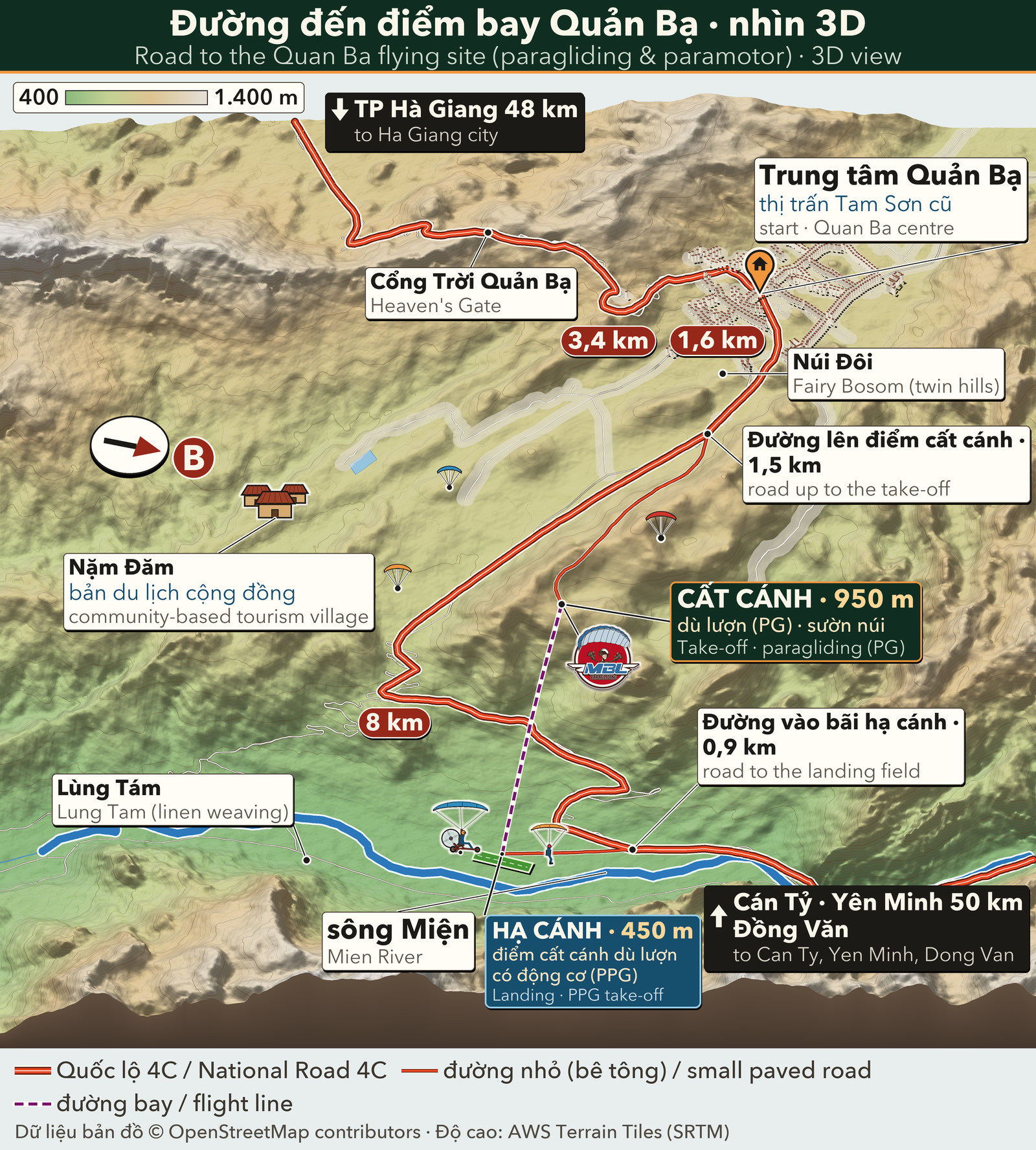
3D map: National Road 4C through Heaven's Gate down to central Quản Bạ, the twin hills, Nậm Đăm village, Lùng Tám, the 950 m paragliding take-off and the 450 m landing field by the Miện River
Info
Details
Location
Quản Bạ valley, around Km45 of the Hà Giang Loop
From Hà Giang city
About 45 km to central Quản Bạ, roughly 1 hour 15 minutes, then a few more km of side road
Inhabitants
Red Dao people
Time to allow
2–3 hours for a stroll, or one night if you want to fly early the next morning
Accommodation
Family homestays, many in rammed-earth houses
Pick-up for flights
Free, within the Quản Bạ area
There are several ways to reach the village:
Riding your own motorbike: the side road is small but concreted, and both motorbikes and cars can get through. The last stretch has a few tight bends; go slowly and sound your horn before blind corners.
Easy rider or tour: many Loop tours stop for lunch or the first night around Quản Bạ, so you can ask your driver to turn off to Nậm Đăm. Read more: easy rider or riding yourself?
Car: cars can drive right into the village. If you are travelling in a large coach, ask your homestay beforehand about parking and how to get in.
Public bus: buses from the city to Yên Minh and Đồng Văn all pass through central Quản Bạ. Get off there and ask your homestay to pick you up.
The village road and what to watch out for
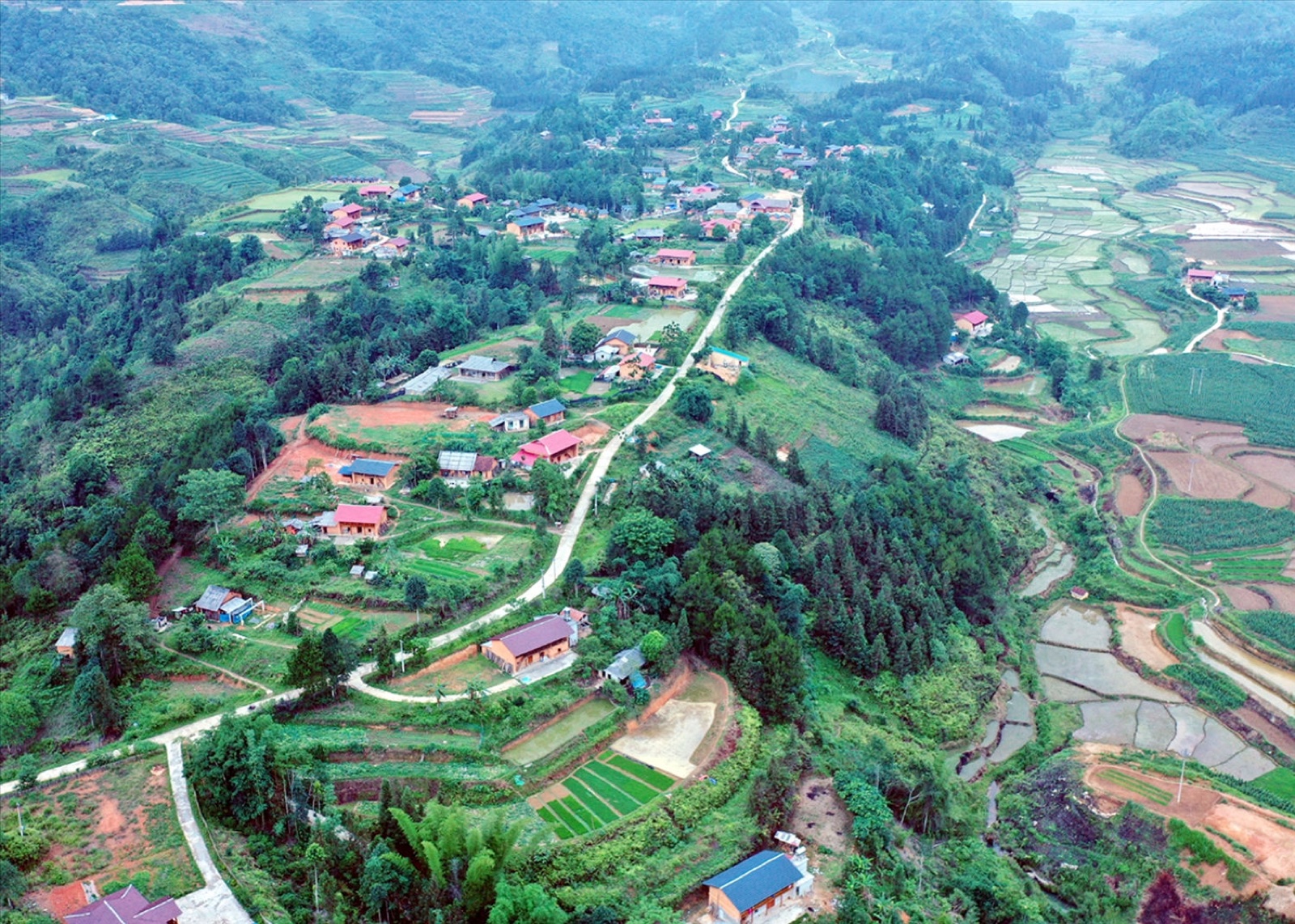
The concrete road running through Nậm Đăm, with ponds, terraced fields and houses on both sides
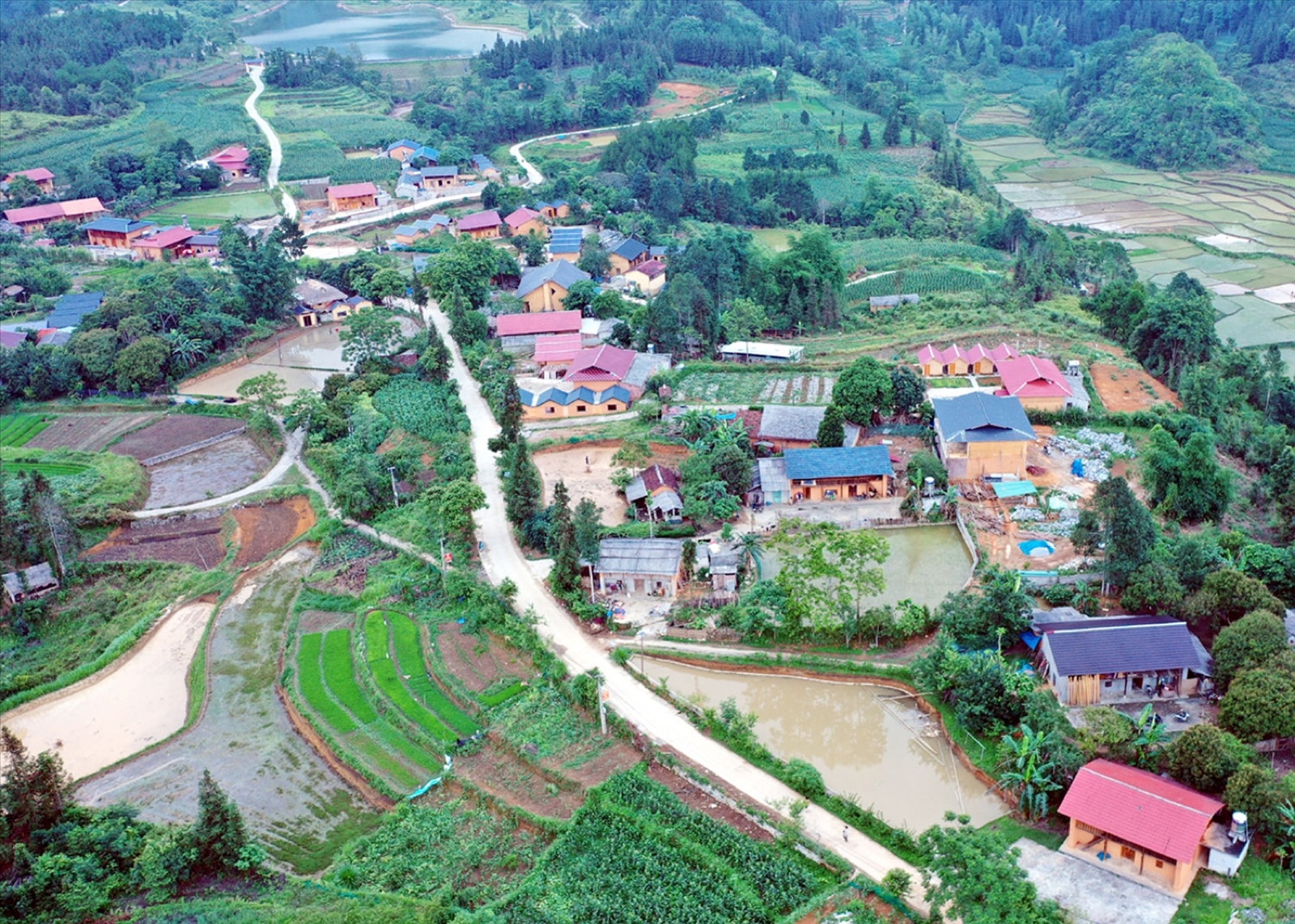
The road into the village runs between rice fields, fish ponds and maize gardens, with houses scattered along both sides. It is narrow, many sections are tight when two vehicles pass, and buffalo, cows and children may be walking right in the middle of it. Try to arrive before dark, especially from late autumn to early spring, when fog settles early in the valley. Fill up your tank and withdraw cash in central Quản Bạ before heading in: there is no petrol station in the village, and don't count on an ATM.
On the way in: the Fairy Twin Mountains and the Quản Bạ valley
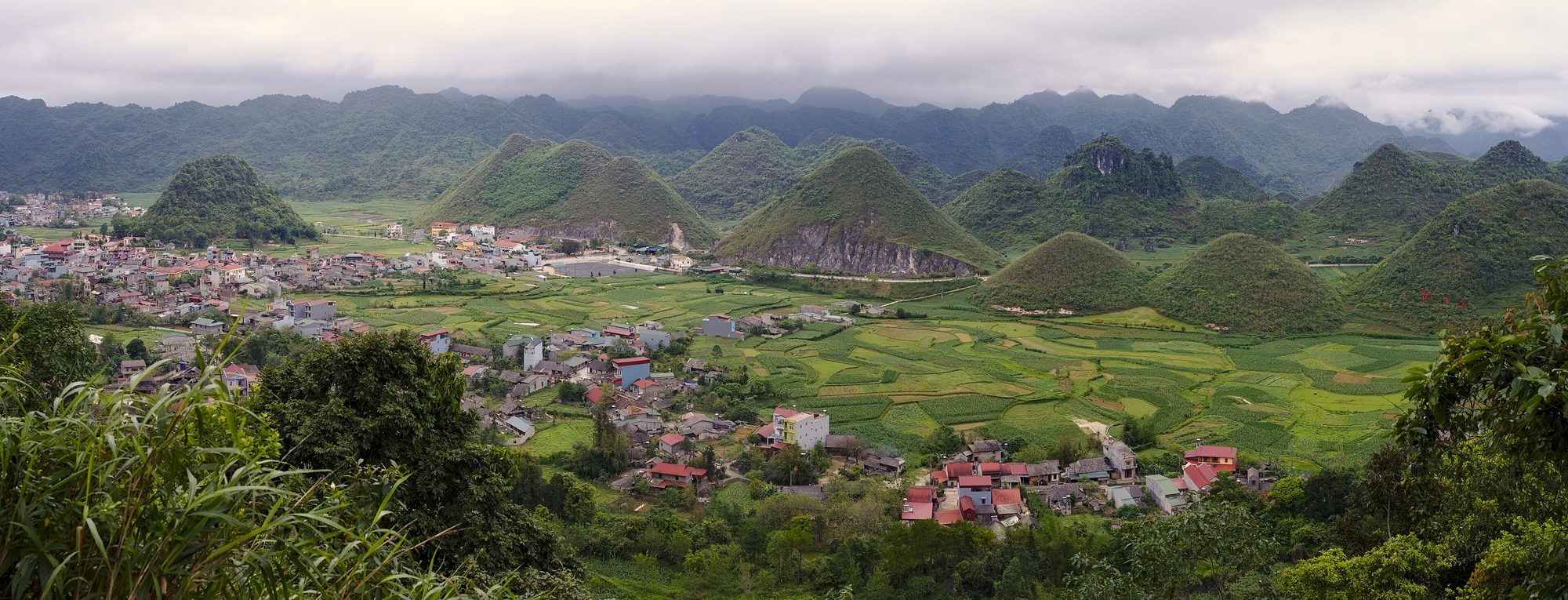
Before reaching Nậm Đăm, you will already have passed Quản Bạ's most famous view. Looking down from Heaven's Gate, you see the valley with the Fairy Twin Mountains (Cô Tiên twin hills), two evenly rounded hills rising from the fields. The twin hills and Nậm Đăm both lie in the valley around central Quản Bạ, so visiting both in one afternoon is easy.
Cô Tiên Mountain (the twin hills) in the middle of the Quản Bạ valley — Photo: Sketyl none, CC BY 2.0, Wikimedia Commons
If you are travelling in the afternoon, stop at Heaven's Gate first, then drop down into the valley and check in at the village. The legend of the twin hills, the best photo angles and the best times of day are covered in the article Quản Bạ Heaven's Gate and the Fairy Twin Mountains.
What is there to see in Nậm Đăm?
What makes Nậm Đăm special is the feel of a village that still keeps its everyday rhythm. You don't come here for a quick "check-in" photo, but to walk slowly, look around and chat with people.
Rammed-earth houses and village architecture
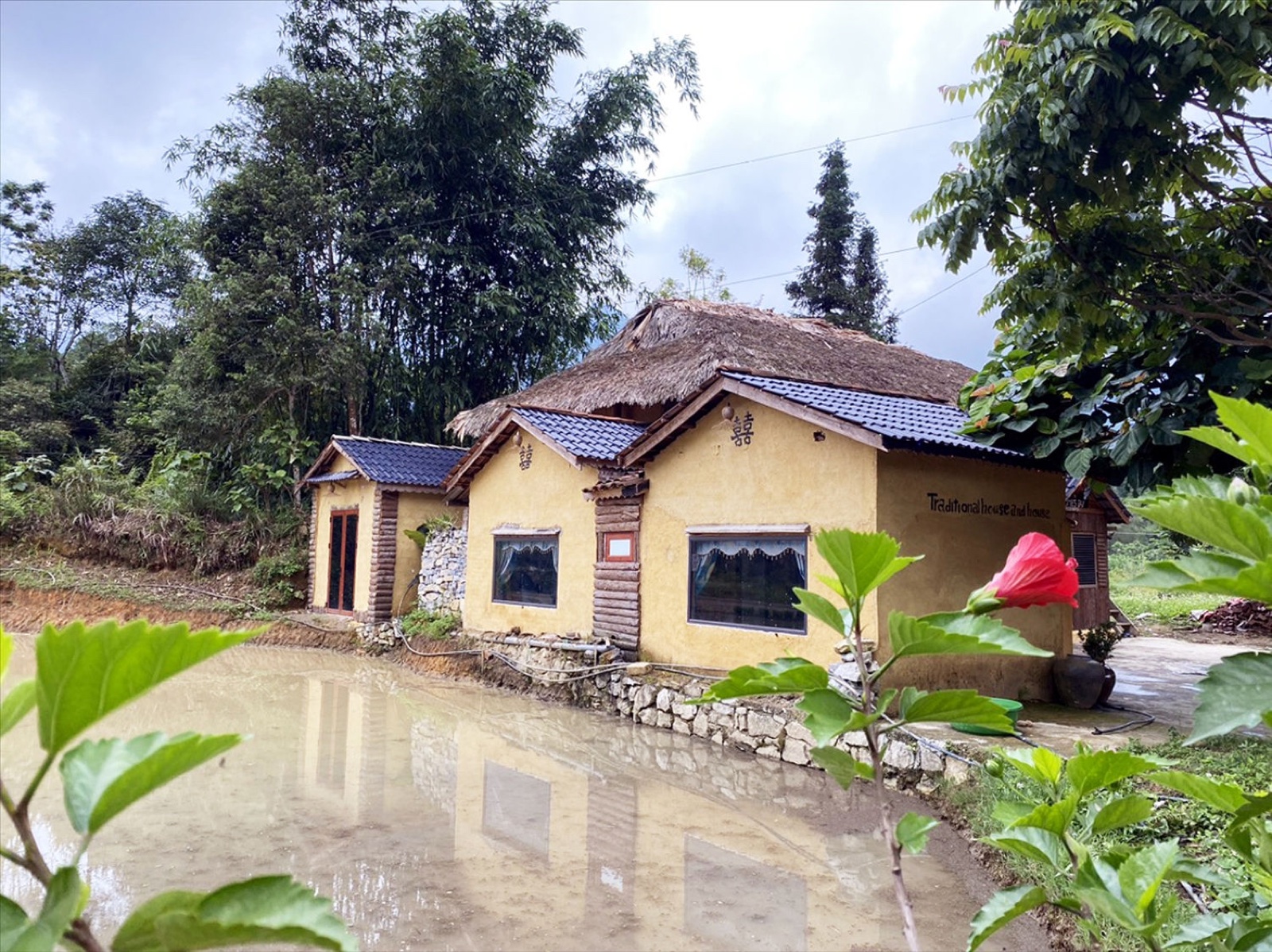
A rammed-earth house with earthen walls and a thatched roof beside a flooded field in Nậm Đăm
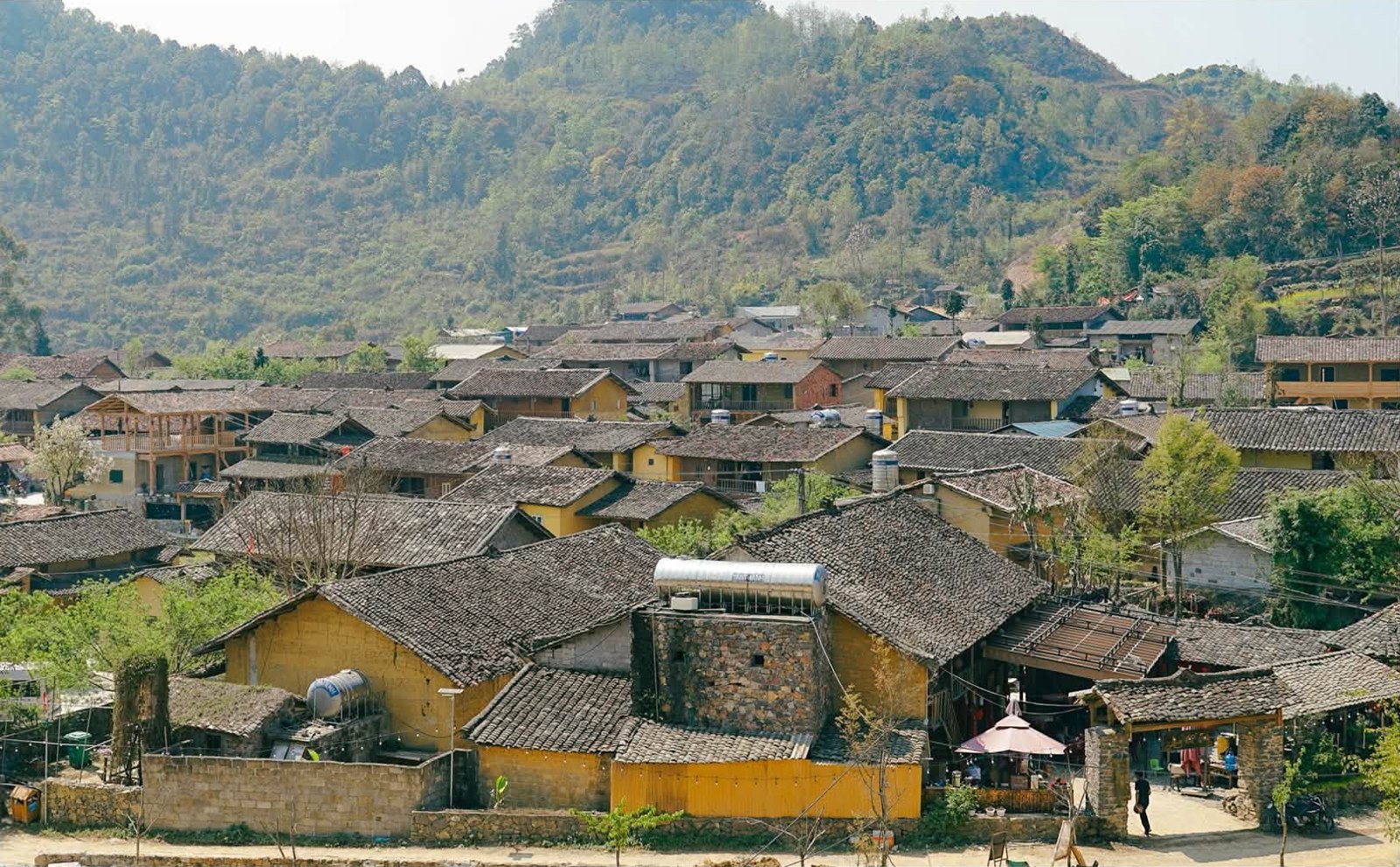
Many houses in Nậm Đăm are rammed-earth houses: thick walls of packed earth, small windows, and thatched or tiled roofs. This style of house stays cool in summer and keeps the warmth in during winter, which suits the mountain climate well. In between stand newer houses with coloured metal roofs, which from above look like red and green dots among the fields. Some families have renovated to welcome guests while keeping the traditional shape of the house, with a wooden veranda, an earthen yard and stone embankments.
As you stroll, you will notice the small details of daily life: wooden fences, firewood stacked beside the houses, fields right up against the verandas, vegetable gardens, wood fires glowing in the kitchens in the late afternoon. Look from the village lane, and only step into a yard or a house when the owner invites you.
Dress, medicinal herbs and Red Dao life
The Red Dao are easy to recognise by their clothing: women wear red headscarves and hand-embroidered jackets with multicoloured patterns. On ordinary days many people dress simply to work in the fields; at festivals, market days or when guests are around, the full traditional costume comes out.
The Dao are also known for their herbal remedies and herbal baths. In Nậm Đăm you may be introduced to the leaves used every day in the village; some homestays can prepare a herbal bath — ask your host in advance. If you want to buy embroidery, bathing herbs or medicine, buying directly from villagers is the most practical way to support the community.
The community sometimes puts on performances or experiences for groups of visitors; these may carry a fee and do not happen every day, so ask your homestay when you book.
Walking around the village
The village lane winding around Nậm Đăm, between woodland, terraced fields and houses
The small paths around the village lead past terraced fields, maize gardens, woodland and stretches of stream. You can walk on your own, as far as you like, but ask your host which way to go so you don't wander into private fields or gardens. Late afternoon and early morning bring the best light, with mist still clinging to the rooftops and kitchen smoke drifting across the hillside.
Wear shoes with good grip: after rain, the field embankments and dirt paths get slippery. Don't step onto planted fields; stick to the embankments and existing footpaths.
Staying overnight in Nậm Đăm: what to know
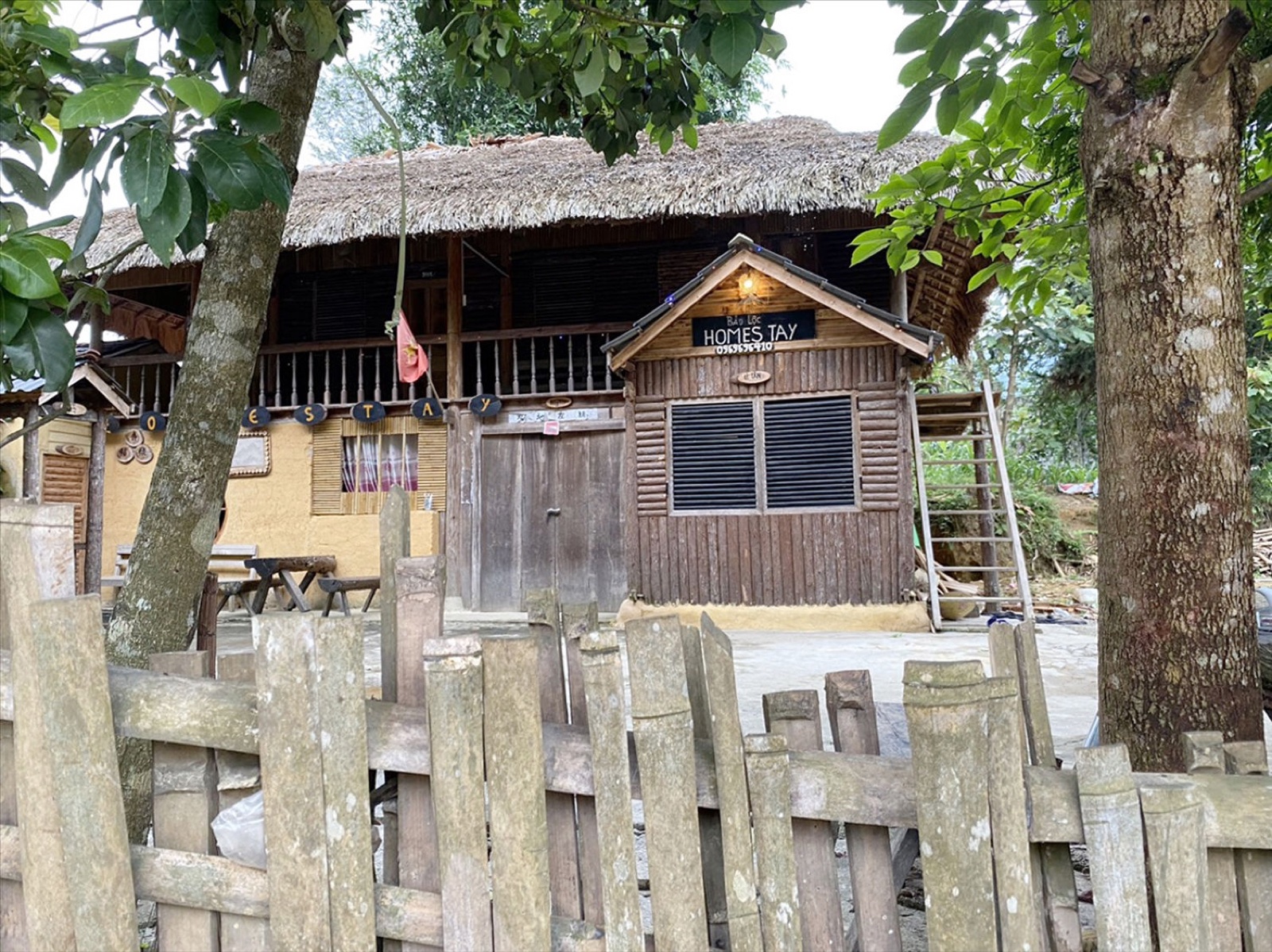
A homestay with a wooden frame, earthen walls and a thatched roof behind a bamboo fence in Nậm Đăm
Homestays in Nậm Đăm are mostly family homes that take in guests, with shared sleeping areas or simple private rooms. This is a place to sleep for the experience, not a hotel; if you need a private room with its own bathroom, ask clearly when booking.
Item
What you'll usually find in Nậm Đăm
Room type
Shared floor space with mattresses; some places have private rooms
Meals
Home-cooked local dishes, booked in advance
Amenities
Hot water, thick blankets; wifi and phone signal may be weak
Atmosphere
Quiet, early to bed, early to rise
A few tips for staying at a village homestay:
Let your hosts know your arrival time and how many people will eat dinner so they can prepare.
Bring warm clothes. From November to December, mornings and evenings in the highlands are often only 5–15 °C; nights in the valley can be colder than you'd expect.
Keep noise down after around 22:00; the village goes to bed early.
Ask your hosts before entering the altar room or the family's private areas.
Bring small cash to pay for your room, meals and purchases in the village.
In the busy season, over holidays and during buckwheat flower season (around October–November), book a few days ahead.
To compare with other places to stay nearby, such as central Quản Bạ, Lùng Tám or Cán Tỷ, see the article staying overnight in Quản Bạ.
What to eat in Nậm Đăm and around Quản Bạ
Dinner at a homestay is usually a home-cooked meal made from whatever the family has: garden vegetables, chicken, pork, boiled and stir-fried dishes, sometimes smoked meat hung over the kitchen fire or a cup of corn wine offered to guests. The exact dishes vary from house to house and season to season, so just ask your host to cook something typical of the village.
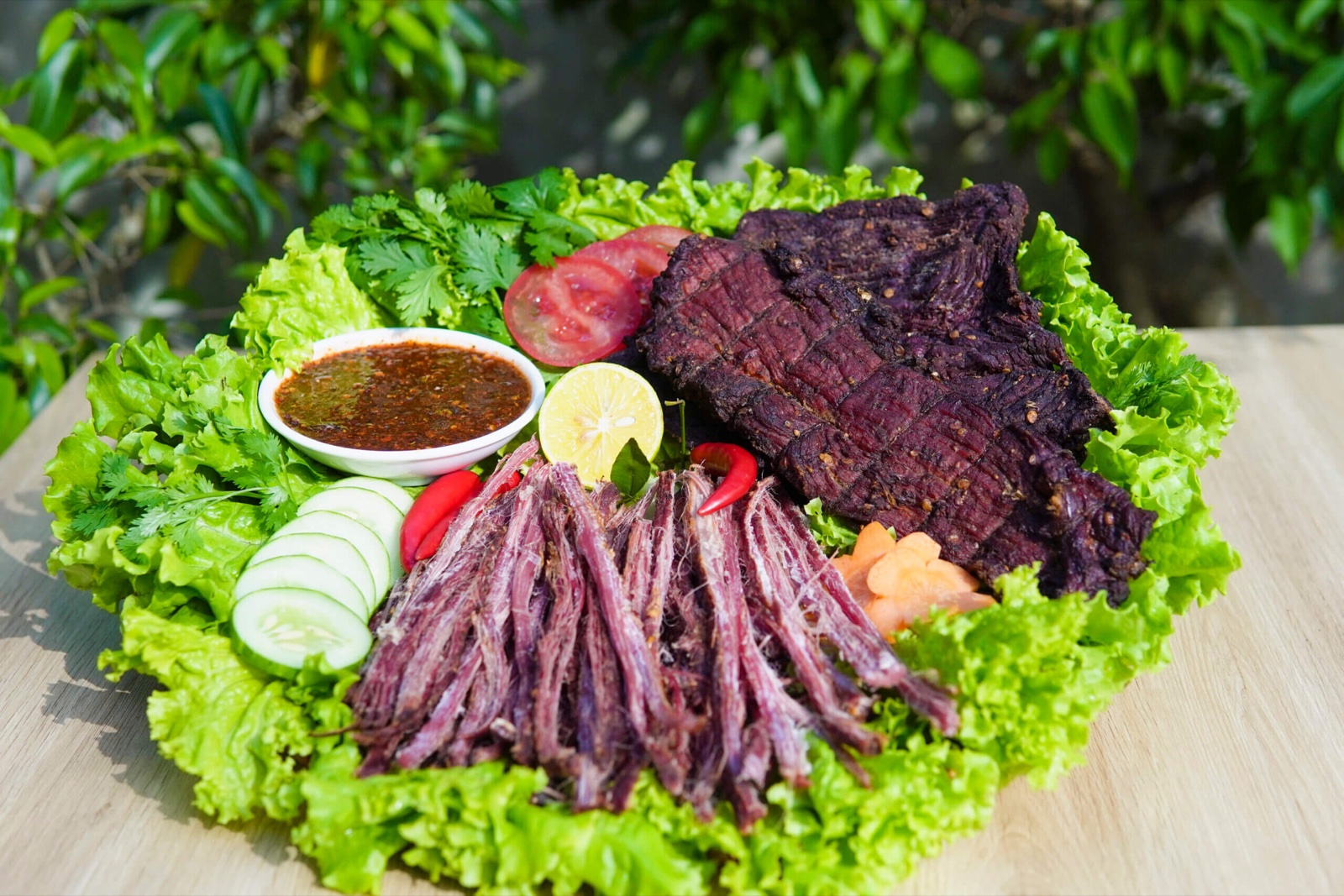
Smoked buffalo meat, a Hà Giang highland speciality
In central Quản Bạ and along the Loop, you can also try thắng cố (a hearty highland stew, traditionally made with horse meat), mèn mén (steamed ground maize), cháo ấu tẩu (rice porridge cooked with the ấu tẩu root) or bánh cuốn trứng (steamed rice rolls with egg). A list of dishes worth trying is in the article Hà Giang specialities to try.
If you are flying the next morning, keep dinner moderate, go easy on the corn wine and get to bed early. In the morning, eat a light breakfast before the pick-up; flying on a very full or very empty stomach both make you tire easily.
Combining Nậm Đăm with paragliding in Quản Bạ
Nậm Đăm is within the Mebayluon flight team's free pick-up and drop-off area, together with central Quản Bạ, Cán Tỷ, Lùng Tám and H'Mong Village resort. That makes sleeping in the village and flying the next morning a very tidy itinerary:
Day 1, afternoon: ride from Hà Giang city up to Quản Bạ, stop at Heaven's Gate to see the twin hills, check in at Nậm Đăm and stroll around the village in the late afternoon.
Day 1, evening: enjoy a home-cooked dinner, check the forecast on the flying weather page and confirm your flight slot with the team.
Day 2, morning: you are picked up at your homestay and taken to the take-off at about 950 m (paragliding) or to the flat field by the Miện River (paramotor). Be at the flying site about 30 minutes before your flight time.
Day 2, midday: you are driven back to the village, or you stop at the Lùng Tám linen-weaving village and carry on to the Yên Minh leg.
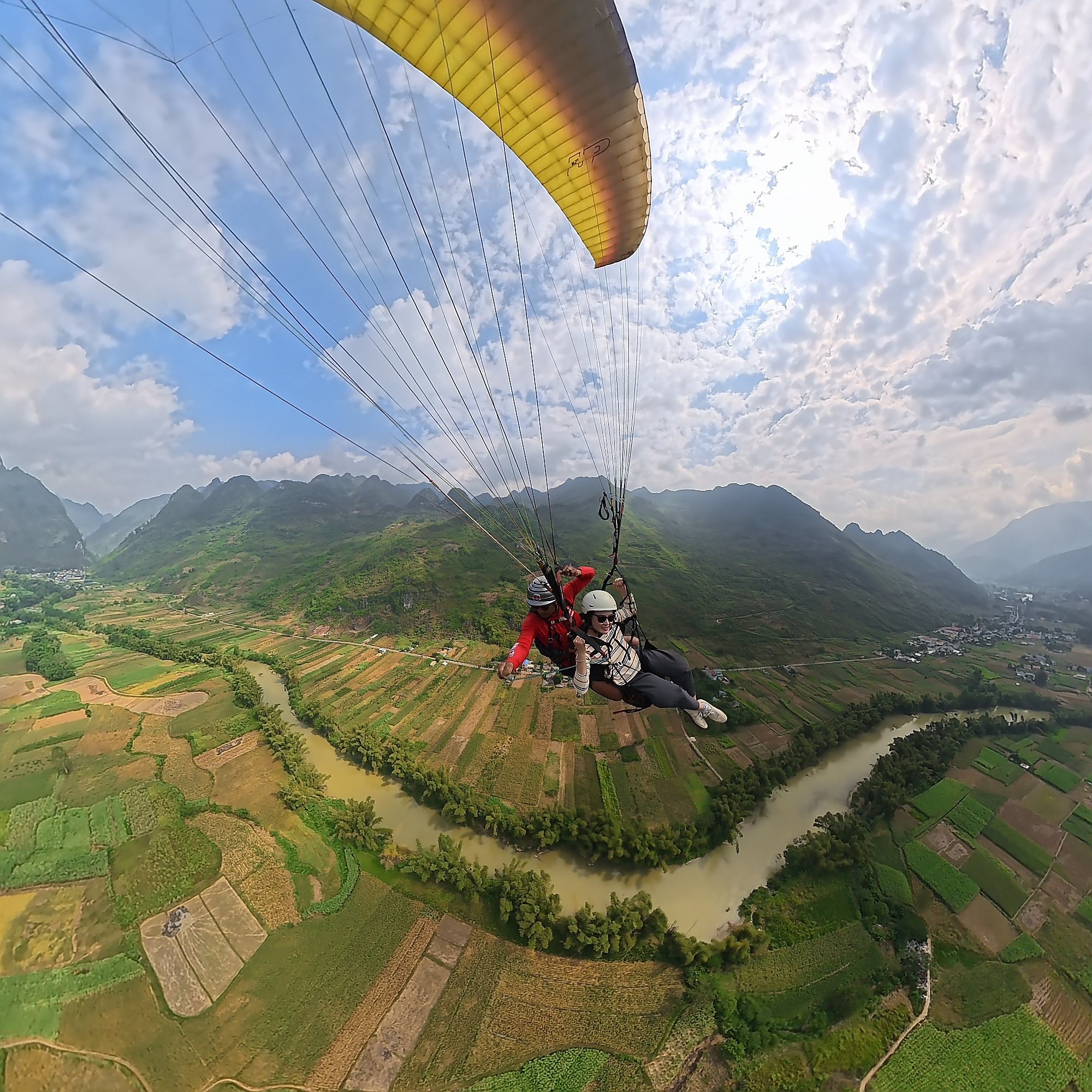
A tandem paraglider soaring over a bend of the Miện River in the Quản Bạ valley
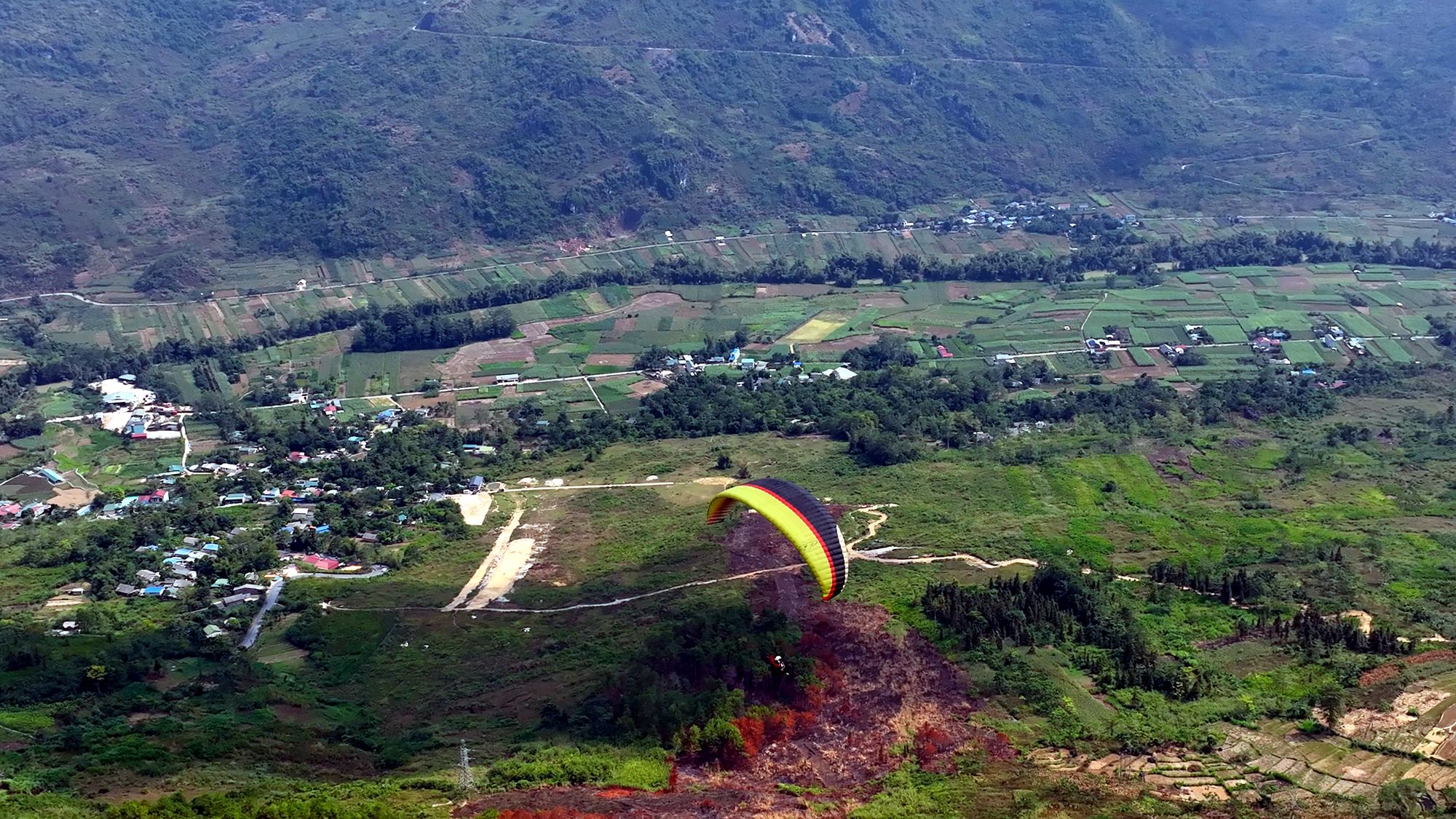
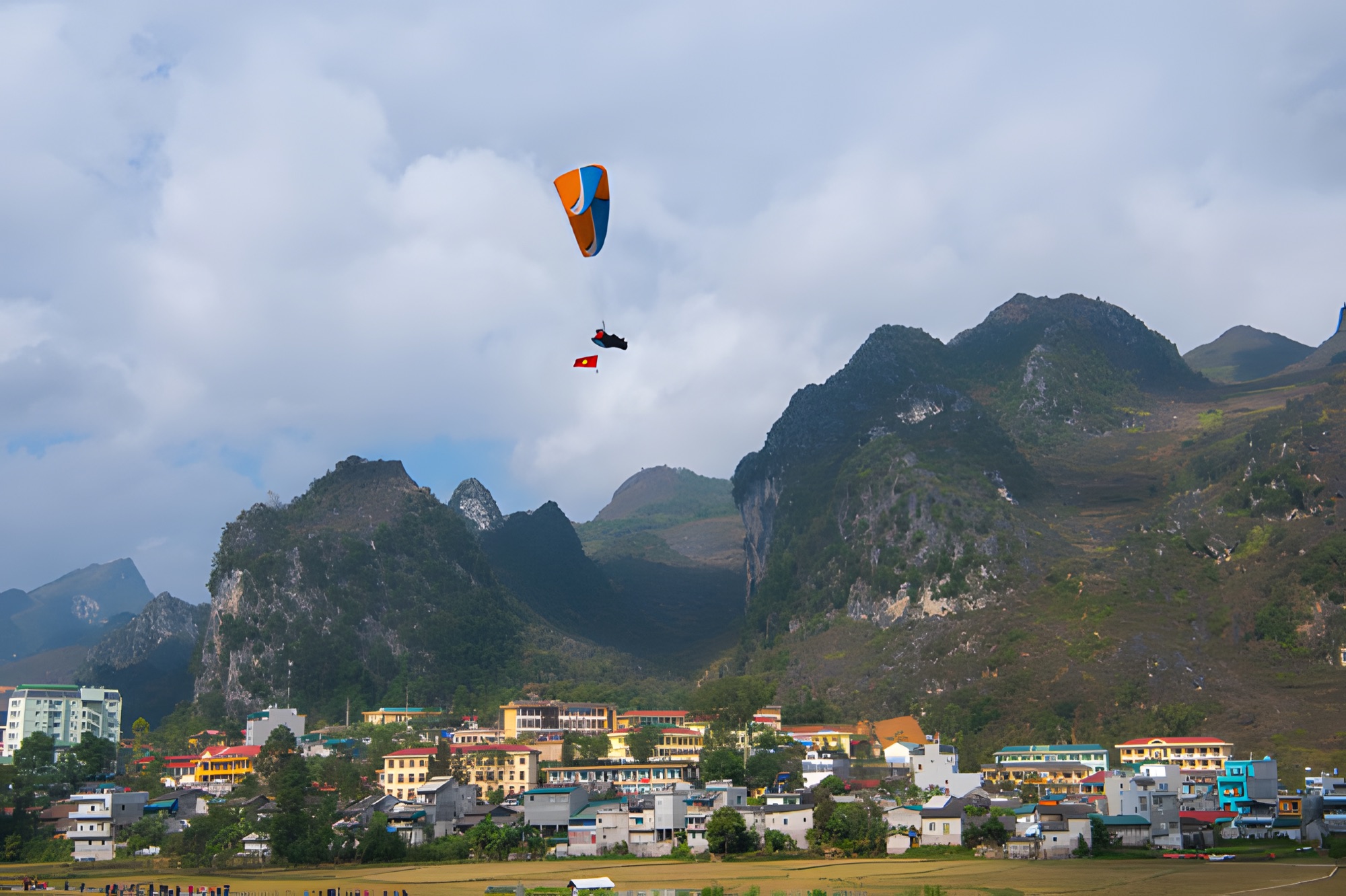
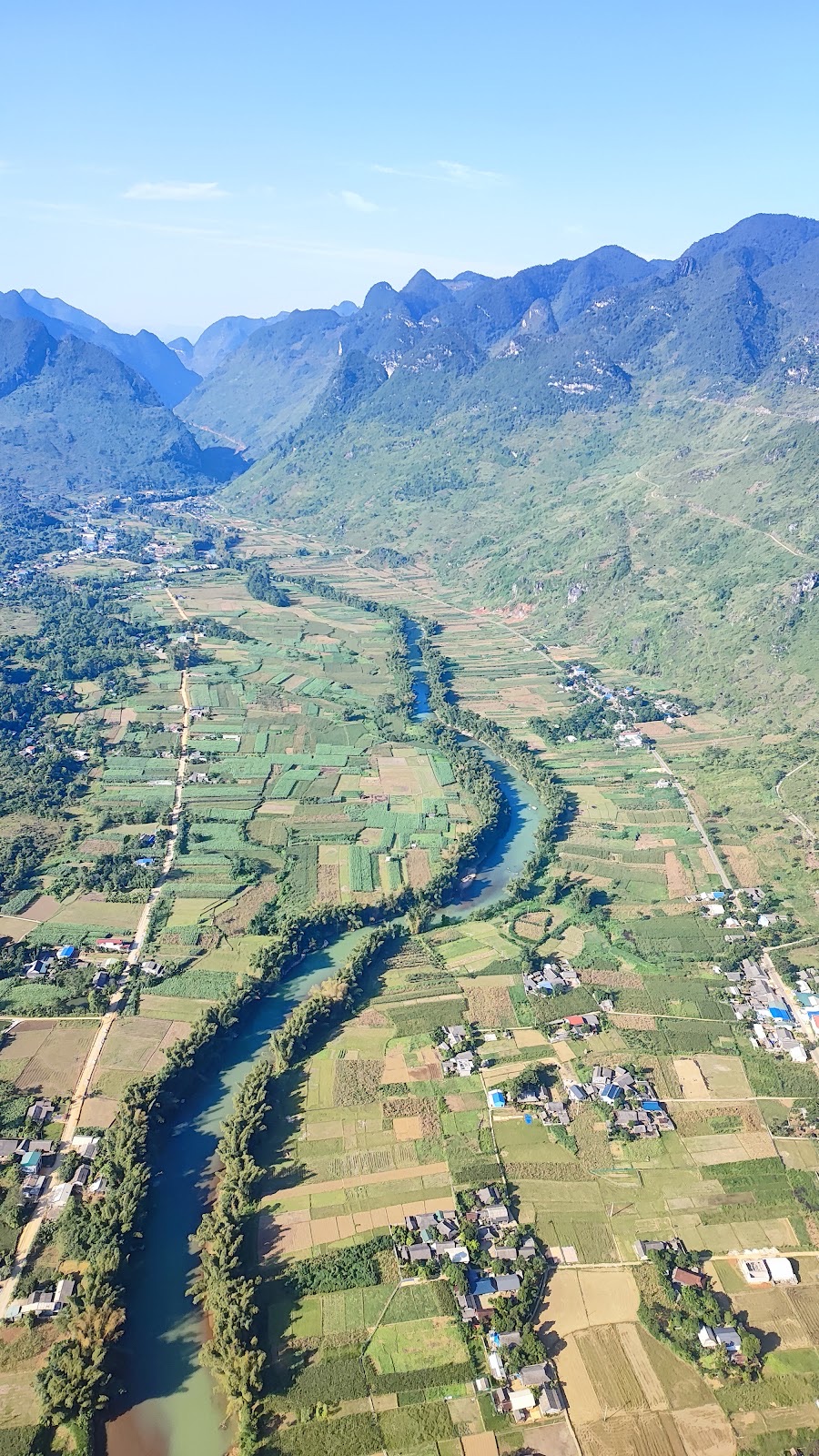
Paragliders take off from a mountainside at about 950 m and land on a flat field at about 450 m in the Miện River valley. From under the wing you can see the Fairy Twin Mountains, Quản Bạ Heaven's Gate, ranges of jagged karst peaks, maize slopes and the winding river. Paramotors take off right from the flat field by the river. The flying site is open every day from 06:30 to 18:30.
Prices include a free GoPro video (ask your pilot), insurance, drinking water and pick-up and drop-off within the Quản Bạ area. Extras: flycam 400,000 VND per guest, 360° camera 400,000 VND per guest. Sunrise and cloud-hunting flights are only available with the advanced paramotor package; if conditions don't allow a special flight, you will fly a standard one instead.
No deposit is needed and nothing is paid when you book — you pay at check-in at the flying site, before your flight, by cash, bank transfer, card (+3%) or PayPal (+3%). When you book online, note the name of your homestay in Nậm Đăm so the team can arrange transport; they will tell you the exact pick-up time when they confirm your booking. If the weather doesn't allow flying, the team will reschedule for free. See full package details in the article Hà Giang paragliding prices.
You don't need any experience to fly tandem with a pilot; children from 3 years old can fly. Guests over 90 kg should let the team know in advance, and please tell the team if you have a heart condition, are pregnant, have recently had surgery or have a history of epilepsy.
Best season and best time of day
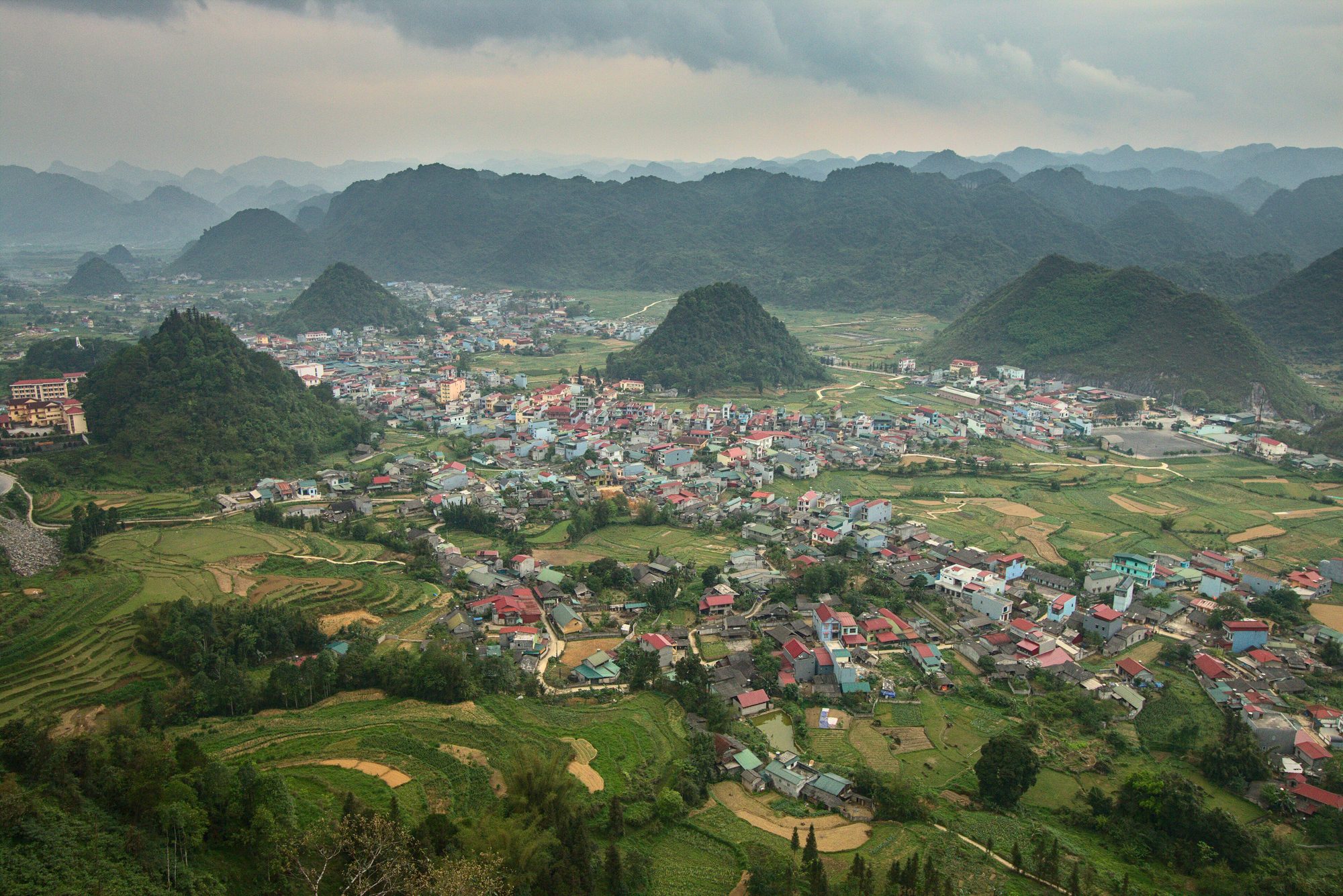
The Quản Bạ valley with the town and its cone-shaped mountains, seen from above — Photo: Benjamin Smith, CC BY-SA 4.0, Wikimedia Commons
October–December: the dry season, with generally clear skies, good for both walking and flying. Buckwheat flowers bloom from around October to early December in many places along the Loop. The rice harvest is over by mid-October, so don't expect golden fields at this time.
December–January: cold, with possible frost on the plateau. Days are short, with sunset around 17:15–17:30, so sunset flights are scheduled earlier than in summer.
Spring: peach and plum blossoms bloom along many Hà Giang roads; see the article Hà Giang in spring.
Time of day: early morning and late afternoon are when the village looks its best, with soft light, kitchen smoke and mist. A sea of clouds often forms in the valley early in the morning after a cool, damp night.
Fitting Nậm Đăm into your Hà Giang Loop itinerary
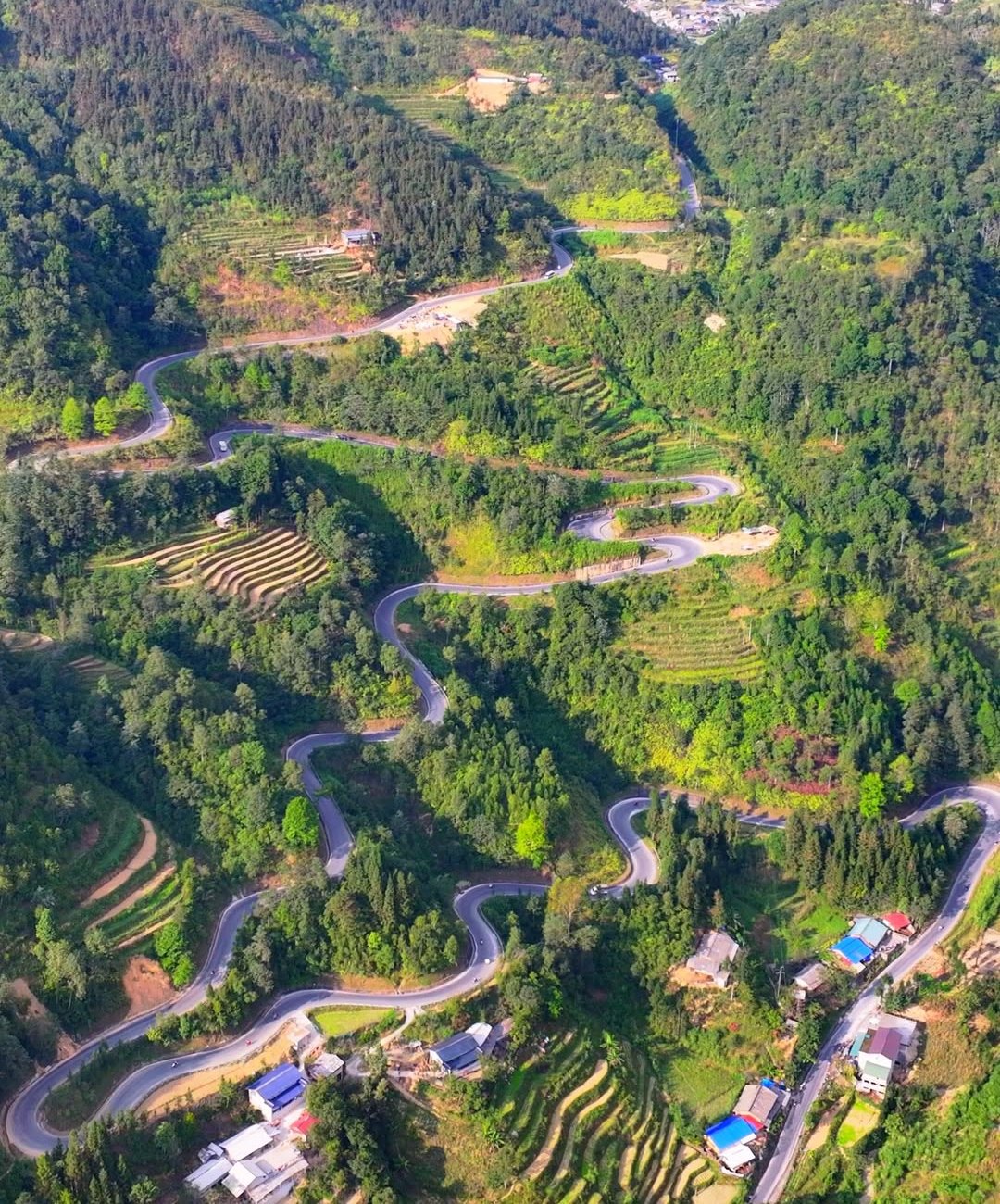
Nậm Đăm works well as your first overnight stop on the Loop, since Quản Bạ is the first major stop after leaving the city. After a morning flight, carry on to Yên Minh: about 50 km along National Road 4C, or about 31 km on the new inter-commune road through Lao Và Chải (turn off at the Cán Tỷ rest stop), which has a good surface and lovely scenery. The whole Quản Bạ stage is covered on the page Hà Giang Loop: Quản Bạ.
If you are short on time, you can still spend 2–3 hours in Nậm Đăm in the afternoon and sleep in central Quản Bạ. How to get from the city to the flying site is explained in the article getting to the Quản Bạ flying site.
Etiquette in the village
Ask before photographing local people, especially the elderly and children; respect it if they decline.
Don't give children sweets or money; if you want to help, buy handicrafts or pay for services at the agreed price.
Dress modestly when entering homes, and don't touch altars or offerings.
Don't fly a drone close to rooftops or people without asking permission.
Carry your rubbish out of the village, especially plastic bottles and snack wrappers.
Frequently asked questions
Is there an entrance fee for Nậm Đăm cultural village?
Usually you can wander around the village freely. Some activities, such as watching a performance or joining an experience, may carry a fee set by the community. It's best to ask your homestay host when you arrive.
Can I be picked up in Nậm Đăm for my paragliding flight?
Yes. Nậm Đăm is within the Quản Bạ area covered by free pick-up and drop-off. When booking, note the name of your homestay so the team can arrange transport.
How many nights should I stay in Nậm Đăm?
One night is enough to get a feel for village life and fly the next morning. If you'd like to take it easy, walk more or wait for a day with good wind, you can stay two nights.
Can young children come?
Yes. The road into the village is easy by car, and children from 3 years old can fly tandem with a pilot. Tips for the whole family are in the article paragliding with young children.
Is it OK to ride a motorbike into Nậm Đăm in the evening?
Best avoided. The side road is narrow, with blind bends, buffalo, cows and pedestrians, and visibility is poor in the foggy season. Plan to reach the village before dark.
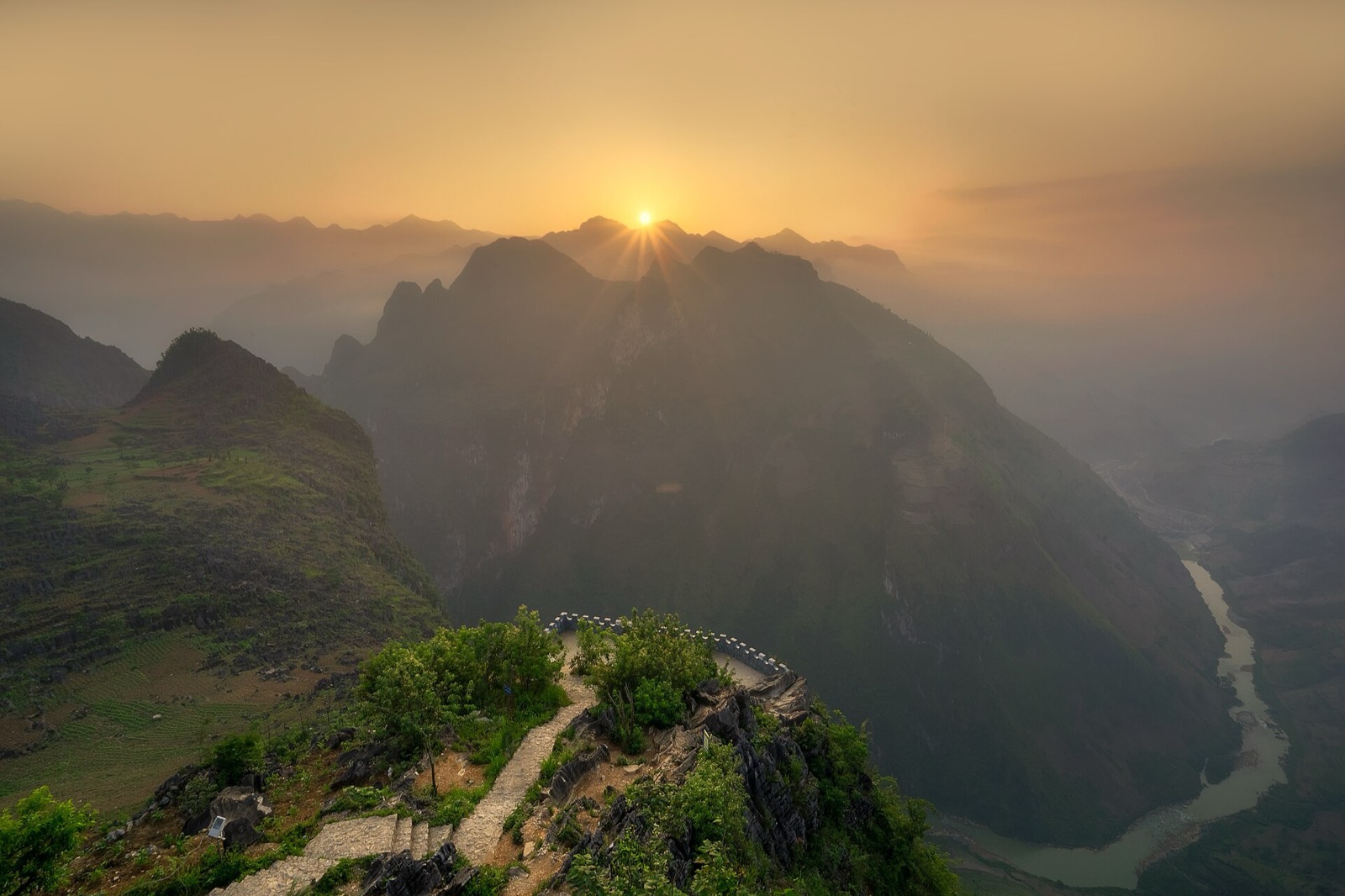
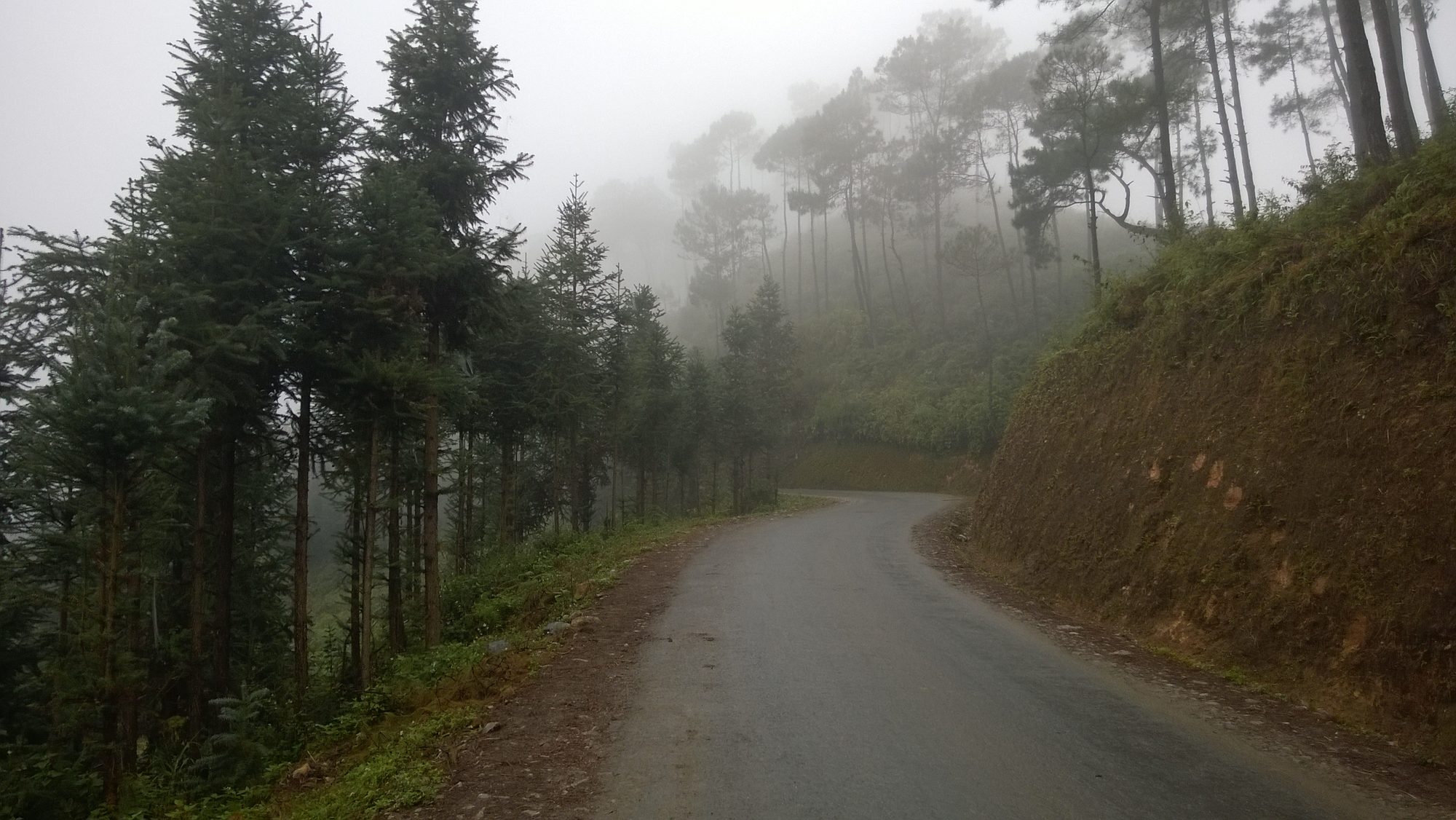
Cover photo: Báo Tuyên Quang
Nậm Đăm village photos: Báo Dân tộc và Phát triển
Book a flight:book online — no deposit, free cancellation
Bắc Sum Pass or Quản Bạ? A side-by-side look at the two flying sites on the QL4C near Hà Giang city: distance, landing field, valley width, paragliding and paramotor, a flying morning at Quản Bạ, getting there and fitting the flight into the Hà Giang Loop…
Quản Bạ or Đồng Văn? An honest comparison of our two flying sites on the Hà Giang Loop: location, getting there, scenery, paragliding vs paramotor, what a flying session looks like, wind and schedule, price, and how to fly both…
The Chín Khoanh slope is a stack of hairpin bends on QL4C between Phố Cáo and Sủng Là, about 18 km past Yên Minh and 27 km before Đồng Văn: why it's called "nine coils", the best viewpoint, how to stop safely, how it differs from Thẩm Mã and what to see nearby…
A practical guide to the Mã Pí Lèng Sky Path, the cliff-edge walking trail above the Nho Quế River: the trailhead at the Youth Volunteers monument, the route section by section, the death rock closure (October 2026), what to wear, when to go and how to pair it with a Tu Sản canyon boat trip…
A guide to Lô Lô Chải, the Lô Lô village at the foot of the Lũng Cú flag tower: rammed-earth houses, costume and bronze drums, Café Cực Bắc, homestays, the road from Đồng Văn, 2026–2027 traffic rules and village etiquette…
The Yên Minh pine forest lines Highway 4C about 7–8 km before Yên Minh town on the Quản Bạ side: exact location, commune after the 2025 merger, best light, how to stop safely, what's nearby and how to fit it into a 3- or 4-day Loop…