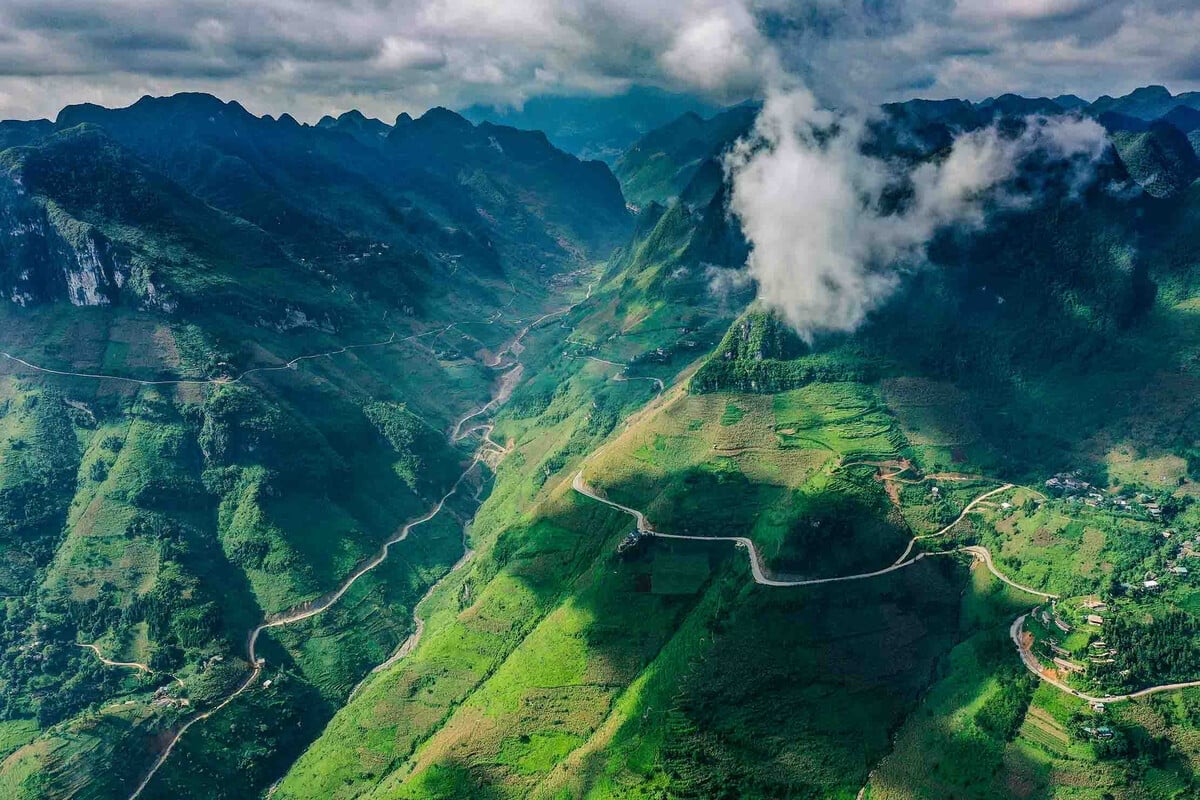
Tips for Hà Giang in spring: when peach and plum blossoms bloom and where to see them on the Loop, the Hmong New Year atmosphere, riding in cold and fog, and paragliding in Quản Bạ on chilly days.
Ms. Judy · · 16 min read
Spring in Hà Giang is usually at its most beautiful from around late January to March, when peach and plum blossoms paint the rocky mountainsides pink and white, and the Hmong celebrate the New Year with market days, khèn pipes and new clothes. It's also the season when you can go paragliding at the start of the year in Quản Bạ, though you'll need to watch out for fog and drizzle. Below you'll find the blossom calendar, the best stops for seeing the flowers, the New Year atmosphere, tips for riding the Hà Giang Loop in the cold, and how to choose your flying day.
Since the 2025 merger of provinces, Hà Giang has officially been part of Tuyên Quang province, but travellers still call the whole region Hà Giang and the circuit road the Hà Giang Loop. This article uses those familiar names.
When do peach and plum blossoms bloom in Hà Giang?
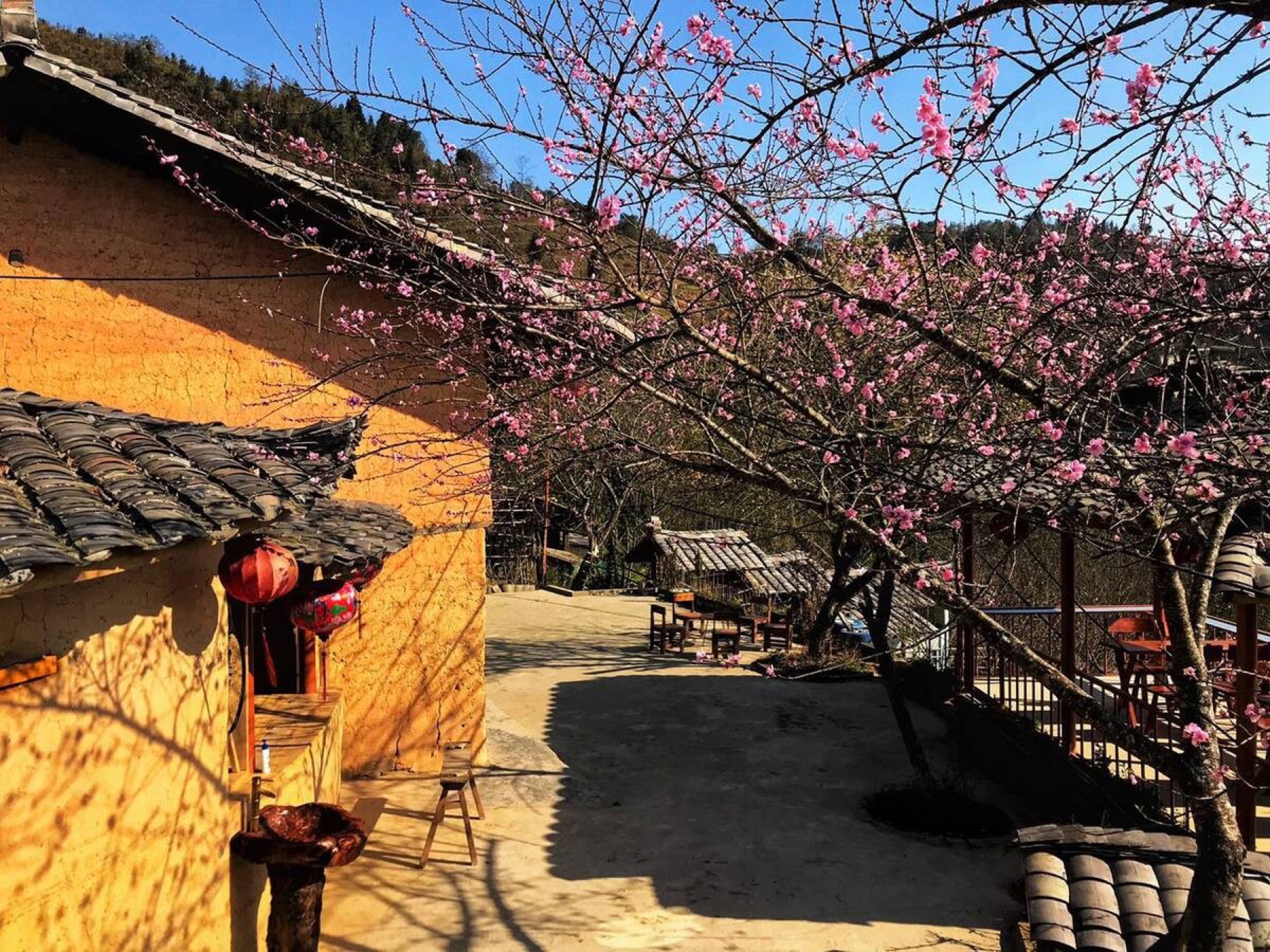
Peach blossom by a rammed-earth house — Photo: VnExpress
The blossom season depends on altitude and each year's weather, so we can only say "usually".
Flower
Usual flowering time
Where to find it
Peach blossom
Around late December to February
Quản Bạ, Yên Minh, Đồng Văn, around the villages
Plum blossom
Around January to March
Đồng Văn, Mèo Vạc, Sủng Là, Phố Cáo
Mustard flowers
Scattered through winter and spring
Fields around the villages
Pear blossom
Around February to March
Some highland villages
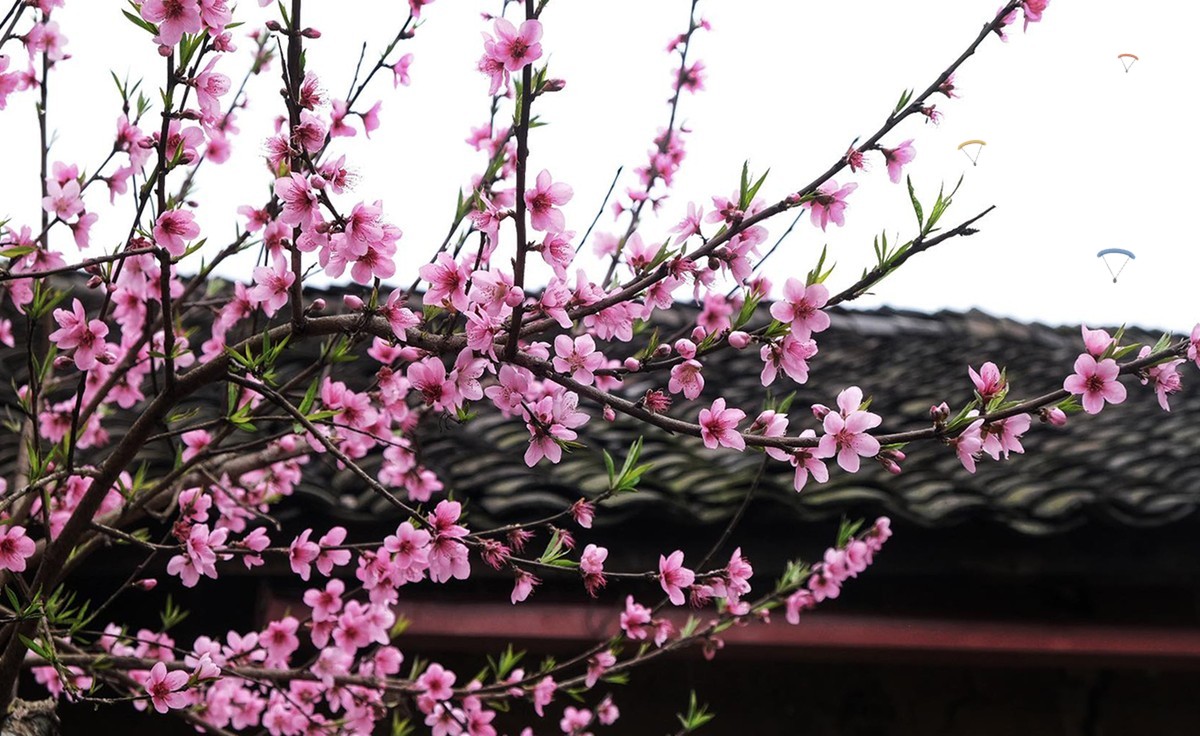
Peach blossoms in Hà Giang are usually wild peach, with thin, pale pink petals. Plum blossoms are pure white, blooming in drifts beside the stone walls, a perfect match for the grey Rocky Plateau.
An easy rule of thumb: lower, warmer places tend to bloom earlier, while the high country around Đồng Văn and Mèo Vạc tends to bloom later. So on the same trip, the flowers in Quản Bạ may already be dropping while the Rocky Plateau is still at its best. A hard cold snap or a few days of drizzle can delay the blossom or make it fade quickly. If you only have a few days, ask your accommodation or a local contact how the flowers are doing just before you set off, rather than relying on last year's photos.
Where to see the blossom on the Hà Giang Loop
There's no single "flower garden". Peach and plum trees grow around houses, along stone fences and at the edge of corn fields, so the best way to enjoy them is to travel slowly and stop in the villages. Here are suggestions for each stage of the .
The first stage, about 45 km from Hà Giang city, takes roughly 1 hour 15 minutes along highway QL4C. Around Quản Bạ Heaven Gate, the Cô Tiên twin mountains and the villages down in the valley, many peach trees are planted around the houses. Nậm Đăm village, with its rammed-earth houses, is an easy place to find peach blossom beside the rooftops; see our articles on Nậm Đăm cultural village and Quản Bạ Heaven Gate and the Cô Tiên twin mountains. Quản Bạ is also home to the paragliding site, so many people spend a night here.
Yên Minh (around Km100)
From Quản Bạ up to Yên Minh, the road runs through stretches of pine forest and wide valleys. Peach and plum trees bloom here and there around the roadside villages. After Yên Minh comes the Thẩm Mã slope with its hairpin bends, and then the road climbs towards Phố Cáo and Sủng Là, where the plum blossom starts to grow thicker. Details of this stage are on our page Yên Minh on the Hà Giang Loop.
Sủng Là and Pao's House
A lane past a stone wall and a rammed-earth house in Sủng Là — Photo: trungydang, CC BY 3.0, Wikimedia Commons
Sủng Là is about 20 km from Đồng Văn. Its dry-stone fences and rammed-earth houses with yin-yang tiled roofs are the backdrop that makes the white plum blossom stand out. Pao's House in Lũng Cẩm hamlet, the house used as a film set, charges an entrance fee of around 10,000 VND (under US$1). Stop and walk a little way into the hamlet instead of just taking photos from the roadside.
Sà Phìn and the Vương family mansion
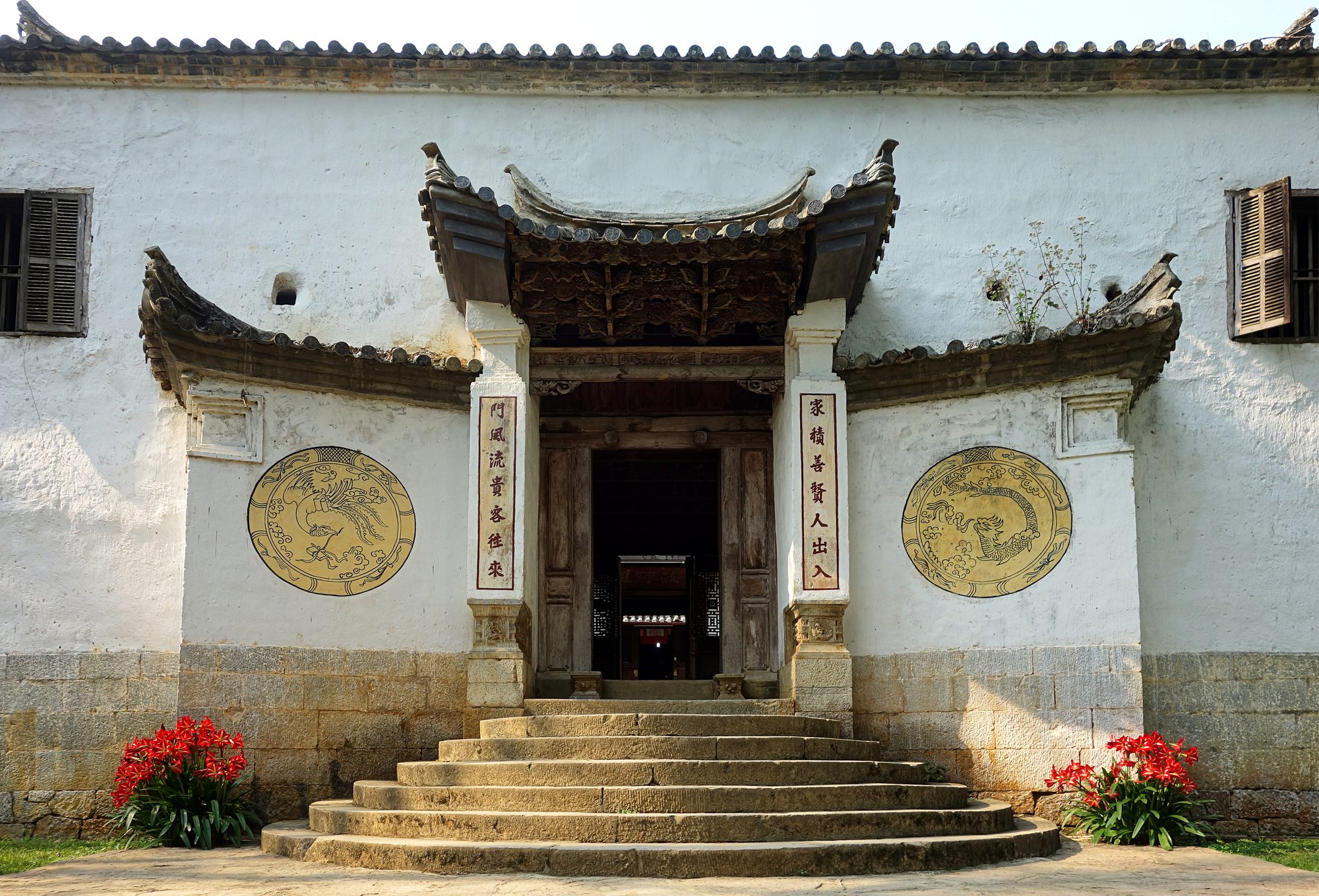
The main entrance of the Vương family mansion in Sà Phìn — Photo: Velvet, CC BY-SA 4.0, Wikimedia Commons
The Vương family mansion (often called the Hmong King's Palace) stands in Sà Phìn commune, about 13 km from central Đồng Văn, down a short side road off highway QL4C. It was built around 1898–1907 on a mound shaped like a turtle's shell, from blue-grey stone and timber, and is a national architectural and artistic heritage site. From January to March, the peach and plum trees around the mansion and the houses of the Sà Phìn valley soften the whole scene. Come in the morning for the best light on the gate and the path lined with Chinese fir trees. Tickets are around 20,000–25,000 VND (about US$1) and may change. Read more: The Hmong King's Palace in Sà Phìn.
Đồng Văn, Phố Cáo, Lũng Cú
Đồng Văn (around Km150) is the heart of the Rocky Plateau. Plum blossom appears in the villages around town and along the road up to Lũng Cú (about 24 km). Đồng Văn old quarter, with its rammed-earth houses, yin-yang tiled roofs and old stone market, is worth staying at least one night; see Đồng Văn old quarter and its markets.
Mã Pí Lèng and Mèo Vạc
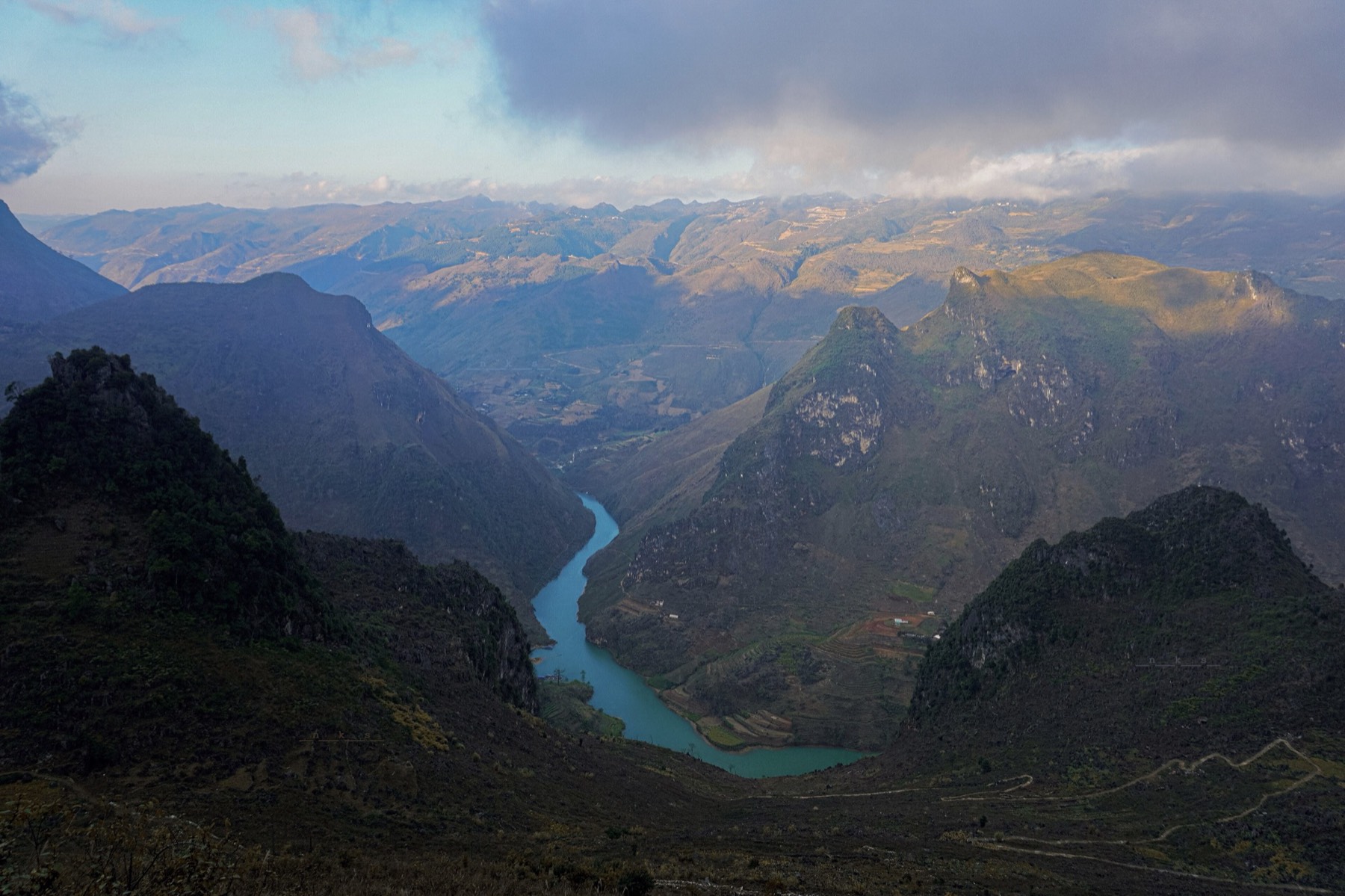
From Đồng Văn over Mã Pí Lèng pass (about 20 km) to Mèo Vạc, the scenery is mostly deep gorges and the Nho Quế river, with only the odd touch of blossom around the villages. Winter and spring are the peak season for boat trips on the Nho Quế river (usually from the tenth lunar month until 30 April), when the water is greener than in the rainy season; see a boat trip on the Nho Quế river and Tu Sản canyon.
Hmong New Year
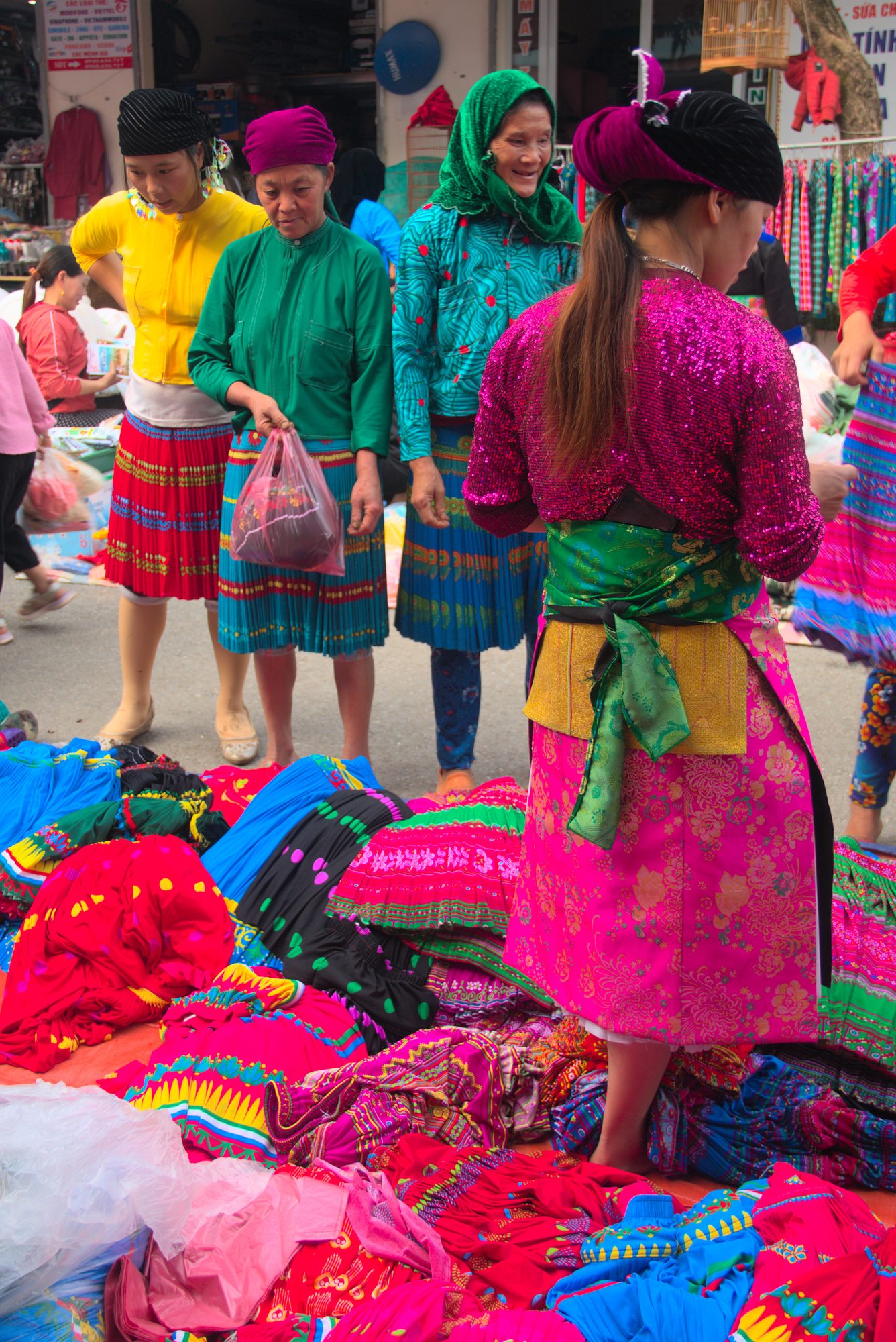
Shoppers choosing clothes at Mèo Vạc market — Photo: Benjamin Smith, CC BY-SA 4.0, Wikimedia Commons
Today, most Hmong people in Hà Giang celebrate the New Year at the same time as Tết, the Lunar New Year. During these days you may come across:
Bustling year-end market days, with locals shopping for new clothes, meat and liquor.
Folk games such as pao ball throwing, top spinning and shuttlecock games.
The sound of Hmong khèn pipes, and young couples in brightly coloured outfits.
Families gathering together, taking a few days off from the fields at the start of the year.
Market days are the easiest way to feel the year-end atmosphere. Đồng Văn and Mèo Vạc markets are held every Sunday morning, while Sà Phìn has a "rolling" market held once every six days. At the market you'll find thắng cố stew, mèn mén (steamed corn flour), ấu tẩu porridge, five-colour sticky rice, black bánh chưng rice cakes, corn liquor and brocade clothing. Markets are busiest in the morning, so arrive early and bring cash. See also Mèo Vạc market and Hà Giang specialities worth trying.
Etiquette during Tết
Remember that this is a time for family reunions. Ask permission before taking photos, don't enter homes uninvited, and if you're offered a cup of liquor, you can politely decline if you're still riding. When photographing children, ask the adult with them first. At the market, don't block the walkway to take pictures. Dress modestly, and keep your voice down when passing through villages early in the morning.
Services around the first day of Tết
Some services such as restaurants and homestays may close for a few days around the first day of Tết. Contact your accommodation and transport in advance. Buses, rental cars and easy riders (hired motorbike drivers who take you on the back of their bike) get booked up early at this time, and prices may differ from usual. Fill up with petrol in the main towns such as Quản Bạ, Yên Minh, Đồng Văn and Mèo Vạc, and keep some spare cash.
Hà Giang weather in spring
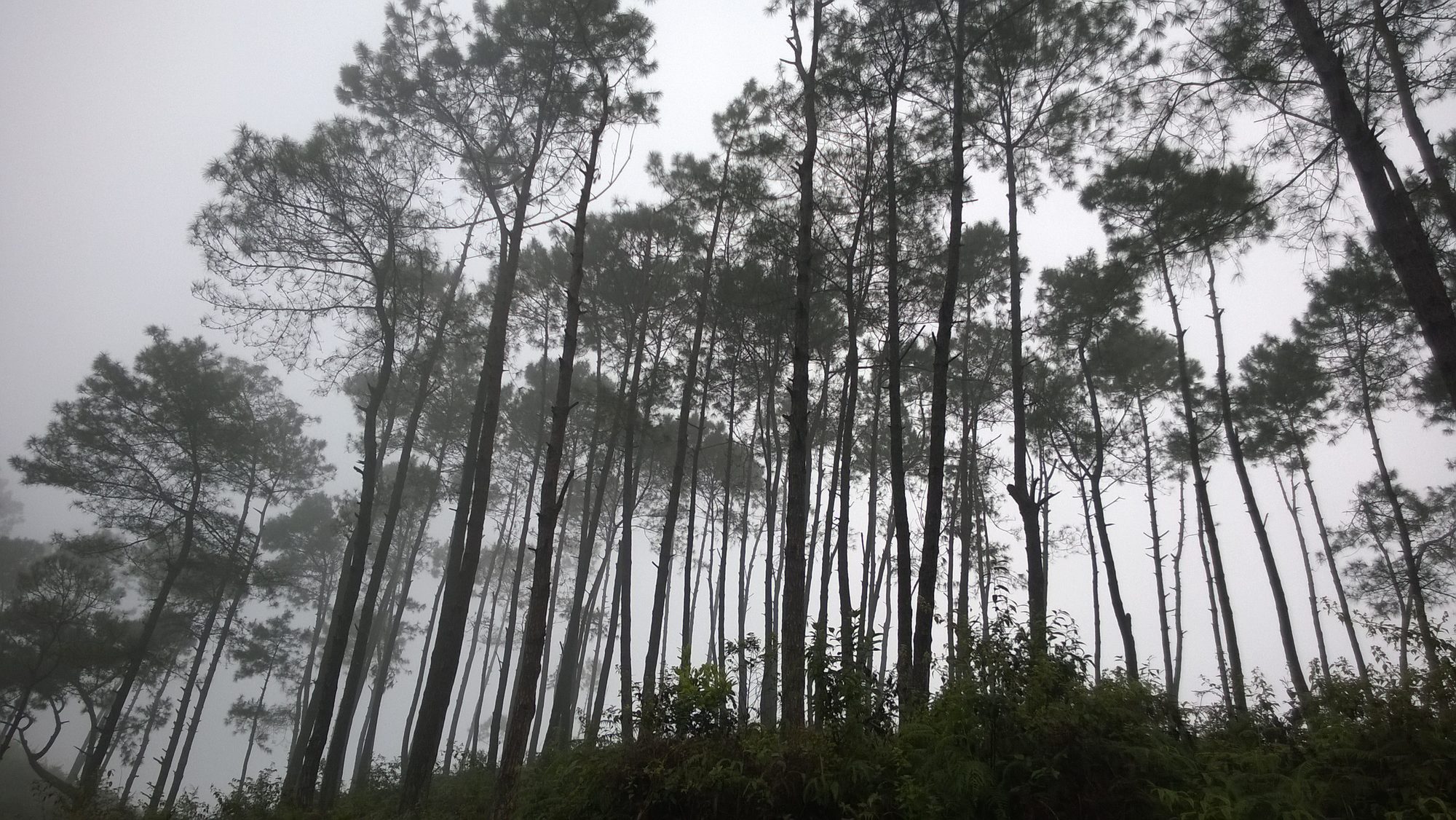
Pine trees in the mist, Yên Minh — Photo: Vuong Tri Binh, CC BY-SA 4.0, Wikimedia Commons
Spring in Hà Giang is chilly, and temperatures can drop low early in the morning and at night, especially in Đồng Văn and Mèo Vạc. In late December and January there can still be frost in the highlands. Typical conditions include:
Morning fog: the valleys are often shrouded in mist until mid-morning.
Drizzle and damp, humid weather: mountain roads get slippery and visibility drops.
Dry, sunny spells in between: some days are crystal clear, perfect for photos and flying.
The weather changes quickly within a day: misty in the morning, sunny at noon, cold again in the afternoon. Leave some slack in your itinerary and plan shorter daily distances than in the dry season. See the month-by-month details in our article Hà Giang weather by month.
Riding the Hà Giang Loop in cold and fog
Most travellers do the Loop by motorbike. In spring the scenery is lovely, but the mountain roads call for extra care.
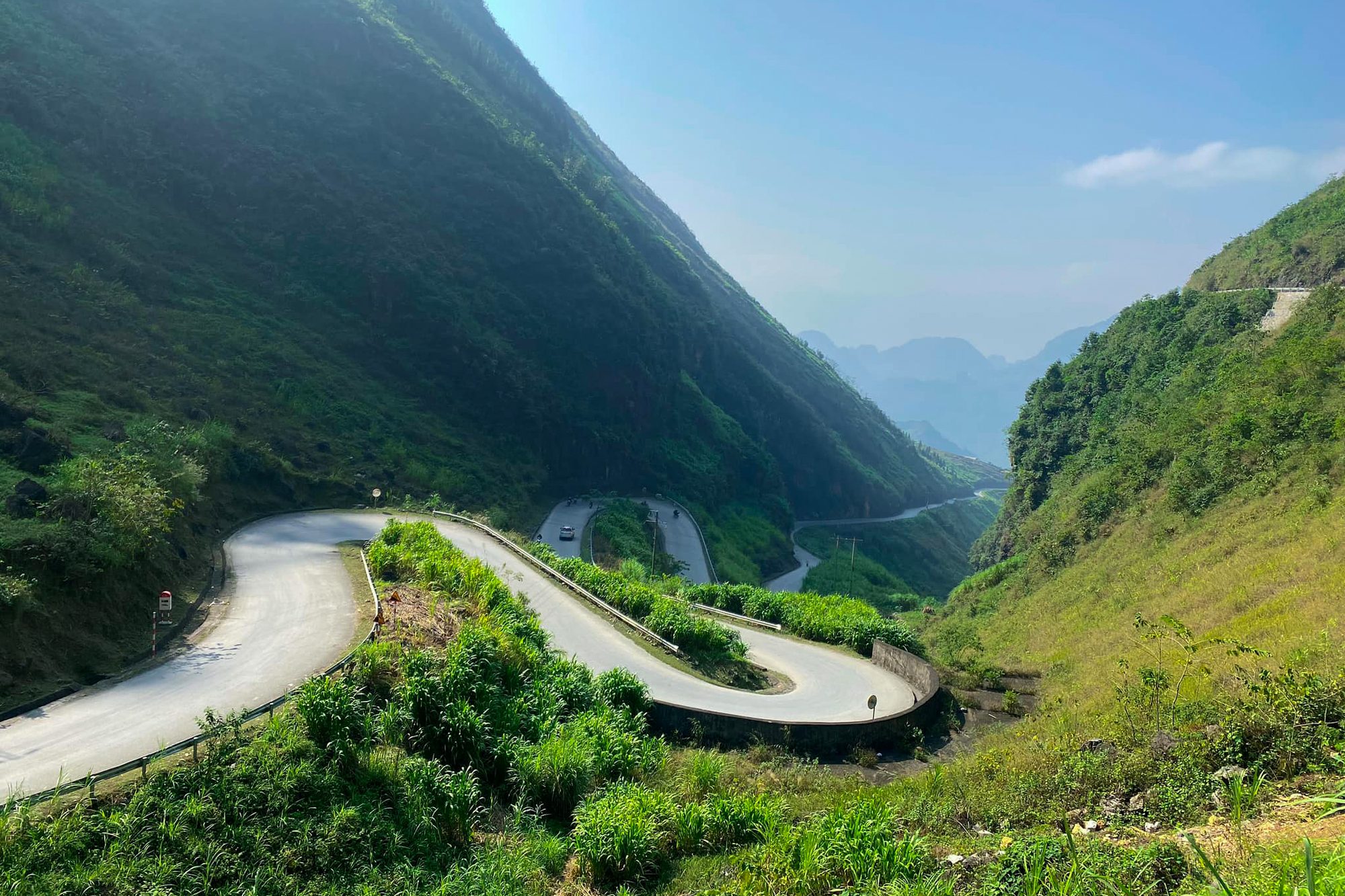
The hairpin bends of the Thẩm Mã slope — Photo: NKSTTSSHNVN, CC BY-SA 4.0, Wikimedia Commons
Before you set off
Check the brakes, tyres, lights and horn as soon as you pick up the bike in Hà Giang city.
Pack a two-piece rain suit, warm gloves and a neck scarf; keep your phone and papers in a waterproof bag.
If you're not used to mountain passes, consider hiring a driver; we compare the two options in easy rider or riding yourself.
On the road
Set off once the fog has thinned, usually mid-morning, and reach your accommodation before dark. Days are still short early in the year.
Use your low beam in fog, not your high beam, as the light reflects back and dazzles you.
Sound your horn on blind bends, keep close to the right-hand edge and leave plenty of distance to the vehicle in front.
Brake gently and shift down on descents. Wet road surfaces, painted lines and mossy concrete lanes in the villages are very slippery.
Don't stop on a bend to take photos. Choose a wide stretch of road with good visibility.
Take breaks to warm your hands after each long stretch. Frozen hands brake poorly.
Don't ride after drinking. Around Tết, being offered corn liquor is very common.
The cliffside walking path at Mã Pí Lèng is very dangerous in rain or fog; on those days, enjoy the view from the roadside stops instead. Information on the pass is on our Mã Pí Lèng page.
Paragliding in Quản Bạ in spring
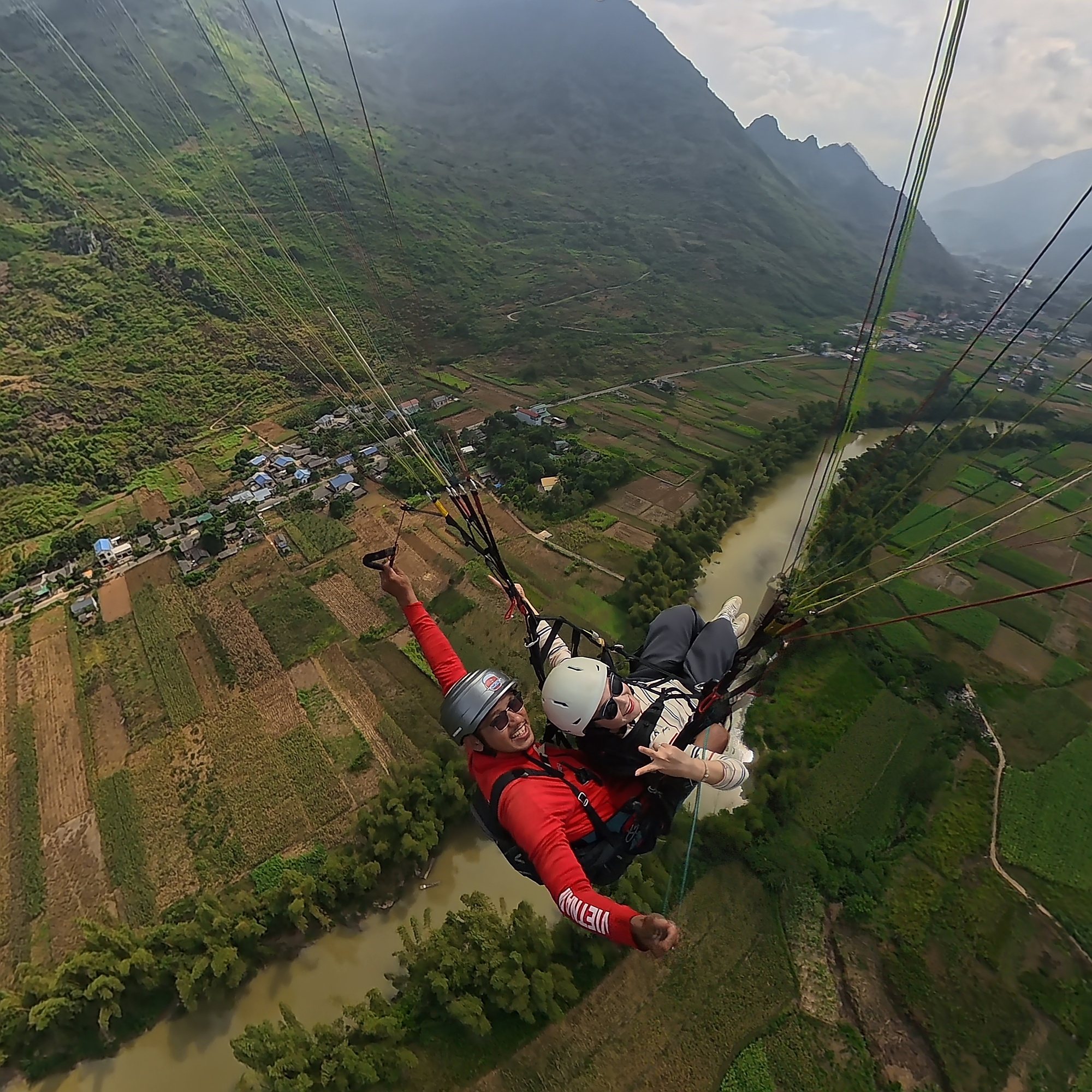
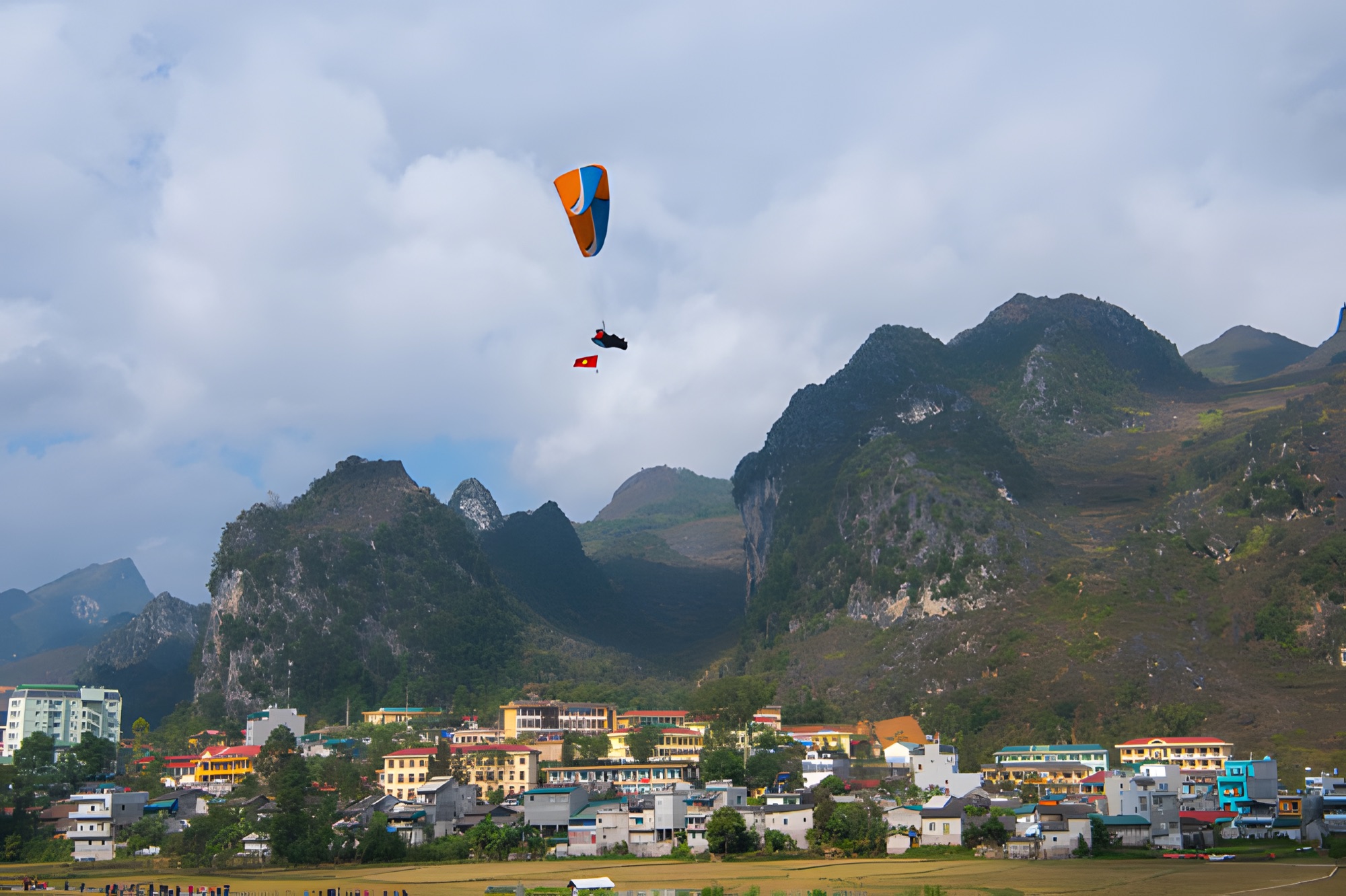
Pilot and guest on a tandem paraglider above the Miện river, Quản Bạ
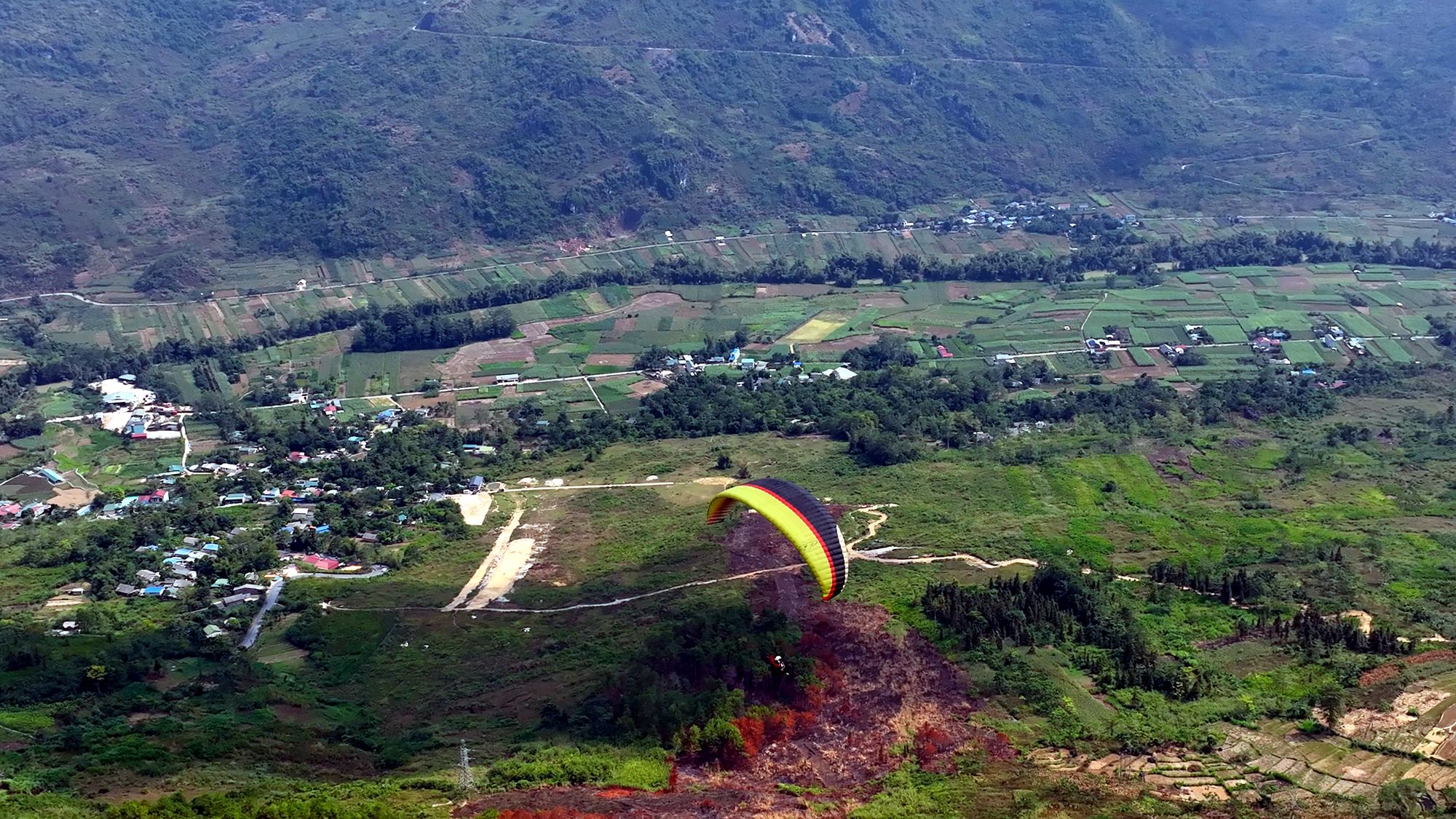
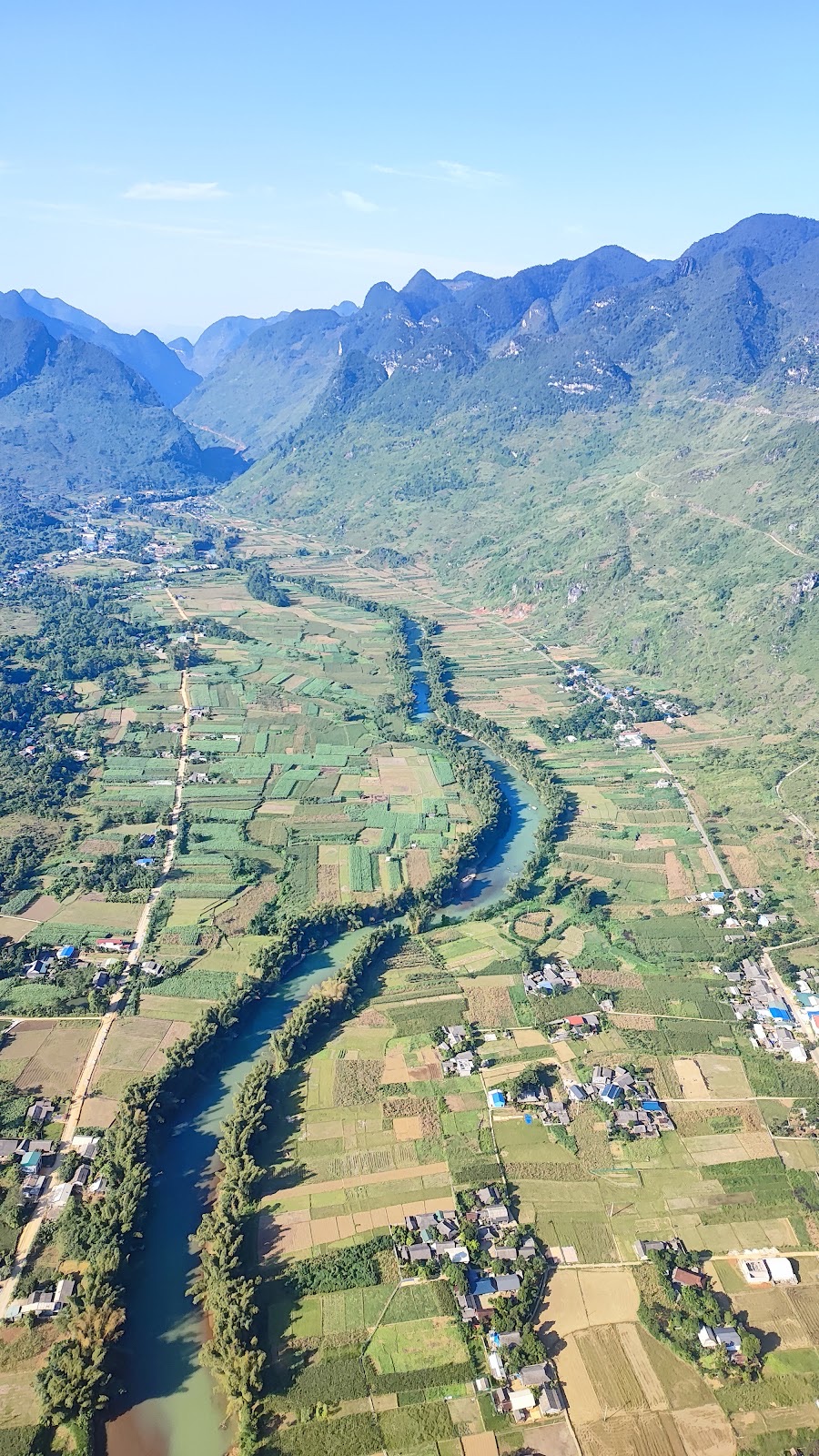
The Quản Bạ paragliding site opens on 15/10/2026, so spring 2027 will be the first spring you can fly tandem over the Miện river valley. Paragliders take off on foot from a mountainside at about 950 m and land on flat ground in the Lùng Tám valley by the Miện river, at about 450 m. The paramotor (powered paraglider) takes off right from the flat field beside the river. From above, you'll see the Cô Tiên twin mountains, Quản Bạ Heaven Gate, jagged "cat's-ear" limestone peaks, corn fields, the winding Miện river and the villages. If you're there in blossom season, dots of pink and white peach and plum appear around the rooftops.
The flying site is open daily from 06:30 to 18:30. The flying team offers free pick-up and drop-off within the Quản Bạ area (for example Nậm Đăm village, Cán Tỷ or H'Mong Village resort). From Hà Giang city, a 4-seat car costs 500,000 VND (≈ US$20) each way. Please arrive at the flying site about 30 minutes before your flight time. Where to stay: spending the night in Quản Bạ.
Choosing your flight time
In spring, mornings often bring fog in the valley. The late morning to early afternoon window is usually when the fog lifts and visibility improves. A sunset paragliding flight is also a beautiful choice on clear afternoons.
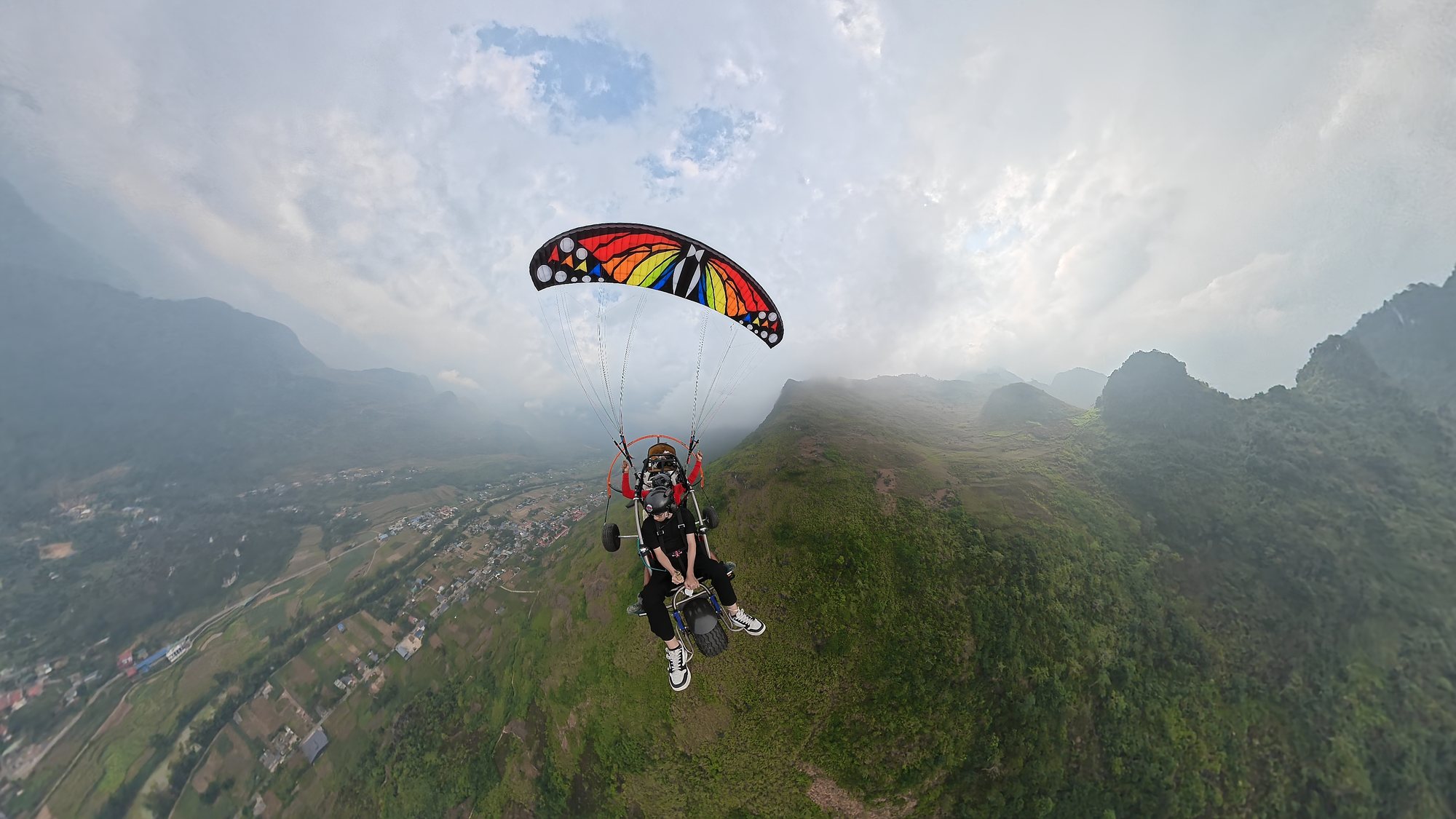
Cloud hunting by paramotor
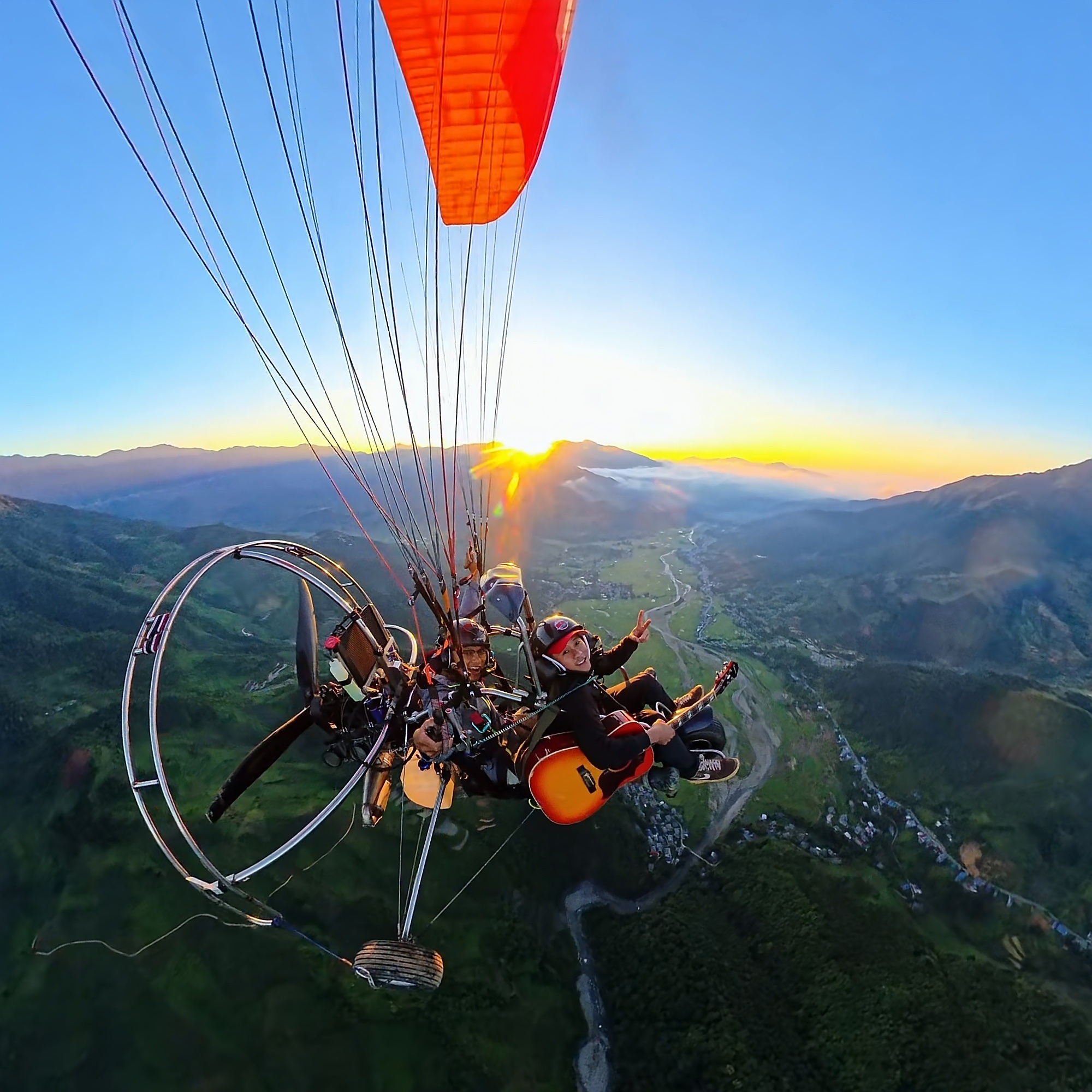
Seas of cloud often form early in the morning after a cool, humid night, so spring gives you a chance. The cloud-hunting package (like the sunrise flight) is only available by paramotor; paragliding has no cloud-hunting package. Clouds are nature and can't be guaranteed; if conditions don't allow the special flight, it becomes a standard flight. See also cloud-hunting flights in Quản Bạ.
A paramotor flying through mist over the Quản Bạ valley
Checking the weather
Our flying weather forecast page gives hourly flying scores for 10 days, a whole-day rating, a wind map and several models to compare. In spring, pay attention to humidity, cloud base and drizzle. Flights only go ahead when the wind and visibility are safe; the flying team checks the forecast and confirms the flight time on the morning of your flight. When conditions aren't safe, the team will postpone and reschedule free of charge.
Prices include GoPro video (ask your pilot), insurance, drinking water, and pick-up and drop-off within the Quản Bạ area. Extras: drone footage 400,000 VND (≈ US$16) per guest, 360° camera 400,000 VND (≈ US$16) per guest.
No experience needed, and children from 3 years old can fly with a pilot. Guests over 90 kg, please let us know in advance; anyone with a heart condition, who is pregnant, has had recent surgery or has epilepsy should tell the flying team. No deposit, nothing to pay when you book — you pay at check-in before your flight. Looking for a special Tết gift for a loved one? Take a look at our article giving a paragliding experience as a gift.
Want to fly over the old quarter and the Rocky Plateau? Đồng Văn offers tandem paragliding (no paramotor), with no fixed time slots: flights are scheduled in advance by group and according to the wind; see Quản Bạ or Đồng Văn: where to fly.
What to wear for Hà Giang and flying in spring
A thermal top, a windbreaker or a light puffer jacket.
Gloves, a neck scarf and a thin beanie to wear under your helmet.
Trainers with good grip — no sandals.
A two-piece rain suit if you're travelling by motorbike.
It's colder up in the air than on the ground, especially on morning flights. Wear layers so you can easily take some off after landing. The full checklist is on our preparing for your flight page.
Suggested 3–4 day spring itinerary
Day 1: Hà Giang city → Quản Bạ (about 45 km), admire the peach blossoms around Heaven Gate, go paragliding or paramotoring, overnight in Quản Bạ.
Day 2: Quản Bạ → Yên Minh → Thẩm Mã slope → Sủng Là → Sà Phìn → Đồng Văn, hunting for plum blossoms beside the stone-walled houses. If you love seas of cloud, take an early-morning paramotor flight before you hit the road.
Day 3: Đồng Văn → Mã Pí Lèng (with a boat trip on the Nho Quế river if time allows) → Mèo Vạc.
Day 4 (if you have time): Mèo Vạc → Du Già → Hà Giang city.
Around Tết, traffic is heavy and many services close. Book your accommodation in advance and allow extra time. For a more detailed plan, see Hà Giang Loop in 4 days and 3 nights.
Frequently asked questions
When do plum blossoms bloom in Hà Giang?
Usually around January to March, depending on altitude and each year's weather. Higher areas such as Đồng Văn and Mèo Vạc tend to bloom later.
Can I go paragliding during Tết?
Possibly, depending on the weather. Book in advance and ask the flying team via the hotline about our operating schedule over Tết.
Is it cold flying in spring?
It's colder up in the air than on the ground, especially in the morning. Wearing layers and bringing gloves and a neck scarf is enough.
Are flights often postponed in spring?
Spring often brings fog and drizzle, so on some days the flight time has to be moved or the date changed. Rescheduling due to weather is free; see rescheduling or cancelling because of the weather.
Is it OK to ride the Hà Giang Loop yourself in spring?
Yes, if you're used to mountain passes and ride slowly. Avoid riding in thick fog or after dark, dress warmly and bring a rain suit. If you're not confident, hiring a driver is the safer choice.
Cover photo: VnExpress
Book a flight:book online — no deposit, free cancellation
Christmas and New Year (24/12/2026 – 1/1/2027) is peak time on the Hà Giang Loop. Welcome the year in the air at Quản Bạ with cloud-chasing or sunrise paramotor and sunset paragliding, plus 3- and 4-day plans, group booking, gift ideas, warm clothing and winter road safety tips…
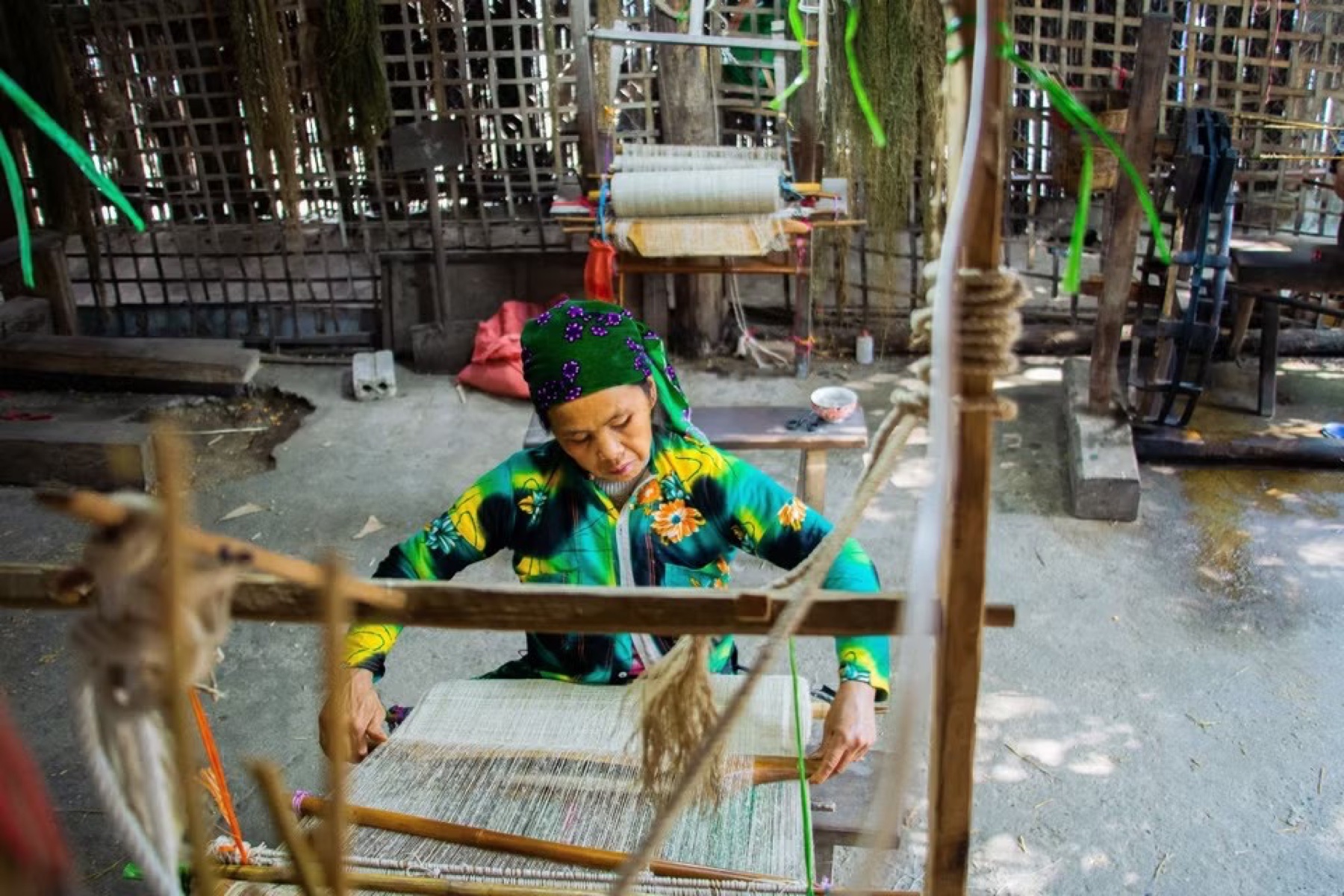
Visit the Lùng Tám linen weaving cooperative in the Quản Bạ valley: watch Hmong women spin linen, weave cloth, draw patterns in beeswax and dye with indigo, then try it yourself — an easy pairing with a paragliding flight…
A day-by-day 4-day, 3-night Hà Giang Loop itinerary: paragliding in Quản Bạ, the new Cán Tỷ – Yên Minh road, the Hmong King's Palace, Lũng Cú, Đồng Văn old quarter, Mã Pí Lèng, a Nho Quế river boat, Mèo Vạc and Du Già, plus Sunday markets and a 3-day version…
Only have 2 days? A realistic Hà Giang Loop plan: fly in Quản Bạ on the first morning, take the new Cán Tỷ – Yên Minh road, spend the night in Đồng Văn, see Mã Pí Lèng at dawn and ride back — plus what to skip and two 3-day options…
Bắc Sum Pass or Quản Bạ? A side-by-side look at the two flying sites on the QL4C near Hà Giang city: distance, landing field, valley width, paragliding and paramotor, a flying morning at Quản Bạ, getting there and fitting the flight into the Hà Giang Loop…
Quản Bạ or Đồng Văn? An honest comparison of our two flying sites on the Hà Giang Loop: location, getting there, scenery, paragliding vs paramotor, what a flying session looks like, wind and schedule, price, and how to fly both…