Is There a Night Market in Đồng Văn Old Quarter? Evenings and the Sunday Market
Đồng Văn has no fixed weekly night market. What the old quarter offers after dark, the full-moon "old quarter night", Sunday market hours, what to eat, where to stay to catch the market and what to bring.
Ms. Judy · · 15 min read
Đồng Văn old quarter has no fixed weekly night market: in the evening you get lantern-lit old houses, cafés and a few food stalls around the old market, sometimes an "old quarter night" around the full moon or evening events during festival season — the real market day is the Sunday morning market.
Knowing this up front makes planning easier: spend Saturday night in Đồng Văn, stroll the old quarter after dark, then get up early for the Sunday market. This guide covers everything you need for one night and one morning in the old quarter: what's on in the evening, market hours, what to eat, where to sleep, how to get around and what to combine it with nearby.
Đồng Văn sits at about Km150 of the Hà Giang Loop, in the middle of the Đồng Văn Rocky Plateau (a UNESCO Global Geopark). Since 1 July 2025 it officially belongs to Đồng Văn commune, Tuyên Quang province (after the provincial merger), though travellers still call the area Hà Giang.
Is there a night market in Đồng Văn old quarter?
There is no night market that runs every week. Plenty of articles online use the words "night market" for evenings with performances, but those are occasional events, not a fixed market. What you may find in the evening:
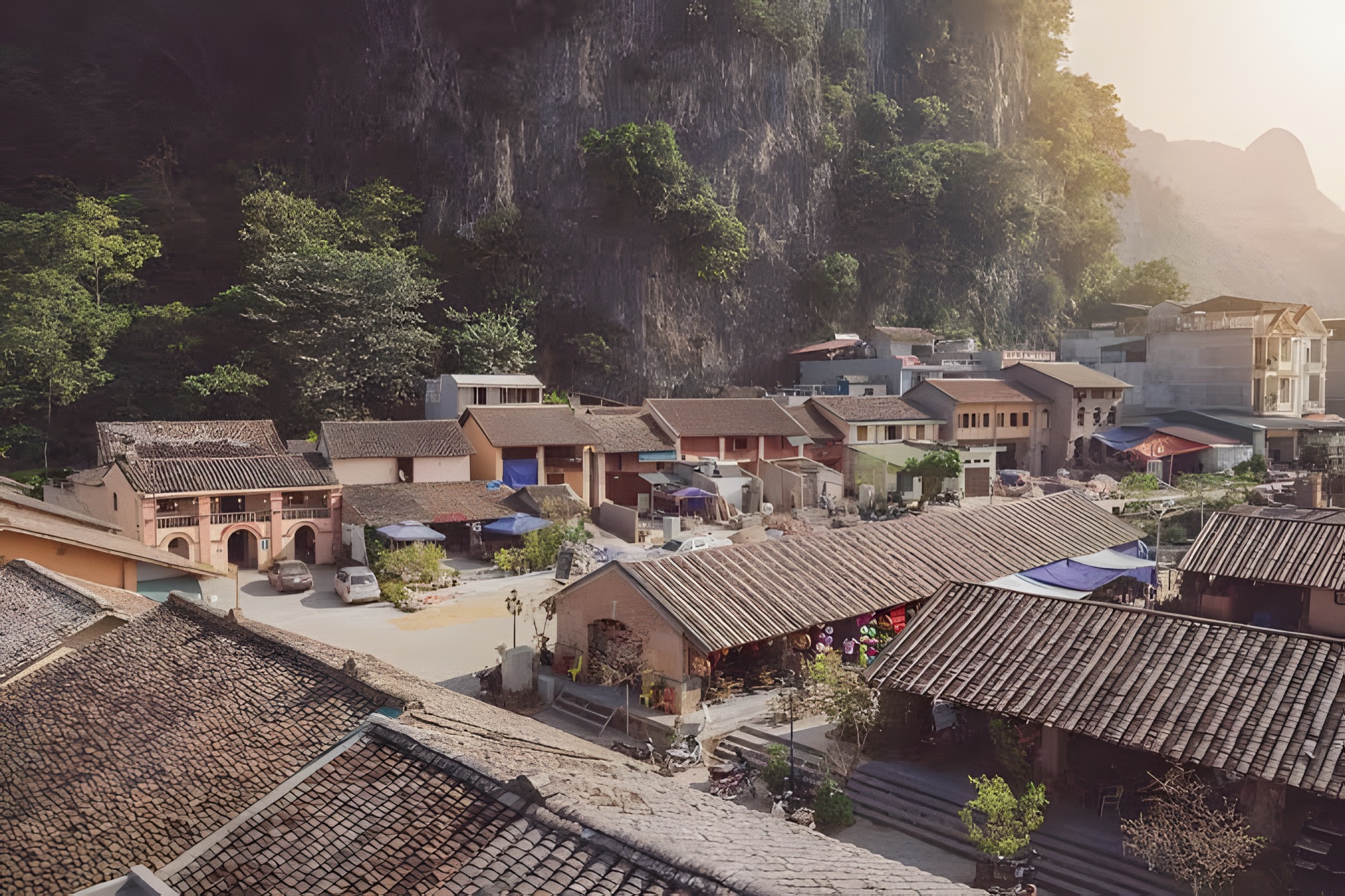
The old quarter lit up: old houses hung with red lanterns, and a few cafés open into the evening.
Keep reading
Food stalls around the old market: cháo ấu tẩu (rice porridge cooked with ấu tẩu root), thắng cố (a highland meat stew) and grilled skewers.
"Old quarter night" at the full moon: around the 14th–16th of the lunar month, some months bring performances, khèn (Hmong pipe) music and food stalls inside the old market. It is not held every month.
Festival evenings: the 12th Buckwheat Flower Festival, "Echoes of the Stone Land" (Âm vang miền đá), opened at 20:00 on 25 October 2026 at Youth Square (Quảng trường Thanh niên) in Đồng Văn; activities run until the end of December 2026. Ask locally for the schedule of individual evening events.
When
What's on
How certain
Any evening
Lantern-lit old quarter, cafés, food stalls around the old market
Regular
Full moon (lunar 14th–16th)
Old quarter night: performances, khèn, food stalls
Some months only, ask first
Buckwheat festival season 2026 (25 Oct – end of Dec 2026)
Evening programmes on the festival schedule
Ask locally
Sunday morning
Đồng Văn market
Every week
Before you arrive, ask your homestay whether anything is on the night you're there. Locals are usually the first to know whether the old market has a show tonight.
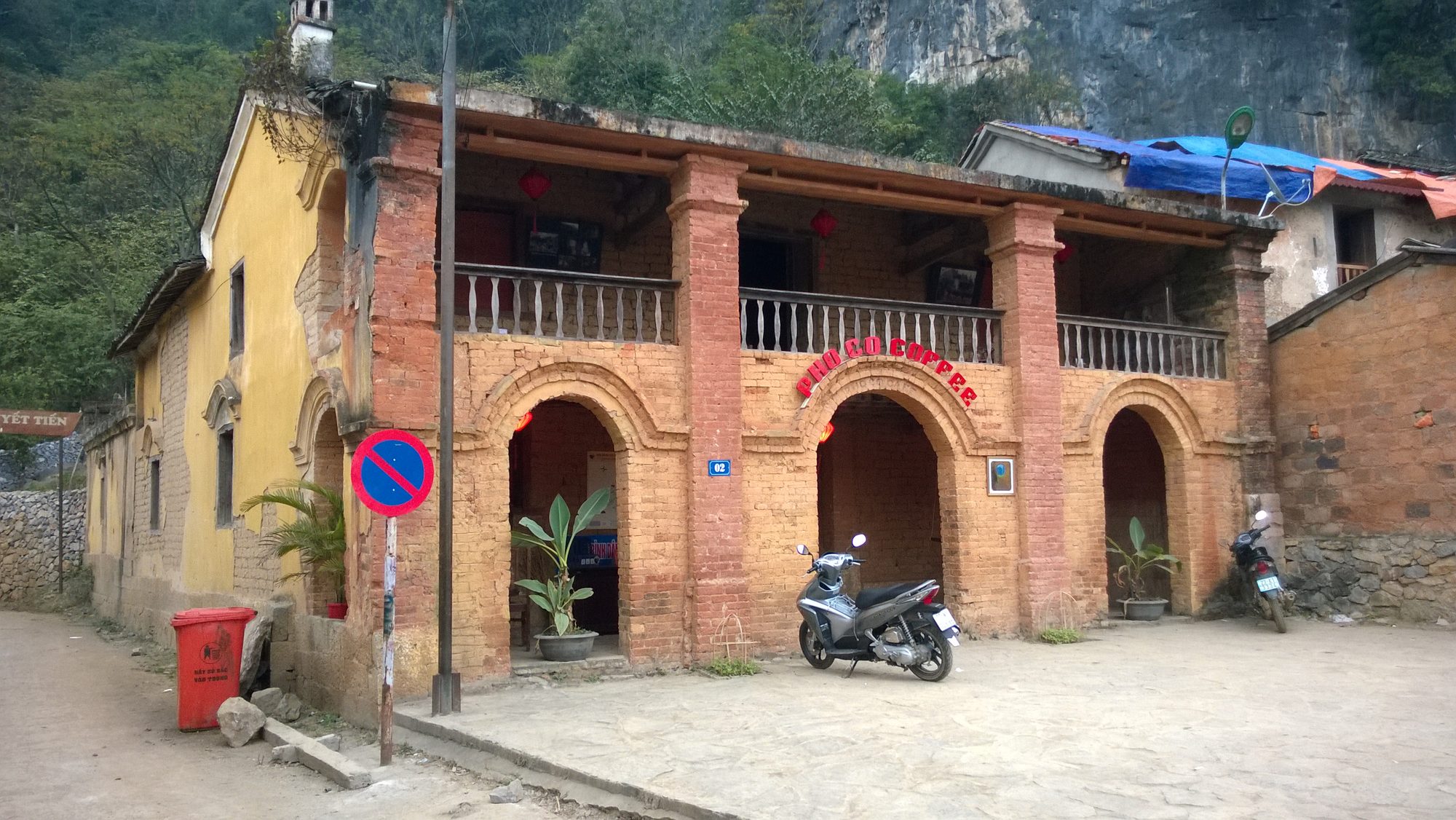
An old two-storey house in Đồng Văn old quarter, now a café — Photo: Vuong Tri Binh, CC BY-SA 4.0, Wikimedia Commons
A suggested evening in the old quarter
Even without an event, an evening in Đồng Văn is worth staying for. Here is an easy rhythm:
Late afternoon: arrive, check in and walk the old quarter while there's still light to photograph the tiled roofs and the cliff behind them. In November–December the sun sets around 17:15–17:30 and it gets dark quickly.
When the lanterns come on: go back to the old market and the row of old houses once the lanterns are lit. The quarter is small; an unhurried walk is all you need.
Dinner: a bowl of cháo ấu tẩu or thắng cố at the stalls around the old market.
Coffee: sit in one of the old houses and watch the street, then turn in early so you're fresh for the market.
Evenings on the Rocky Plateau are cold and quiet. Don't expect a noisy walking street like in the cities; the charm of Đồng Văn at night is the stillness among the stone mountains.
Đồng Văn old quarter: history and architecture
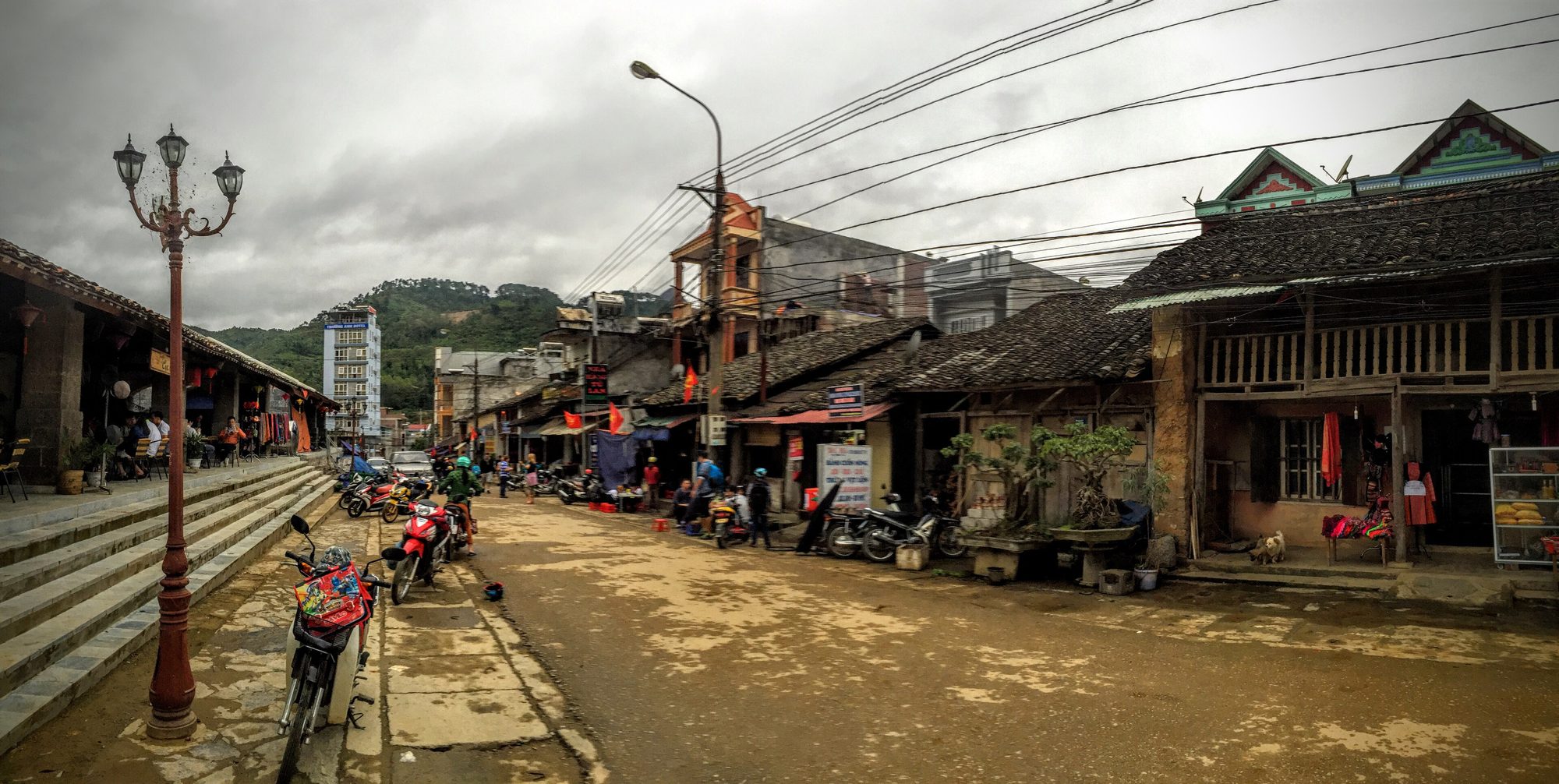
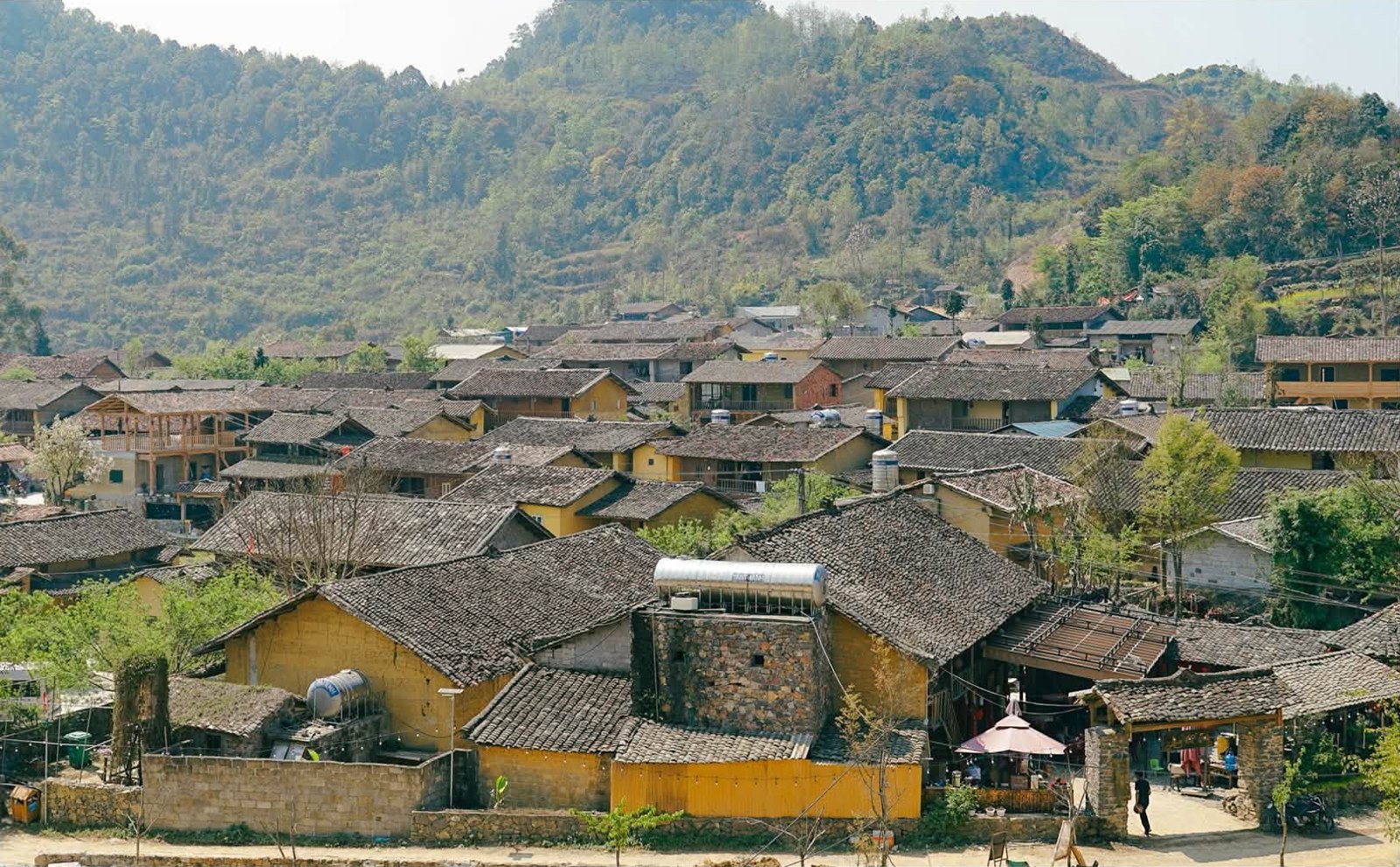
The old quarter is about 1 km long, tucked under a limestone mountain, with around 40 old houses built between the late 19th century and the first half of the 20th. They have rammed-earth walls, yin-yang clay tiles, wooden eaves and red lanterns at the door; the style blends Chinese building traditions with local ones.
A street in Đồng Văn town lined with old houses — Photo: trungydang, CC BY 3.0, Wikimedia Commons
As you walk, look at the small details: thick earth walls that keep the houses warm in winter, yin-yang tiles layered like scales, wooden eaves and balconies jutting over the street. Many houses are still lived in; some have become cafés, shops or guesthouses. Because these are people's homes, only go inside when it's a business or when you're invited.
The old stone market: the heart of the quarter
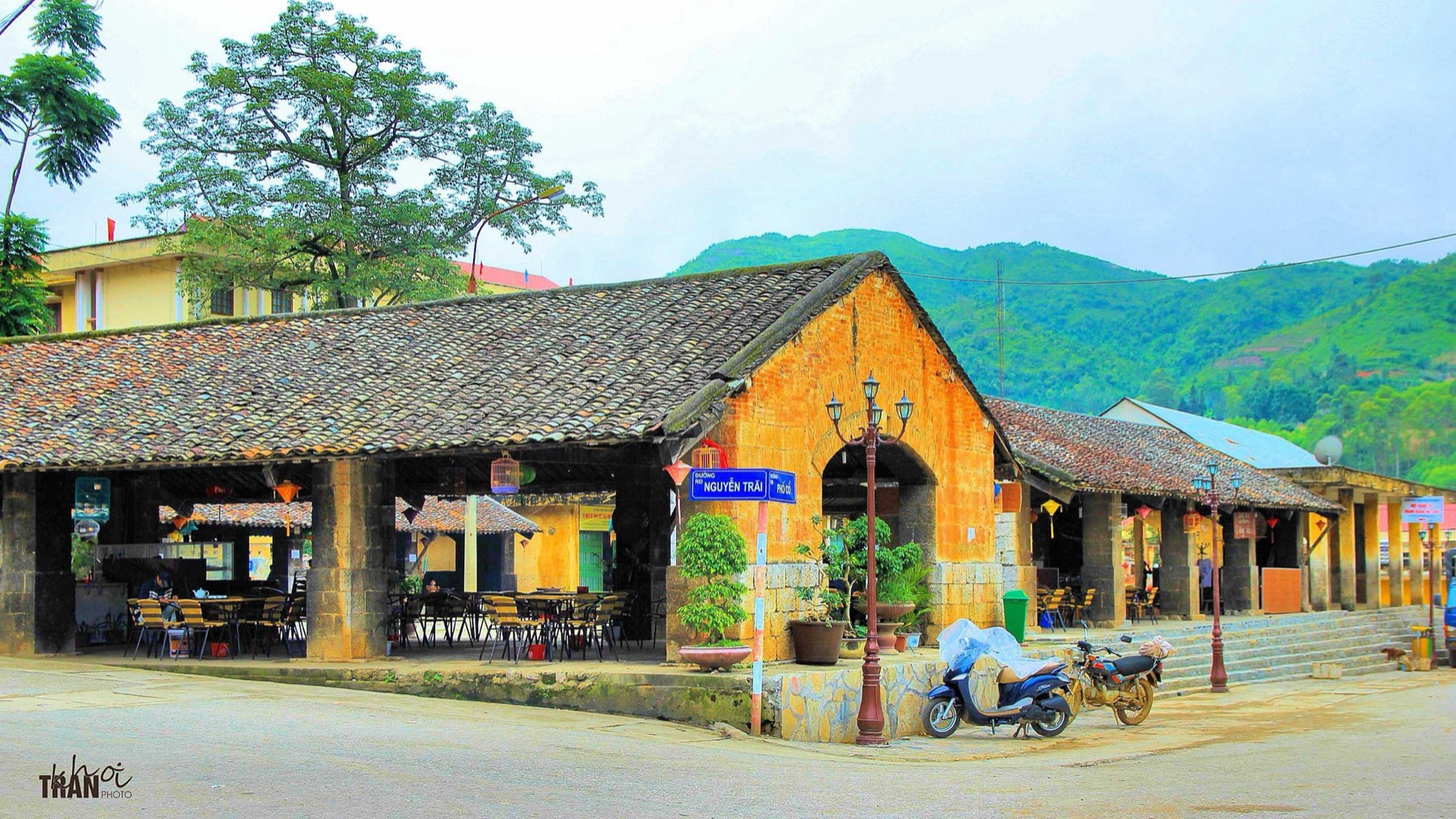
At its heart is the U-shaped old market, built by the French in the 1920s with craftsmen from Sichuan. It has three main buildings made of large squared stone blocks, with carved column bases.
A corner of the old market in Đồng Văn: stone walls, an arched gate and yin-yang tiles — Photo: Khoitran1957, CC BY-SA 4.0, Wikimedia Commons
On ordinary days the old market is quiet, with cafés and food stalls setting tables under the eaves. On Sunday morning the very same place is packed with shoppers. It's worth walking the quarter twice: in the late afternoon while the light lasts and again after the lanterns come on; if you stay for Sunday morning you'll see the same market in three different moods.
The Sunday morning market in Đồng Văn
Đồng Văn market is held every Sunday morning (by the solar calendar), in and around the old stone market of the old quarter.
Time
What happens
Around 5:30
Vendors arrive and set up
Around 7:00–10:00
Busiest
Late morning – early afternoon
The market thins out and packs up
If you only have one morning, 7:00–9:00 is a good window: the market is in full swing, the air is starting to warm up, and you can still be on the road before noon.
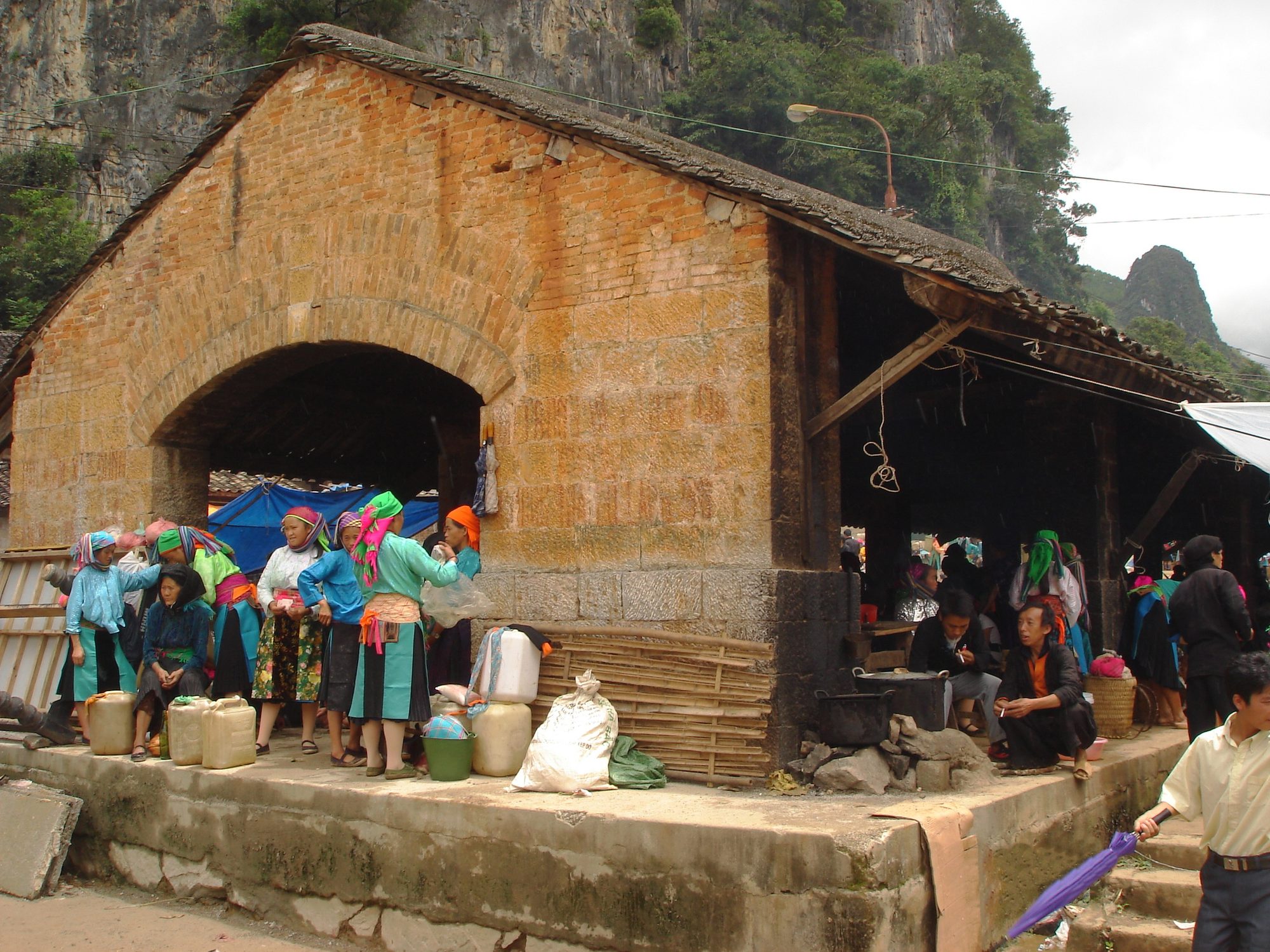
People by the old market hall in Đồng Văn (2009) — Photo: Stephan Klage, CC BY-SA 3.0 de, Wikimedia Commons
Who comes to market
Hmong, Lô Lô, Dao and Tày people come down from the surrounding villages, many in traditional dress. For highland families, market day is not only about buying and selling: it's a chance to meet relatives and friends, share a bowl of thắng cố and catch up after a week in the fields. Think of yourself as a guest, not as an audience at a show.
What's for sale
Brocade and clothing: fabric, traditional skirts and jackets.
Livestock and poultry: buffalo, cattle, pigs and chickens bought and sold on the spot.
Food and local specialities: thắng cố, lạp xưởng (sausage), mèn mén (steamed corn meal), five-colour sticky rice, black bánh chưng (rice cakes), dried persimmons, smoked buffalo meat.
Herbs: medicinal plants and leaves brought down from the villages.
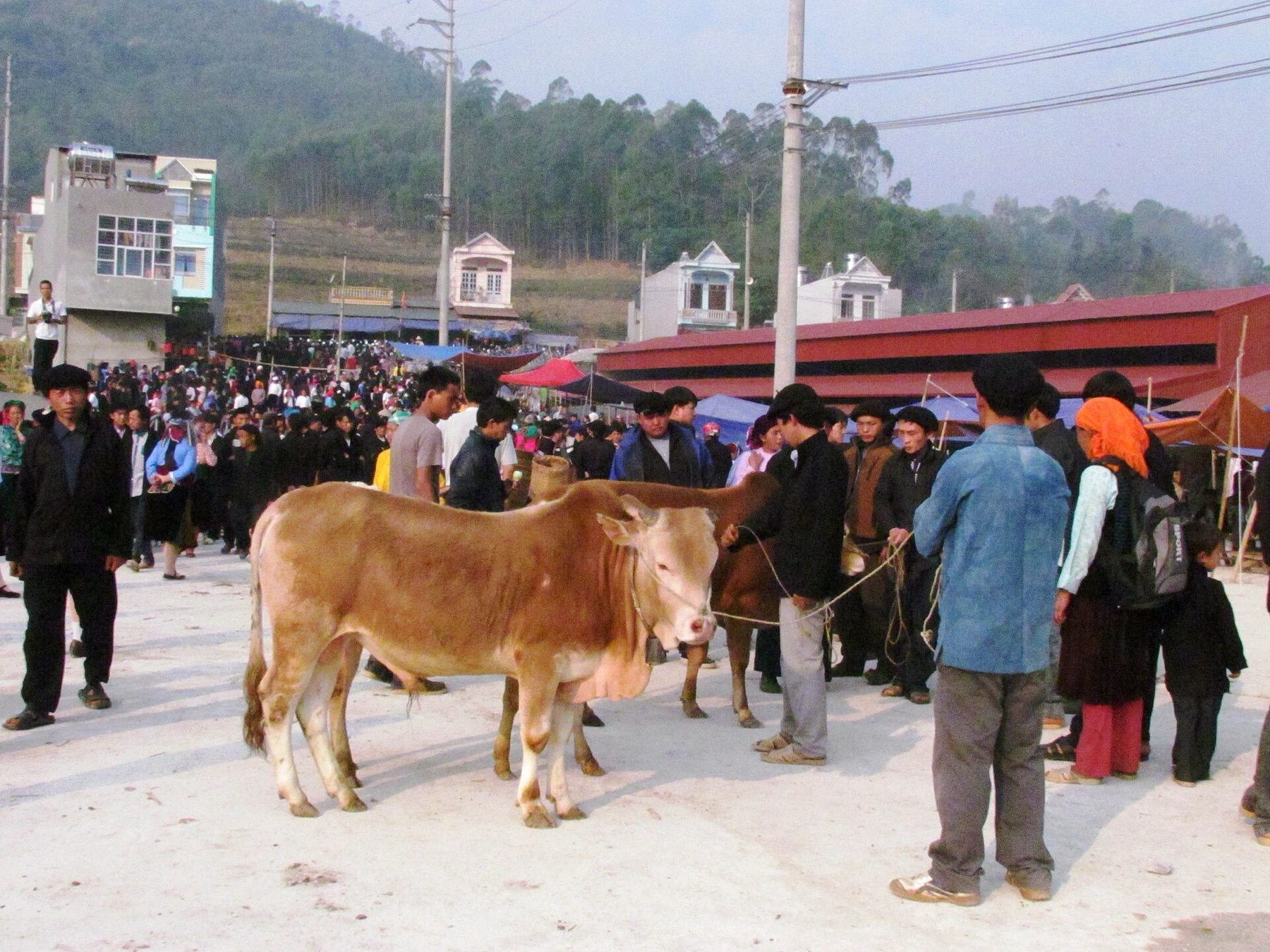
The livestock trading area at Đồng Văn market — Photo: Zennysmile, CC BY-SA 4.0, Wikimedia Commons
The livestock area and breakfast stalls
The buffalo and cattle area is where many visitors like to stand and watch, but it's also where you need to be most careful. Stand to one side, don't block the path of people leading animals, and never stand right behind an animal. If you have small children with you, hold their hands here.
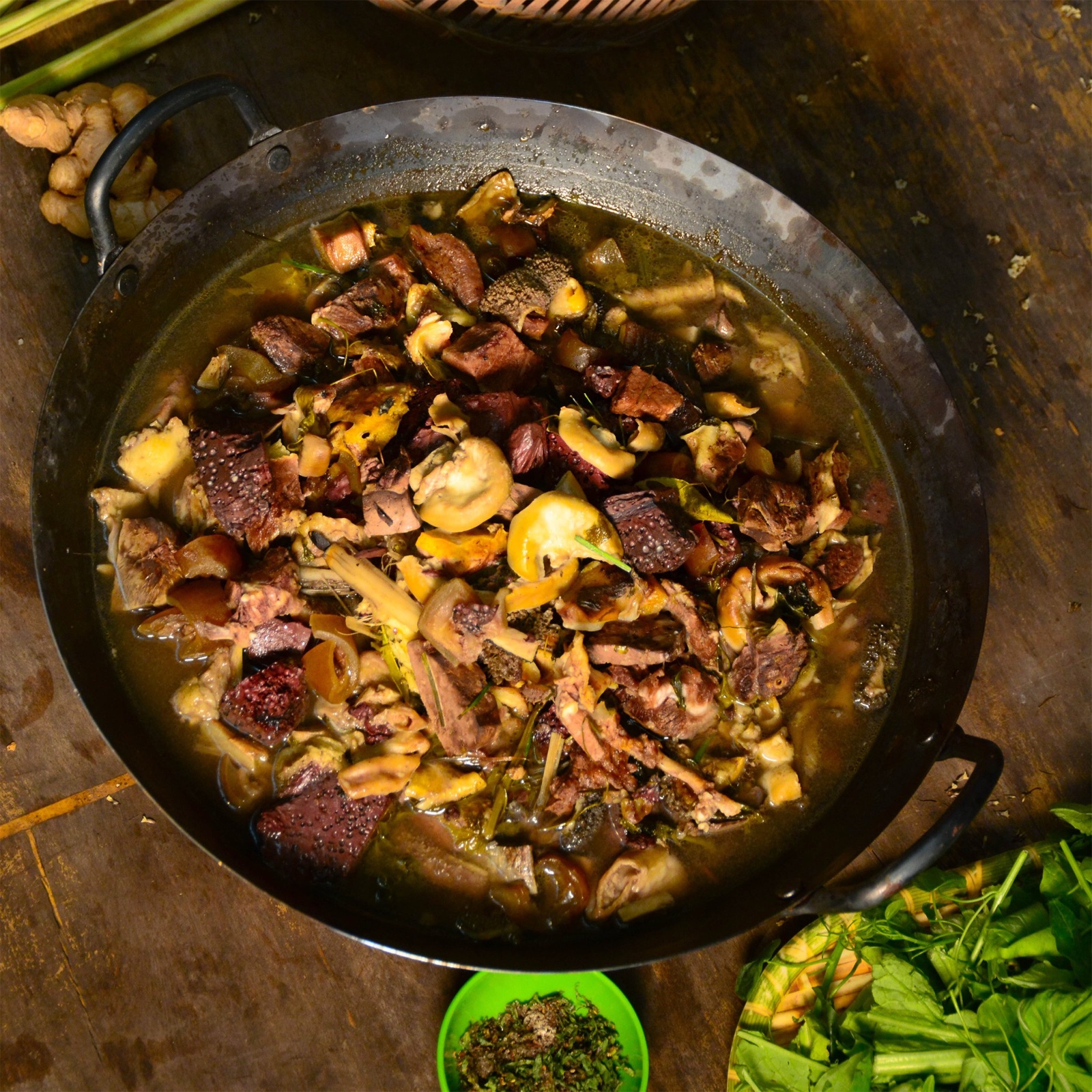
Food stalls in the market serve from early morning. Thắng cố simmering in a big pan, mèn mén steamed from corn flour, five-colour sticky rice and black bánh chưng are the dishes to try right there in the market, sharing a table with local people.
A pan of thắng cố, a staple of highland market days
For other markets on the Rocky Plateau, see our guide to Hà Giang ethnic markets. Note that Mèo Vạc market is also held on Sunday morning, so in any given week you can only pick one of the two; read Mèo Vạc Sunday market to compare.
What to eat in Đồng Văn old quarter
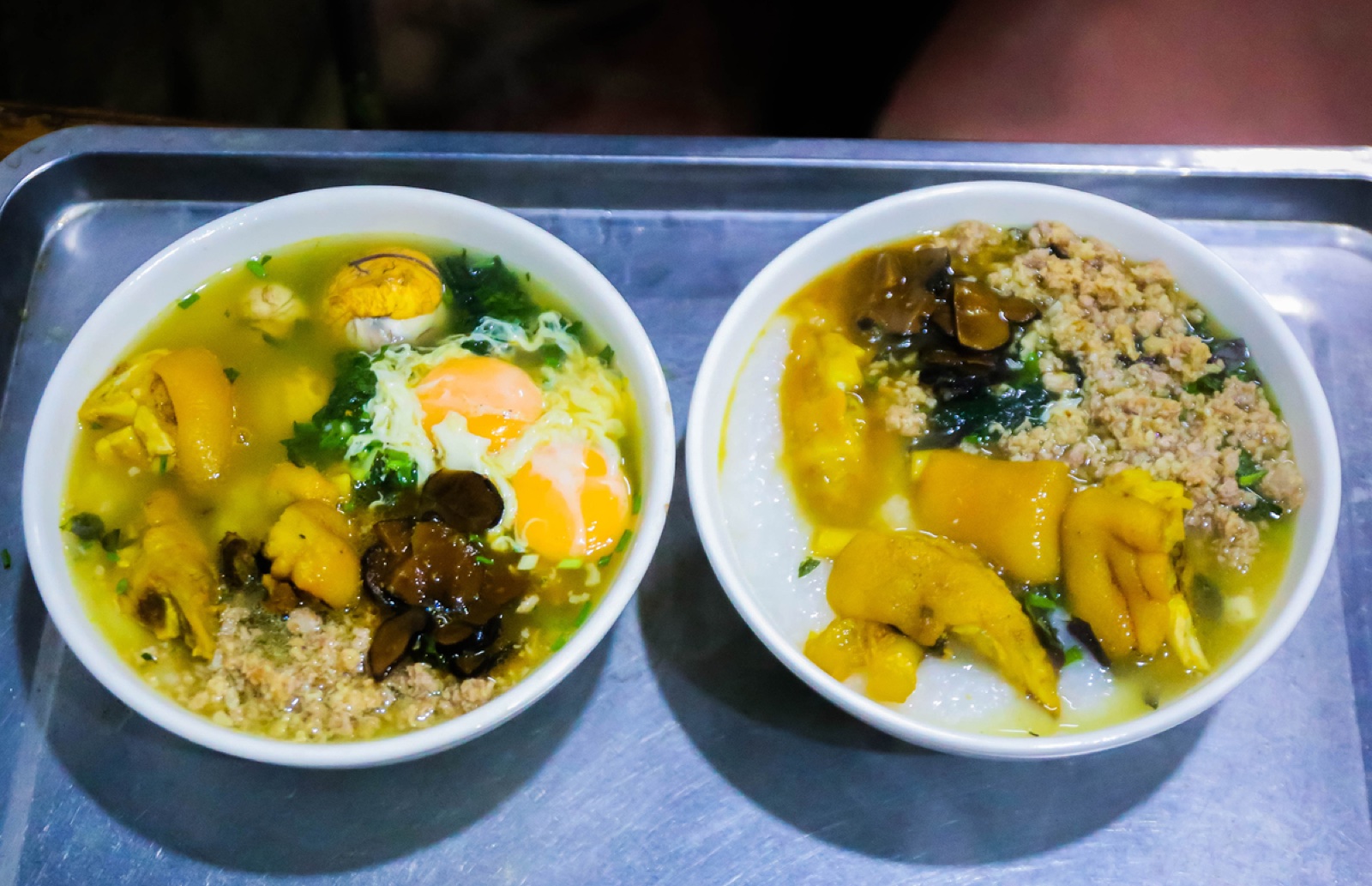
Cháo ấu tẩu: a familiar dinner or early-breakfast dish in Đồng Văn, for example at Cháo Mộc Miên in the market area.
Bánh cuốn (steamed rice rolls): a hot breakfast before the market, for example at Mrs Hà's bánh cuốn, No. 31 Phố Cổ.
Thắng cố, mèn mén, five-colour sticky rice, black bánh chưng: look for them at the Sunday market.
Phố Cổ café: set in a house more than 100 years old on the corner of the market, a good seat for watching the street.
Two bowls of hot cháo ấu tẩu, a familiar dinner in Đồng Văn old quarter
Ấu tẩu root is poisonous if it isn't prepared properly, so only eat the porridge at well-known, established places and don't buy the root to cook yourself. For gifts to take home, lạp xưởng, smoked buffalo meat and dried persimmons from the market travel well. See also Hà Giang food to try.
Where to stay to catch the market
The simplest plan is to spend Saturday night in or near the old quarter and walk to the market on Sunday morning. Staying right in the quarter means you don't have to ride through the early-morning mist and you can be there while vendors are still setting up.
On the popular Hà Giang Loop route (day 1 Quản Bạ – Yên Minh, day 2 up to Đồng Văn), you can leave Hà Giang city on Friday so you're in Đồng Văn on Saturday night. Do the market on Sunday morning, then continue over the Mã Pí Lèng pass. See the 4-day 3-night Hà Giang Loop itinerary and the stage guide Đồng Văn on the Hà Giang Loop.
Buckwheat season and festival season bring a lot of visitors, so book weekend rooms in advance. Ask your guesthouse whether rooms have warm blankets and hot water, and whether there's indoor parking for motorbikes.
A weekend in Đồng Văn: suggested plan
When
Suggestion
Saturday, morning – midday
Ride from Yên Minh up to Đồng Văn; stop at the Hmong King's Palace in Sà Phìn on the way
Saturday, afternoon
Go up to Lũng Cú, or head straight to the old quarter if you're tired; be in Đồng Văn before dark
Saturday, evening
Old quarter by lantern light, dinner, coffee, ask what's on
Sunday, 6:00–9:00
Bánh cuốn or cháo ấu tẩu, then the market
Sunday, late morning
Leave Đồng Văn over the Mã Pí Lèng pass to Mèo Vạc
The Vương family mansion (the Hmong King's Palace) is about 13 km from central Đồng Văn, on the Đồng Văn – Lũng Cú side of QL4C; see the Hmong King's Palace in Sà Phìn. The turn-off to Lũng Cú is about 2 km from Đồng Văn, and the Lũng Cú flag tower is about 24 km from Đồng Văn. Sà Phìn market is a "shifting market" held every six days, falling one weekday earlier each week, so now and then it falls on the day you pass through.
After the market, the Mã Pí Lèng pass road, about 20 km long, links Đồng Văn with Mèo Vạc. If you want a boat trip on the Nho Quế river, the Tà Làng junction is on the pass road; ticket counters usually open roughly 7:00–18:30 and it's best to arrive before about 16:00.
Getting around in the evening: safety notes
The old quarter is small and best explored on foot. The part to watch is the road in and out:
Arrive before dark. The roads up to Đồng Văn and over Mã Pí Lèng have many bends, and fog often settles in the late afternoon and early morning. Don't plan to ride the passes after sunset.
Don't drink and ride. Corn wine turns up at many highland markets; if you're riding your own motorbike, save it for an evening when you're done with the road.
Sunday morning is busy with people and livestock around the market: ride slowly and give way to people leading buffalo and cattle.
Check the weather before your trip; our flying weather forecast also shows wind, cloud and visibility in the area.
Add a paragliding flight to your trip
On the first day of the Loop you can stop at Quản Bạ (Km45) to fly a tandem paraglider or a paramotor; the site is open daily 06:30–18:30. A standard paragliding flight of 9–15 minutes costs 2,290,000 VND per guest (≈ US$ 91), and a 15-minute paramotor flight costs 2,490,000 VND per guest (≈ US$ 99).
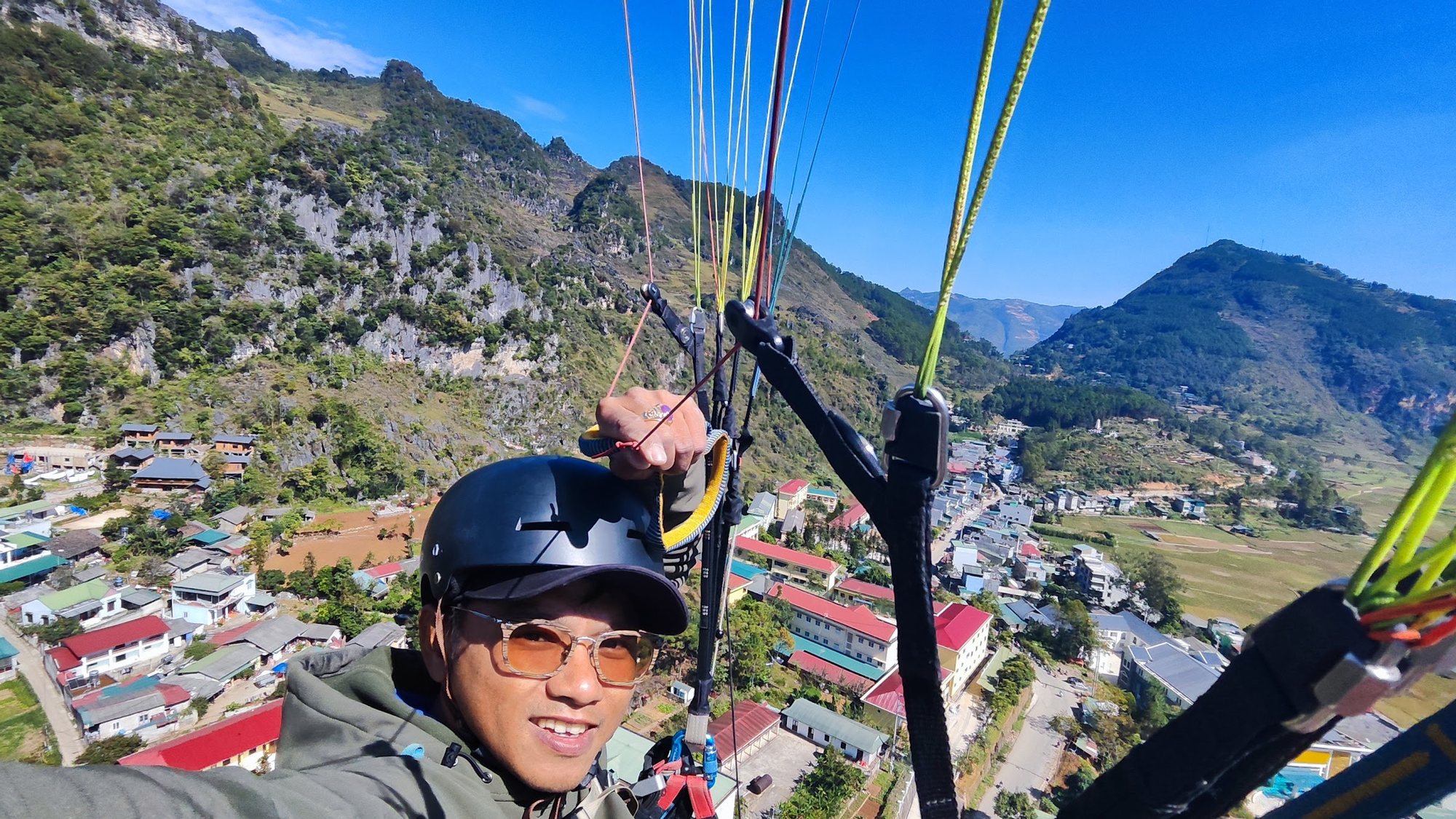
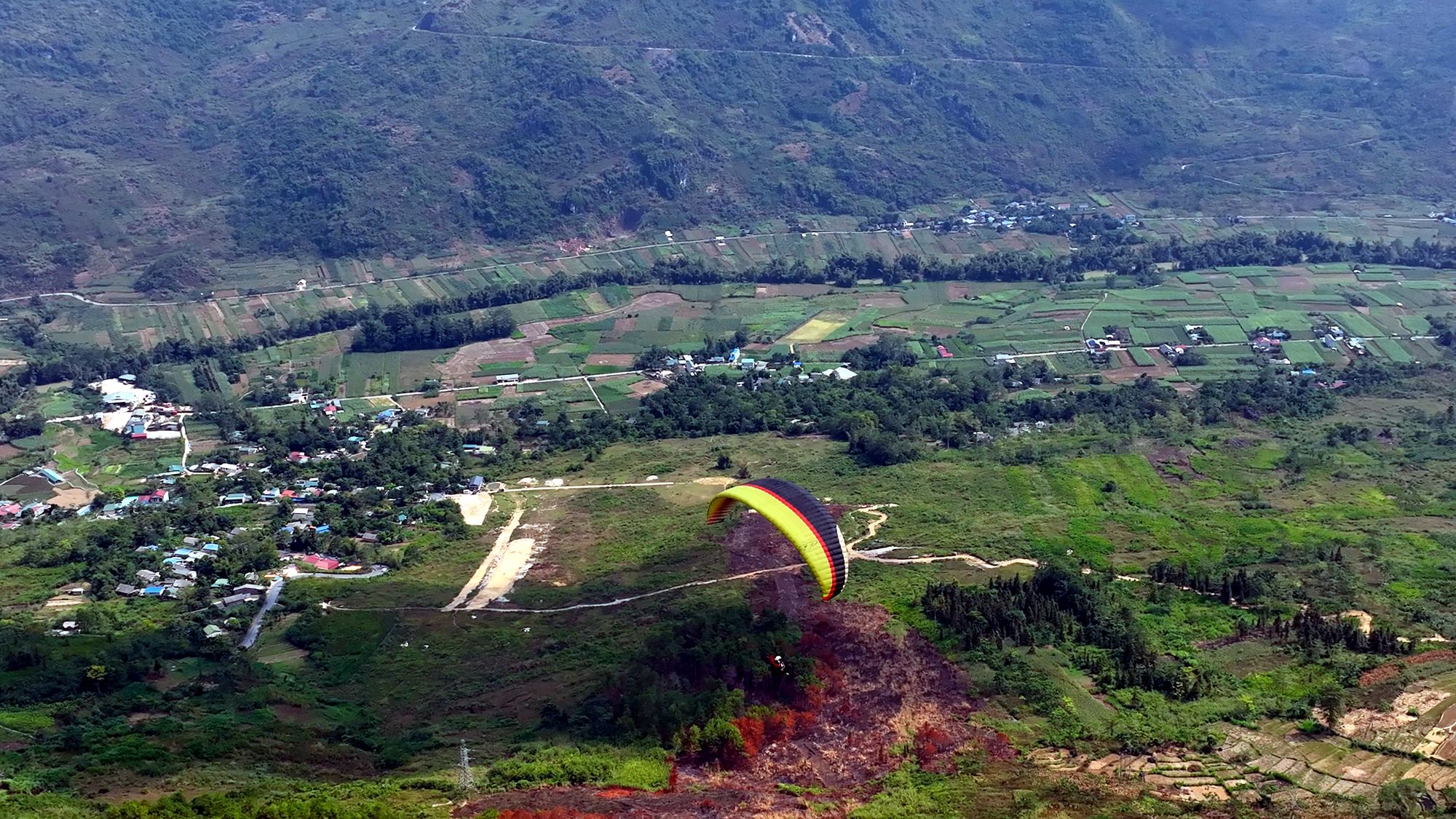
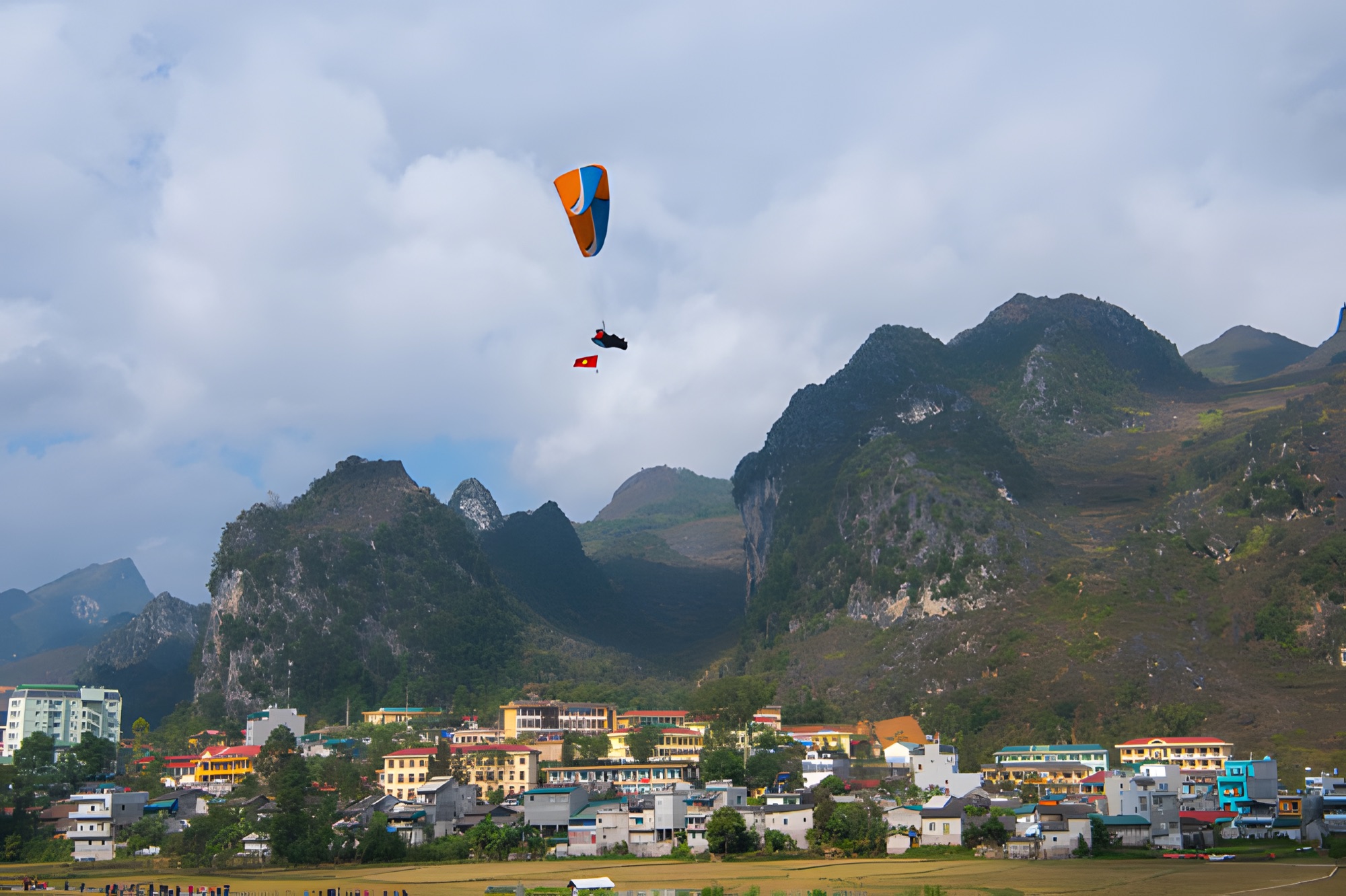
In Đồng Văn, if you want to see the old quarter and the Rocky Plateau from above, the Mebayluon flying team runs tandem paragliding flights over the old quarter that land right in town. There is paragliding only here, no paramotor; there are no fixed time slots — flights are scheduled in advance for each group according to the wind and confirmed on the morning of the flight. See paragliding in Đồng Văn or book online and add the note "Đồng Văn flight".
A paragliding pilot's selfie above Đồng Văn town
Practical tips for the market and the old quarter
Bring cash, ideally small notes; market stalls mostly take cash.
Dress warmly: in November–December, early mornings and evenings on the plateau are often just 5–15 °C, and Đồng Văn is colder still. Frost is possible from late December into January. Bring a jacket, a woollen hat and gloves.
Photograph politely: ask before photographing people, especially close-ups; if they shake their head, put the camera down. Don't fly a drone over the market crowd.
Ask the price before you buy and buy only what you need; don't handle food and then put it back.
Take care in the livestock area: stand aside and don't block people leading buffalo and cattle.
Go early: to see the market being set up, be there from around 6:00.
Flower season: buckwheat flowers bloom from about October to early December, at their best from late October through November; see buckwheat flower season in Hà Giang.
Frequently asked questions
Is there a night market in Đồng Văn?
There is no fixed weekly night market; evenings bring lanterns, cafés and food stalls around the old market, and sometimes an "old quarter night" or festival programme.
What day and time is Đồng Văn market?
Every Sunday morning: vendors arrive from around 5:30, it's busiest around 7:00–10:00, and it winds down by late morning.
When is the Đồng Văn "old quarter night"?
Around the full moon (roughly the 14th–16th of the lunar month), and only in some months. Ask your homestay first.
Where should I stay for the Sunday market?
In or near the old quarter on Saturday night, so you can walk to the market on Sunday morning.
Đồng Văn market or Mèo Vạc market?
Both are on Sunday morning. Đồng Văn has the old quarter and the stone market as its setting; Mèo Vạc is mostly Hmong, with a row of corn-wine stalls and a livestock area. Choose by where you sleep on Saturday night.
Can I go paragliding in Đồng Văn?
Yes, tandem paragliding by advance appointment, depending on the wind. For daily flights or to try a paramotor, choose Quản Bạ.
Book a flight:book online — no deposit, free cancellation
Bắc Sum Pass or Quản Bạ? A side-by-side look at the two flying sites on the QL4C near Hà Giang city: distance, landing field, valley width, paragliding and paramotor, a flying morning at Quản Bạ, getting there and fitting the flight into the Hà Giang Loop…
Quản Bạ or Đồng Văn? An honest comparison of our two flying sites on the Hà Giang Loop: location, getting there, scenery, paragliding vs paramotor, what a flying session looks like, wind and schedule, price, and how to fly both…
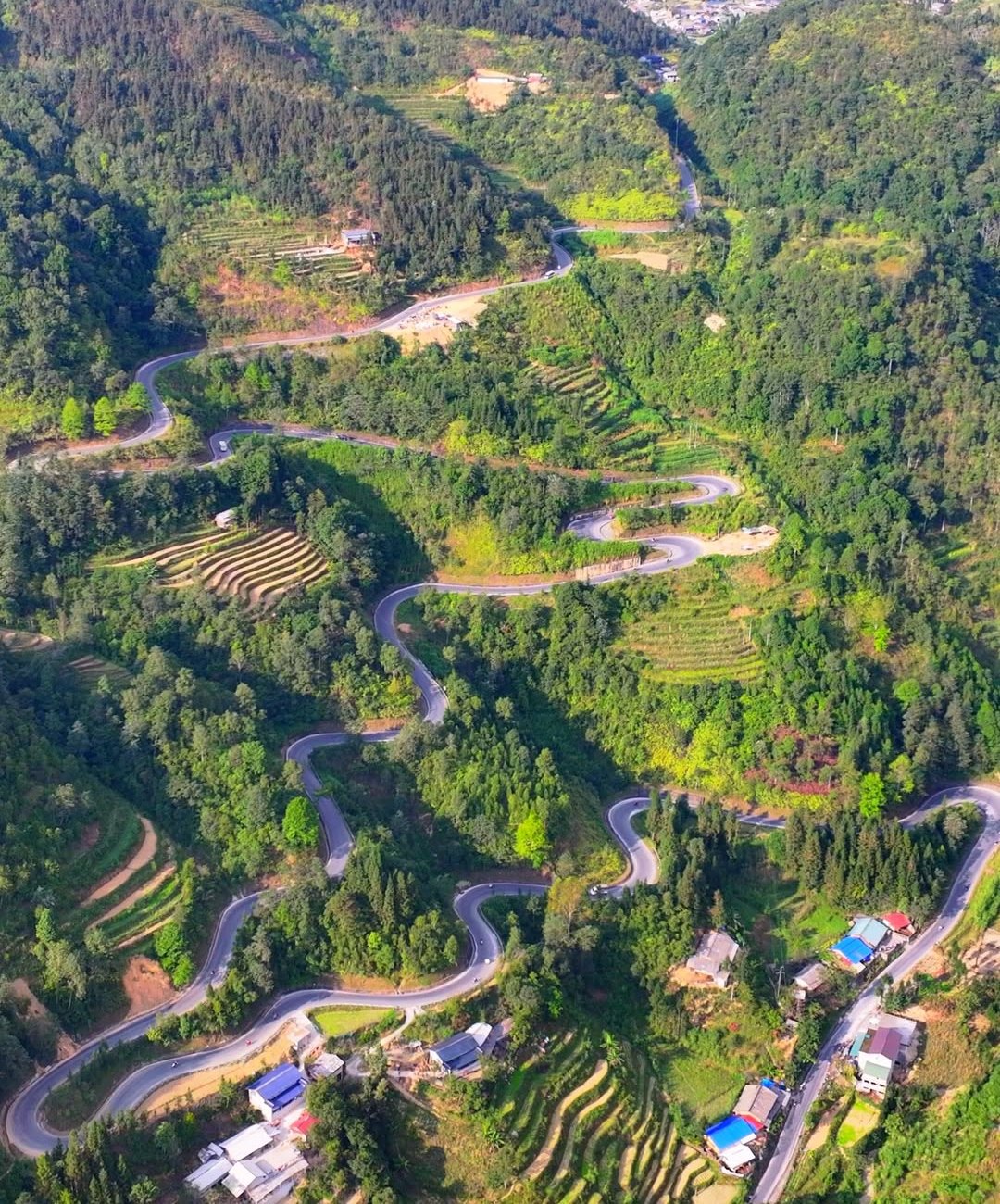
The Chín Khoanh slope is a stack of hairpin bends on QL4C between Phố Cáo and Sủng Là, about 18 km past Yên Minh and 27 km before Đồng Văn: why it's called "nine coils", the best viewpoint, how to stop safely, how it differs from Thẩm Mã and what to see nearby…
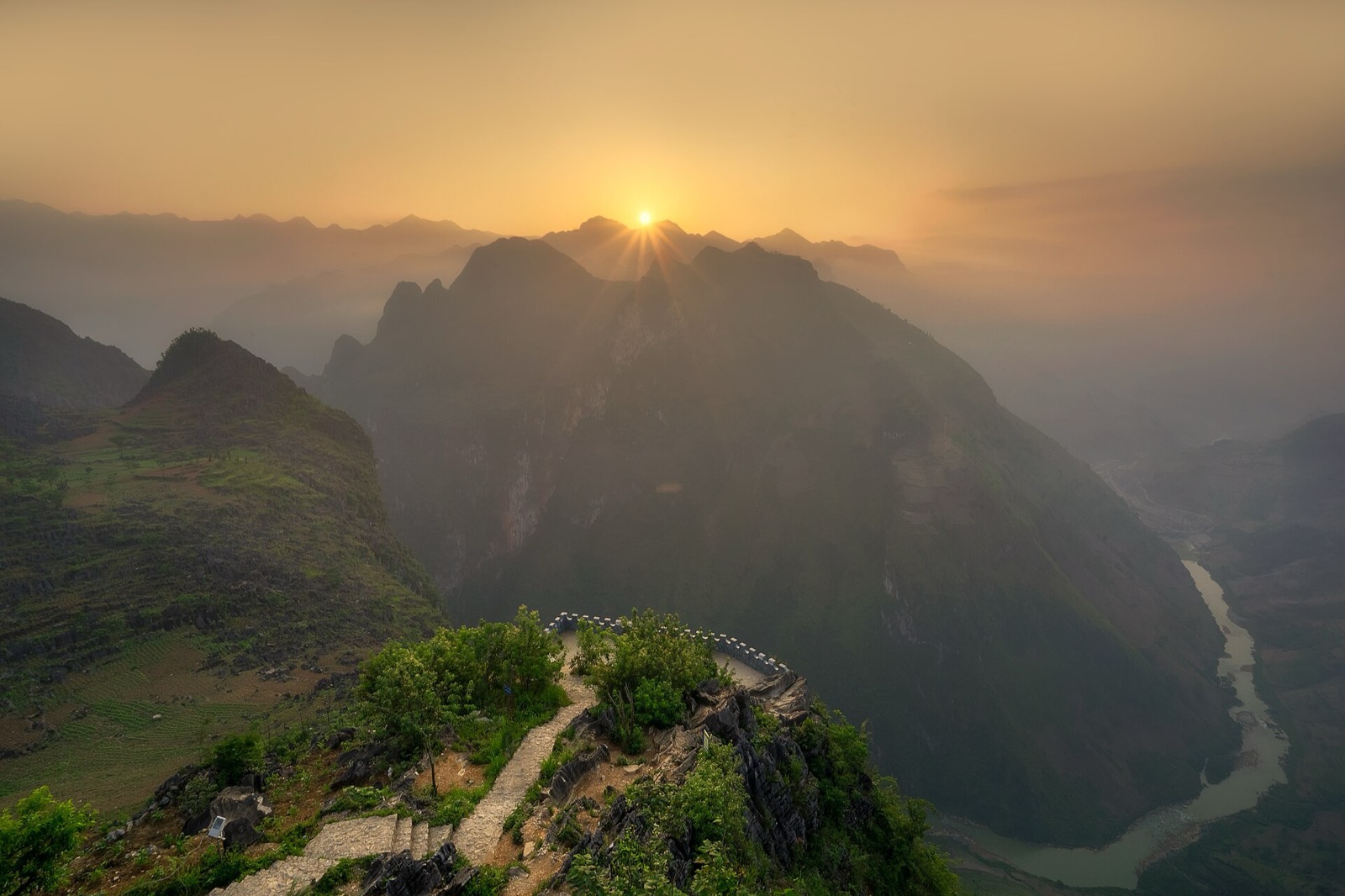
A practical guide to the Mã Pí Lèng Sky Path, the cliff-edge walking trail above the Nho Quế River: the trailhead at the Youth Volunteers monument, the route section by section, the death rock closure (October 2026), what to wear, when to go and how to pair it with a Tu Sản canyon boat trip…
A guide to Lô Lô Chải, the Lô Lô village at the foot of the Lũng Cú flag tower: rammed-earth houses, costume and bronze drums, Café Cực Bắc, homestays, the road from Đồng Văn, 2026–2027 traffic rules and village etiquette…
The Yên Minh pine forest lines Highway 4C about 7–8 km before Yên Minh town on the Quản Bạ side: exact location, commune after the 2025 merger, best light, how to stop safely, what's nearby and how to fit it into a 3- or 4-day Loop…