

Paragliding terms for beginners
Common paragliding terms explained simply: wing, harness, reserve, thermal, soaring, ridge lift, glide ratio, speed bar, briefing… plus a quick-reference table for first-time flyers.
Đội trưởng Mỹ · · 7 min read
Paragliding terms can sound daunting, but in truth you only need about twenty words to understand almost everything the pilots say at the flying site. This article briefly explains each key term — from wing, harness and reserve to thermal, soaring and glide ratio — along with a quick-reference table you can pull up right before your first flight.
You don't need to memorise these words to fly tandem. When you fly with a pilot, the pilot handles every technical manoeuvre. But understanding the vocabulary helps you feel more at ease, follow the briefing more easily and enjoy the flight to the full.
Group 1: Flying equipment
Wing (glider)
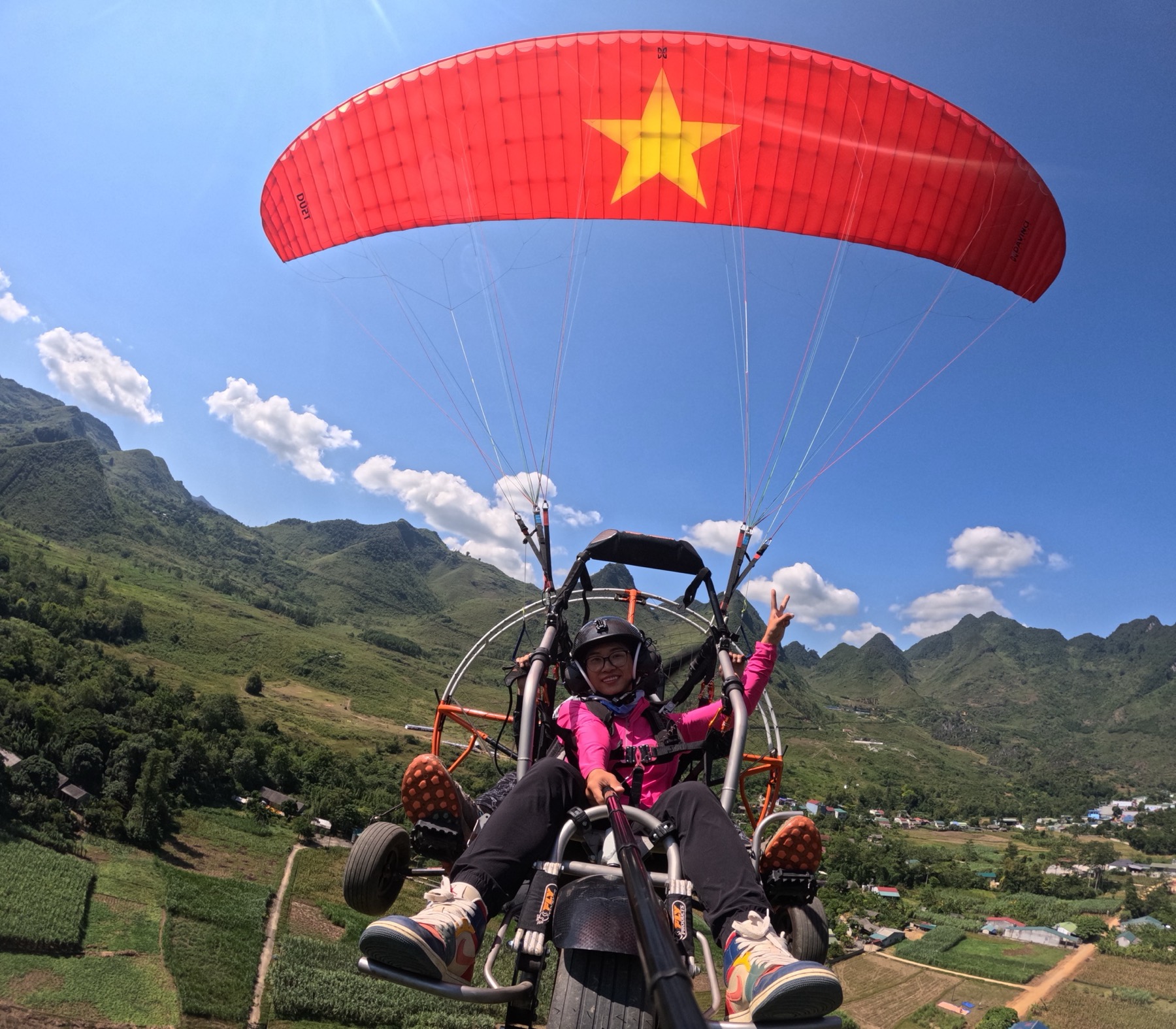
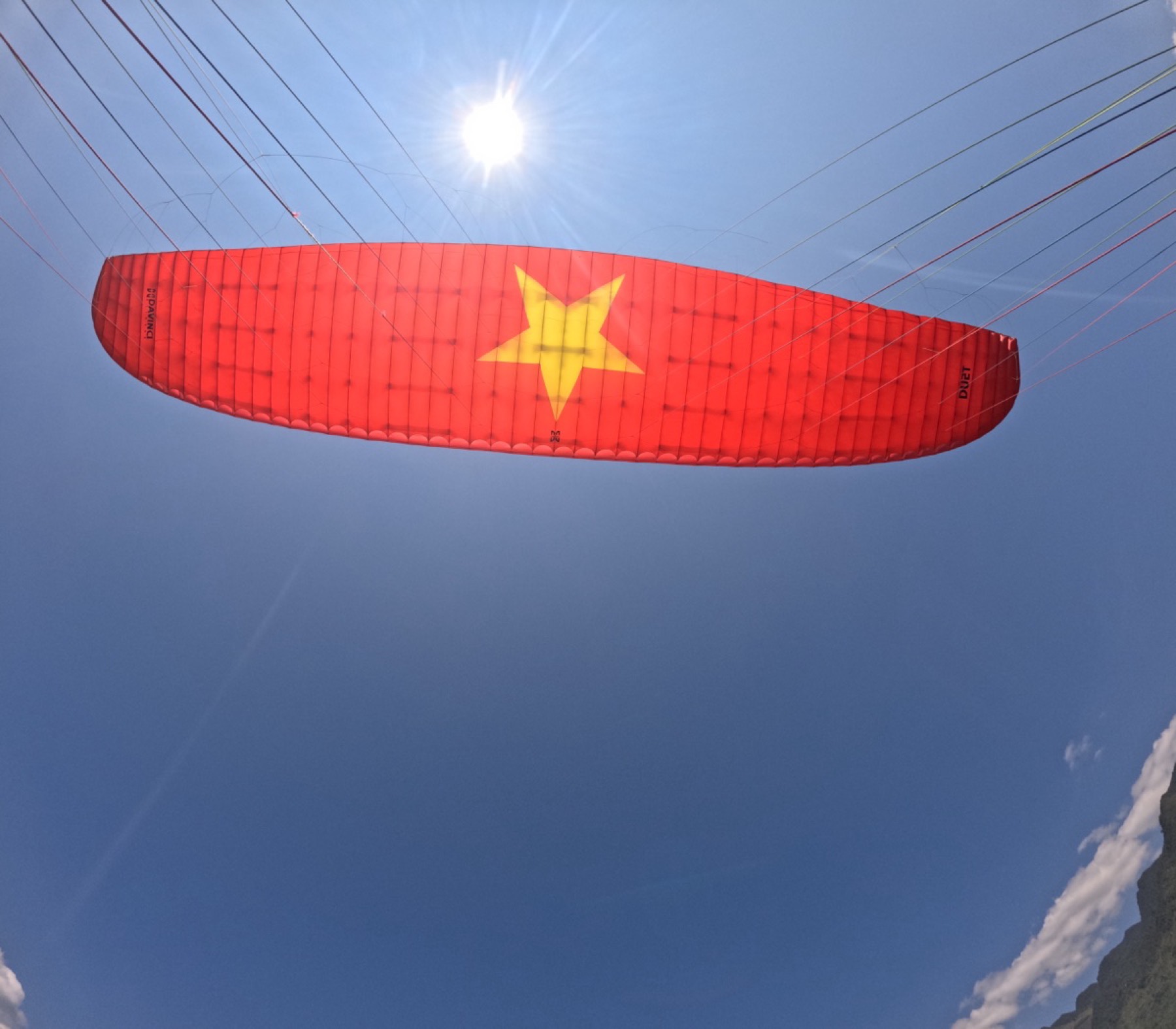
The wing is the large fabric canopy flying above your head. It is not a round parachute for slowing a fall, but a flying wing with a profile like an aircraft wing. Air enters the cells along the leading edge, inflating the wing and creating lift as it glides forward.
A tandem wing is larger than a solo wing because it has to carry two people.
Lines and brakes
Hundreds of thin lines connect the wing to the pilot. Two brake toggles at the back let the pilot turn left and right, slow down and land gently.
Harness
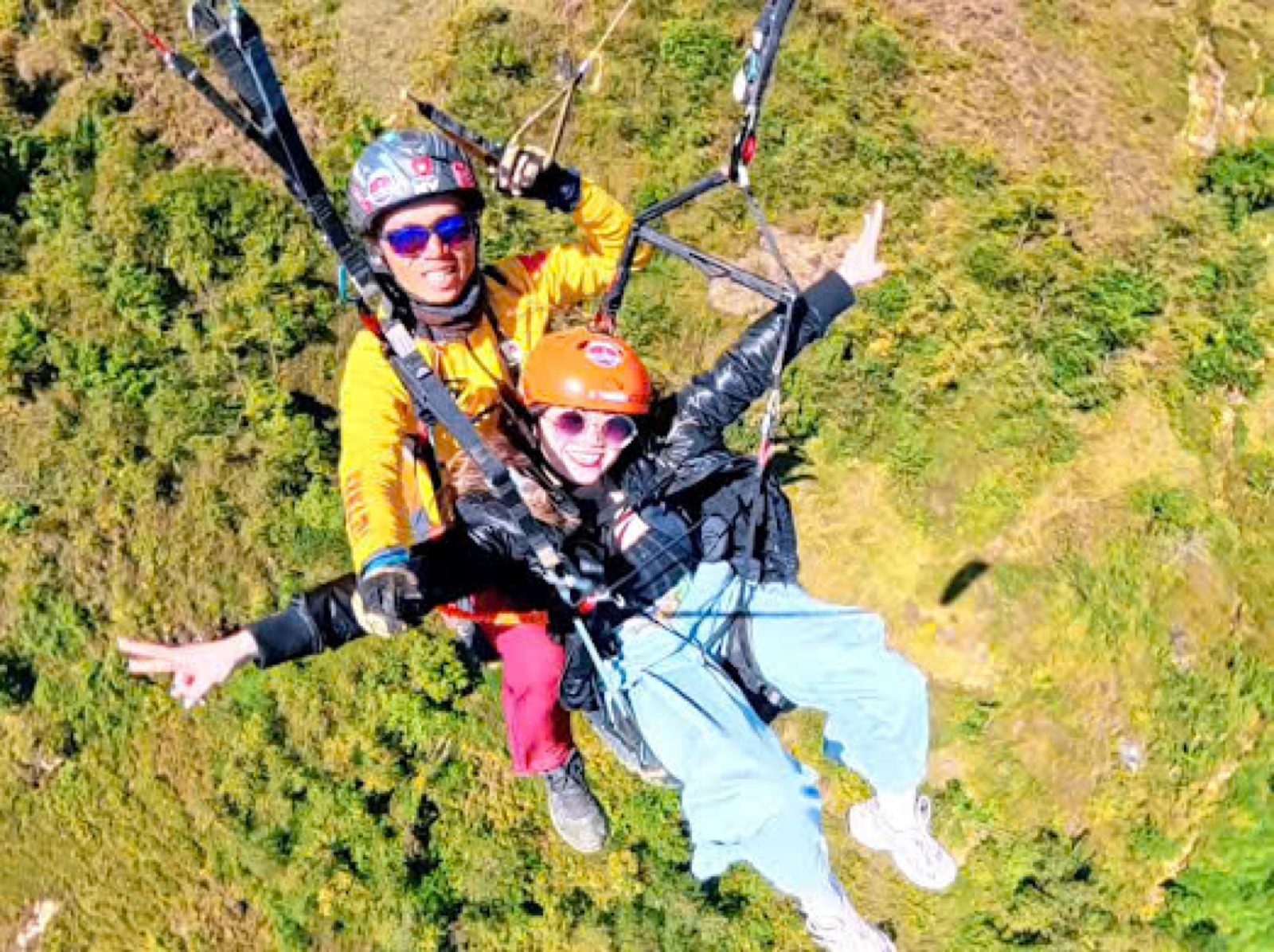
The harness is a padded seat with straps that holds you securely and lets you sit comfortably once you are airborne. In tandem flying, the passenger's harness and the pilot's harness are connected by spreader bars.
Reserve
The reserve is a backup parachute packed into the pilot's harness, used only in an emergency. The reserve must be inspected and repacked regularly. Read more about equipment in our article on safety equipment for tandem paragliding.
Helmet, radio and altimeter (vario)
The vario (variometer) is a dedicated electronic instrument that measures changes in air pressure: it beeps ("beep beep") as the wing gains height and gives a low buzz as it loses height. Rapid beeping is usually good news: the wing has found rising air.
Group 2: Air and wind
Thermal (rising column of warm air)
When the sun heats hillsides, fields, rooftops and so on, the air just above the ground warms up and rises in a column. That is a thermal. Pilots circle inside thermals to gain height. Thermals are usually strongest from around midday to early afternoon.
Ridge lift and soaring
When the wind blows straight onto a mountainside, the air is pushed up along the slope, creating ridge lift. Flying back and forth along the ridge to stay up on this rising air is called soaring. That is why on some days the flights last much longer than on others.
Gust
Gusts are sudden bursts of stronger wind that then die down. Even when the average wind is light, strong gusts can lead the pilot to postpone the flight.
Turbulence
Churning air that makes the wing shake. Light turbulence is normal, like a car driving over a slightly bumpy stretch of road.
Group 3: Flying and control
Glide ratio
The glide ratio tells you how far the wing travels for the height it loses. A ratio of 8:1 means that in still air, for every 1 m of height lost, the wing travels about 8 m forward. Modern wings typically have a glide ratio of about 8–10:1, depending on the model.
Speedbar
The speedbar is a foot bar under the pilot's feet, used to speed up the wing when flying into a headwind. As a tandem passenger, you never have to touch it.
Forward and reverse launch
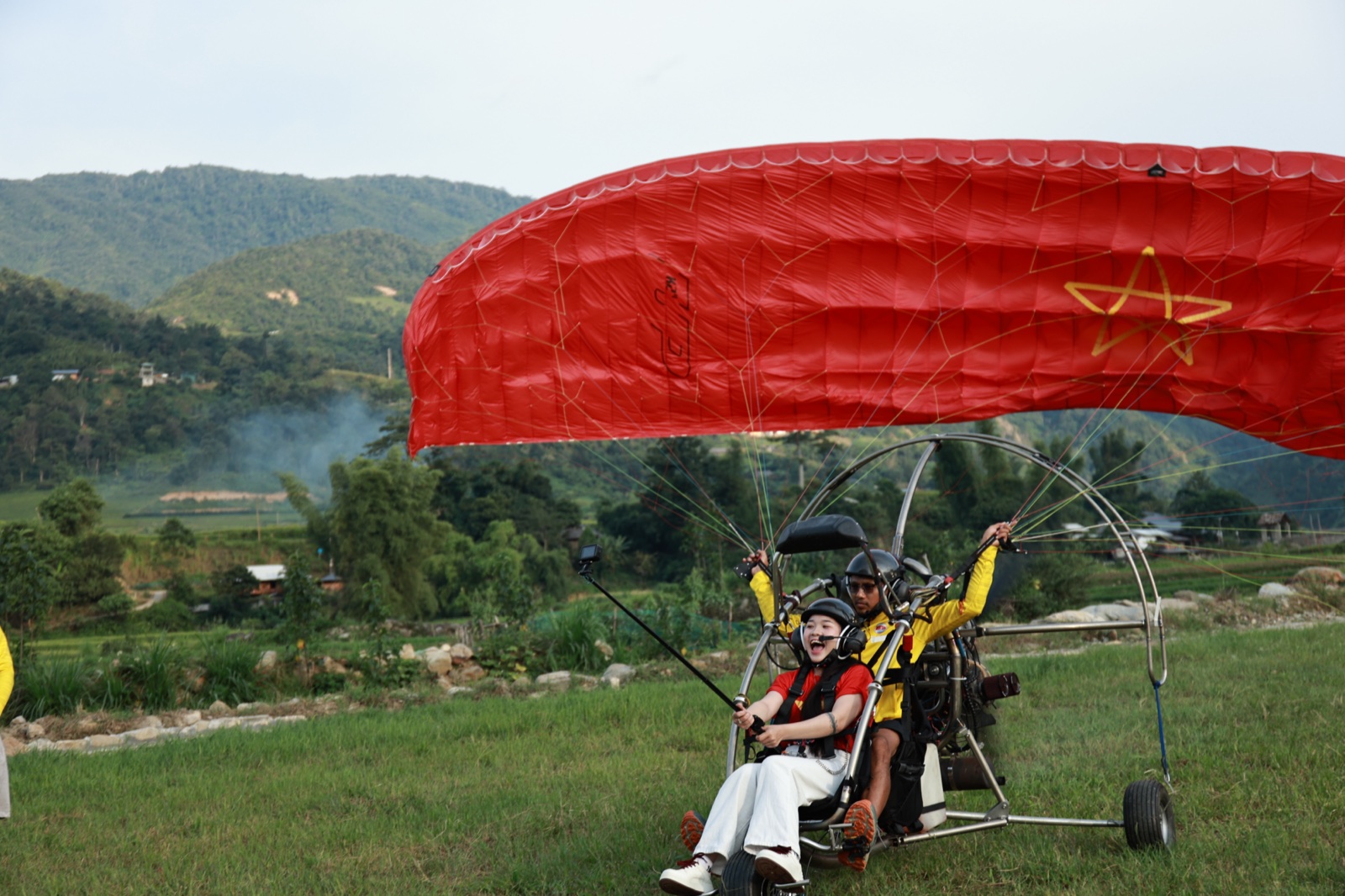
A paraglider takes off by running a few steps down a slope. The pilot can run forward (forward launch), or turn to face the wing while inflating it so they can watch it better (reverse launch); which one depends on the wind.
Approach and landing
The pilot loses height in a U-shaped or S-shaped pattern, then lands on the landing field into the wind for the softest possible touchdown.
Group 4: Procedures on the ground
- Briefing: a short talk before the flight: how to run, how to sit, signals, how to land.
- Pre-flight check: the mandatory check before every take-off: the pilot checks the weather, all flying equipment, the buckles, the wing and the harnesses.
- Windsock: a windsock hung at the flying site that shows wind direction and strength at a glance.
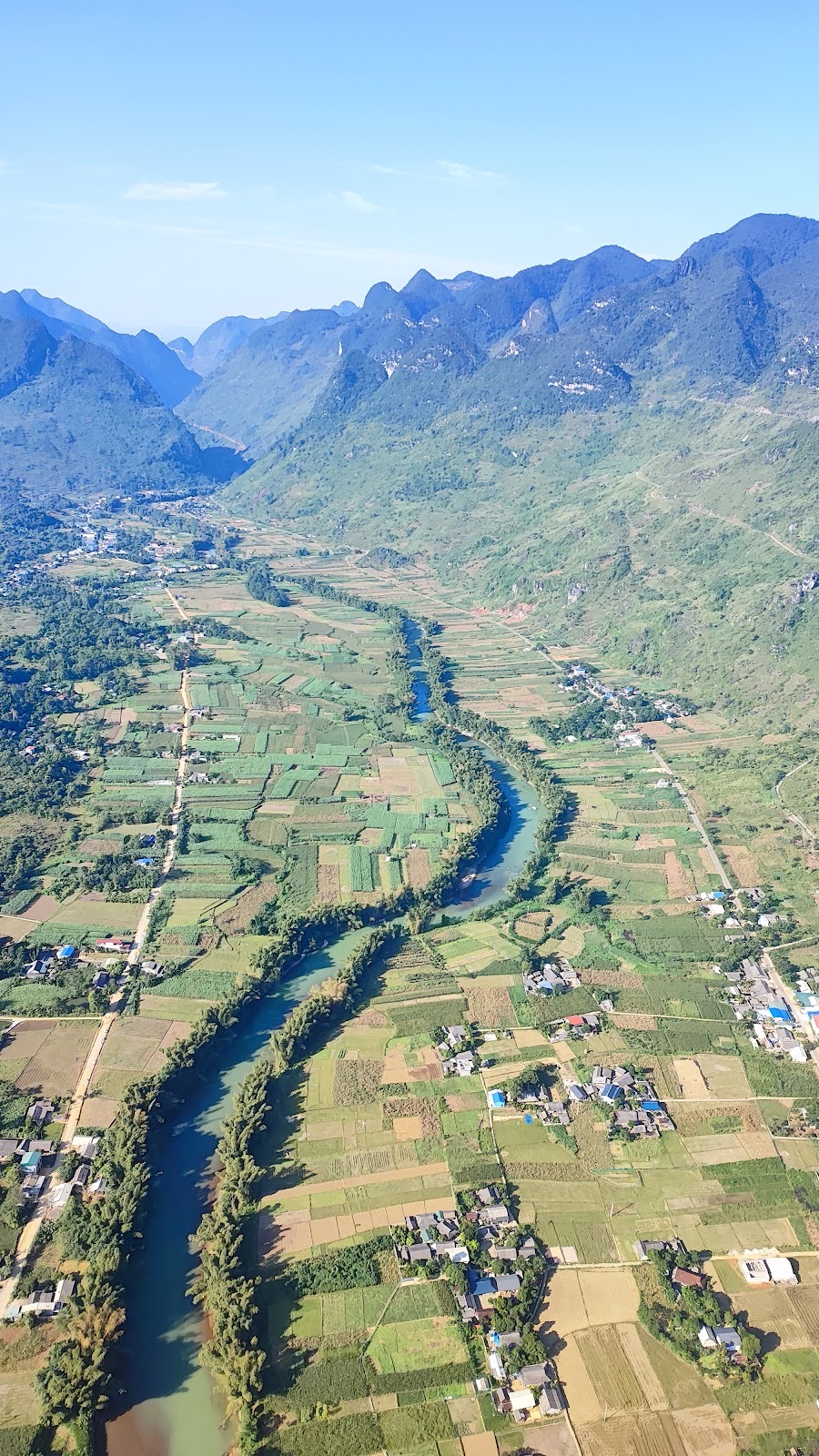
- Take-off / landing field: at Quản Bạ, the paragliding take-off is a hillside at 950 m, and the landing field is a flat area beside the river at about 450 m.
Quick-reference table of paragliding terms
| Term | English | In short |
|---|---|---|
| Wing | Glider, wing | The fabric canopy overhead that creates lift |
| Harness | Harness | Straps and padded seat |
| Spreader bar | Spreader bar | Connects the passenger's harness to the pilot's |
| Reserve | Reserve | Backup parachute for emergencies |
| Vario | Variometer | Beeps when climbing, buzzes when sinking |
| Thermal | Thermal | Rising column of warm air |
| Ridge lift | Ridge lift | Wind pushed upwards by a mountain |
| Soaring | Soaring | Staying up on rising air |
| Glide ratio | Glide ratio | Distance travelled for height lost |
| Speedbar | Speedbar | Foot bar to speed up |
| Gust | Gust | Sudden burst of stronger wind |
| Windsock | Windsock | Shows wind direction and strength |
| Briefing | Briefing | Instructions before the flight |
| Tandem flight | Tandem | Passenger flies with a pilot |
Which terms really matter for a tandem flight?
If you only plan to fly tandem once in Hà Giang, remember three things from the briefing:
- Run — when the pilot calls it, run steadily forward and don't sit down too early.
- Sit — once airborne, slide back deep into the harness and relax.
- Get ready to land — stretch your legs out in front, ready to stand or run a few steps.
Everything else is the pilot's job. To see how a flight unfolds step by step, read what a paragliding flight is like, or book a flight to experience it yourself over the Quản Bạ valley.
Frequently asked questions
What is the difference between paragliding and skydiving?
Skydiving means jumping from a plane and opening a parachute to slow down. Paragliding takes off from a mountainside with a running start and glides on its wing, with no free fall.
Are thermals dangerous?
Thermals are the "fuel" of paragliding. Very strong thermals can cause bumpiness, so pilots choose suitable flying times and check the weather before every flight.
Does a tandem passenger have to steer the wing?
No. The pilot does all the flying. You just follow the three steps from the briefing: run, sit, get ready to land.
Does a higher glide ratio mean a longer flight?
A higher glide ratio lets the wing travel further, but flight time also depends heavily on the thermals and ridge lift on the day.
Book: book online — no deposit, free cancellation
Hotline / Zalo / WhatsApp: +84 964 073 555
Read more: Quản Bạ flying site · Flying weather forecast · The Hà Giang Loop stage by stage · Before you fly