

Tandem paragliding safety gear
What equipment keeps you safe on a tandem paragliding flight? We explain the tandem wing, the reserve parachute, the padded harness, the helmet, the radios and how the pilot checks each of them.
Đội trưởng Mỹ · · 5 min read
A safe tandem paragliding flight relies on five main groups of equipment: the tandem wing, the padded harness system, the reserve parachute, the helmet, and communication tools such as radios. Good gear only does its job when it is checked properly before every flight. This article walks you through each item so you understand exactly how you are protected.
1. The tandem wing
A tandem wing is larger than a solo wing because it has to carry two people. Every wing has a weight range set by the manufacturer — that is why the team asks for your weight when you book.
The pilot checks the wing by:
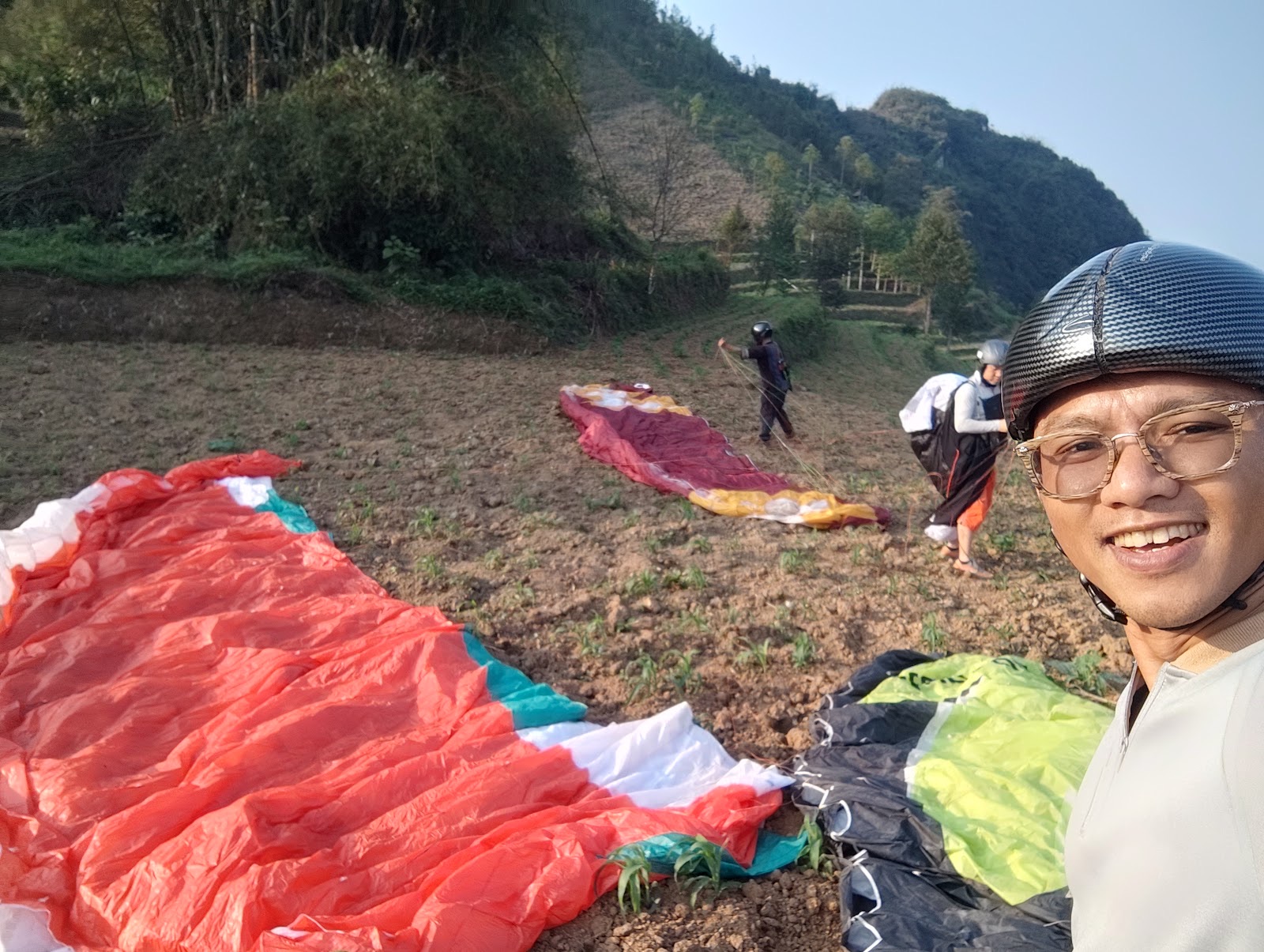
- Laying it out on the launch site and inspecting the leading edge and the cells.
- Checking the fabric for tears, holes or unusual wear.
- Sorting and separating the lines, making sure none are tangled or twisted.
- Checking the connectors between the lines and the wing, and between the wing and the harnesses.
2. Lines and spreader bars
Hundreds of thin but very strong lines connect the wing down to two spreader bars — these keep your harness and the pilot's harness at the right distance, so the two of you don't bump into each other during the take-off run and in flight.
The connection points use purpose-made metal carabiners with safety locks, which the pilot double-checks before take-off.
3. The padded harness
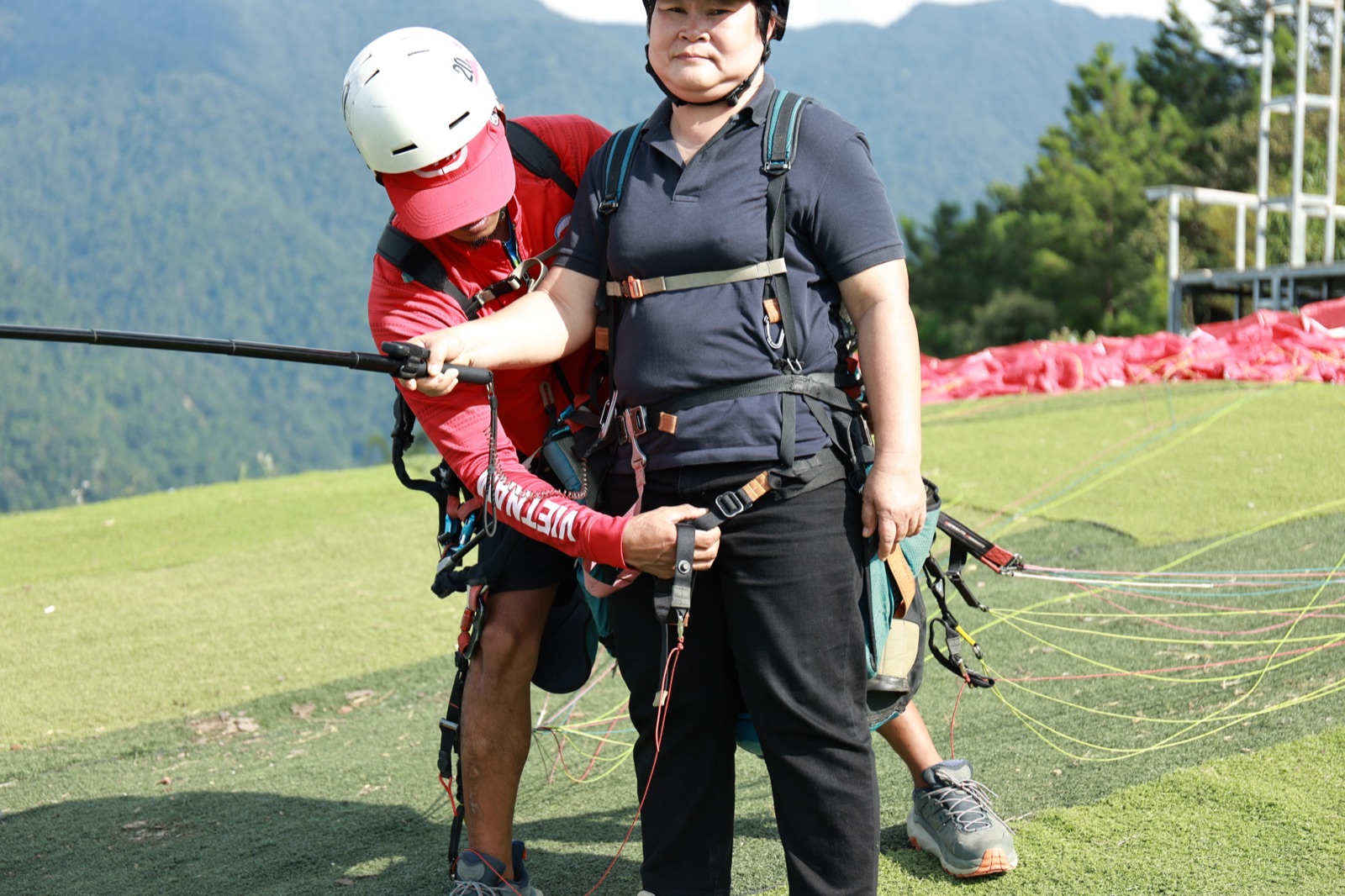
The passenger harness is a seat-style pod that supports your back and thighs. Key points:
- Back and hip protection padding helps reduce the impact if the landing is firm.
- Shoulder, leg and chest straps are adjusted to fit you.
- The buckles are checked by hand by the pilot once you are strapped in.
Once you are airborne, you just lean back — the harness holds you securely and you don't need to hold on.
4. The reserve parachute
The reserve parachute is packed in a separate compartment on the pilot's harness. It is for emergencies only, when the main wing has a problem the pilot cannot fix. The pilot pulls the handle, the reserve opens and slows the descent.
The reserve must be repacked regularly by a qualified person to make sure it deploys correctly. You don't have to do anything with it — just know that it is always there.
5. Helmet
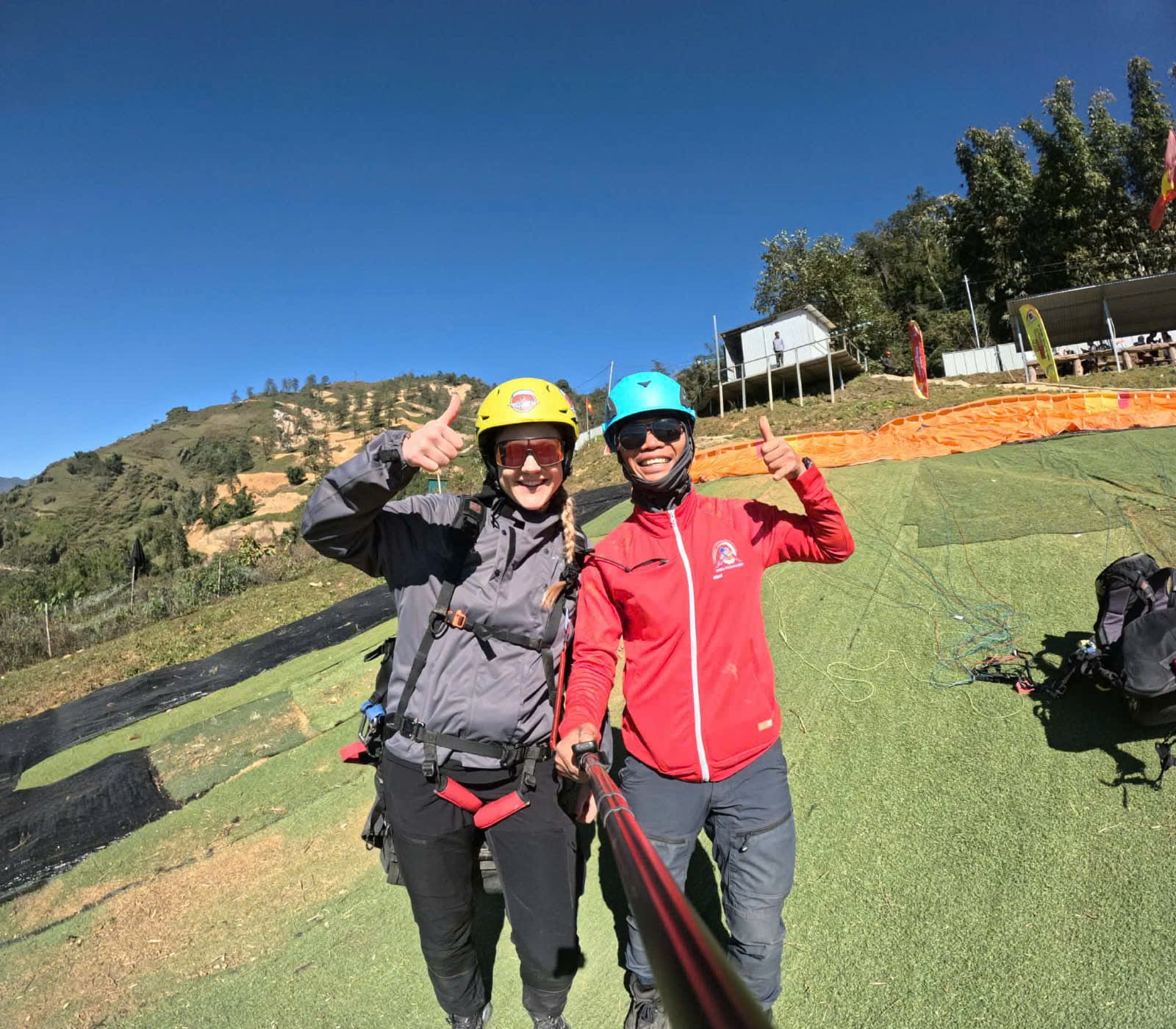
Every passenger is fitted with a helmet in the right size before take-off. It protects your head during take-off and landing. If you have long hair, tie it back so the helmet fits better.
6. Radios and communication
The team stays in contact between the launch site, the landing field and the shuttle vehicle. The ground crew can update the pilots on wind conditions and the landing field, and coordinate flight turns. Depending on the team, pilots may use radios or phones.
Equipment summary
| Equipment | Purpose | Checked by |
|---|---|---|
| Tandem wing | Generates lift, carries two people | Pilot, before every flight |
| Lines and spreader bars | Connect the wing to both harnesses | Pilot |
| Padded harness | Holds and protects the passenger's back and hips | Pilot re-checks once the passenger is strapped in |
| Reserve parachute | Emergency backup | Repacked regularly, pilot checks the handle |
| Helmet | Protects the head | Pilot, when fitting it on the passenger |
| Radios / communication | Coordination between sites and the vehicle | Ground crew |
What extra equipment does a paramotor use?
With a paramotor (PPG), the pilot also wears an engine and a propeller cage on their back. The cage keeps the lines, arms and legs away from the propeller. The pilot checks the engine, the fuel and the cage before taking off from the flat riverside field in Quản Bạ.
Equipment never replaces the decision to fly
However good the gear, it cannot make up for bad weather. That is why an equally important part of safety is deciding whether to fly or not, based on wind, rain and cloud. You can check the Quản Bạ flying weather forecast and read more about the process in our article on the tandem paragliding flight process.
You are part of the "safety equipment" too
- Wear long-sleeved clothes and trainers with a good grip.
- No sandals, long scarves or anything that could blow away.
- Keep your phone in a zipped pocket, or let the pilot film on the GoPro.
- Listen carefully to the briefing and follow it during the take-off run and landing.
Every flight in Quản Bạ includes insurance, so please give accurate information when you book. See also our flight safety page.
Frequently asked questions
Do I have to put on the harness and helmet myself?
No. The pilot helps you into the harness, adjusts the straps and fits your helmet, then checks every buckle again.
What happens if the main wing has a problem?
Pilots are trained to handle the common situations that can occur with a wing. In an emergency that cannot be resolved, the pilot will deploy the reserve parachute.
Can I bring my phone on the flight?
Yes, if it is kept in a zipped pocket or on a secure lanyard. Better still, let the pilot film on the GoPro — photos and videos are included free of charge.
Book a flight: book online — no deposit, free cancellation
Hotline / Zalo / WhatsApp: +84 964 073 555
Read more: Quản Bạ flying site · Flying weather forecast · Hà Giang Loop stage by stage · Preparing for your flight