Paragliding (PG) or Paramotor (PPG)? Pros, Cons and Which to Choose in Ha Giang
A breakdown of the strengths and weaknesses of paragliding and paramotor flights in Quan Ba: which time of day suits which, and which type of traveller fits PG and which fits PPG, and why.
Đội trưởng Mỹ · · 13 min read
Should you fly paragliding (PG) or paramotor (PPG) in Ha Giang? The short answer:
Choose paragliding if you want the original, quiet flying feeling, taking off from a mountain top, at a lower price.
Choose paramotor if you want to stay in the air longer, go further, chase the morning sea of clouds, or would rather not run down a slope.
The two differ at one root level: a paraglider draws its energy from the air, while a paramotor carries its energy on the pilot's back. From this single difference come all the gaps in flight time, duration, feel and the type of traveller each suits best. This article breaks down the strengths and weaknesses of each, based on the flight training materials our pilot team uses and our operating experience in Quan Ba.
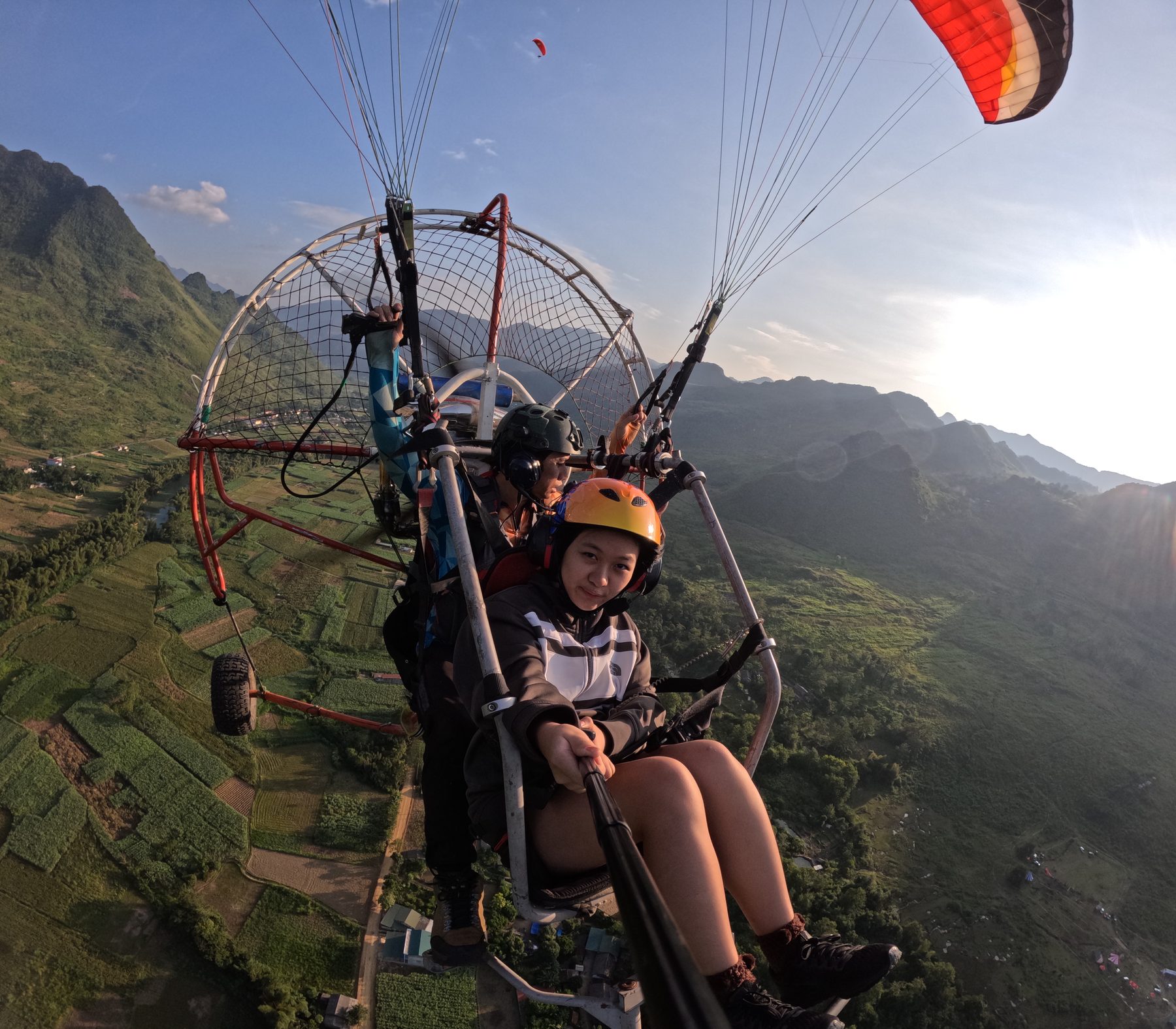
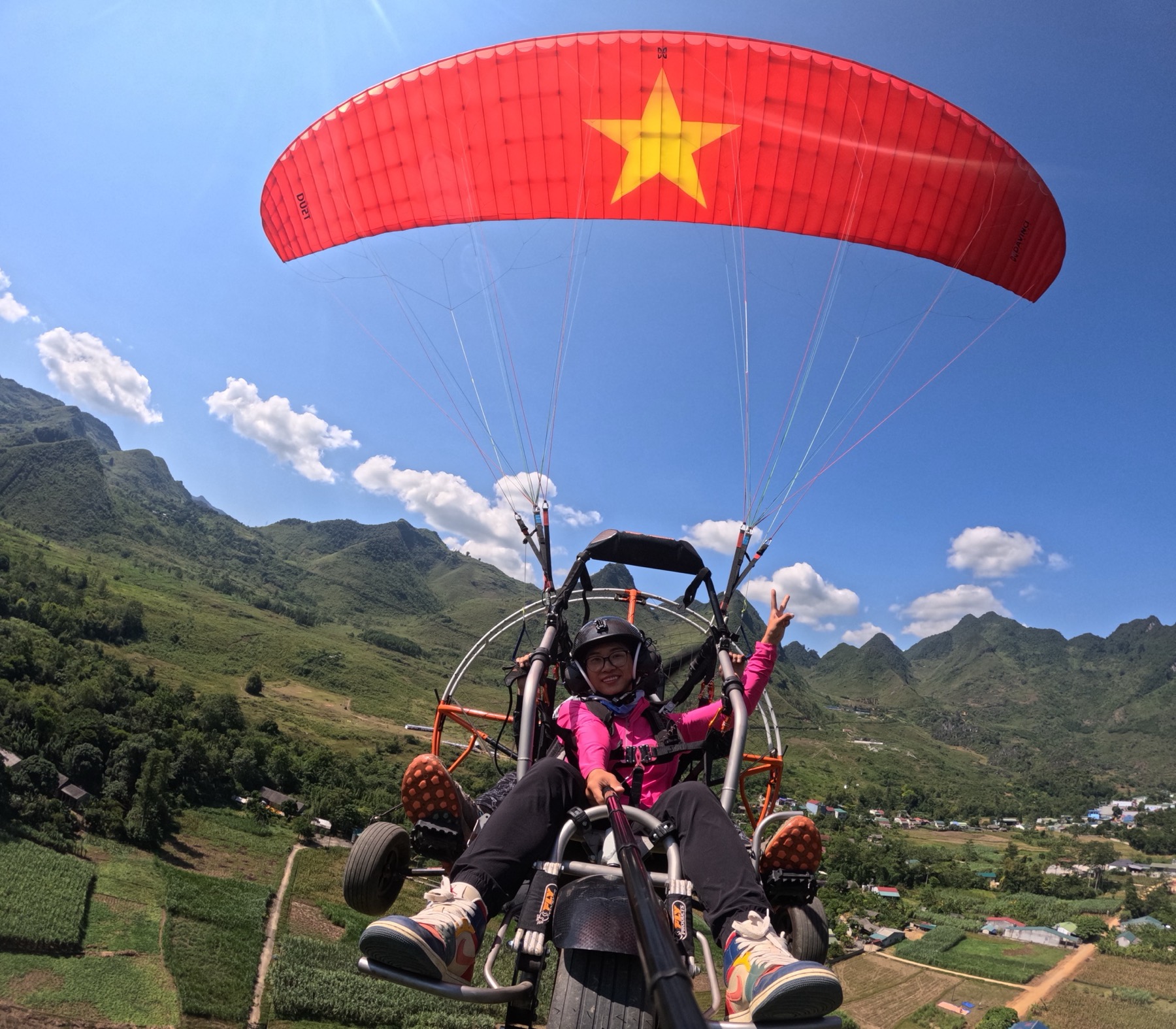
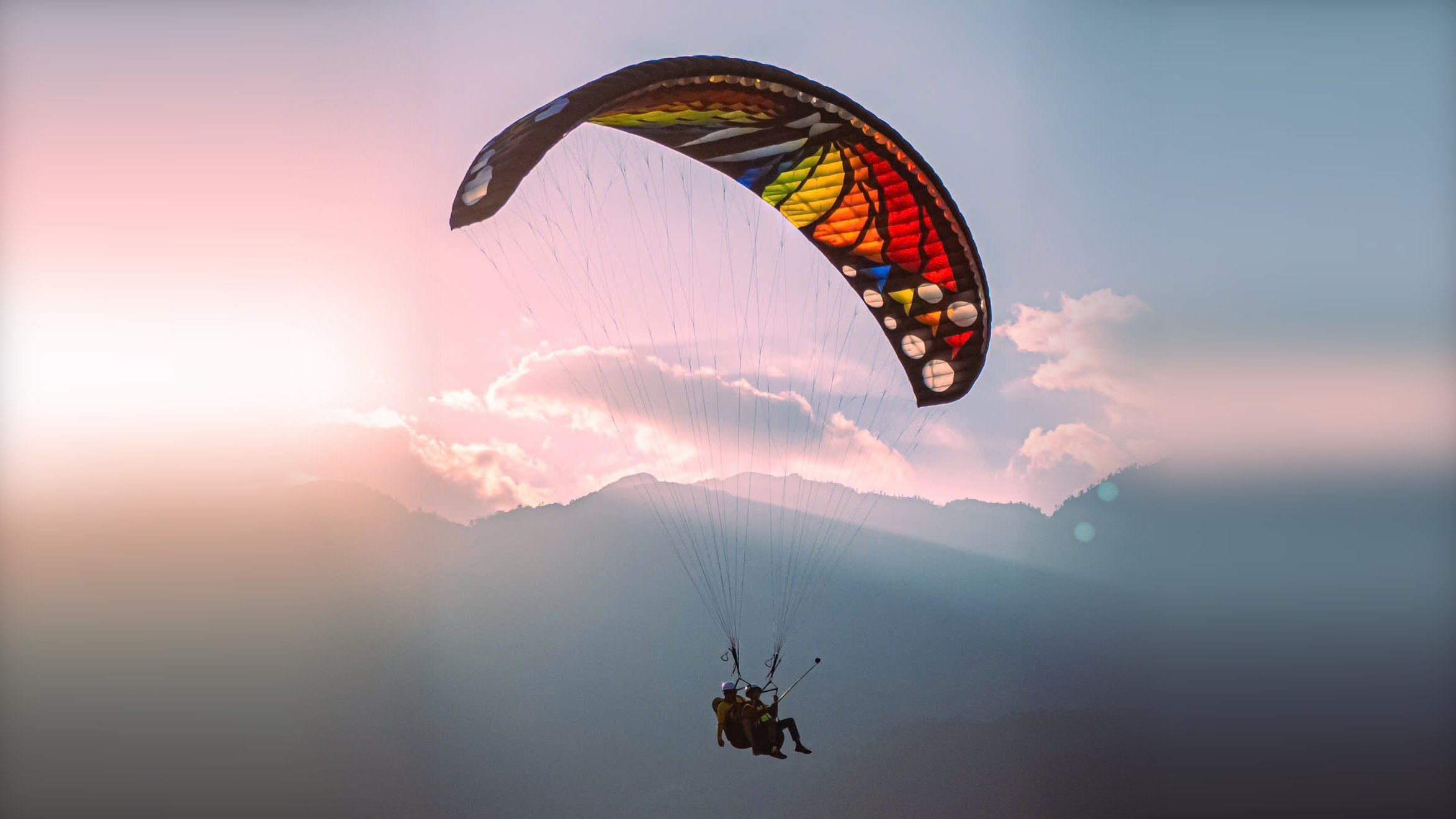
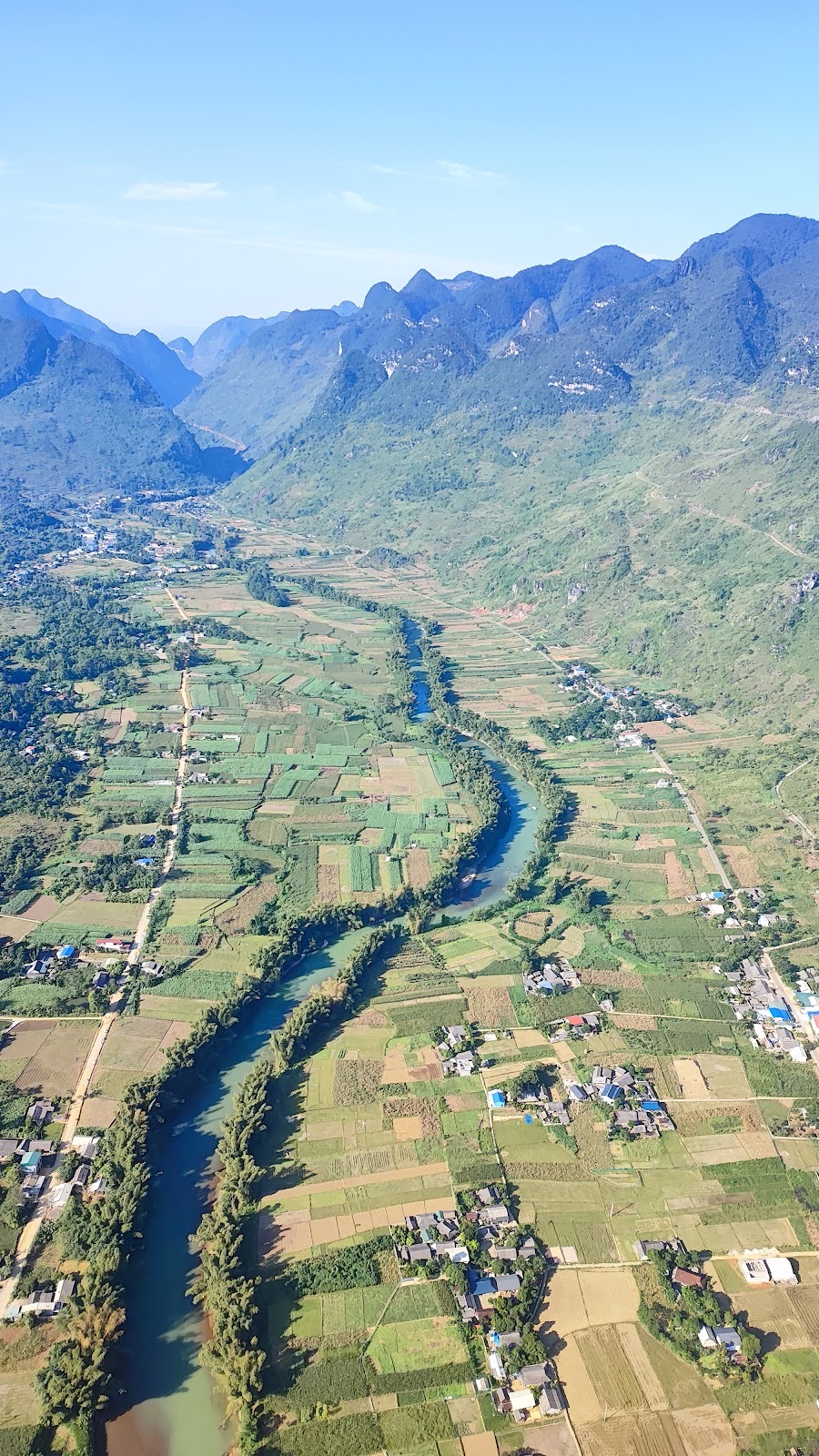
A tandem paramotor flight over the rocky valley, with a red paraglider wing in the distance: two ways to fly under the same sky.
Same wing, two sources of energy
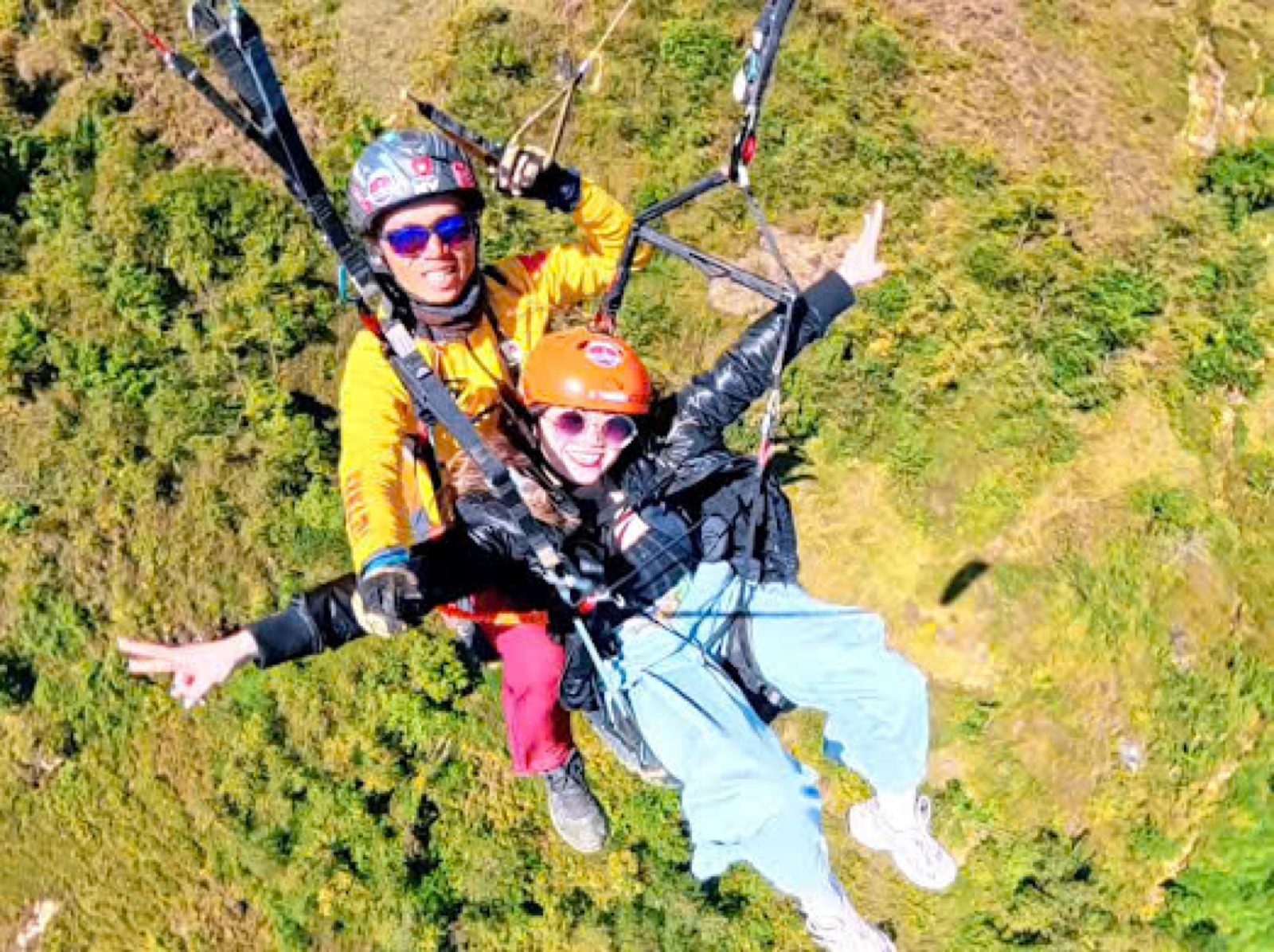
Both fly on a soft wing/canopy, with the pilot and passenger harnessed below on a set of lines. Both are tandem flights: you sit in front, the pilot sits behind you and controls the flight from takeoff to landing. No experience is needed for either.
The difference lies in how each gains altitude:
Paragliding (PG) has no engine. The wing is always gliding downward, like a sheet of paper drifting diagonally through the air. To stay up longer, the pilot has to find rising air: ridge lift wind blowing into the slope and pushed upward, or thermals, columns of warm air rising as the sun heats the ground.
Paramotor (PPG) is a paraglider with an engine frame and propeller strapped to the pilot's back. The thrust lets the wing climb from flat ground without needing any lifting wind.
A common misunderstanding is to think of a paramotor like a beach "parasail" ride. It isn't. On a parasail you just sit there; on a paramotor the pilot is actively flying the whole time.
Paragliding (PG): strengths and weaknesses
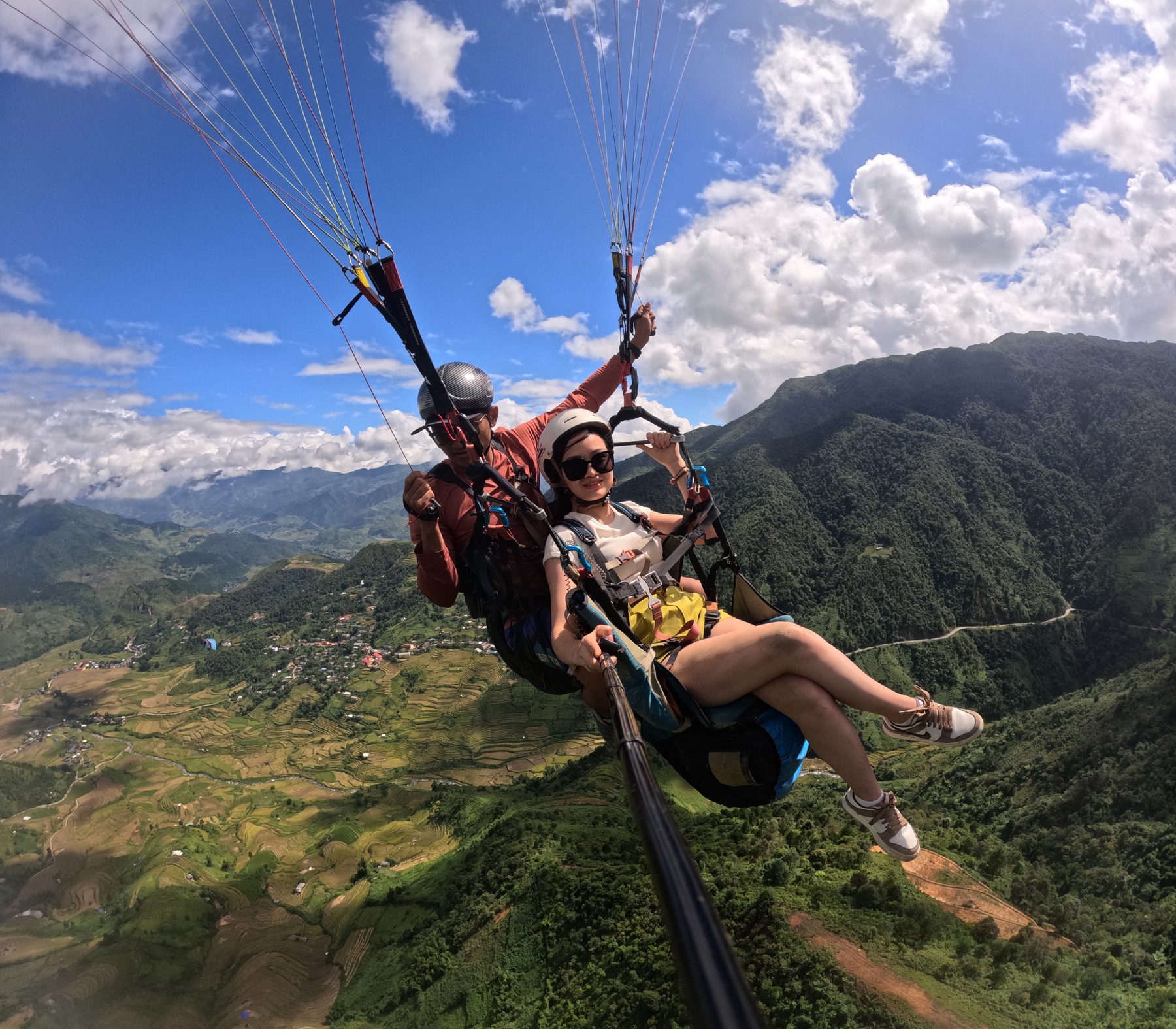
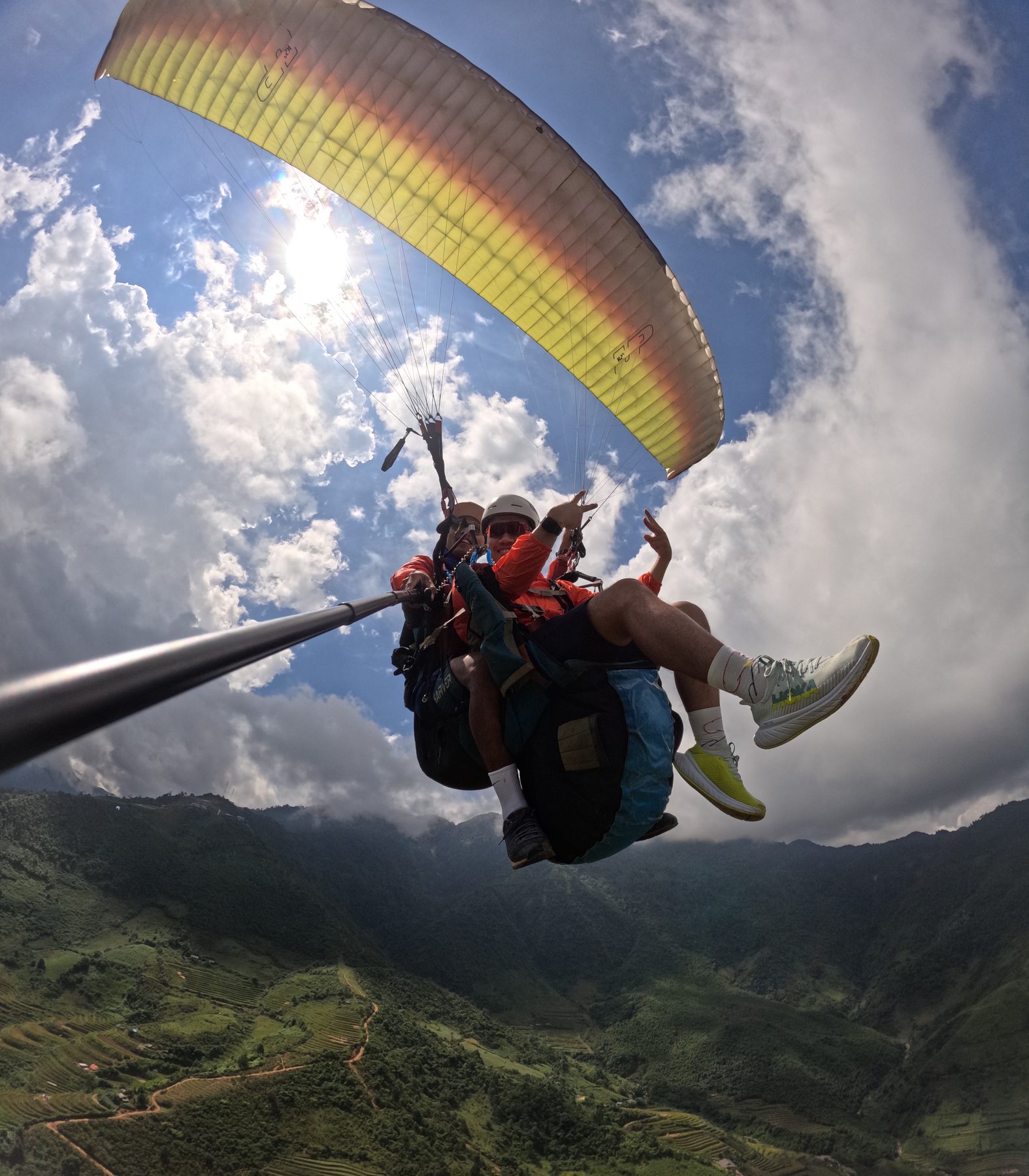
Paragliding flies on wind alone: no engine noise, just the sound of the wind and the valley below.
Absolute quiet. No engine sound — you can clearly hear the wind rushing through the lines. This is "flying like a bird" in the truest sense.
The moment of taking off from a mountain top. The launch site sits at about 950 m. You and your pilot take a few running steps down the slope, your feet leave the ground, and the whole Quan Ba valley opens up beneath you. For many guests, these few seconds are the most memorable part of the trip.
A full view from the very first second. Because you start from a high point, you see the Co Tien twin mountains, the Quan Ba Heaven Gate and the Mien River valley the instant you leave the ground.
A gentler price. The standard package is 2,290,000 VND per guest, 300,000 VND less than paramotor.
Available at both flying sites. In Dong Van, the team only operates paragliding.
Weaknesses
Wind-dependent. Paragliding needs a steady wind blowing into the launch site. If the wind is too weak, blowing from behind (a tailwind), or gusting hard, the pilot has to wait or reschedule.
Flight duration is set by the wind. From the 950 m launch site down to the roughly 450 m landing site is about a 500 m drop. With no lifting wind, the wing simply glides straight down in a few minutes. With ridge lift and thermals, a flight can last 10–15 minutes. Unlike paramotor, the pilot can't "set a timer."
You need to run a few steps down the slope. The launch site is a mountainside. You need to run on the pilot's command and must not sit down early.
Midday can be bumpy. Thermals are strongest around midday and early afternoon. The wing bounces more at this time, which can cause motion sickness, so it's best avoided for guests prone to it.
Paramotor (PPG): strengths and weaknesses
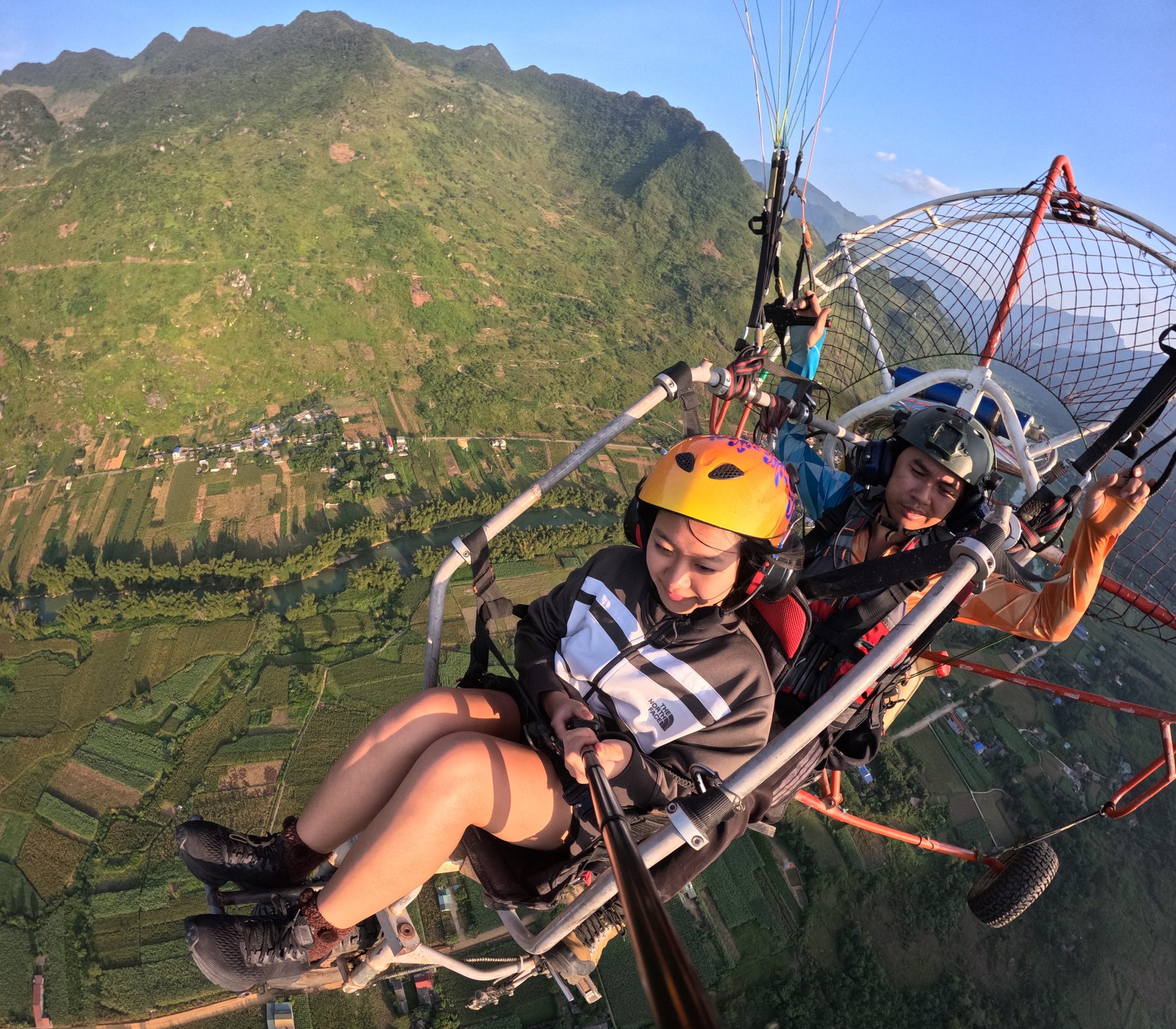
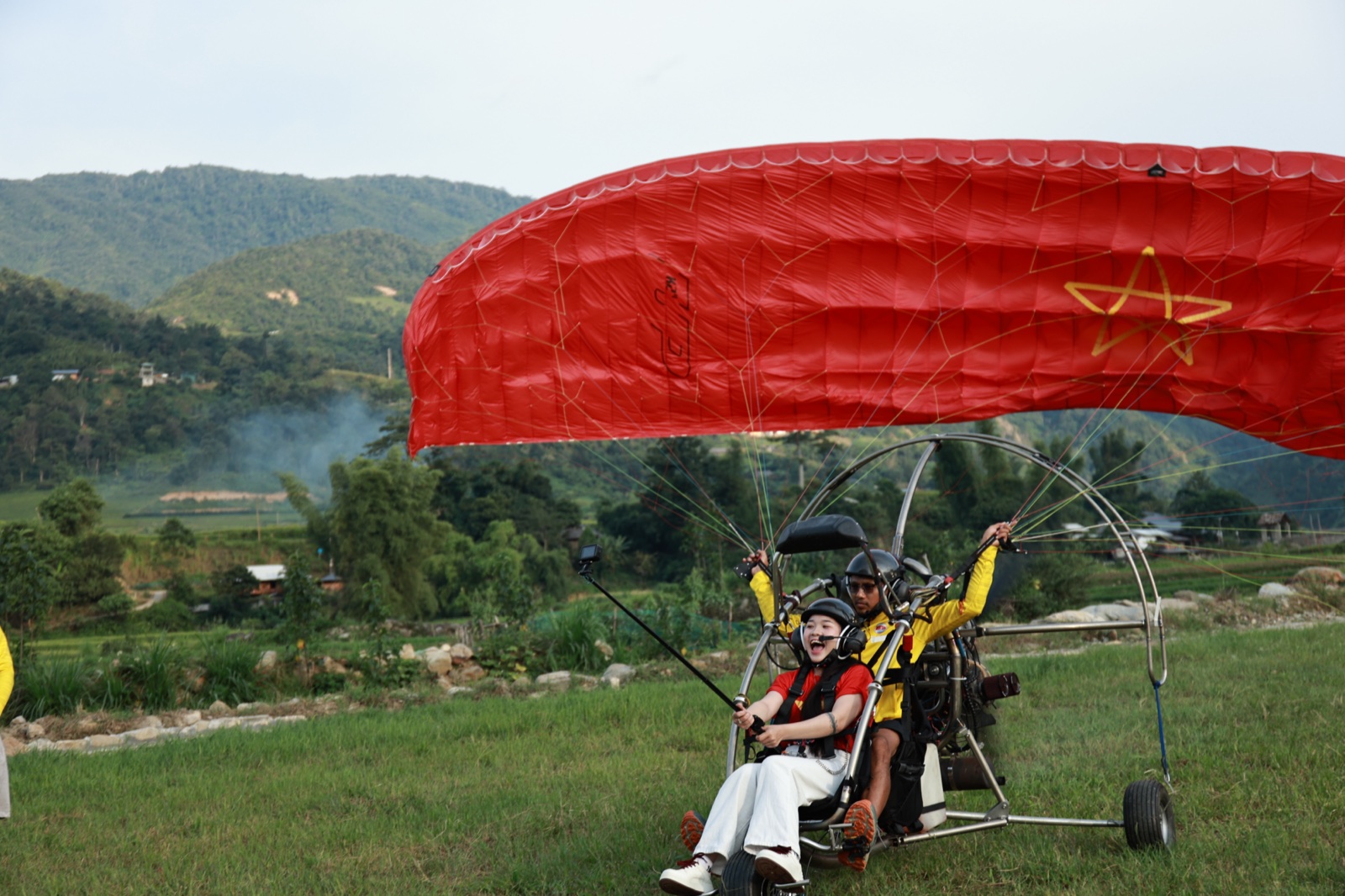
Tandem paramotor: passenger in front, pilot and engine frame behind, flying along the valley.
Strengths
Active control over altitude, direction and duration. The pilot can fly low along the Mien River, then climb to admire the limestone peaks, go further, and keep the flight to an exact 15 minutes, or 15–22 minutes with the extended package.
Takes off from flat ground. The launch site sits at the bottom of the valley by the river, at about 450 m, and doubles as the landing site. No climbing a mountain, no running down a slope. Depending on the setup, you either take a few running steps on the flat ground or sit ready on a wheeled frame.
Flies in the calmest, stillest air of the day. Paramotor training materials consider the most stable moment of the day to be about 30 minutes after sunrise, and again in late afternoon — exactly when paragliding often lacks enough lifting wind. That's why the morning sea of clouds and sunset flights are paramotor's "home turf."
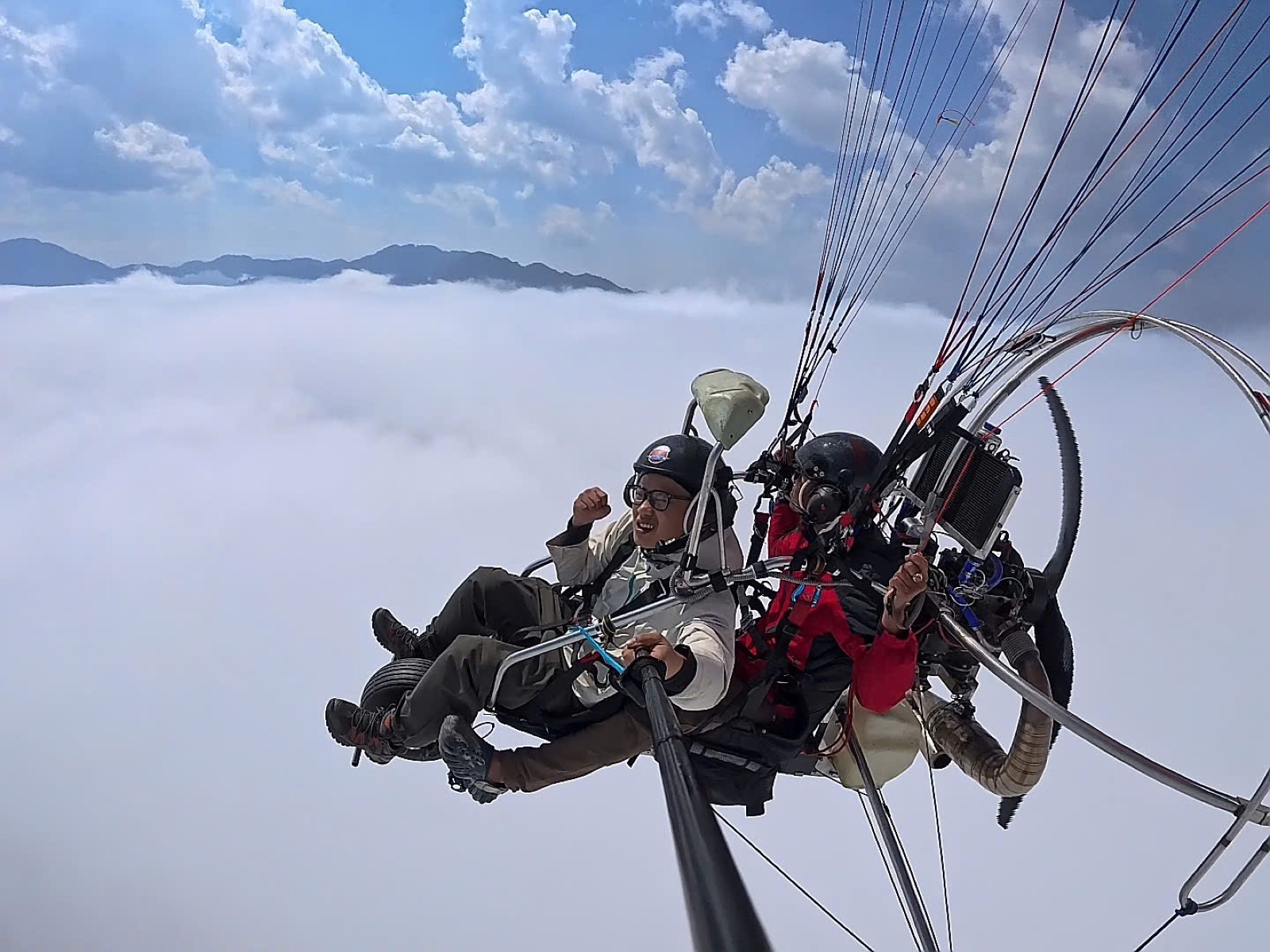
Actively chases the clouds. The morning sea of clouds is a layer of mist trapped at the bottom of the valley as cold air settles into the low ground. A paramotor climbs through this mist layer while the air is still calm and glides above it — something paragliding struggles to do.
Weaknesses
Engine noise. Throttling up for takeoff is fairly loud. Once in level flight, the pilot throttles back and the engine becomes a steady hum behind you.
Higher price. The standard package is 2,590,000 VND per guest; the extended package for chasing clouds or sunset is 3,290,000 VND per guest.
Still needs suitable weather. An engine can't replace the weather. A foot-launched tandem paramotor still needs a bit of headwind. Gusty or rapidly shifting wind, rain and thunderstorms are all reasons to wait. Paramotor is less wind-dependent, not weather-independent.
Only available in Quan Ba. Dong Van has no paramotor flights.
Extra rules around the propeller. Guests must not stand behind the unit, must not reach a hand backward, must tie back long hair, and must not wear a scarf or a camera strap around the neck.
"What if the engine cuts out?"
This is the question most guests ask. When the engine stops, a paramotor simply becomes an ordinary paraglider again. According to the training manual, a paraglider wing covers about 9 m of forward glide for every 1 m of altitude lost; with the engine frame attached, that figure drops to about 6 m. The paramotor pilot's rule is to always keep the landing site within gliding range, so cutting the engine simply means landing a little earlier than planned. On a normal landing, the pilot also deliberately cuts the engine from altitude so the propeller comes to a full stop before touchdown.
When should you fly? A day in Quan Ba
The flying site is open 06:30–18:30. Each time slot favours a different type of flight:
Time slot
Air conditions
Best suited to
Early morning, about 06:30–08:30
Calmest air of the day, sea of clouds still sitting in the valley
Paramotor cloud chasing. Paragliding usually doesn't yet have enough steady launch wind
Mid-morning, about 08:30–11:00
Mist clears, sun warms the slopes, ridge wind becomes steady
Paragliding at its best; paramotor also flies well
Midday, early afternoon
Strongest thermals, occasional gusts
Use judgement — best avoided for guests prone to motion sickness
Late afternoon, about 15:00–17:30
Thermals fading, golden slanting light
Paragliding sunset flights while ridge wind holds steady; paramotor sunset flights offer more active control
This is the general pattern. The exact flight time is confirmed by the team on the morning of your flight, after checking the actual wind at the site. The training manual recommends observing the wind for at least 20 minutes before deciding, and thermals can sometimes stay strong until just a few hours before sunset. So on some days the pilots may push your flight time back even after you've arrived. You can check the flying weather forecast and today's flight status in advance.
As for seasons, October–November is usually the most beautiful (dry, clear skies, buckwheat flowers in bloom), with March–April as the second-best choice. See more at Ha Giang weather by month.
On a cloudy day, the pilot only flies while the landing site and the way back remain clearly visible.
Which guests should fly PG, and which should fly PPG?
Who you are, what you want
You should choose
Why
First-time flyer wanting the "real" flying feeling
Paragliding
Taking off from a mountain top, no engine noise, true free-flight experience
Want to save money
Paragliding
300,000 VND cheaper for the standard package
Visiting Dong Van
Paragliding
Dong Van has no paramotor
Sensitive to noise or fuel smell
Paragliding
Only the sound of the wind
Want to chase the morning sea of clouds
Paramotor cloud chasing
Flies in calm air, climbs above the mist layer
Want to stay airborne longer, take lots of photos
Paramotor extended flight
15–22 minutes, with the pilot actively steering direction
Would rather not run downhill, or have weak knees
Paramotor
A few steps on flat ground instead of a mountain slope
Prone to motion or sea sickness
Paramotor, morning slot
Calmest air of the day. Let your pilot know so they can fly gently
Tight schedule, only one time slot available
Paramotor, morning
Less dependent on ridge wind, less likely to involve waiting
Want to chase the sunset
Either
Paragliding while ridge wind holds steady; paramotor offers more active control
Want to learn to fly in the future
Paragliding
Teaches how a wing uses the wind, the foundation of every type of flying
A few general notes for both types:
No experience is needed; children from age 3 can fly tandem with a pilot.
Please tell the team when booking if you have a heart condition, high blood pressure, epilepsy, are pregnant, or have recently had surgery.
Do not drink alcohol before flying.
Safety: what's shared, what's different
Most safety principles are shared by both: pilots inspect their equipment and run a buddy/cross check before every flight, tandem wings carry a reserve parachute, guests wear a seat harness and helmet, and every flight is insured. Most important of all is the decision not to fly when the weather doesn't meet standard, even if guests have already arrived.
The difference lies in what you, the guest, need to do:
For paragliding: run firmly down the slope on the pilot's command, do not sit down early — only sit when the pilot tells you to.
For foot-launched paramotor: also keep running until the pilot tells you to sit. According to the paramotor training manual, sitting down too early is the most common mistake on tandem takeoff.
For wheeled paramotor: buckle your seatbelt, keep your hands and feet inside the frame, and don't put a hand out to brace yourself if the frame tilts.
For paramotor in general: plus the propeller rules noted above.
On landing (both types): extend your legs forward, and be ready to stand up and keep walking with your momentum.
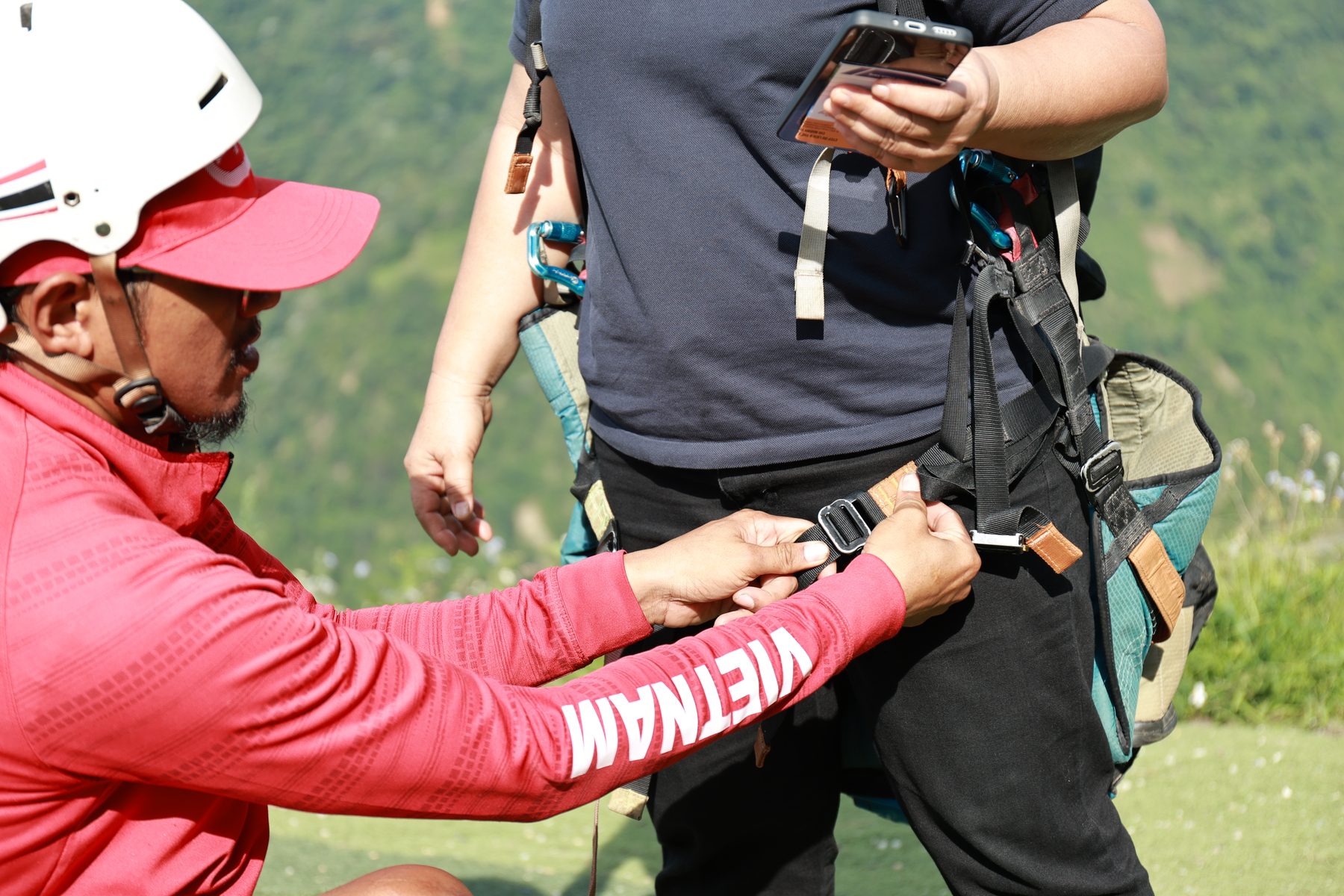
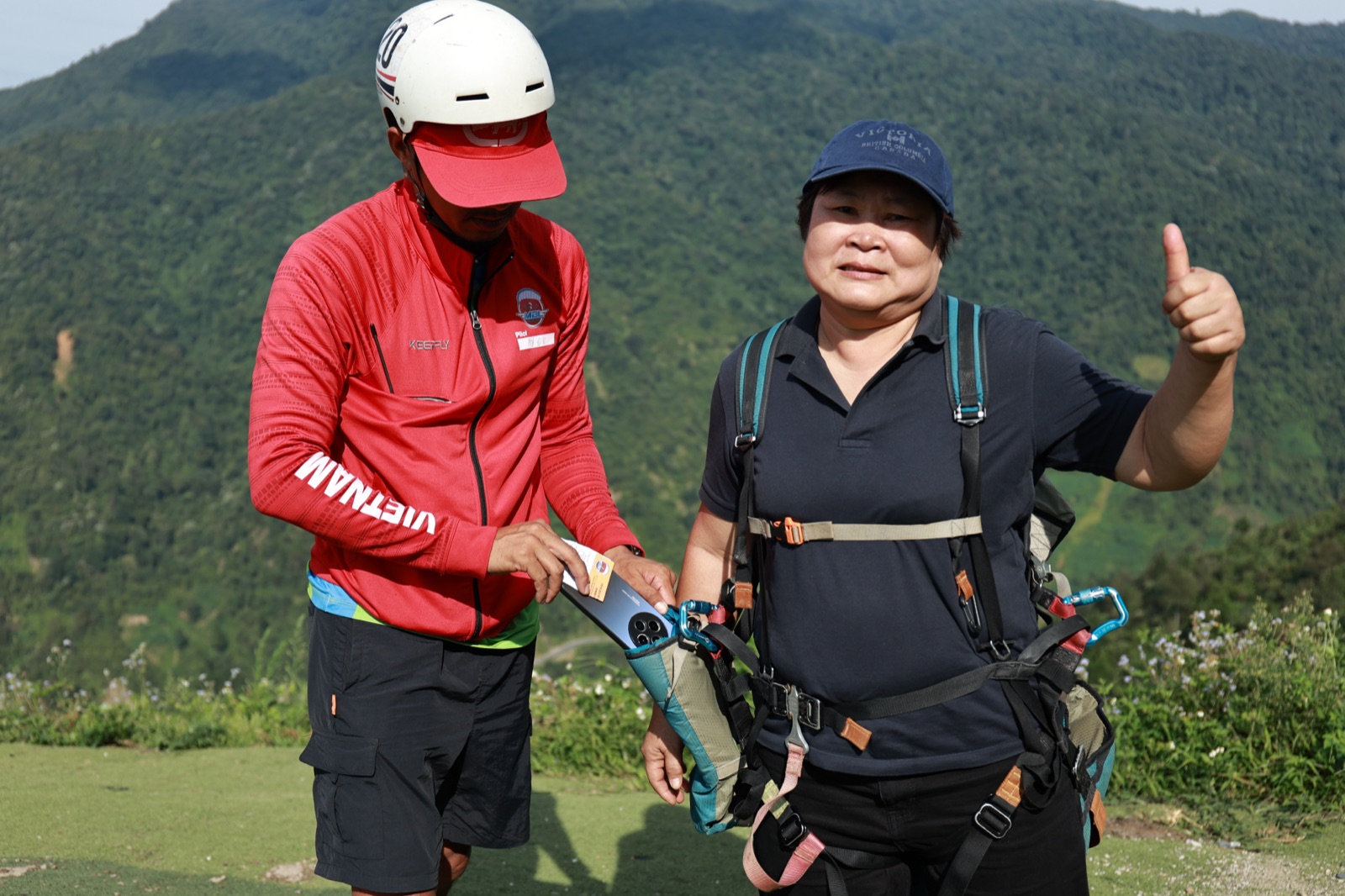
Before every flight, the pilot checks each of the guest's harness buckles.
Neither is "safer" simply for having or not having an engine. Safety comes from the pilot, the weather, and properly maintained equipment. Paragliding has simpler equipment. Paramotor adds an engine but gives the pilot more active control to avoid bad wind. Both only fly when conditions meet standard.
What if I book paragliding and there isn't enough wind that day?
The team will reschedule your time or date free of charge. If your schedule is tight, ask the team whether paramotor can fly in that slot so you can switch packages.
Is paramotor too noisy to enjoy?
The loudest moment is just a few seconds during takeoff when the throttle is up. Once in level flight, the engine becomes a steady hum behind you, and many guests say they forget about it after about a minute.
Should I fly both?
Yes, if you're staying in Quan Ba for two or more sessions. The best combination is a paramotor cloud-chasing flight in the early morning, followed by a paragliding sunset flight — two completely different flying experiences in a single day.
Everything you need to know about paragliding in Hà Giang: the Quản Bạ and Đồng Văn sites, paragliding and paramotor prices, flying hours, who can fly, and booking with no deposit…
What is a paramotor, where can you fly one in Hà Giang, how much does it cost and how does it differ from regular paragliding? A PG vs PPG comparison to help you choose the right flight…
Tandem paragliding has a clear division of roles: the pilot handles the wind, equipment, take-off and landing; you just run a few steps and enjoy. The process from booking to touchdown…
Chasing clouds by paramotor in Quản Bạ, Hà Giang: which season and time of day give the best chance of a sea of clouds, how the 15–22 minute long flight differs from the standard package, and how to book to boost your chances…
Your weight affects the wing, take-off speed and landing speed. Guests over 90 kg can still fly — just let us know in advance so the team can arrange a suitable pilot and equipment…
Sunset paragliding and paramotor flights in Quản Bạ: when to fly, how it differs from a morning flight, the 3.290.000đ paramotor price, tips for great backlit photos and notes on the evening journey back…