

Where did paragliding come from? A short history
Paragliding grew out of experiments with square ram-air canopies, took off in the Alps in the 1980s and then spread around the world. In Vietnam, the sport has grown alongside clubs and mountain flying sites — and now Hà Giang has joined them.
Đội trưởng Mỹ · · 5 min read
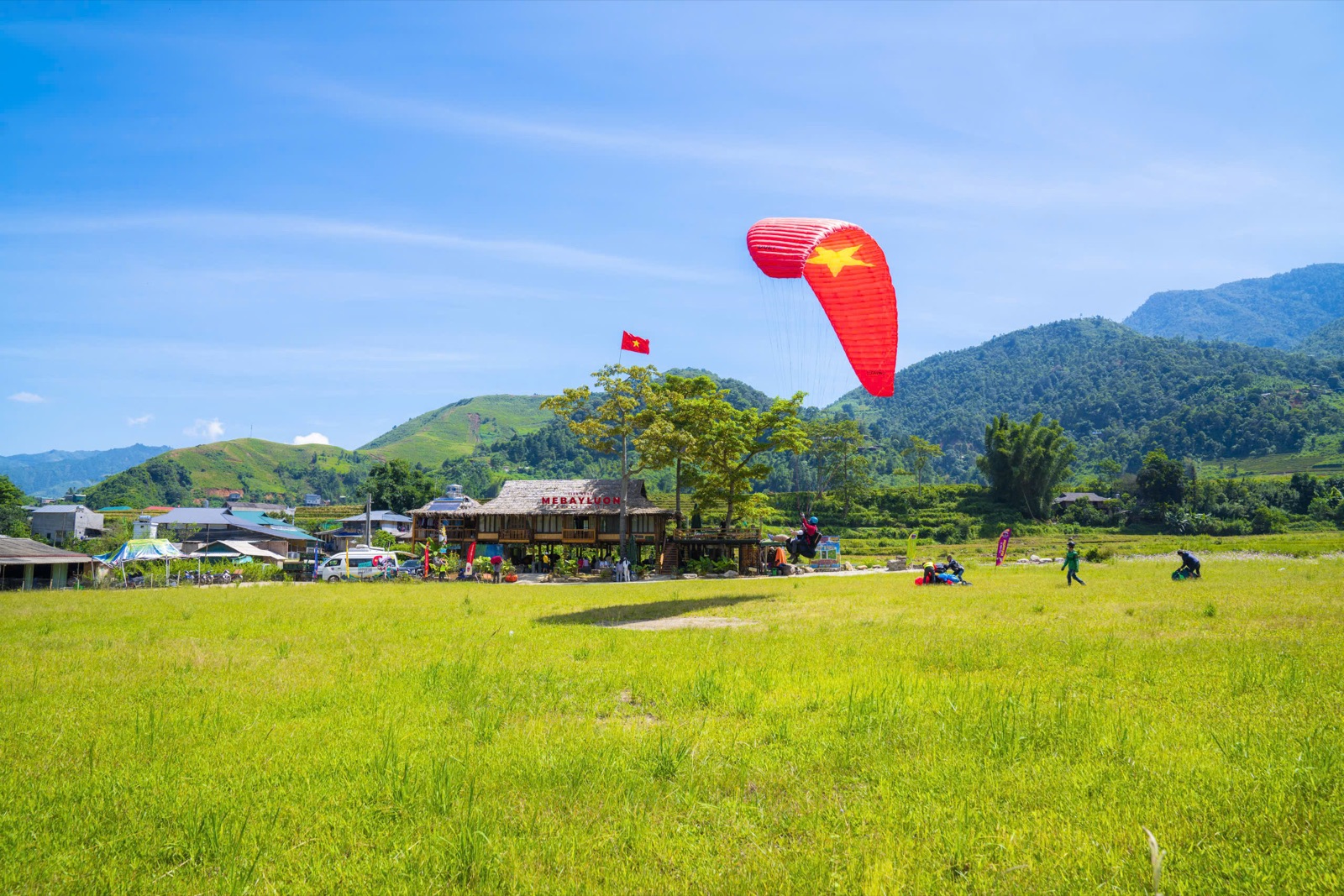
Paragliding has its roots in experiments around the 1960s with square canopies inflated by the wind, and it truly became a sport in the late 1970s, when skydivers in the French Alps tried running down mountain slopes and gliding. From there, paragliding spread around the world and gradually reached Vietnam through clubs, flying festivals and mountain flying sites. This article tells that story in brief.
From round parachute to a wing that flies
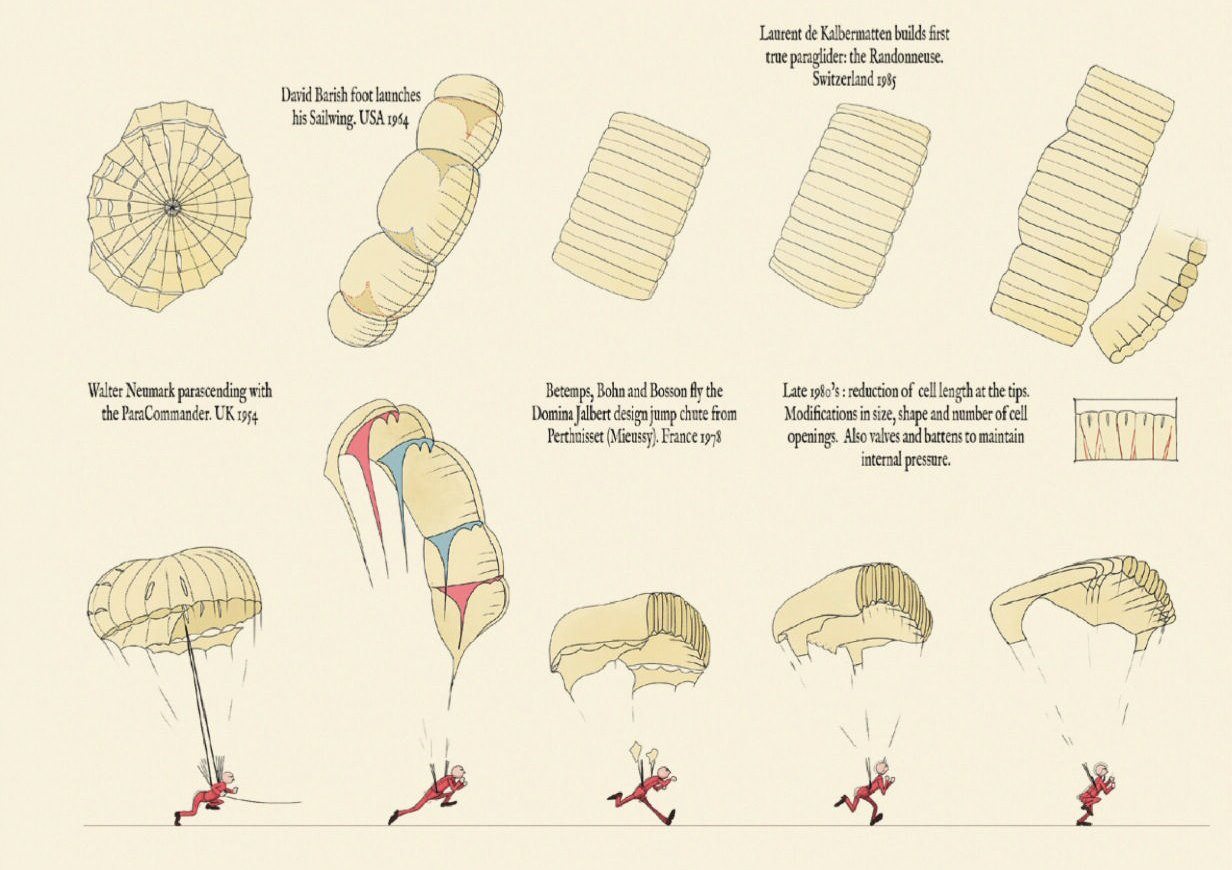
From the ParaCommander round canopy (1954), David Barish’s Sailwing and the 1978 flights at Mieussy to Laurent de Kalbermatten’s first true paraglider (1985). Illustration: Steve Ham.
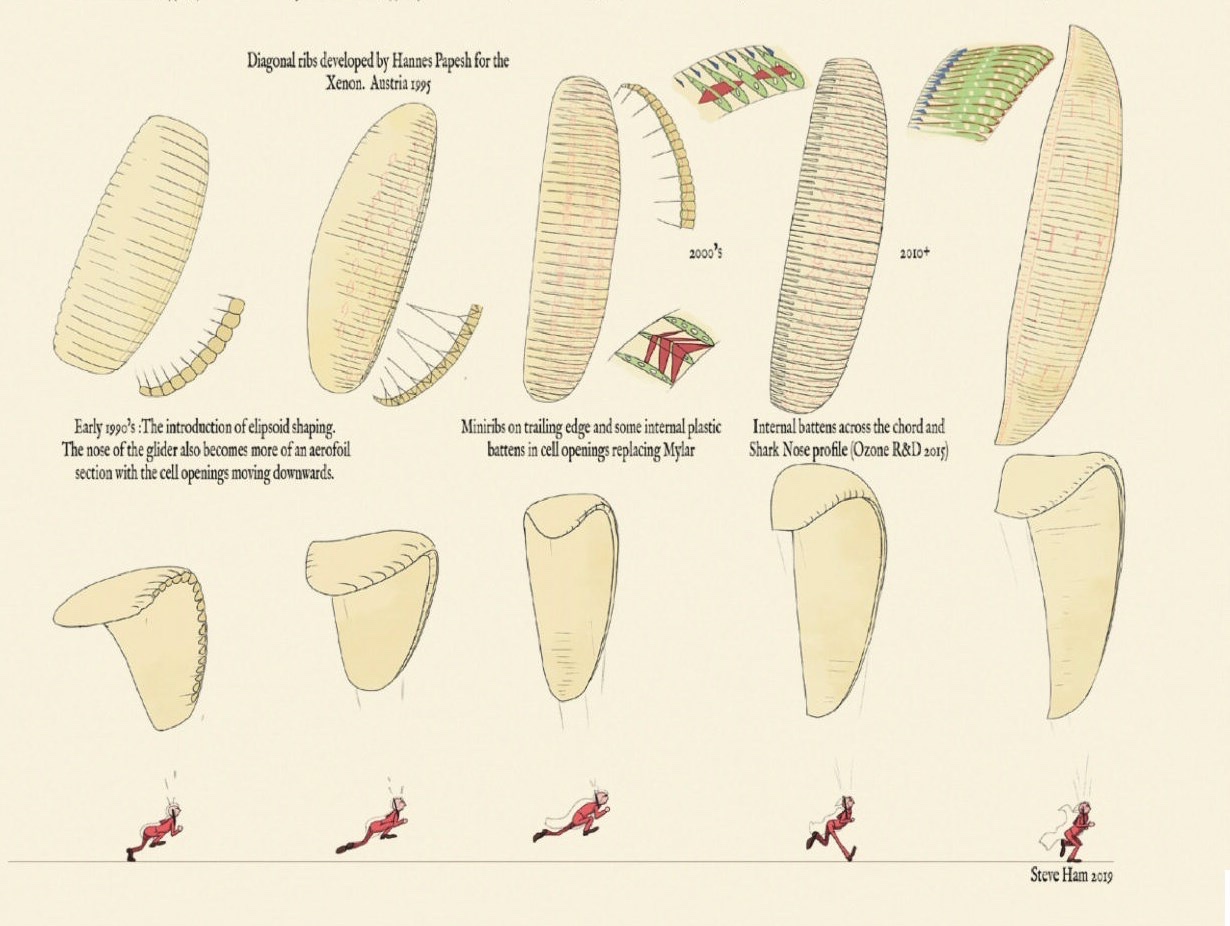
The traditional parachute is round and only slows your descent. The turning point came with the development of the square "ram-air" canopy: two layers of fabric divided into cells, with air rushing in through the leading edge to inflate the canopy into a shape much like an aircraft wing.
This kind of wing doesn't just fall slowly — it also glides forward and can be steered. Around the 1960s, many experiments with soft wings like this were carried out, for both aviation and sport parachuting. Some of them used soft wings to glide off hillsides and are seen as the forerunners of paragliding.
French mountainsides and the birth of a sport
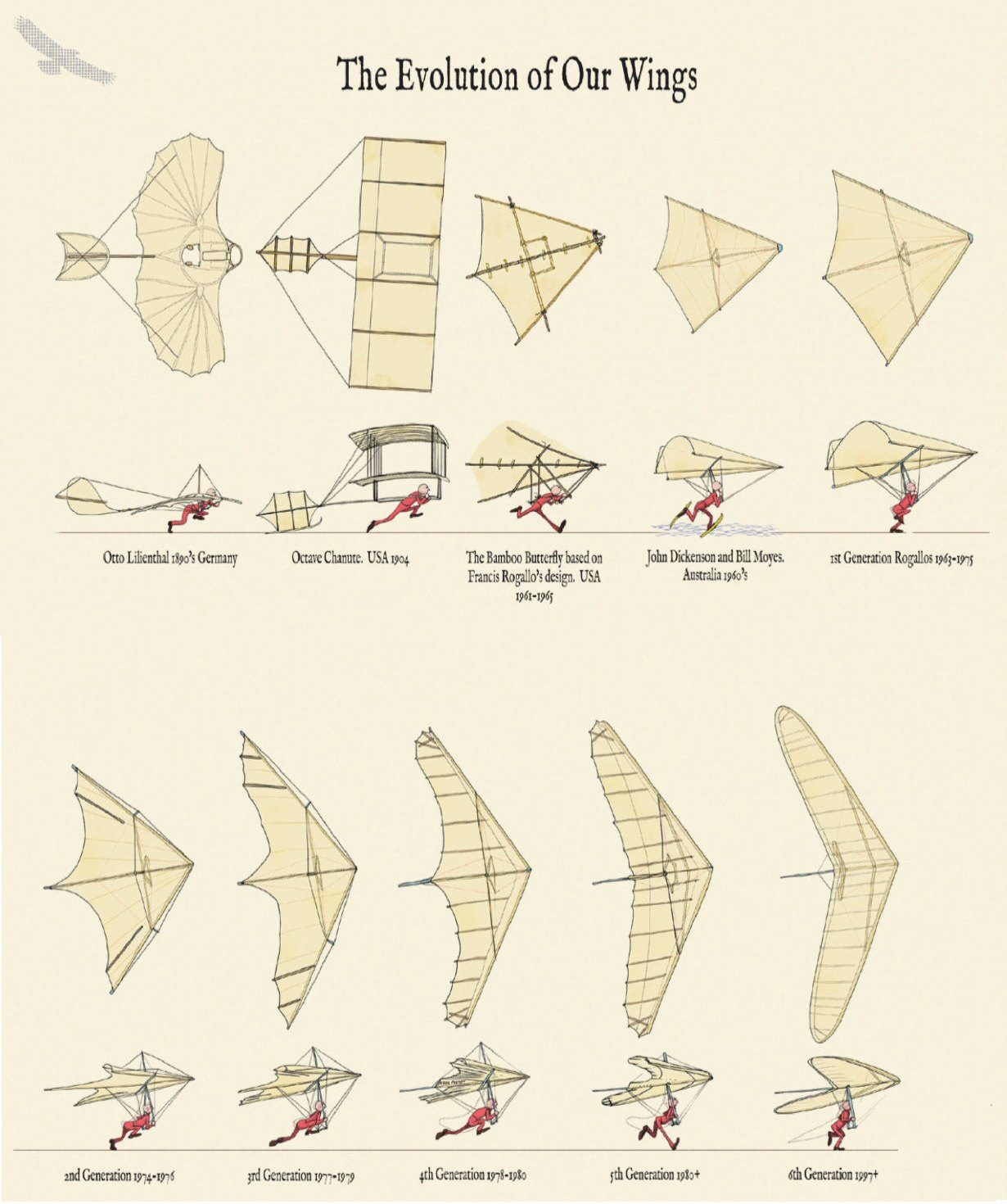
Before paragliders came a century of wings: from Otto Lilienthal’s gliders (1890s) and the Rogallo wing to generations of hang gliders. Illustration: Steve Ham.
The most often-told story is that in the late 1970s, in the French Alps, a group of skydivers tried taking off by running down a steep slope with a square canopy instead of jumping from a plane. They glided down into the valley — a cheaper, more accessible way to fly that needed no aircraft.
The idea spread quickly among mountain lovers in Europe. In the 1980s, paragliding boomed:
- Manufacturers began designing wings made specifically for paragliding, distinct from skydiving canopies.
- Harnesses, reserve parachutes and flying equipment were gradually standardised.
- Flying schools, federations and competitions were founded.
Modern paragliding: safer and more efficient