

What does a tandem paragliding pilot need?
To fly passengers on tandem paragliders, a pilot needs years of flying experience, the skill to take off and land with a passenger, thorough gear checks and clear safety procedures. Learn about the job and Mebayluon's Vietnamese–Nepali pilot team.
Đội trưởng Mỹ · · 5 min read
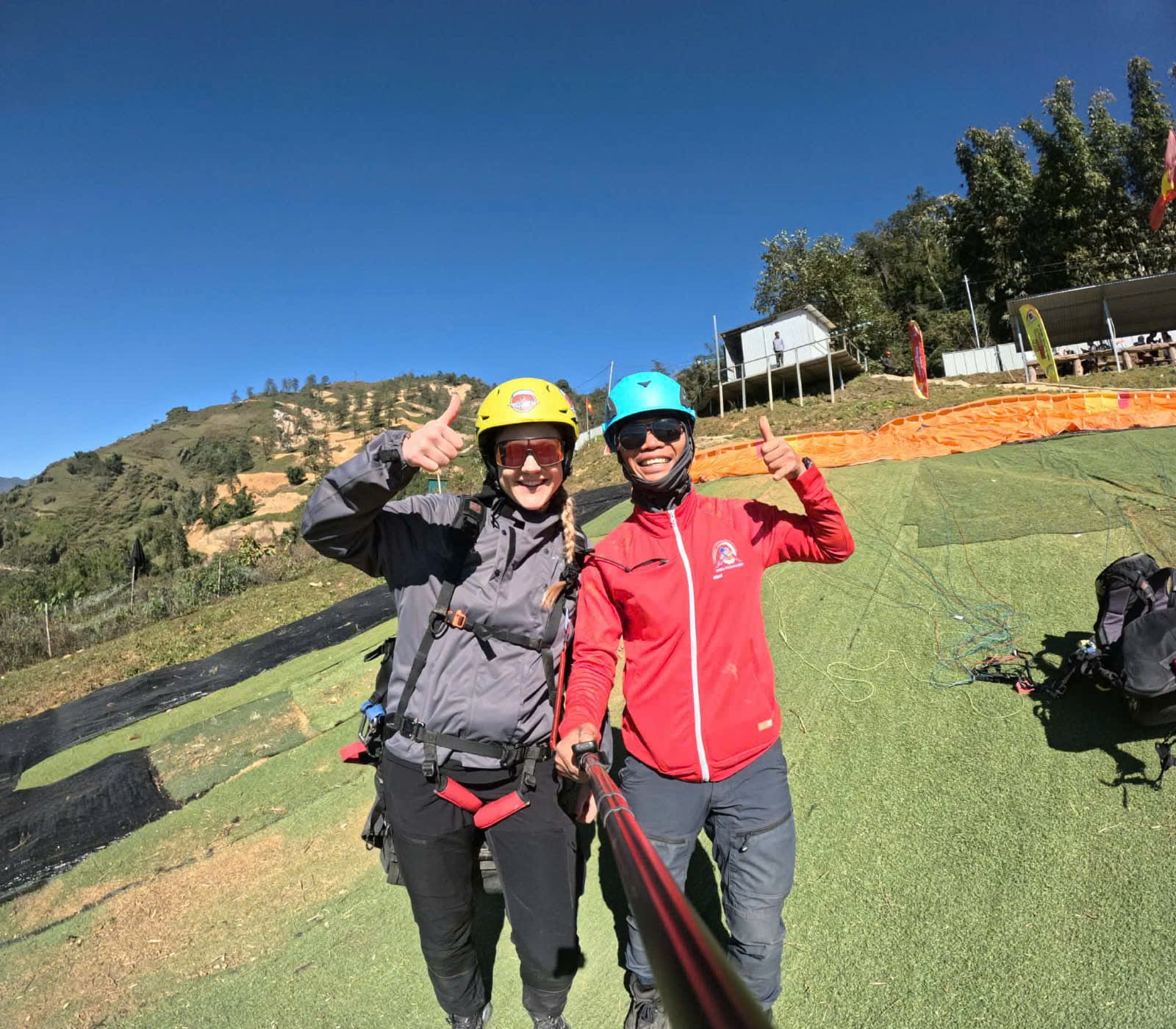
A tandem paragliding pilot needs far more than the ability to fly solo: years of accumulated experience, the skill to take off and land alongside someone who has never flown, a meticulous gear-checking habit, and the ability to read the weather and know when not to fly. This article explains the tandem pilot's job in general and how the Mebayluon pilot team works at the Quản Bạ flying site in Hà Giang.
How is a tandem pilot different from a solo pilot?
Flying solo, a pilot is responsible only for themselves. Flying tandem, the pilot carries a passenger — usually a first-timer who may be nervous or may not run at quite the right moment. That is why a tandem pilot needs to:
- Handle a bigger, heavier wing.
- Run and take off smoothly in step with the passenger.
- Land gently even when the passenger isn't yet steady on their feet.
- Stay calm, communicate clearly and reassure the passenger throughout the flight.
The experience required
Around the world, tandem pilots usually fly solo for many years, building up a large number of flights in all kinds of conditions, before they receive specific tandem training. After training, they are typically assessed and certified for tandem flying under the system of their country or organisation.
What counts is not only hours in the air, but also how many sites and how many types of weather they have flown in: ridge wind, thermals, valley winds, low cloud…
A tandem pilot's core skills
| Skill | Why it matters |
|---|---|
| Reading wind and weather | Deciding whether to fly or postpone — the number 1 safety skill |
| Ground handling | Bringing the wing up steadily before running with the passenger |
| Taking off with a passenger | Matching the running rhythm, handling a passenger who stops mid-run |
| Flying in turbulence | Keeping the wing stable and the passenger comfortable |
| Precise approach and landing | A soft touchdown right on the landing field |
| Handling emergencies | Knowing when and how to use the reserve parachute |
| Communication | A clear briefing, a reassured passenger, great GoPro footage |
Gear checks before every flight
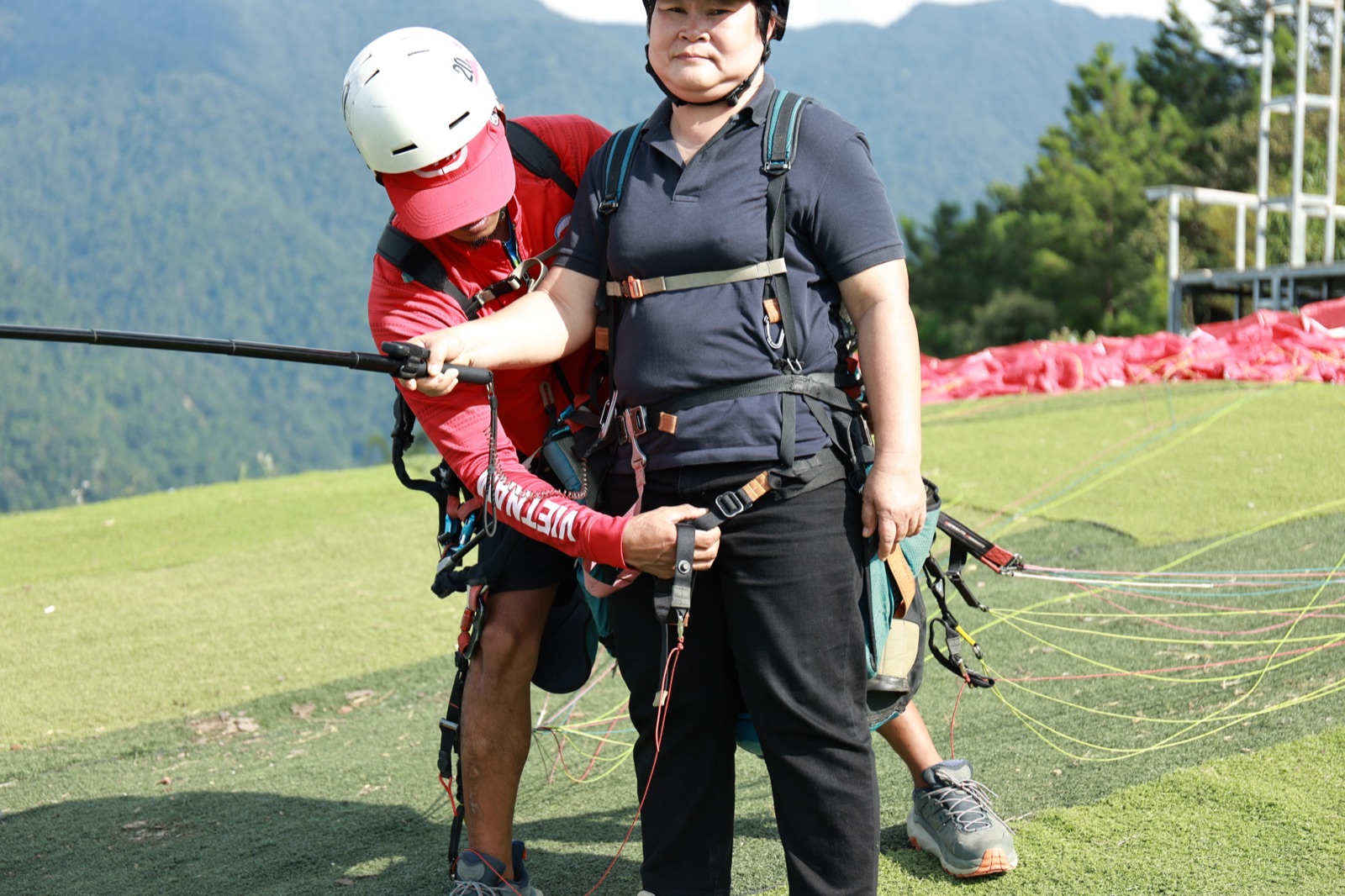
A good pilot checks the gear out of habit and never skips it, even after thousands of flights:
- Wing: no tears in the fabric, cells clear, no foreign objects.