


A Day of Flying over the Rocky Plateau: a Quản Bạ Paragliding Diary Through the Drone's Eye
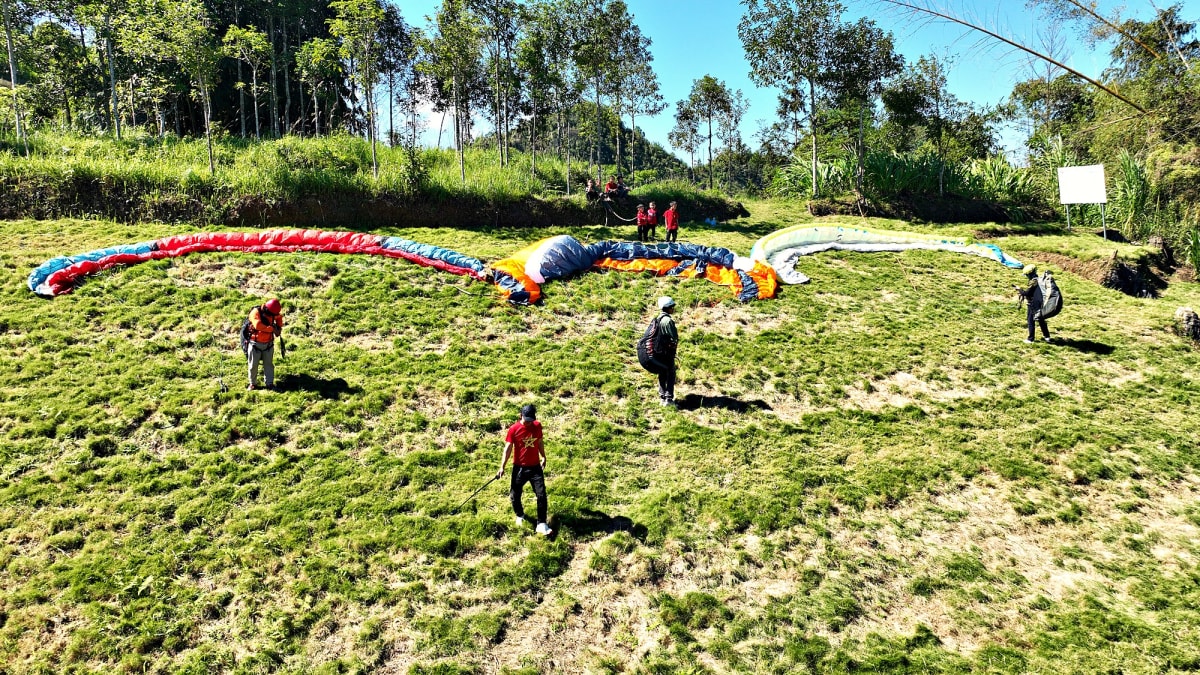
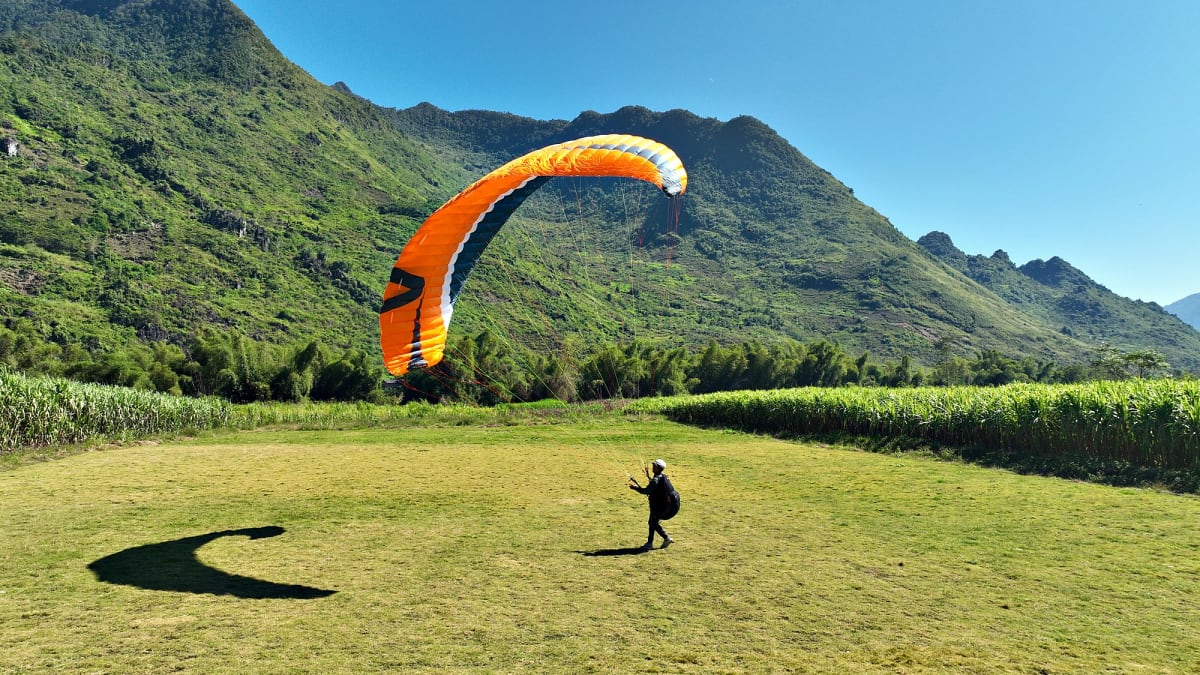
Saturday, 14 November 2026: clear blue skies over Quản Bạ. Our drone follows the wings from the 950 m take-off: laying out, the run-up, ridge soaring along cat-ear limestone, thermalling above the Miện River valley, then landing beside a sugarcane field. A diary in photos and clips, plus how to live a flying day of your own on the Hà Giang Loop.
Captain Mỹ · · 15 min read
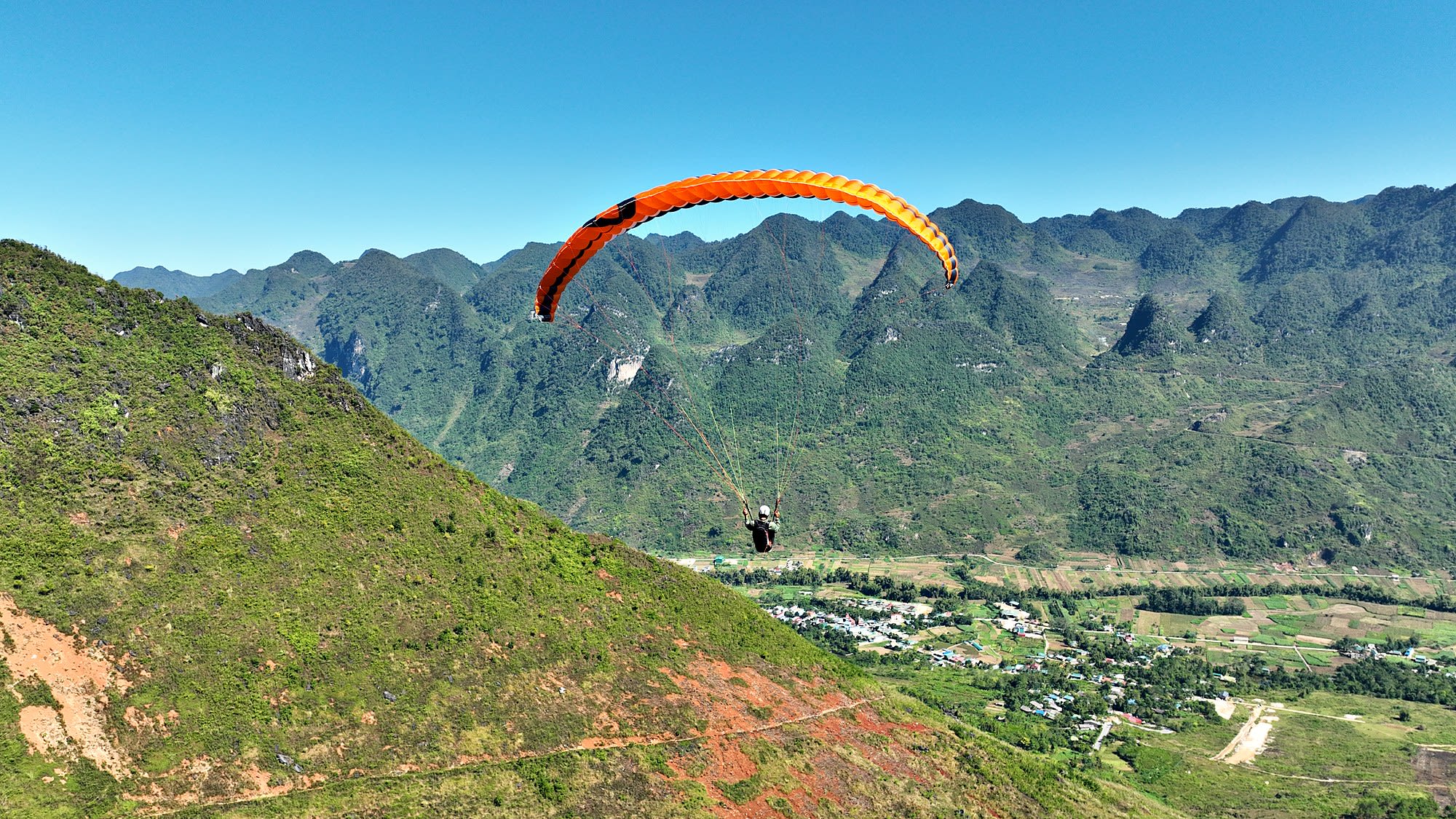
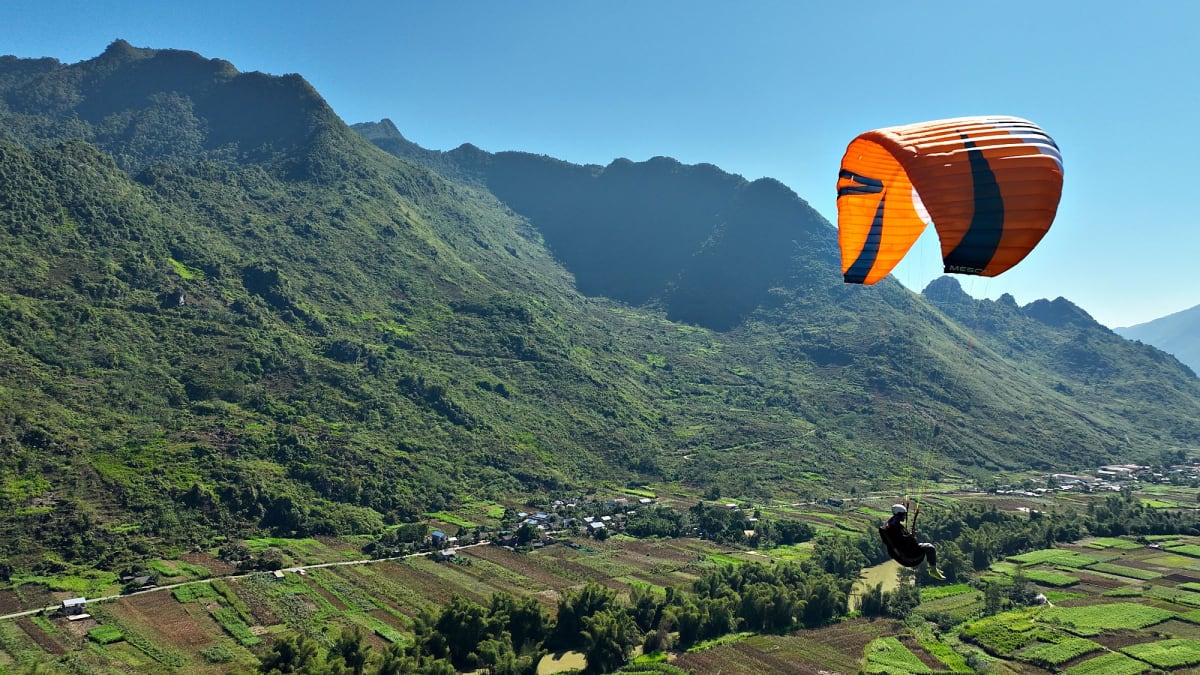
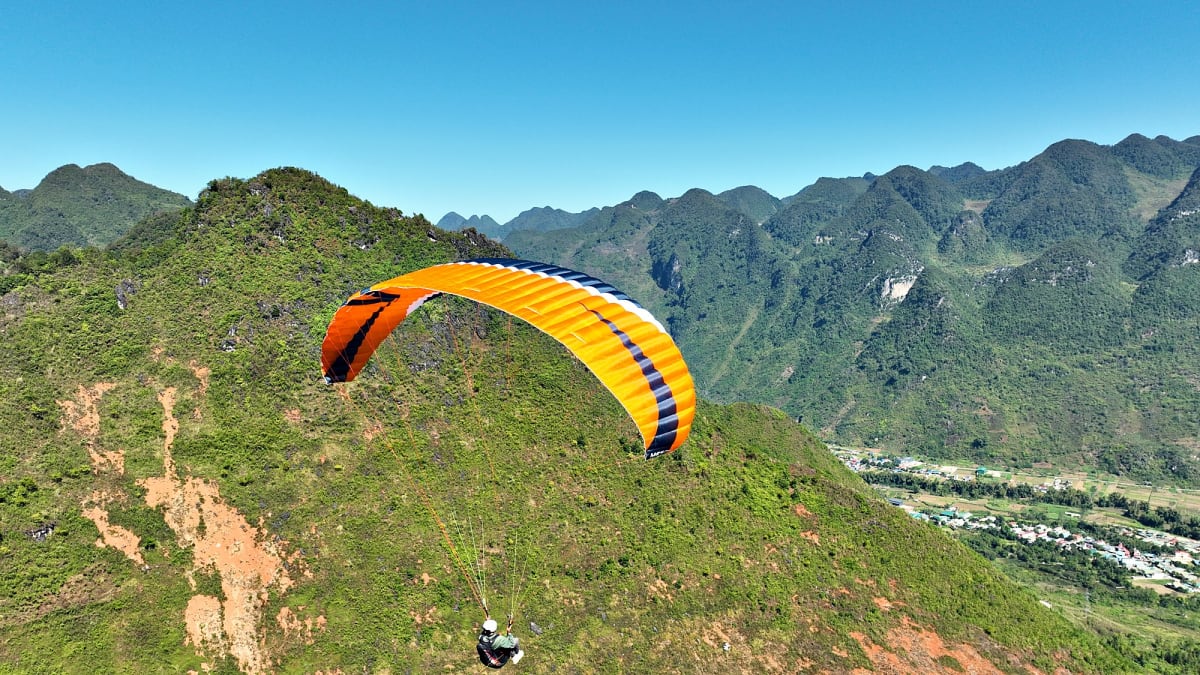
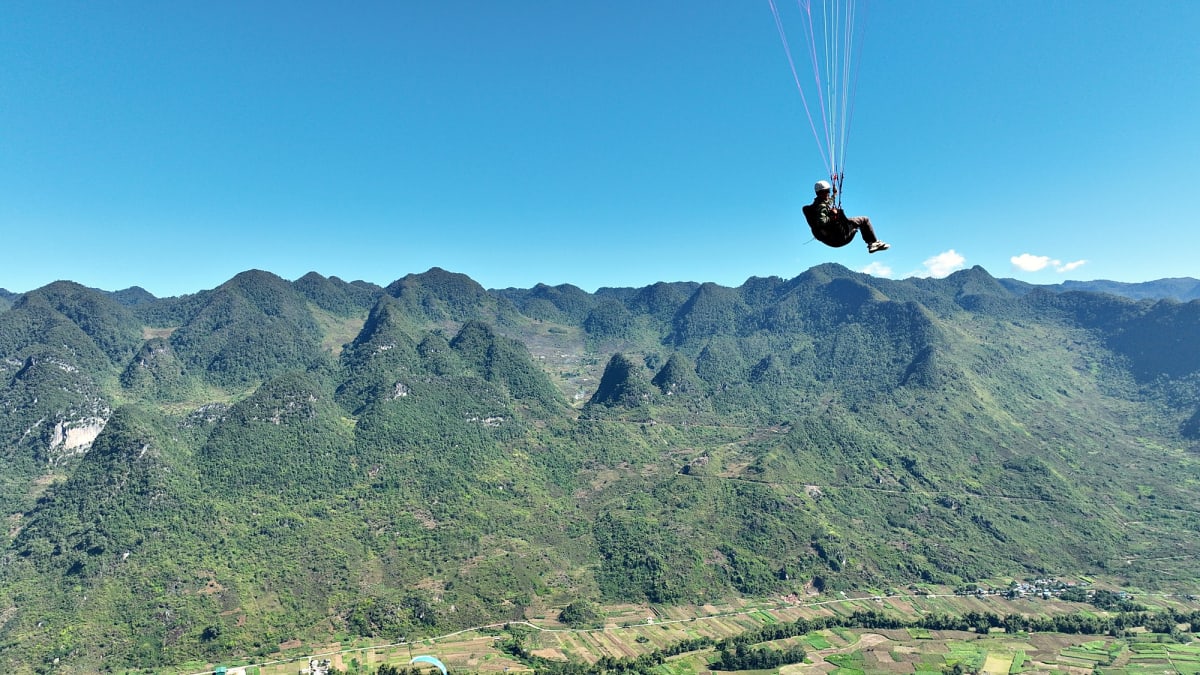
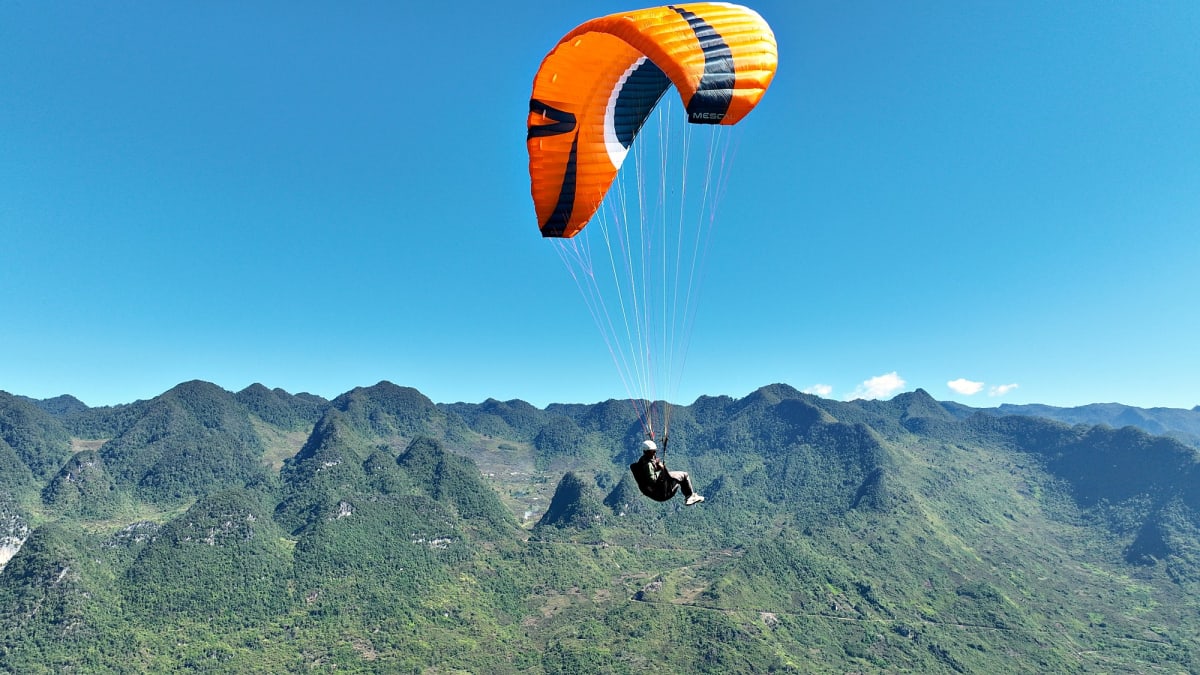
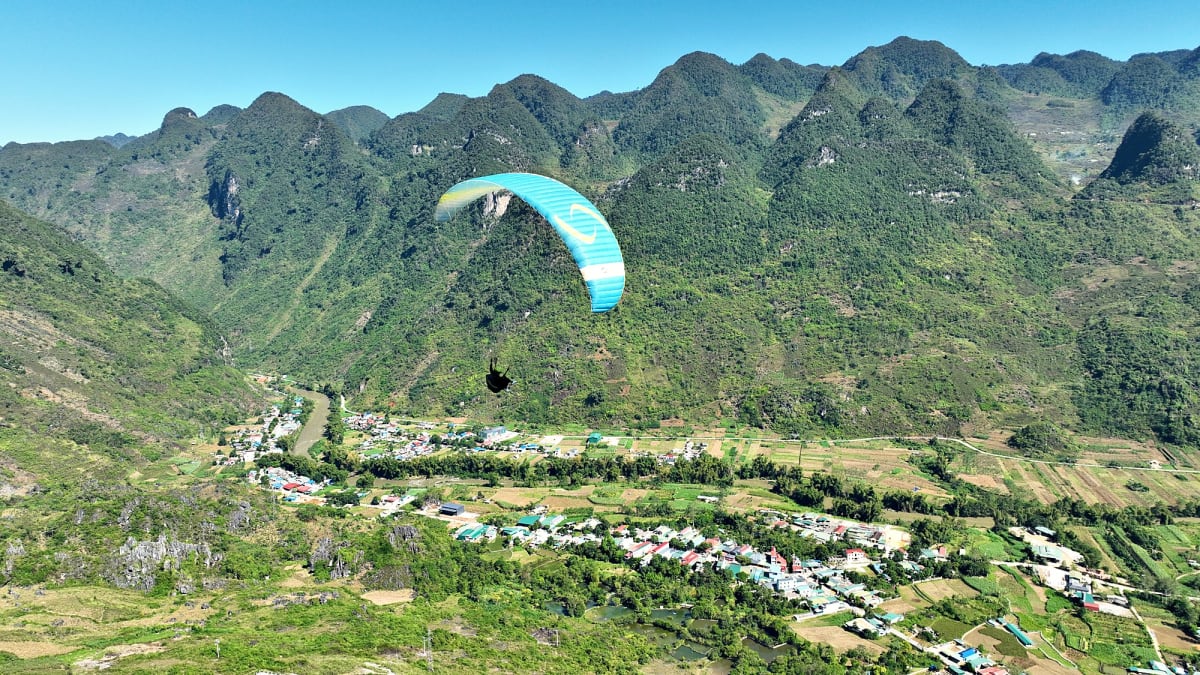
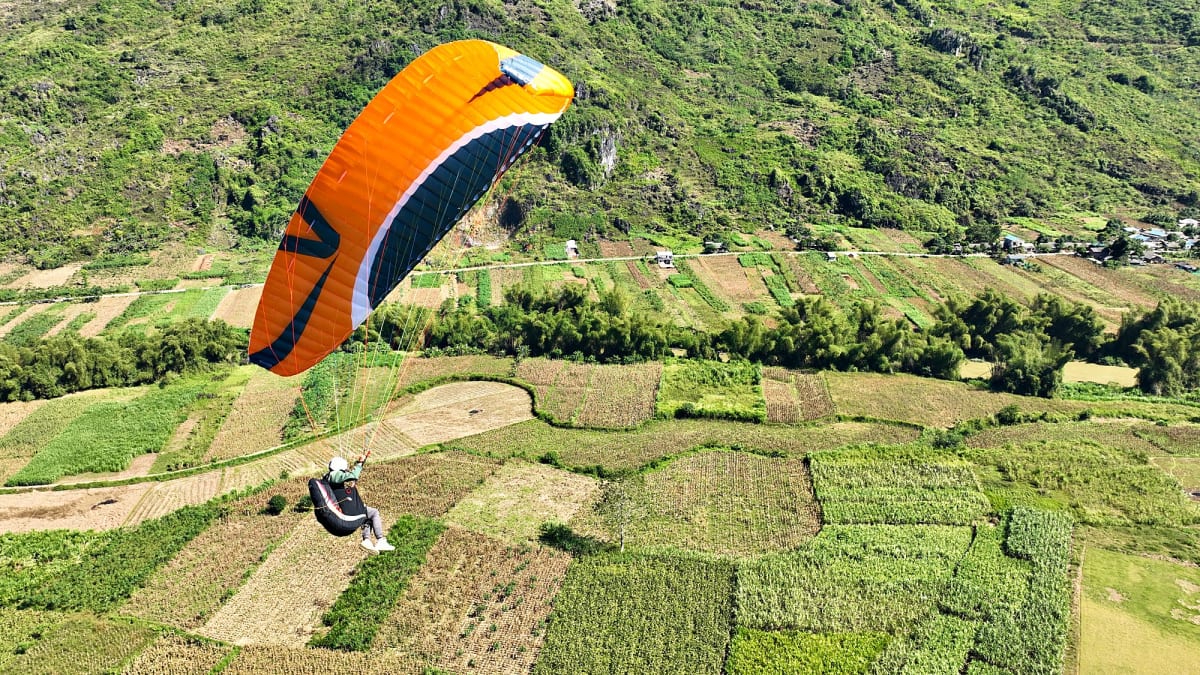
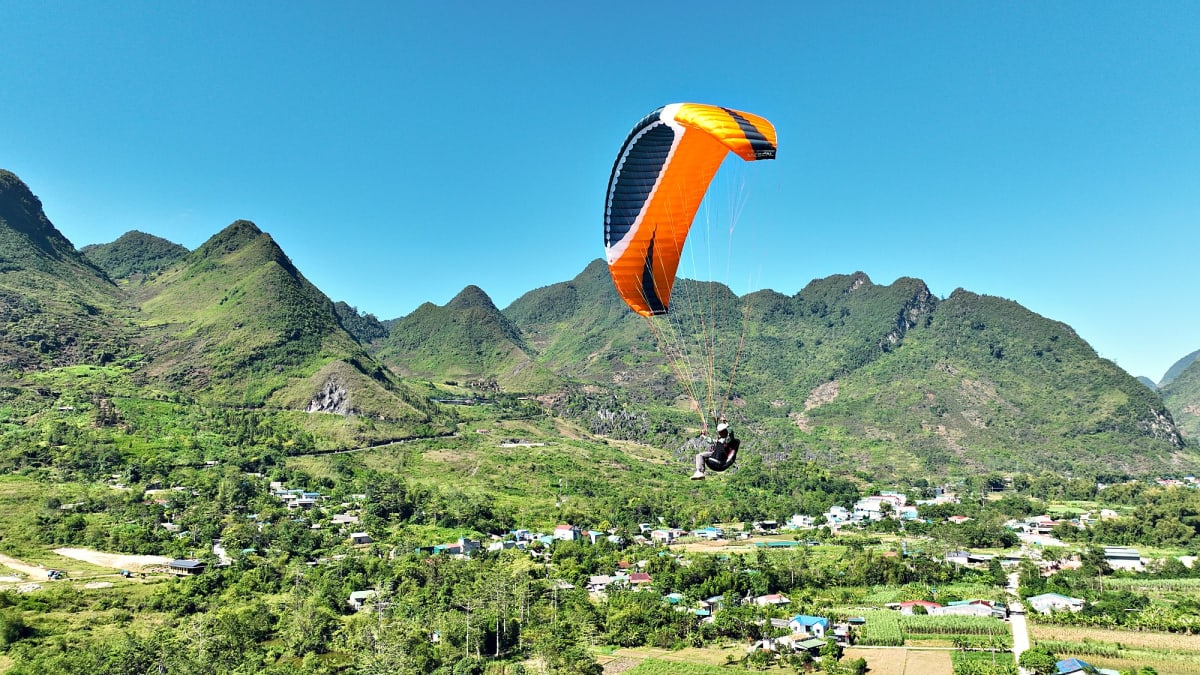
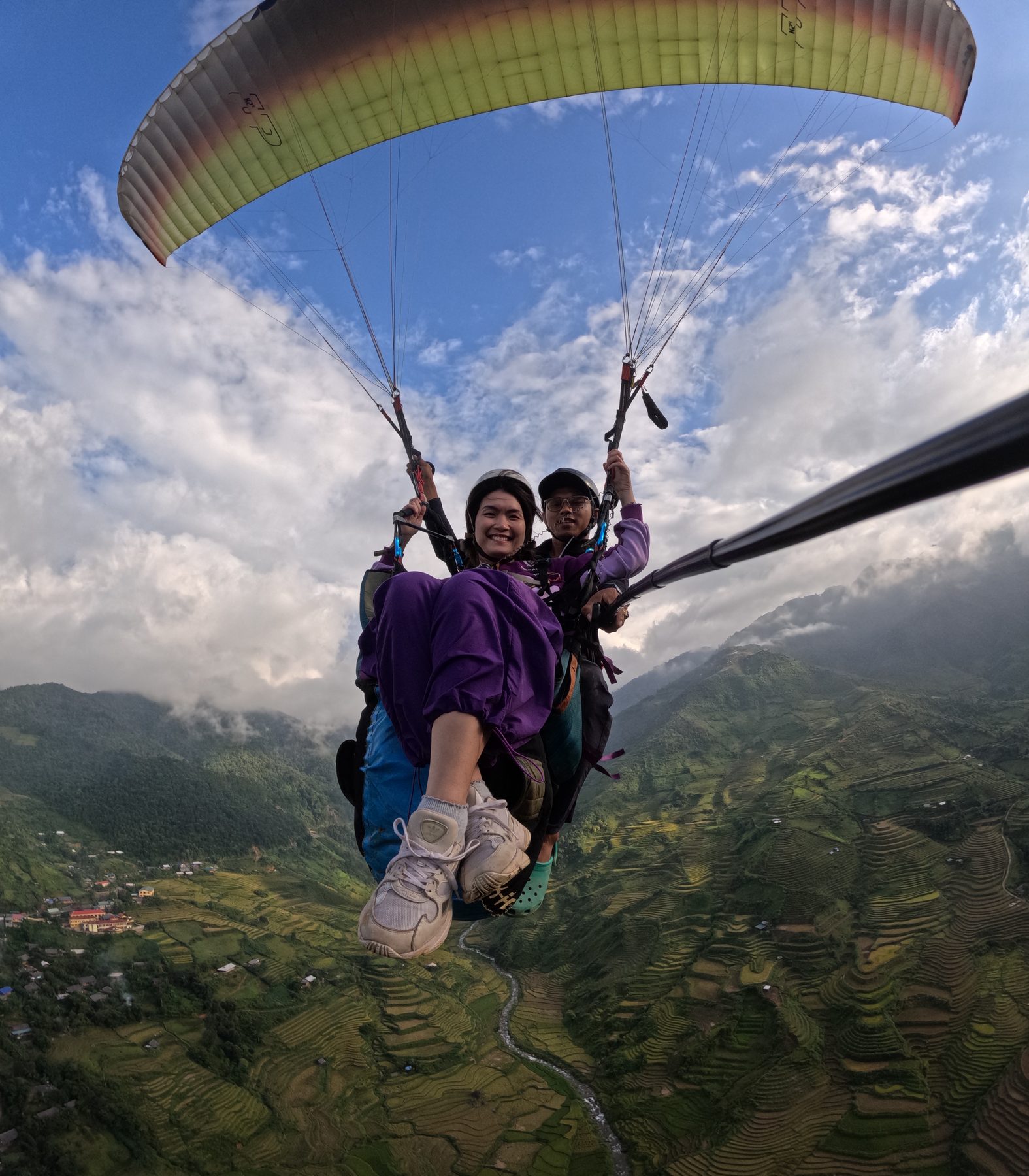
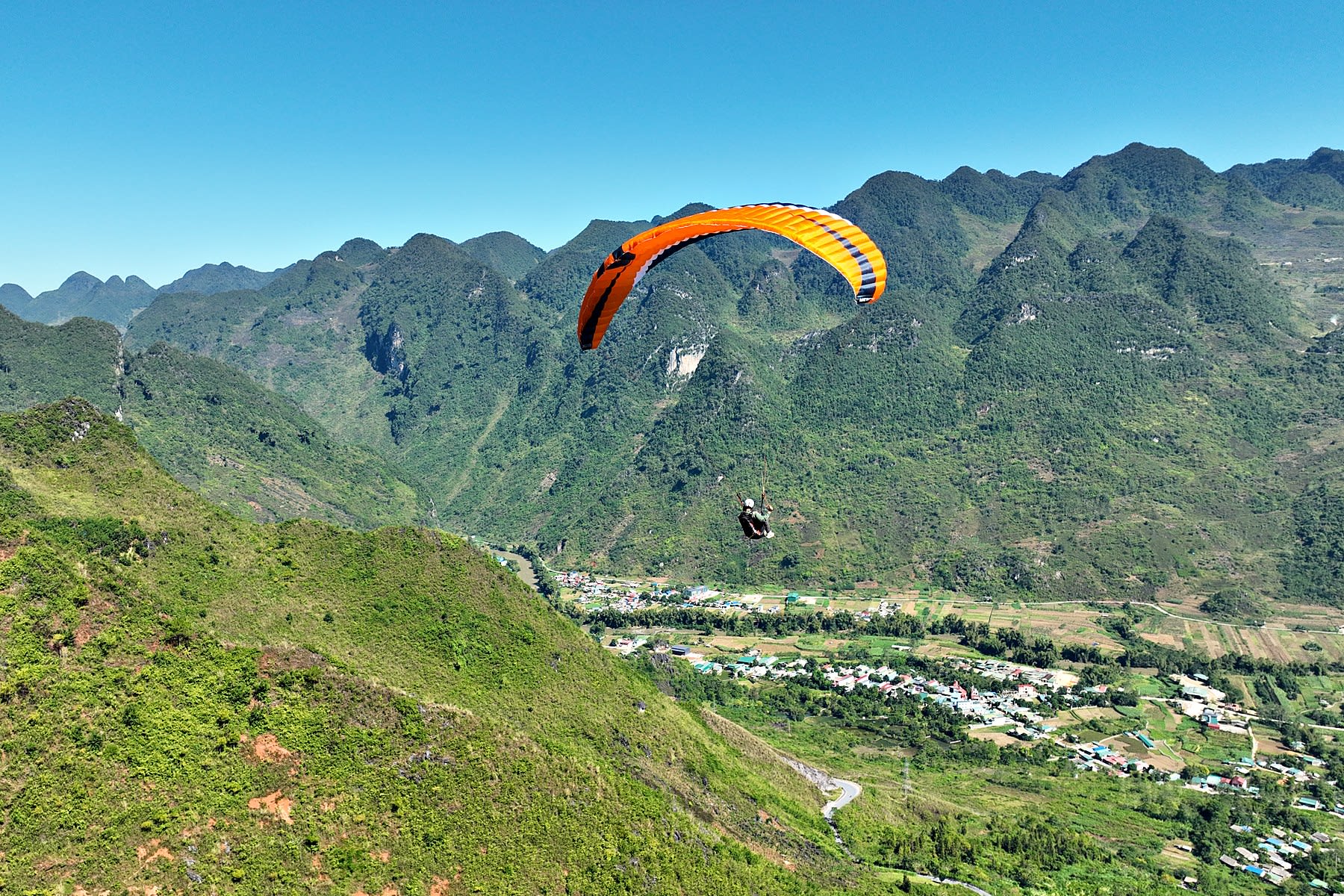
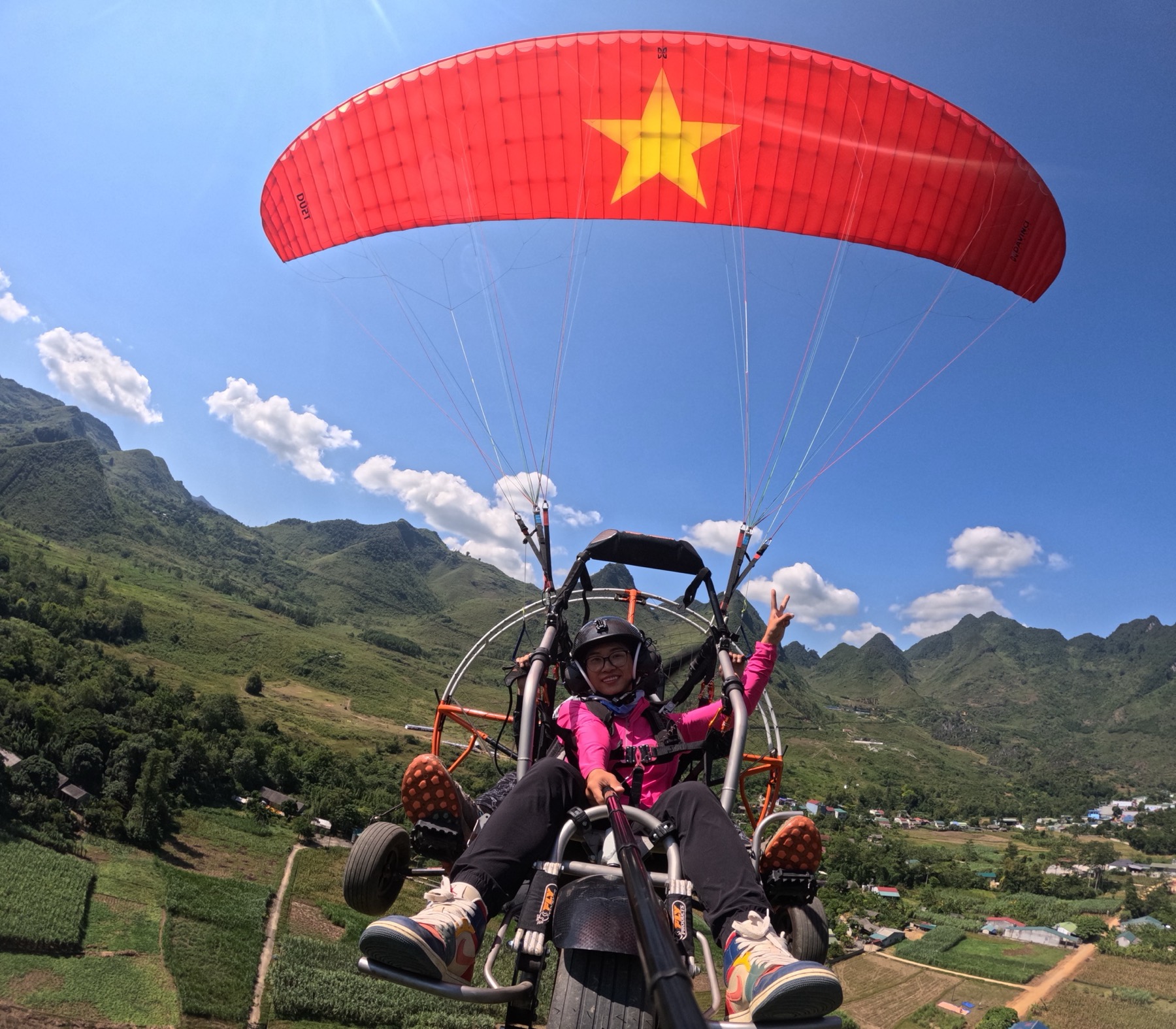
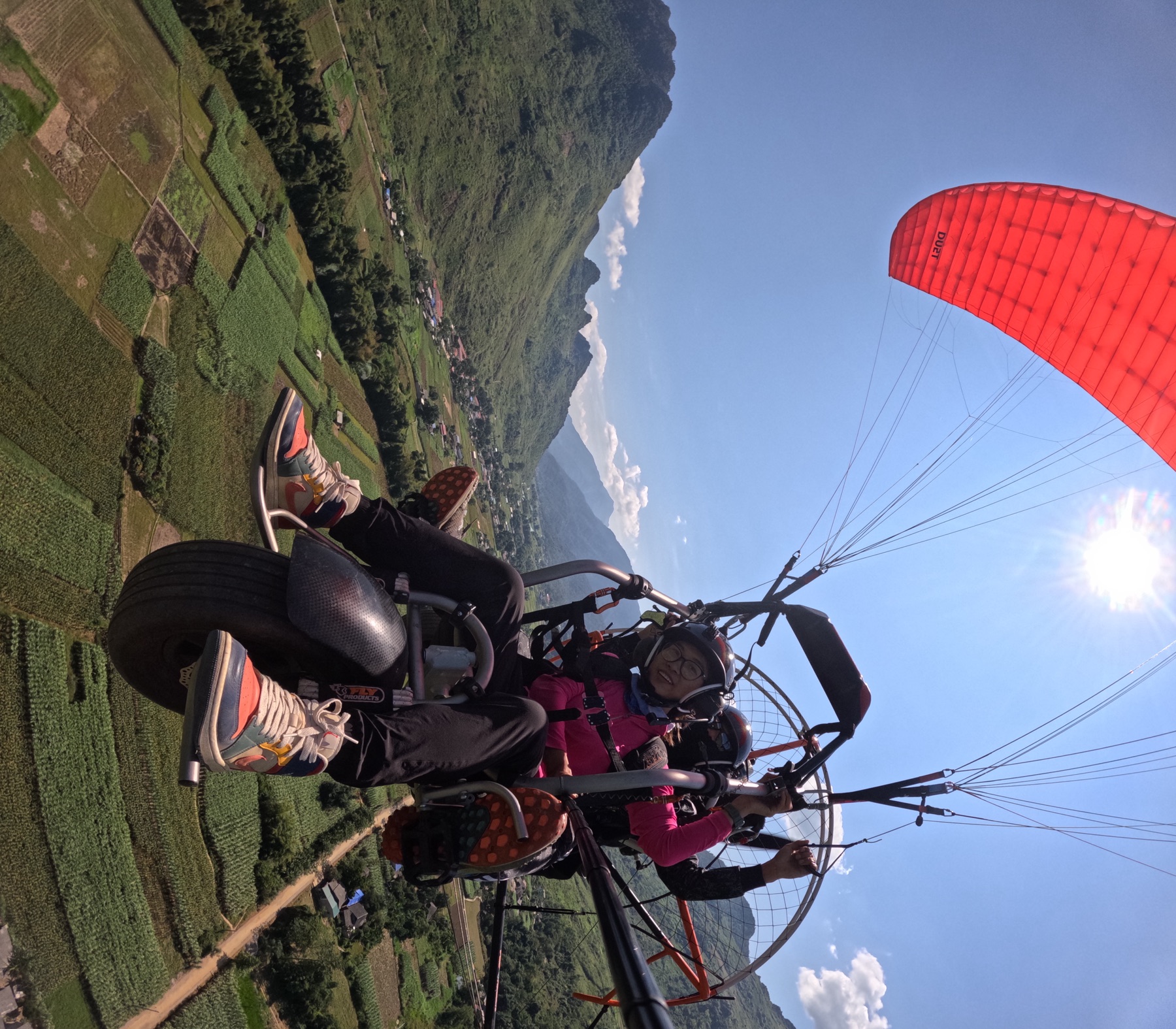
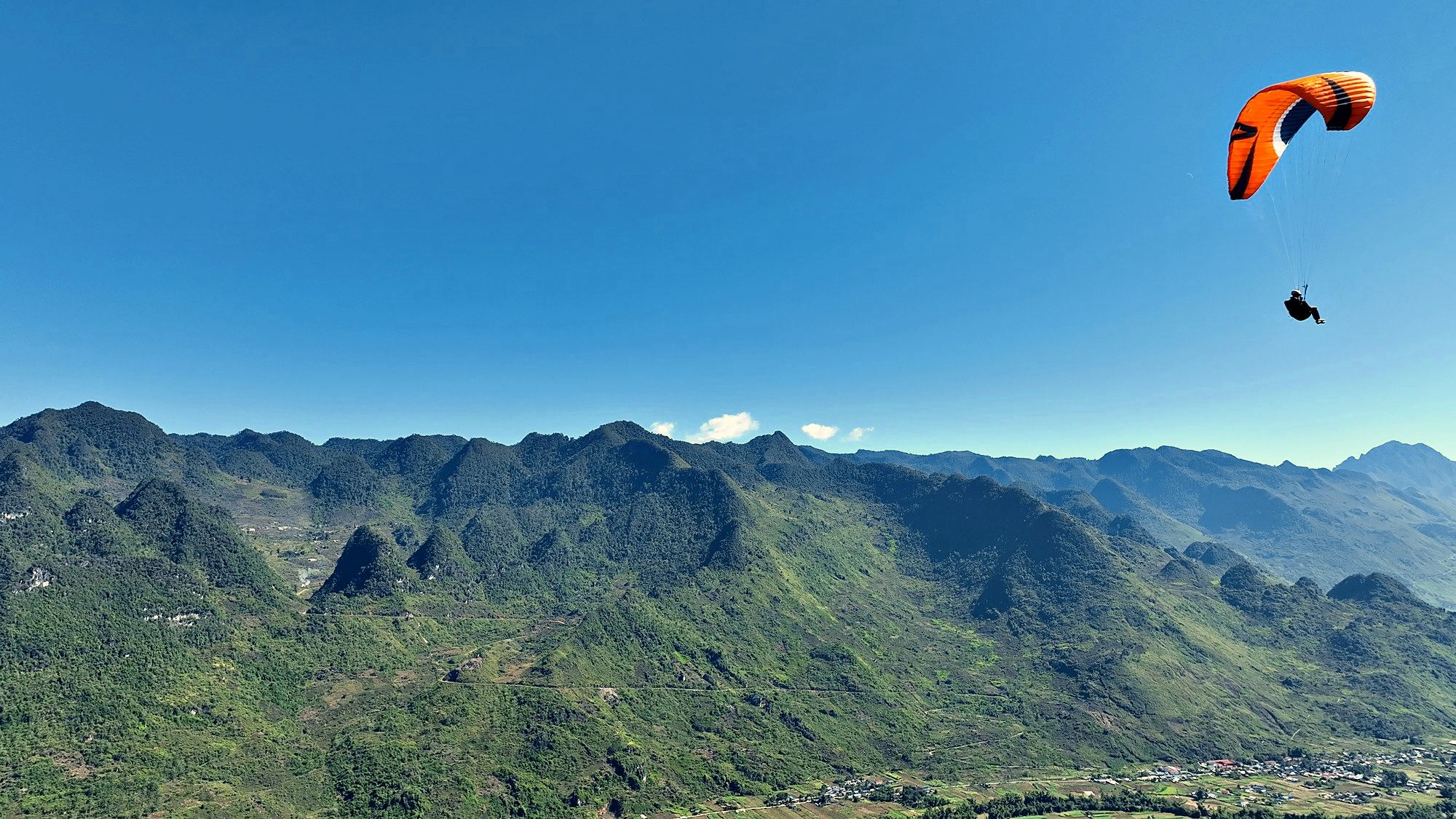
Saturday, 14 November 2026. The sky over Quản Bạ was clear blue without a wisp of cloud, exactly the kind of dry early-winter day pilots wait all year for. Our flying team took off again and again throughout the day. From 12:13 to 14:09, the team's drone followed the wings: from the 450 m landing field by the Miện River, up to the 950 m take-off on the summit, along ridges of cat-ear limestone, then back down with them to land beside a sugarcane field. This is the diary of those two hours, picked from 92 photos and 13 video clips, plus how you can live a day like this yourself on the Hà Giang Loop.
Sport in the sky, travel beneath your feet
Paragliding is a sport for people who can "read the sky". With no engine, a wing lives on wind and sun alone: wind hitting a mountainside gets pushed upward, and sun baking the rock sends up columns of rising air. A good pilot is one who spots those invisible currents and stays in them as long as possible.
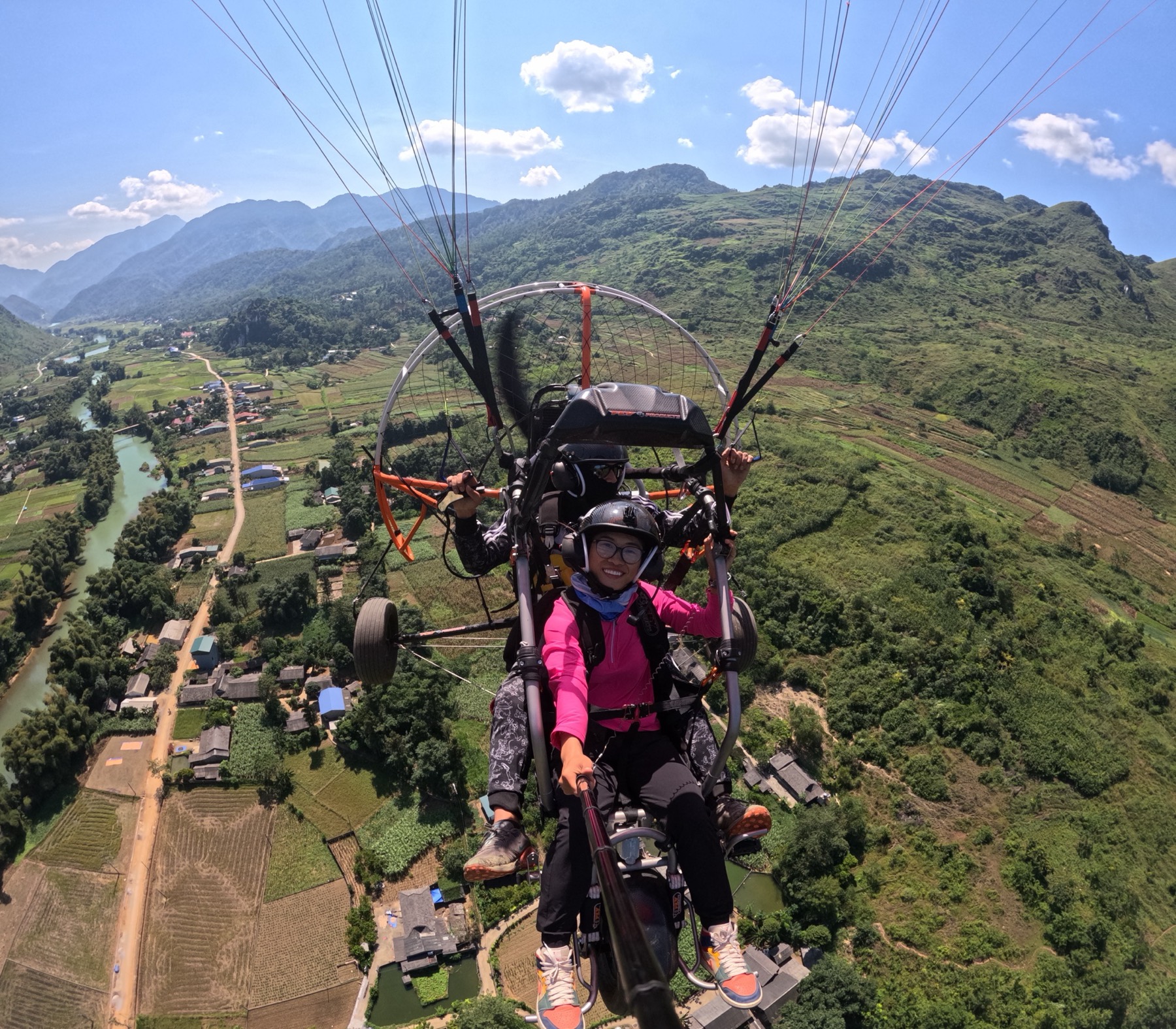
Our playground at Quản Bạ is the gateway to the Đồng Văn Karst Plateau UNESCO Global Geopark. For pilots, a day like today is training: thermalling, ridge soaring, working out the glide back to the landing field. For anyone riding the Loop, it is a view no mountain pass or check-in spot can give you: the whole limestone range laid out beneath your feet, the valley spread open like a map.
12:13 — Midday sun and the first wings
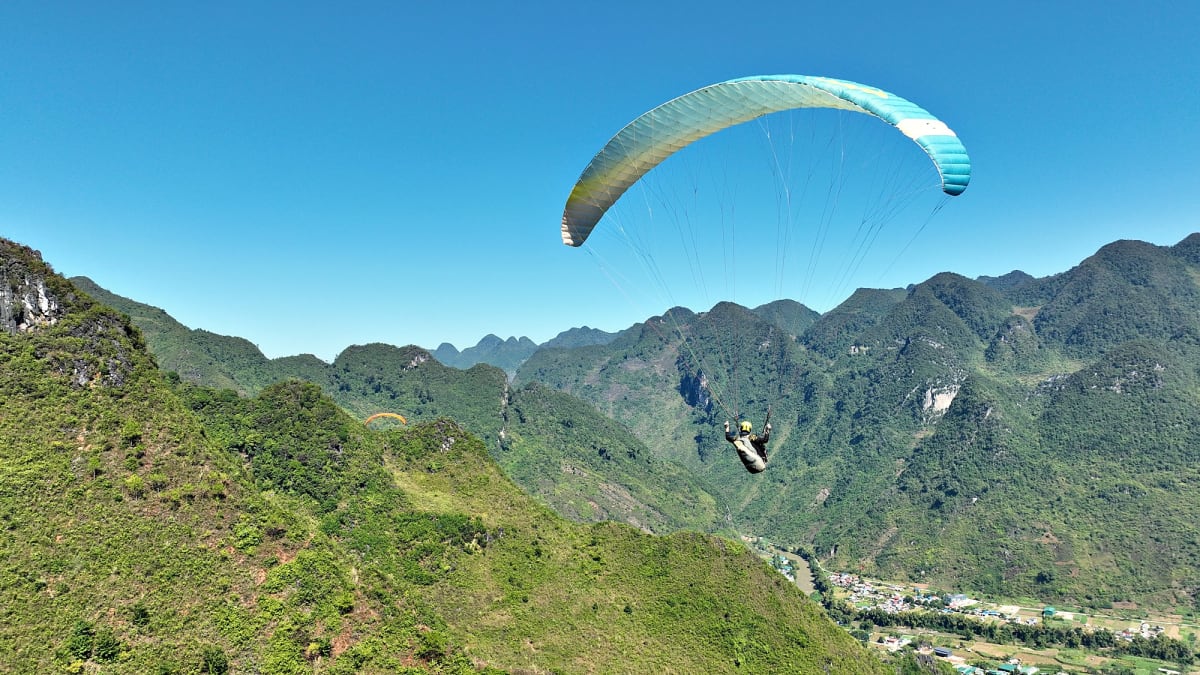
The drone lifted off from the landing field at 12:13. A red wing trimmed in turquoise was already up, gliding close to the summit, small as a leaf among giant blocks of rock.

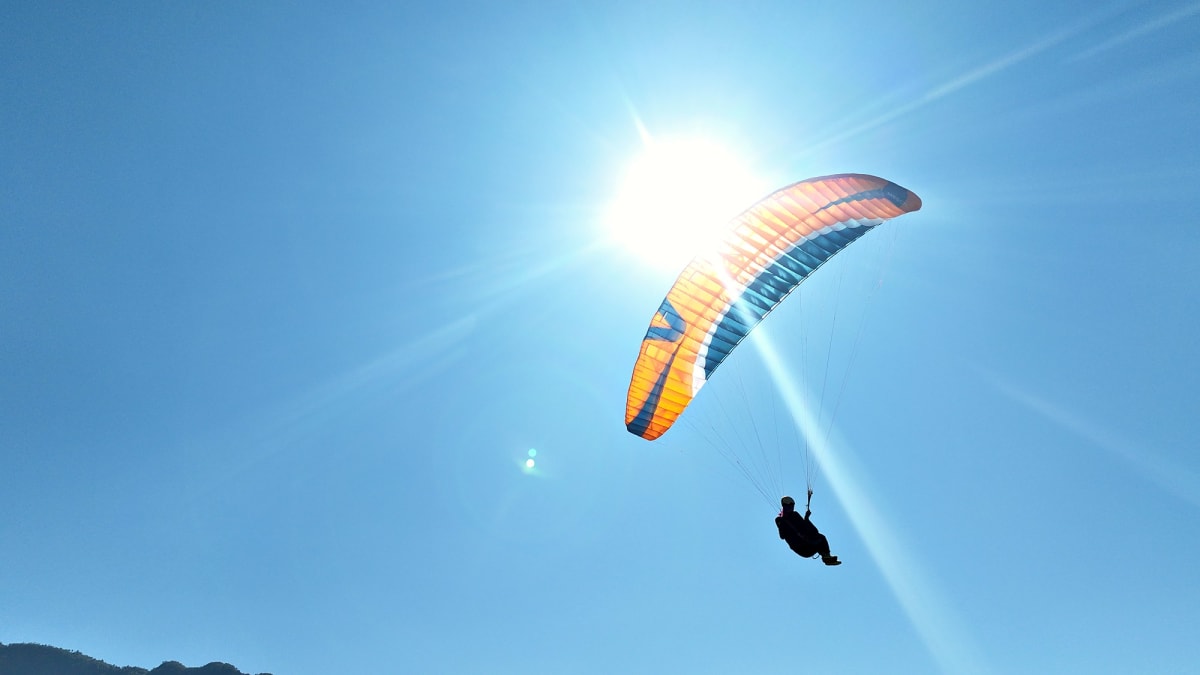
Midday is when the sun hits hardest. The limestone slopes and dry fields heat up fast, warming the layer of air right above the ground. At some point that warm air breaks away from the slope and rises as a column. Pilots call it a thermal ("nhiệt" for short in Vietnamese). A wing that slips into a thermal gets lifted. The pilot carves tight circles to stay inside the column, which is called thermalling, and can climb hundreds of metres without spending any extra effort.