



Can paragliding make you dizzy? Tips for a smooth flight
Most tandem paragliding guests don't feel sick, but people prone to car sickness may feel queasy when the pilot circles. The causes, and simple tips for a smooth flight from start to finish.
Captain Mỹ · · 5 min read

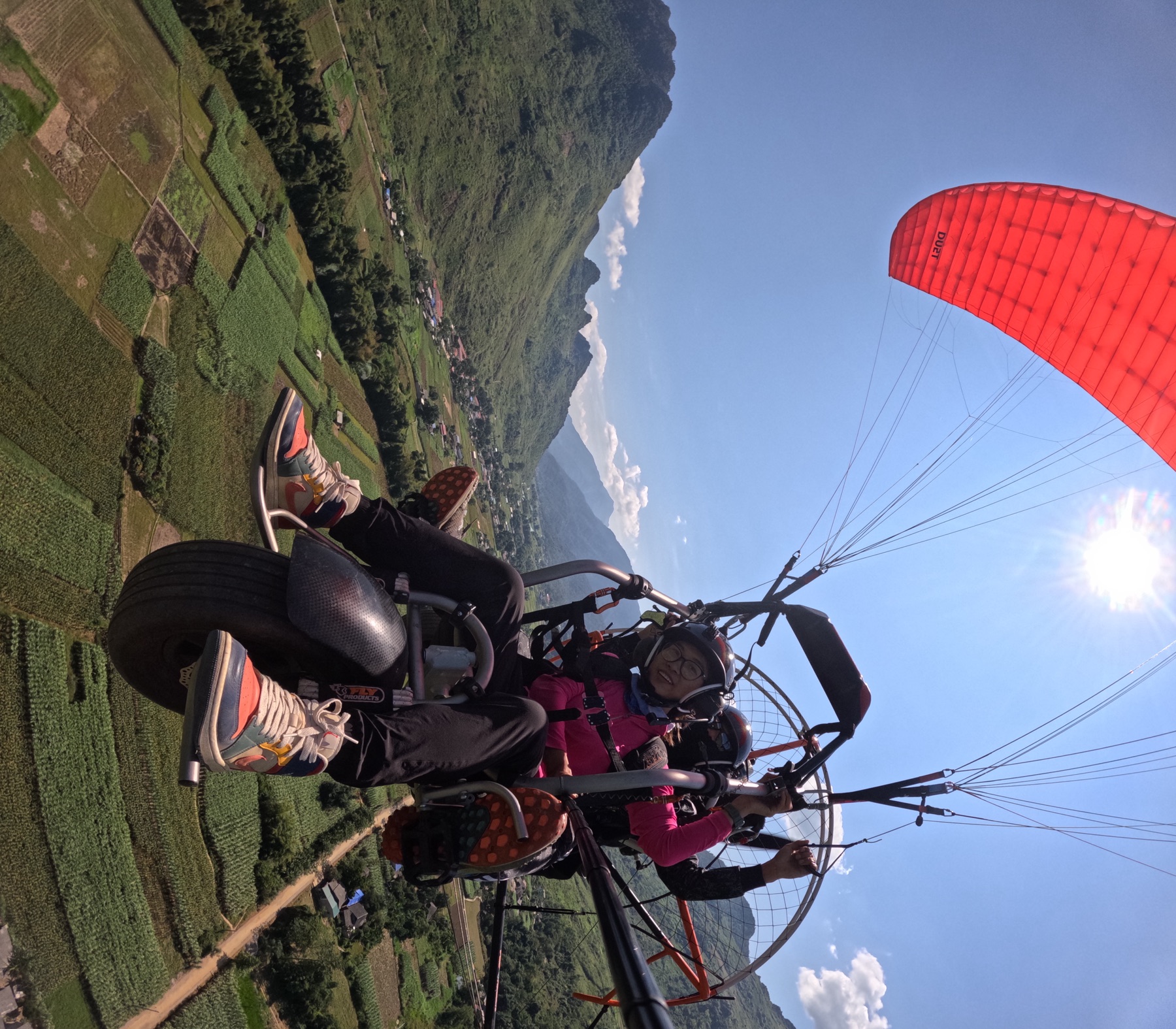
Most tandem paragliding guests don't feel sick at all. A normal flight path is smooth and slow, like sitting in a floating hanging chair. Queasiness and dizziness mostly affect people who are prone to car sickness or seasickness, or happen when the pilot keeps circling in banked turns inside a thermal. The good news is that a few simple tips can almost completely eliminate the risk.
Why do some people feel sick when paragliding?
Motion sickness happens when your eyes and inner ear "report" different things about movement. Under the wing, three situations tend to cause queasiness:
- Circling in a thermal. To gain height or fly longer, the pilot may turn several circles in a row.
- Steep banking manoeuvres that some guests request for extra thrills.
- Turbulent air around midday in strong sunshine.
Being hungry, short on sleep, or staring at your phone screen for too long during the flight can also make you more likely to feel unwell.
Who is more likely to feel sick?
- People who often get car sick or seasick.
- People who have just ridden a long stretch of mountain passes and already feel tired.
- People who are short on sleep or have skipped a meal.
- People who drank alcohol the night before.
If you're in one of these groups, don't worry — just tell your pilot and follow the tips below.
8 tips for a smooth, dizziness-free paragliding flight
- Have a light meal 1–2 hours before flying. Don't fly on an empty stomach, but don't eat too much or anything too greasy either.
- Get a good night's sleep beforehand. If you're doing the Hà Giang Loop, spend a night in the Quản Bạ area rather than flying straight off the bus.
- No alcohol before your flight — this is also a mandatory safety requirement.
- Tell your pilot from the start that you get motion sick and want a smooth flight.
- Look at the horizon, not down at your feet or at your phone screen.
- Breathe slowly and deeply, and let the cool air on your face.
- Choose a morning flight, when the air is usually calmer than at midday.
- Speak up as soon as you feel unwell. The pilot will fly straight, skip the circling, and can bring you to the landing field earlier.