

Wind, rain, clouds: why are some flights postponed?
Why can a paragliding flight be postponed even on a sunny day? How wind, gusts, tailwind at launch, rain and low cloud affect flying, and how you can reschedule for free.
Đội trưởng Mỹ · · 6 min read
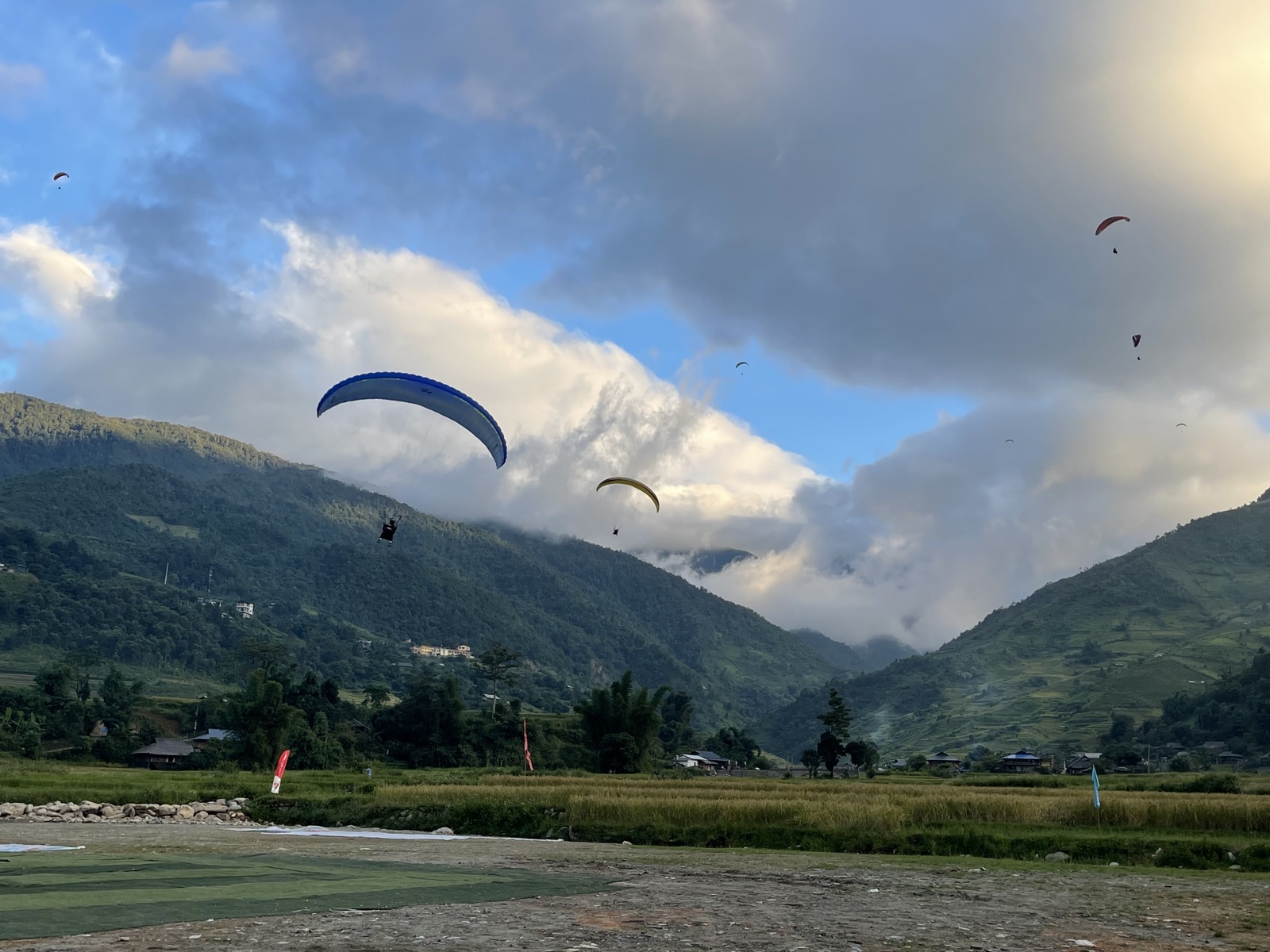
Paragliding is a wind-powered sport, so the weather decides whether a flight goes ahead. Wind that is too strong or gusty, wind blowing from behind the launch site, rain, storm clouds or low cloud covering the site are all reasons for the team to postpone, even on a beautiful sunny day. When that happens you can reschedule or cancel completely free of charge, and since no deposit is required, you lose nothing. This article explains each factor, how the flight team in Quản Bạ reads the weather, and how you can check the forecast yourself before setting off.
Why is paragliding so "picky" about the weather?
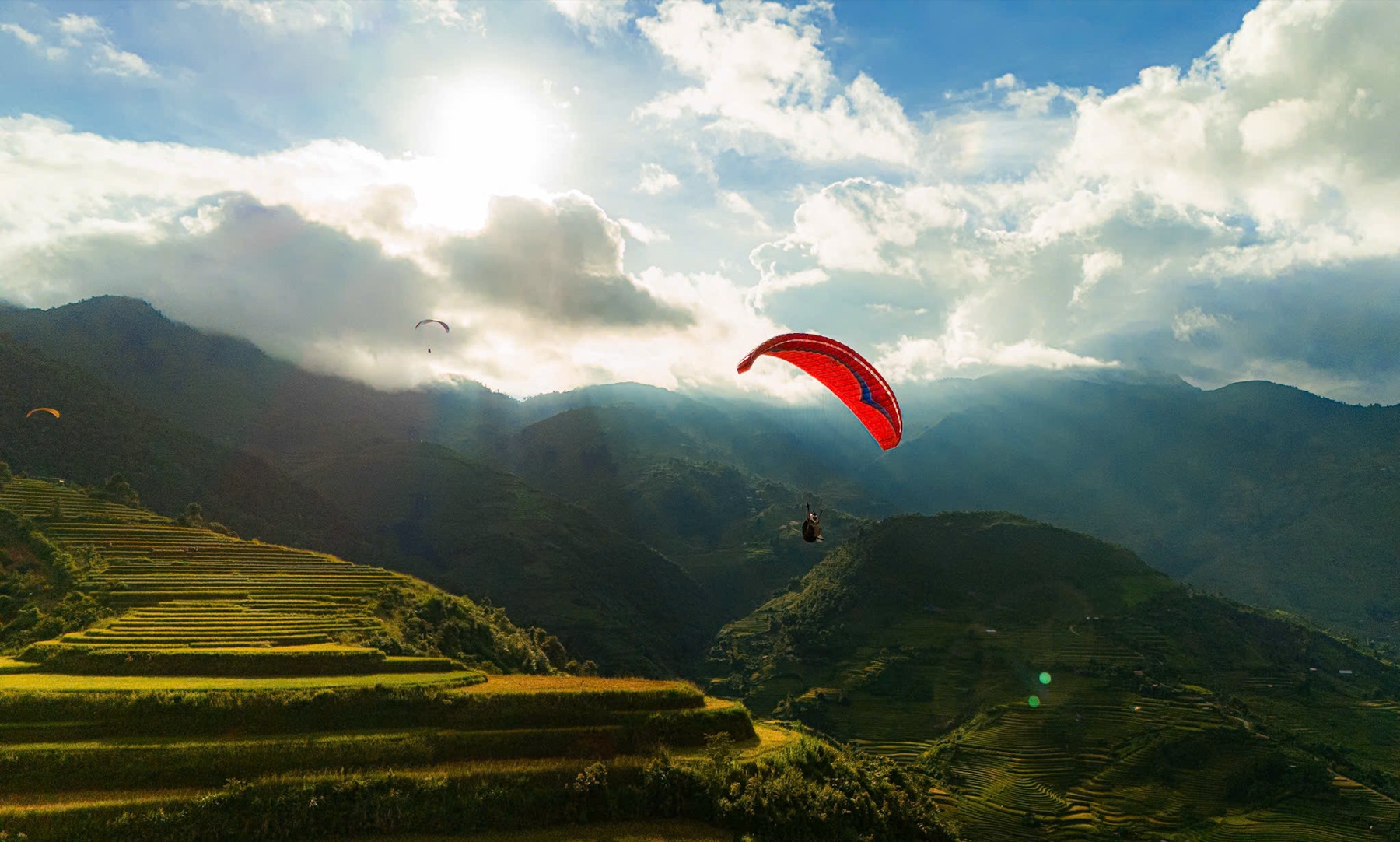
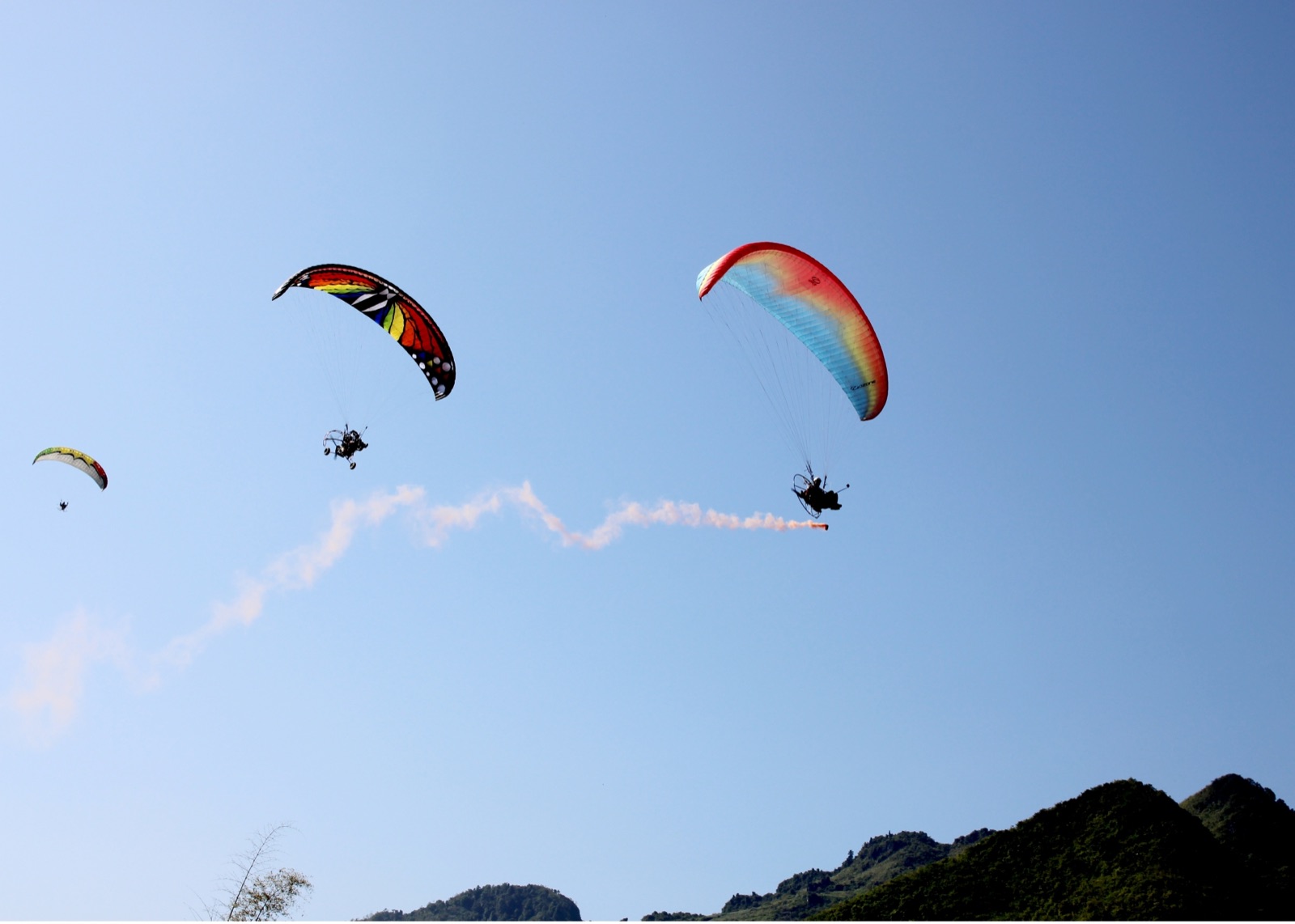
A paraglider wing is made of soft fabric and holds its shape thanks to air filling its cells. It flies quite slowly compared with an aircraft, so wind strength and air stability directly affect take-off, flight and landing. Many people are surprised when a flight is postponed under a blue sky, but the reason usually lies in the wind: a clear day is not necessarily flyable, and a cloudy day does not necessarily mean postponing.
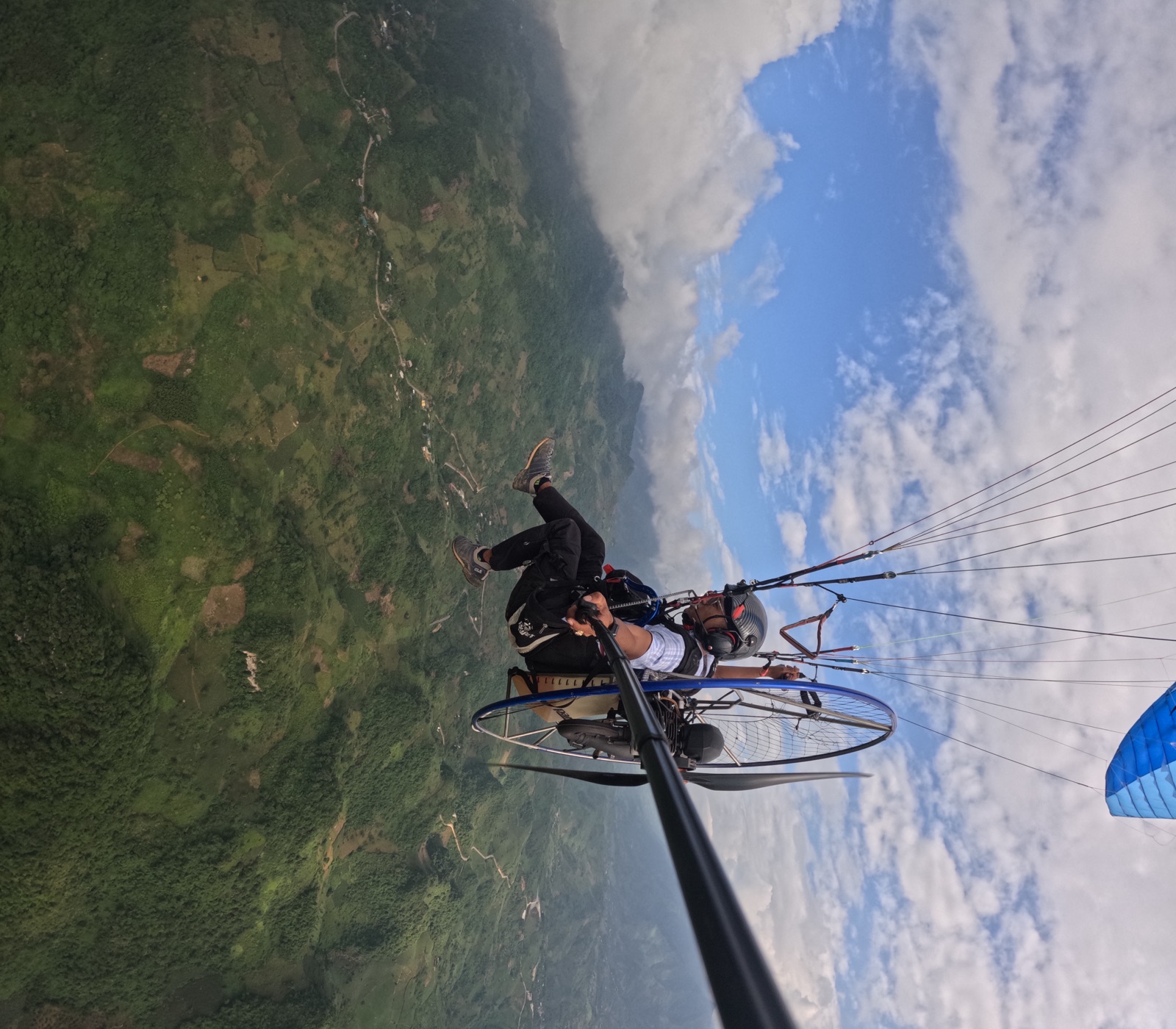
Paragliding has no engine, so it depends on the wind the most. Paramotor is more independent thanks to its engine, but still needs steady wind to take off and land safely.
Wind: the most important factor
A wing needs a moderate, steady flow of air to take off. The team looks at three aspects of the wind.
Wind that is too strong
In strong wind, the wing struggles to move forward and is hard to control during take-off and landing. Light to moderate wind is ideal; the stronger the wind, the more cautious the pilots become; beyond the safety threshold, flying stops.
Gusts
Gusts are sudden changes in wind strength. A big difference between the average wind and the gusts shows that the air is turbulent, making the flight less smooth and harder to control. This is one of the most common reasons for postponing a flight.
Wind from the wrong direction: a Quản Bạ-specific factor
Paragliders must take off into the wind. The paragliding launch site in Quản Bạ sits on a mountain top at about 950 m and faces easterly winds. When a westerly, north-westerly or south-westerly wind blows from behind the site, even if it seems light, the wing still cannot take off safely.
What if there is no wind?
Very light wind is not a reason to postpone. The pilot can take off with a few longer running steps, although the flight may be shorter because there is less lift.
Rain and thunderstorms
A wet wing is heavier and flies less well, visibility drops and the launch site becomes slippery. That is why steady rain means no flying. Light, intermittent drizzle sometimes just means waiting for it to stop.
Thunderstorms mean no flying, full stop. Storm clouds (towering cumulonimbus) bring unusually strong winds and very unstable air; as soon as this type of cloud appears, the team stops flying immediately.